
The Action Line C10 has been getting lowered since not long after it left the factory, and for most of that time the method was a static drop, springs and blocks, done once and lived with. Air ride is a different proposition entirely. You're not picking one height and committing to it. You're building a truck that can sit on the frame in the driveway and clear a speed bump twenty minutes later, and that flexibility is the whole reason people put up with the extra complexity and the extra cost of doing it right.
Restoration & Tech
7 min read
Installing an Air Ride System on an Action Line C10
What actually goes into an air ride install on an Action Line C10, from bag and compressor sizing to mounting, wiring, and the maintenance habits that keep it reliable.
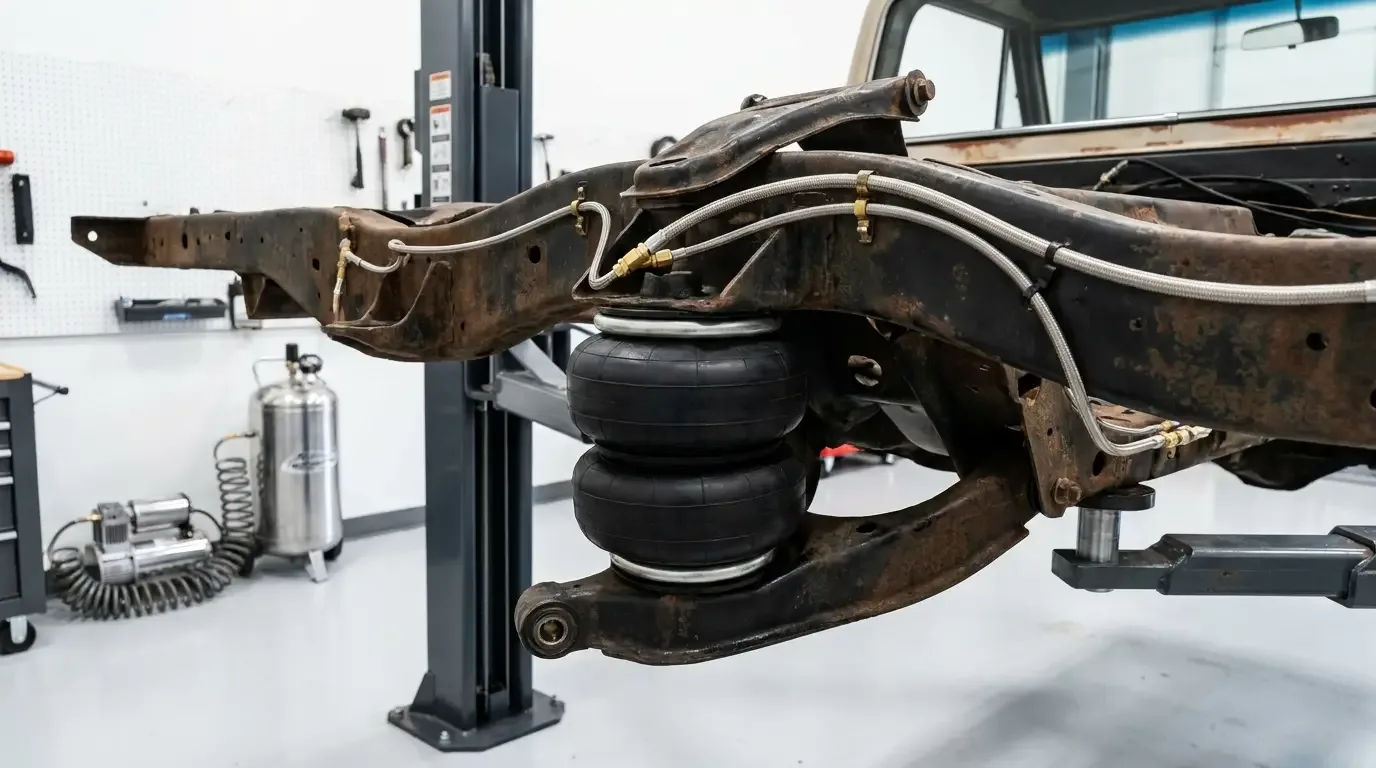
I've put air ride under enough of these trucks now to have opinions about where people cut corners, and it's rarely the bags themselves that cause problems. It's everything around the bags, the mounting, the plumbing, the electrical, that separates a system that works for years from one that's back in the shop every few months. If you want the background on how this truck got built the way it did before anybody started dropping them, the C10 story covers that. This is about what happens when you put an air system under one.
Why air ride versus a static drop
A static drop gets you one height, chosen once, and it's mechanically simpler and generally cheaper. Air ride gets you a range, from slammed to a driveable daily ride height, at the cost of a compressor, tank, valves, and a system that needs occasional maintenance the way a static drop doesn't. If your truck sees rough driveways, speed bumps, or long trips where ground clearance actually matters some of the time, air ride solves a problem a static drop can't. If the truck is a weekend cruiser that only ever sees smooth pavement, a static drop off the full lowering guide gets you most of the look with a lot less to maintain.
Be honest with yourself about which truck you're building before you spend the money. Air ride on a truck that never needs the extra clearance is money spent on complexity you won't use. Air ride on a truck that gets driven regularly, loaded occasionally, or parked on a steep driveway, earns its keep fast.
What's actually in the system
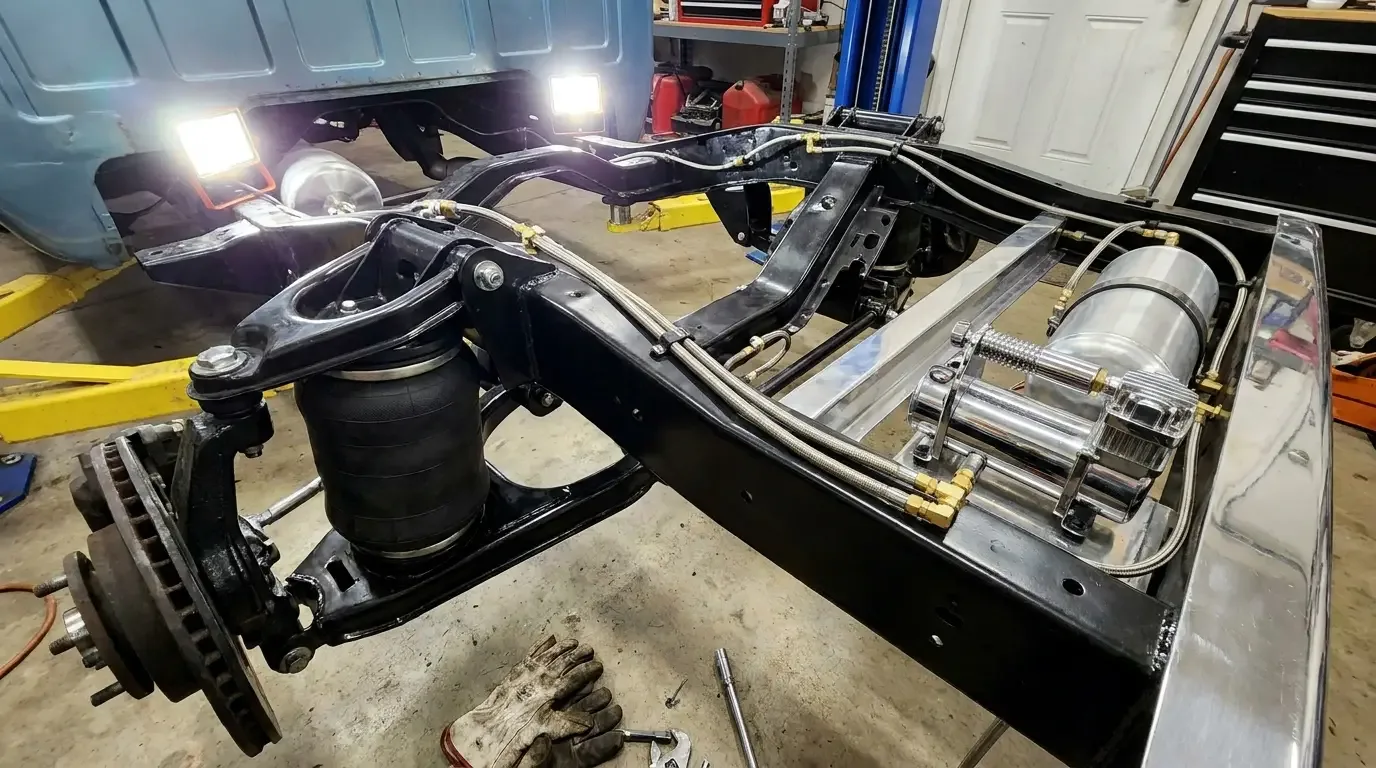
Four air bags, one per corner, replacing the coil or leaf spring depending on where the bag mounts on your particular front and rear setup. A compressor, sized for how often you're planning to air up and down, feeding an air tank that stores pressure so the compressor isn't running constantly. A manifold valve block that directs air to each corner independently, and a controller, either simple paddle switches or a digital management system, that lets you set and save ride heights.
Don't undersize the compressor or the tank to save money. A compressor that's constantly playing catch-up because the tank's too small cycles more, works harder, and wears out faster. Buy for the tank size and duty cycle that matches how often you'll actually be adjusting height, not the cheapest kit that technically airs the truck up eventually.
| Component | Job | Where people cut corners |
|---|---|---|
| Air bags | Replace spring, support weight, provide ride height range | Wrong bag for corner weight, bag rubs at full compression |
| Compressor | Fills tank, maintains system pressure | Undersized for duty cycle, runs constantly |
| Tank | Stores pressure so compressor cycles less | Too small, compressor never catches a break |
| Manifold/valves | Directs air to each corner independently | Cheap valves that leak down overnight |
Installing it in the front and rear
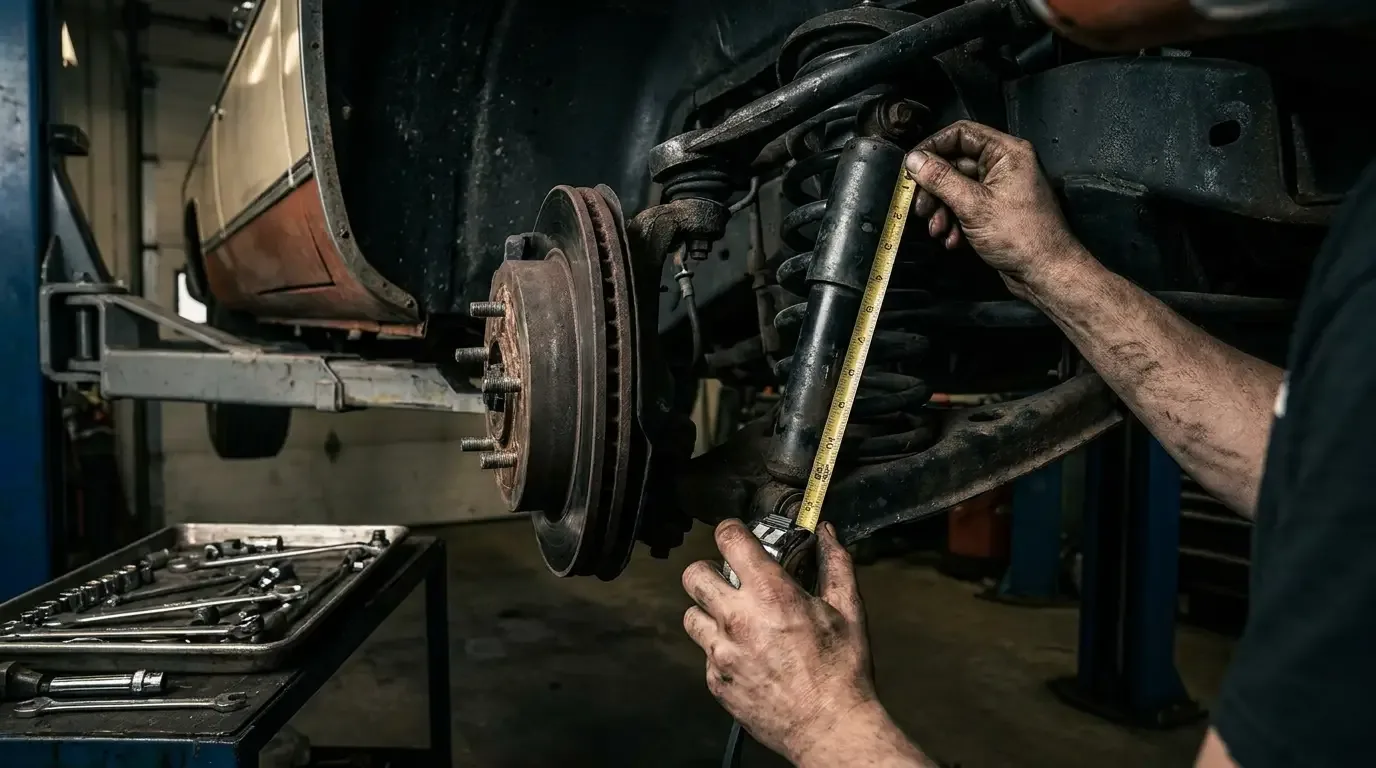
Front mounting on an Action Line truck usually means adapting the bag into the factory spring perch or a fabricated bracket in place of the coil, and getting the bag's centerline right matters more than people expect. A bag that's cocked even slightly wears unevenly and can pinch at full compression, right when you need it working correctly most. Rear mounting typically replaces the leaf spring setup with either a bag on a relocated perch or a full four-link conversion, and the four-link route, while more involved, gives you better control over pinion angle and axle location through the full range of travel than trying to keep leaf springs in the mix with bags stacked on top.
Whatever route you take, ride height range only matters if the rest of the suspension can physically follow it. That's where choosing shocks that survive the extra travel comes in. A shock that's sized for a static drop's fixed range will top out or bottom out on an air ride truck that travels from slammed to full ride height, and a shock that can't complete the range either limits your air ride's travel or gets destroyed trying to exceed its own limits. Size the shocks for the full range you're actually going to use, not just the height you'll usually park at.
Wiring, air lines, and the stuff that actually fails
Air line routing away from exhaust, away from anything with a sharp edge, and away from moving suspension components at full droop and full compression, is not optional. I've seen air lines routed tight enough at ride height that nobody thought about what happens when the axle drops to full extension, and that's exactly when a line that looked fine gets pulled taut and starts leaking or failing outright. Route with the full range of motion in mind, not just the height the truck sits at in the shop.
Electrical connections for the compressor and valve solenoids need real gauge wire and a real relay, not lamp cord and a switch pulling full compressor current through it. A compressor that's underpowered because of voltage drop through undersized wiring runs longer, gets hotter, and fails sooner. Ground everything solidly. A flaky ground on a controller shows up as inconsistent height readings or valves that don't fire when commanded, and that's a frustrating thing to chase down after the truck's already back together.
Setting it up and living with it day to day
Once it's installed, spend real time setting and saving heights for the situations you'll actually use, a driving height, a show height, and a max-height setting for steep driveways or speed bumps. Check for leak-down overnight periodically, a system that's holding air fine at install but drops noticeably by morning six months later has a valve or fitting starting to go, and it's a lot easier to find that early than after you've stopped checking.
Air ride rewards maintenance the way a static drop doesn't need. Drain the tank's moisture trap periodically so you're not pushing water through the system in freezing weather, and keep an eye on compressor duty cycle over time. A compressor that used to fill the tank in thirty seconds and now takes two minutes is telling you something's wearing out before it actually fails on you at the worst possible moment.
"Air ride isn't harder than a static drop because the bags are complicated. It's harder because everything around the bags, the wiring, the lines, the tank size, has to be right, and any one of those being wrong is what people blame the bags for. Do the boring parts correctly and the system just works."
Mike Sullivan
Sources and notes
- Holley Motor Life: GM Truck Generations, the 1967-1972 "Action Line" Series
- AccuAir: C10 Air Suspension (What You Need To Know)
- Street Trucks Magazine: C10 Suspension Buyer's Guide, 1963-1987
- Johnny Law Motors: rear 4-link air ride bag suspension kit for 67-72 C10
- RideTech: air suspension system for 73-87 C10
Related Reading
Have a
Chevrolet C10
for Sale?
Reach thousands of serious classic car collectors across the US.
Sell It Here →
Are You a Classic Car Dealer?
List your full inventory and connect with targeted classic car buyers.
Join as a Dealer →

About the author
Mike Sullivan
Detroit-area muscle car enthusiast and restoration specialist with three decades of hands-on experience working on American iron.
Related Listings - Chevrolet C10
More in Restoration & Tech

Comments
Be the first to comment on this article.