
I've watched more than one nice lowered C10 get parked at a show with the front tires tucked perfect and the rears sitting an inch proud of the fender lip like an afterthought. Nine times out of ten that's not a stance choice. That's somebody buying wheels off a listing that fit "most GM trucks" without ever checking backspacing against the actual fender opening on a truck that's four inches lower than stock. Offset and backspacing aren't optional homework on a lowered truck. They're the difference between wheels that tuck right and wheels that rub, poke, or eat a bearing early.
Restoration & Tech
7 min read
Wheel Offset and Backspacing Guide for a Lowered C10
Why offset and backspacing matter far more once a C10 is lowered, the difference between the two, and how to avoid the fender rub and tire poke mistakes that ruin a stance.
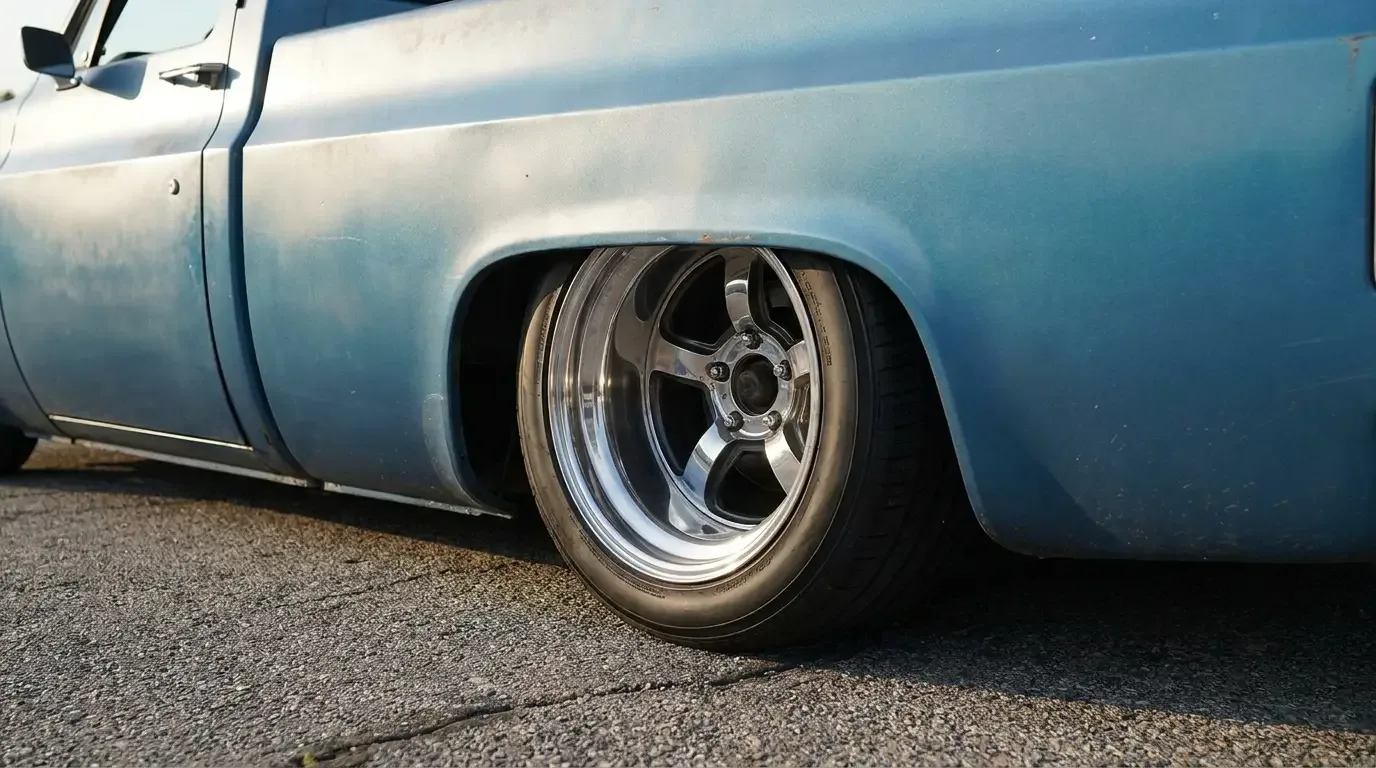
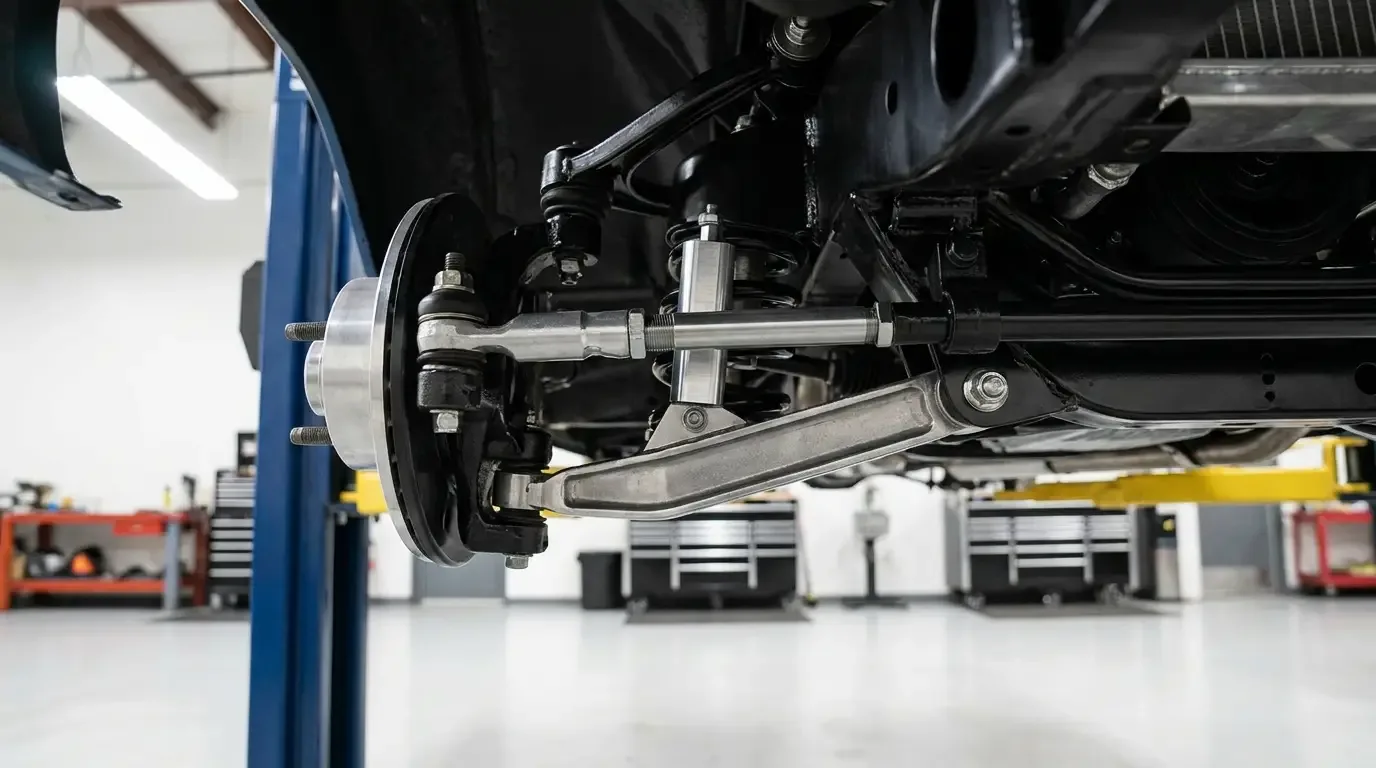
On a stock-height truck you can get away with being loose about this stuff. There's enough room in the wheel well that a half inch of extra backspacing one way or the other doesn't put the tire into sheet metal. Follow the lowering guide and drop the truck four to six inches, and that margin disappears. Now the tire's living in a smaller box, closer to the frame, closer to the inner fender lip, and closer to the control arm on the front end. Get the offset wrong and you find out about it the first time you turn the wheel hard or hit a driveway at an angle.
Why offset matters more once you've lowered the truck
Wheel offset is the distance from the wheel's true centerline to its mounting surface, and it decides whether the tire sits further out toward the fender or further in toward the frame and suspension. A lower offset (or a wheel with less backspacing) pushes the tire outward, toward poke. A higher offset pulls it inward, toward rub on frame rails, control arms, or sway bar links. Stock trucks were engineered with enough clearance to tolerate a range of offsets without drama. A lowered truck with wider tires has erased most of that margin, so the offset that looked fine on paper on a stock-height truck can put the tire into the fender lip or the inner structure the moment you actually load the suspension.
This is where I see the most expensive mistakes. Somebody buys a nice set of wheels, mounts them, drives it around the block at idle in a straight line, calls it good. Then they load the bed, or take a corner with some body roll, or hit a pothole that compresses the suspension further than a parking lot test ever will, and that's when the tire finds the fender. Test full lock, full compression, and a loaded bed before you call a wheel and tire combination correct.
Backspacing versus offset, and why the difference trips people up
Offset is measured from true center. Backspacing is measured from the back edge of the wheel to the mounting surface, and it doesn't account for wheel width the same way offset does. Two wheels with identical backspacing but different widths sit differently in the wheel well, because all the extra width on a wider wheel with the same backspacing goes outward, toward the fender. I've had guys tell me their new wheels have "the same backspacing as the old ones" and still end up rubbing, because the new wheel is two inches wider and every bit of that width went the wrong direction.
If a listing gives you backspacing without wheel width, or offset without also telling you the width, you don't have enough information yet. Get both numbers before you order anything, and if you're not confident converting between the two for your specific wheel width, have the wheel shop do the math instead of guessing.
| Term | Measured from | What changes with wheel width |
|---|---|---|
| Offset | True wheel centerline | Stays consistent per spec regardless of width |
| Backspacing | Rear lip to mounting pad | Extra width shifts outward, changes fender clearance |
Matching front and rear so the truck doesn't look or drive wrong
Front and rear offset don't need to match numerically, because the front suspension geometry and the rear axle housing width aren't the same thing, but they need to produce the same relationship to the fender lip if you want the stance to look intentional. I always tell people to figure out the rear tuck first if you're building around a static drop, because the rear is usually less forgiving of a bad guess, then work the front to match visually rather than assuming a matching part number front and rear gets you there.
Front offset gets complicated fast once you're lowered and running wider tires, because now you're also dealing with scrub radius and steering geometry, not just clearance. That's directly tied to the bump steer that shows up once you're lowered and wide, and getting the offset wrong up front doesn't just cause a fender rub, it changes how the steering feels under bump. Don't treat front wheel selection as a clearance-only decision.
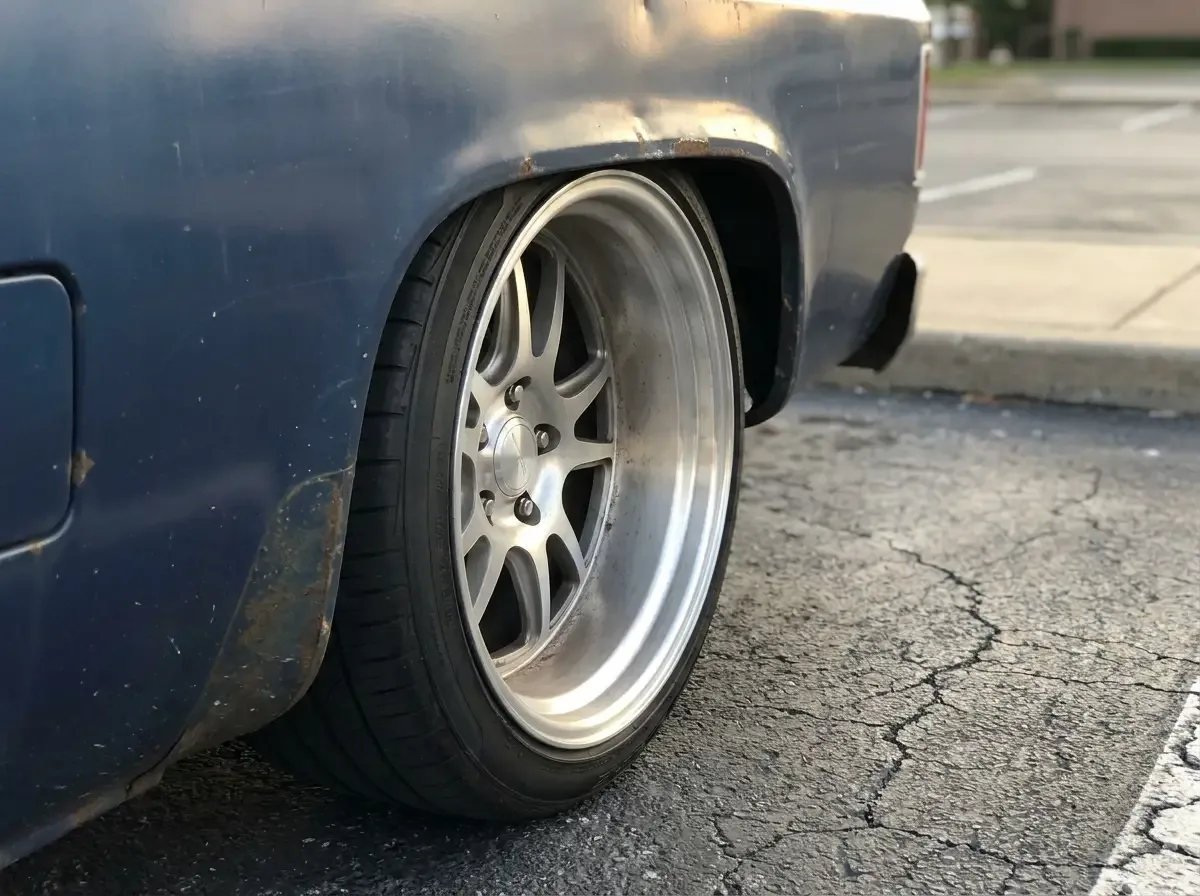
Spacers: when they're fine and when they're a mistake
A quality hub-centric spacer, properly torqued, with studs long enough to still get full thread engagement on the lug nuts, is a legitimate fix for a small clearance problem. What's not legitimate is stacking a spacer to solve a bigger offset mismatch than the spacer was designed for, or running studs that barely catch enough threads because nobody checked stud length before installing a thick spacer. I've pulled wheels off trucks where the lug nuts had four or five threads of engagement holding a wheel on at highway speed. That's not a corner worth cutting.
If you need more than a quarter to three-eighths of an inch of correction, buy the right offset wheel instead of stacking spacers to get there. It's not that much more money, and it removes a failure point instead of adding one.
Getting it right without a return trip to the wheel shop
Bring your actual ride height, your actual tire size, and a tape measure to the wheel shop conversation, not a screenshot of somebody else's build that looked good online. Every C10 that's been lowered has slightly different suspension travel and slightly different fender rolling, and a spec that worked on a truck with air ride won't automatically work on one running a static drop with different shocks. If a shop can't tell you offset, backspacing, and width together for a wheel they're selling you, that's a shop that hasn't done this specific homework, and you shouldn't be the one paying to find that out.
"Nobody's ever rubbed a fender because they measured too much. It's always the guy who eyeballed it, drove around the block, and called it done. Measure at full lock, measure loaded, and measure before you spend the money, not after."
Mike Sullivan
Sources and notes
Related Reading
Have a
Chevrolet C10
for Sale?
Reach thousands of serious classic car collectors across the US.
Sell It Here →
Are You a Classic Car Dealer?
List your full inventory and connect with targeted classic car buyers.
Join as a Dealer →

About the author
Mike Sullivan
Detroit-area muscle car enthusiast and restoration specialist with three decades of hands-on experience working on American iron.
Related Listings - Chevrolet C10
More in Restoration & Tech
Comments
Be the first to comment on this article.