
The reproduction market has gotten so good that a lot of first-time restorers assume you can buy anything for these cars out of a catalog. Sheet metal, weatherstrip, whole interiors, all a phone call away. Then they go looking for one specific bracket or a correct date-coded carburetor and the project stops cold for eight months. Hard to find muscle car parts are the reason projects stall, and knowing which ones will fight you before you buy the car is worth more than any tool in the box.
Restoration & Tech
6 min read
The Hardest Muscle Car Parts to Find Today
The hard to find muscle car parts that stall restorations: date-coded ancillaries, smog gear, rare trim, and how to actually track them down.
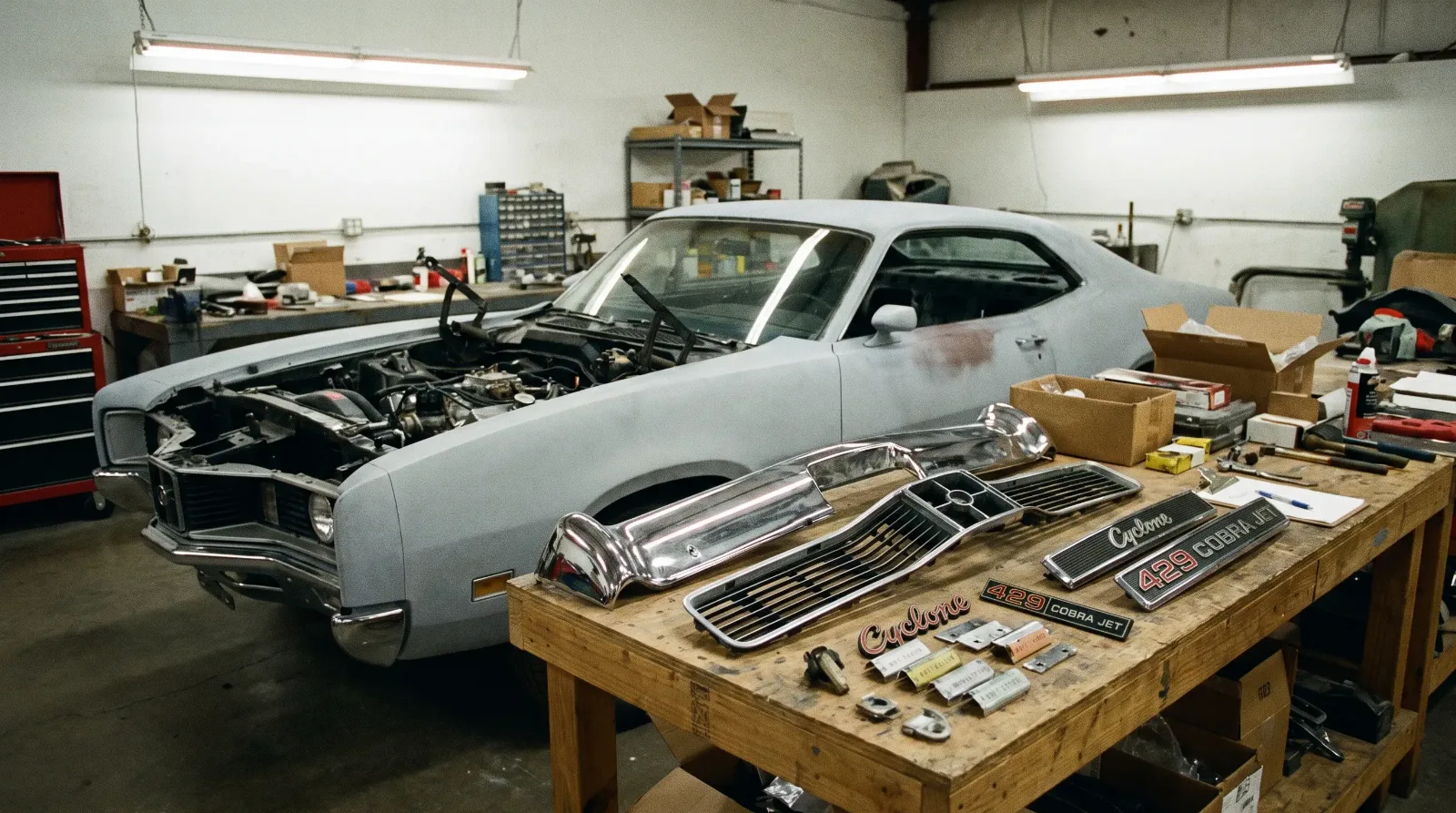
The pattern is consistent. The parts nobody reproduces are the ones that were never sexy: trim-tag-specific pieces, low-production options, and anything the aftermarket cannot sell enough of to justify tooling. The engine and the sheet metal are usually the easy part now. It is the small correct stuff that hides in the weeds. Anybody serious about Muscle Car Restoration learns this the hard way, usually about halfway through the first build.
Correct date-coded and casting-number parts
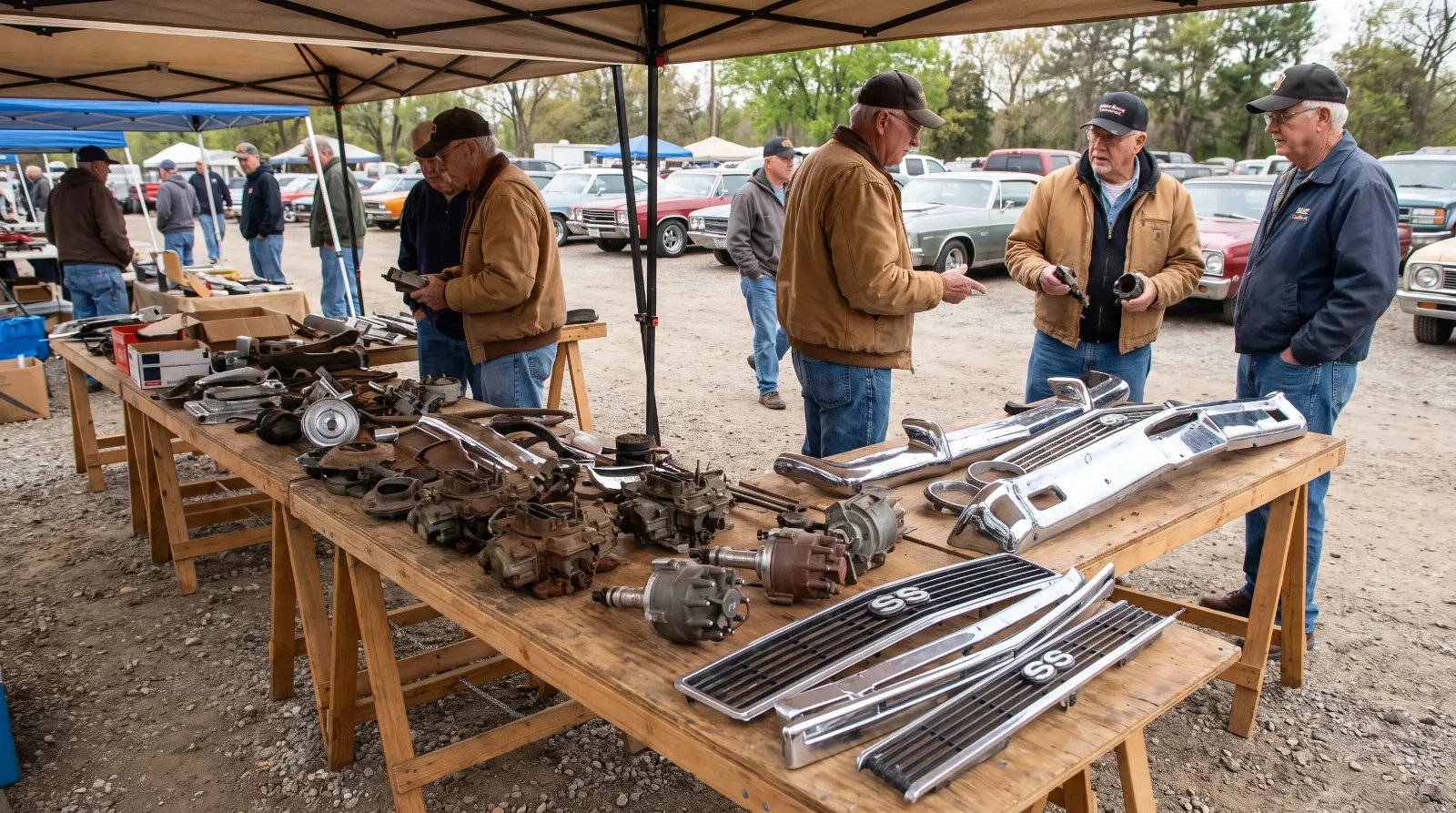
If you are building a numbers-correct car, the hardest hunt is any part that has to carry a specific date code or casting number to be right. Carburetors, distributors, alternators, generators, smog equipment, and correct-dated glass all fall here. A reproduction alternator bolts on fine and works, but it will never wear the right stamping, and for a judged car that matters. Chasing a correct-dated part within the narrow window that matches your car's build date can take a year and cost several times what a repro would.
Smog and emissions hardware is a special kind of misery. Air pumps, correct brackets, the tubes and check valves, most of it got thrown away decades ago because nobody wanted it, and nobody reproduces it now because the demand is thin. On a correct restoration, a complete correct smog setup can run $1,500 to $3,000 if you can even assemble one, and assembling it means haunting swap meets and forums for years.
Trim, emblems, and interior detail pieces
Exterior brightwork is the next wall you hit. Reproduction trim exists for the popular models, but the fit is often poor and the plating quality can be soft. For lower-volume cars and specific one-year-only pieces, you are stuck hunting good used originals and paying to have them replated. Correct emblems, specific badges, and pot-metal trim that has pitted are all slow, expensive hunts.
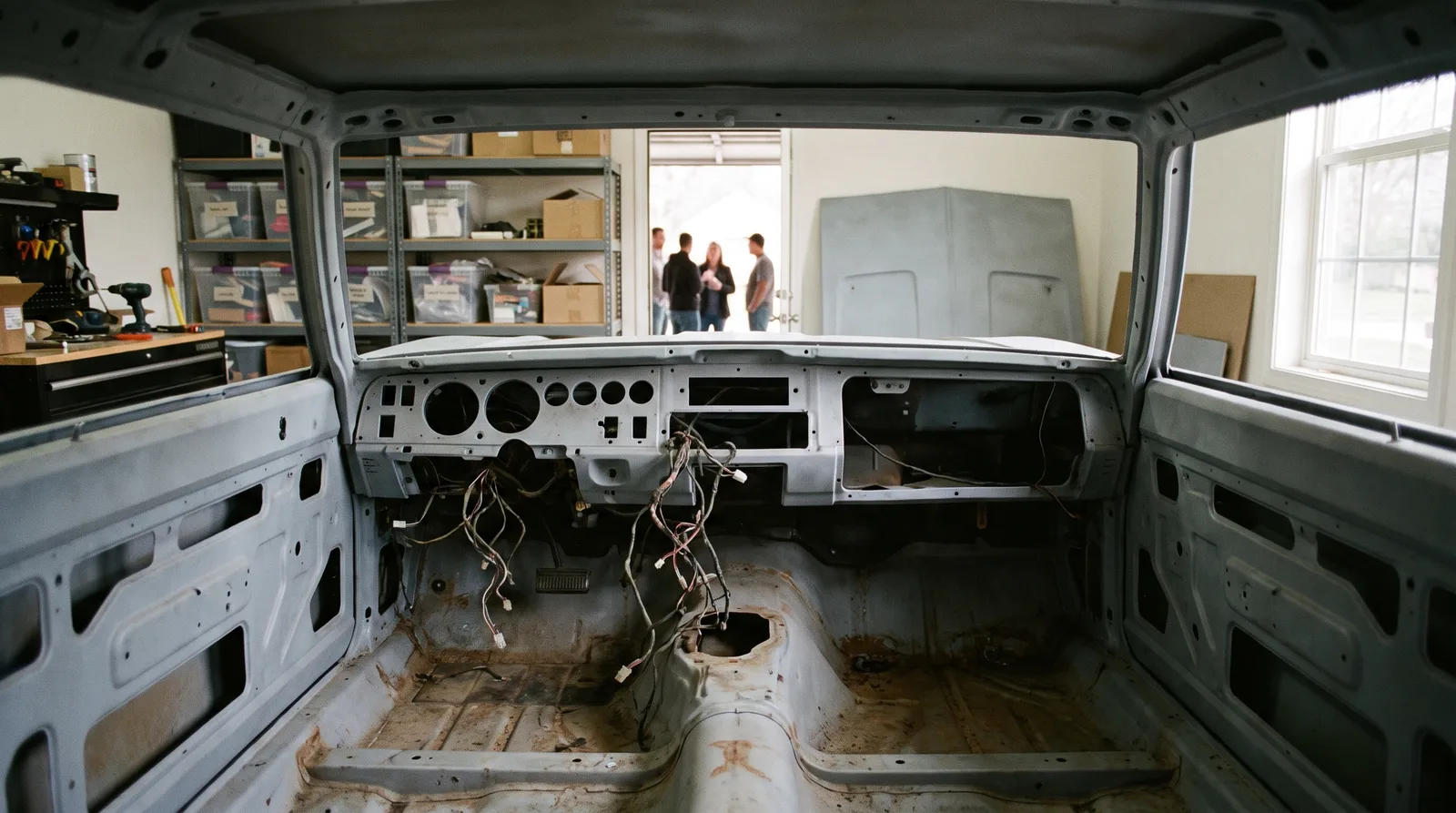
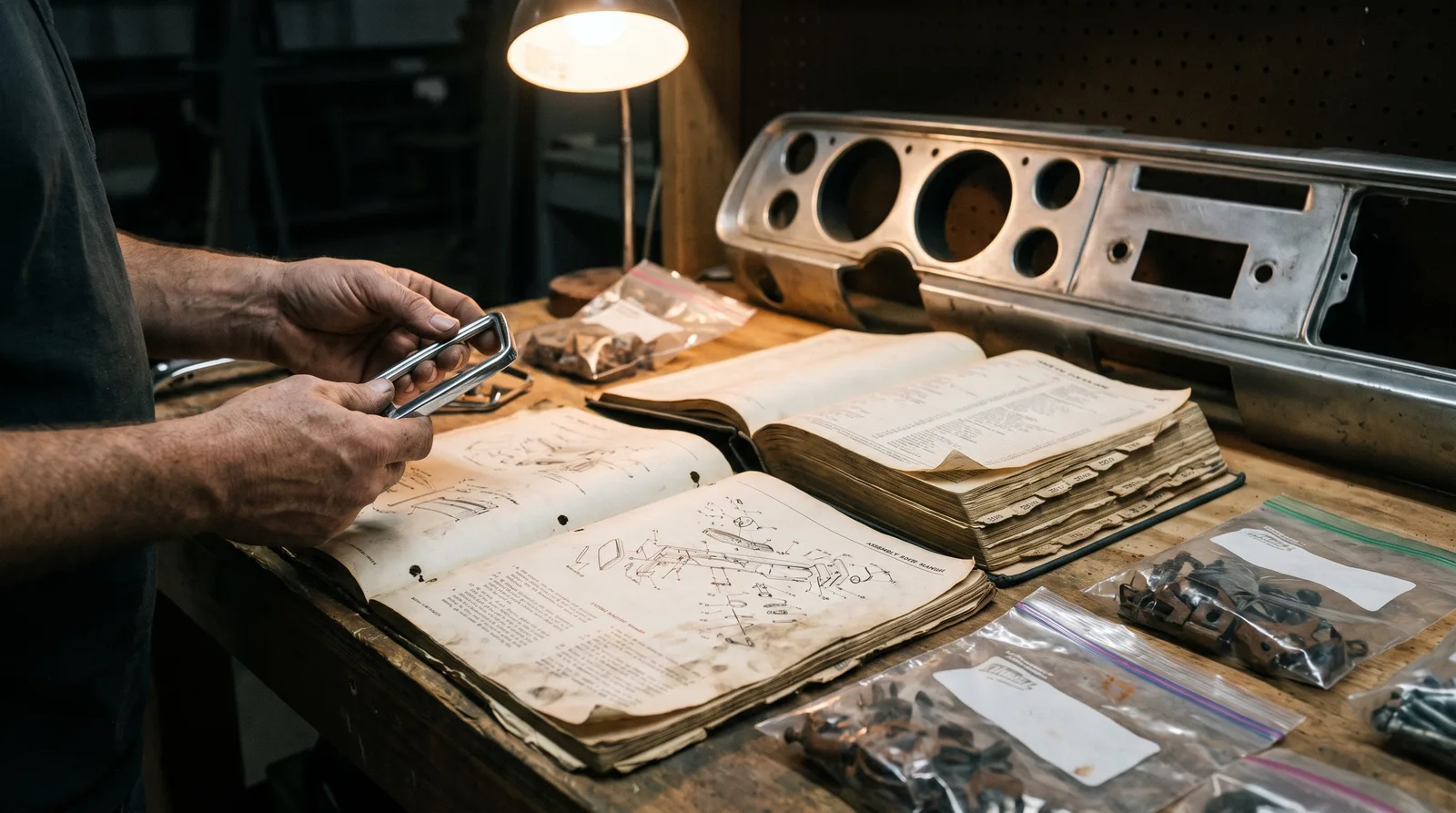
Interior detail parts hide the same trap. The upholstery and carpet come in a kit, no problem. But the correct dash bezels, the right knobs, a specific radio, correct seat belt hardware with the right date stamp, those are the pieces that turn up missing or wrong. They are cheap individually and murder collectively, because each one is its own search.
| Part category | Difficulty | Why it is hard |
|---|---|---|
| Date-coded engine ancillaries | Very hard | Must match a narrow build-date window |
| Factory smog equipment | Very hard | Discarded decades ago, not reproduced |
| One-year-only trim | Hard | Low volume, poor repro fit |
| Correct glass with date codes | Hard | Repro lacks correct markings |
| Rare option components | Hard | Built in tiny numbers originally |
| Common sheet metal | Easy | Well supported by aftermarket |
"I have spent more time hunting a correct bracket than rebuilding the engine it bolts to. The catalog stuff is easy. It is the fifteen-dollar part nobody reproduces that stops the whole build."
Mike Sullivan
Rare option and low-production components
If your car left the factory with a rare option, that option is your hardest problem. Special induction setups, factory tachometers, specific gauge clusters, cold-air packages, and one-year performance parts were built in small numbers, and survivors are scattered across private collections and shelves in garages you will never see. When one does surface, the price reflects the scarcity, and you either pay it or wait another year for the next one.
🔧 Inspection Priorities
- Confirm the car is complete before you buy. A missing rare option part can add a year and thousands to the build. A complete car is worth paying more for.
- Photograph and catalog every small part during teardown. The clip you toss in a coffee can is the one you cannot buy later.
- Verify trim and emblems are original and repairable. Replating a good original beats hunting a rare piece that may not exist in repro.
- Check the date codes on ancillaries early. If correctness matters, know what you are missing before you commit to a numbers-correct build.
How to actually find the hard stuff
The parts that are not in catalogs live in the community. Marque-specific clubs, model registries, swap meets, and the classified sections of forums are where correct pieces change hands. Get on the vendor and specialist lists for your exact model. Go to the big swap meets with a written want list and photos. Network with the guys who have been doing your model for decades, because they know who is sitting on a shelf full of correct parts.
The other move is buying a more complete car in the first place. A donor with the rare pieces still attached, even if the body is rough, can be worth more to you than a clean shell that is missing everything correct. I have bought whole cars just for a correct intake and a gauge cluster, and it still worked out cheaper than the multi-year hunt would have been.
Plan around the parts, not the paint
The lesson after enough builds is simple: sequence your project around the hardest parts, not the easy wins. Do not spray a beautiful paint job and then discover the one emblem you need has not surfaced in three years. Nail down the rare and correct pieces first, then build the rest of the car around what you have secured. And before any of that, deal with the metal, because rust decides more budgets than parts do. If you want to know where these cars rot, read the full story on the spots that eat muscle cars from the inside out.
Related Reading
Have a
Classic Car
for Sale?
Reach thousands of serious classic car collectors across the US.
Sell It Here →
Are You a Classic Car Dealer?
List your full inventory and connect with targeted classic car buyers.
Join as a Dealer →

About the author
Mike Sullivan
Detroit-area muscle car enthusiast and restoration specialist with three decades of hands-on experience working on American iron.
More in Restoration & Tech
Comments
Be the first to comment on this article.