
Rust is the thing that decides whether a muscle car project makes sense, and it is also the thing most buyers do not know how to find. Paint hides it. Undercoating hides it. A clean interior and a fresh engine bay can sit on top of floors you could put your foot through. I have crawled under hundreds of these cars, and the muscle car rust spots that matter are almost never the ones you can see standing up. They are underneath, inside, and behind, exactly where a seller hopes you will not look.
Restoration & Tech
6 min read
Common Rust Areas on Classic Muscle Cars
The muscle car rust spots that decide a project: floors, rockers, quarters, cowl, and frame. How to check each one before you buy.
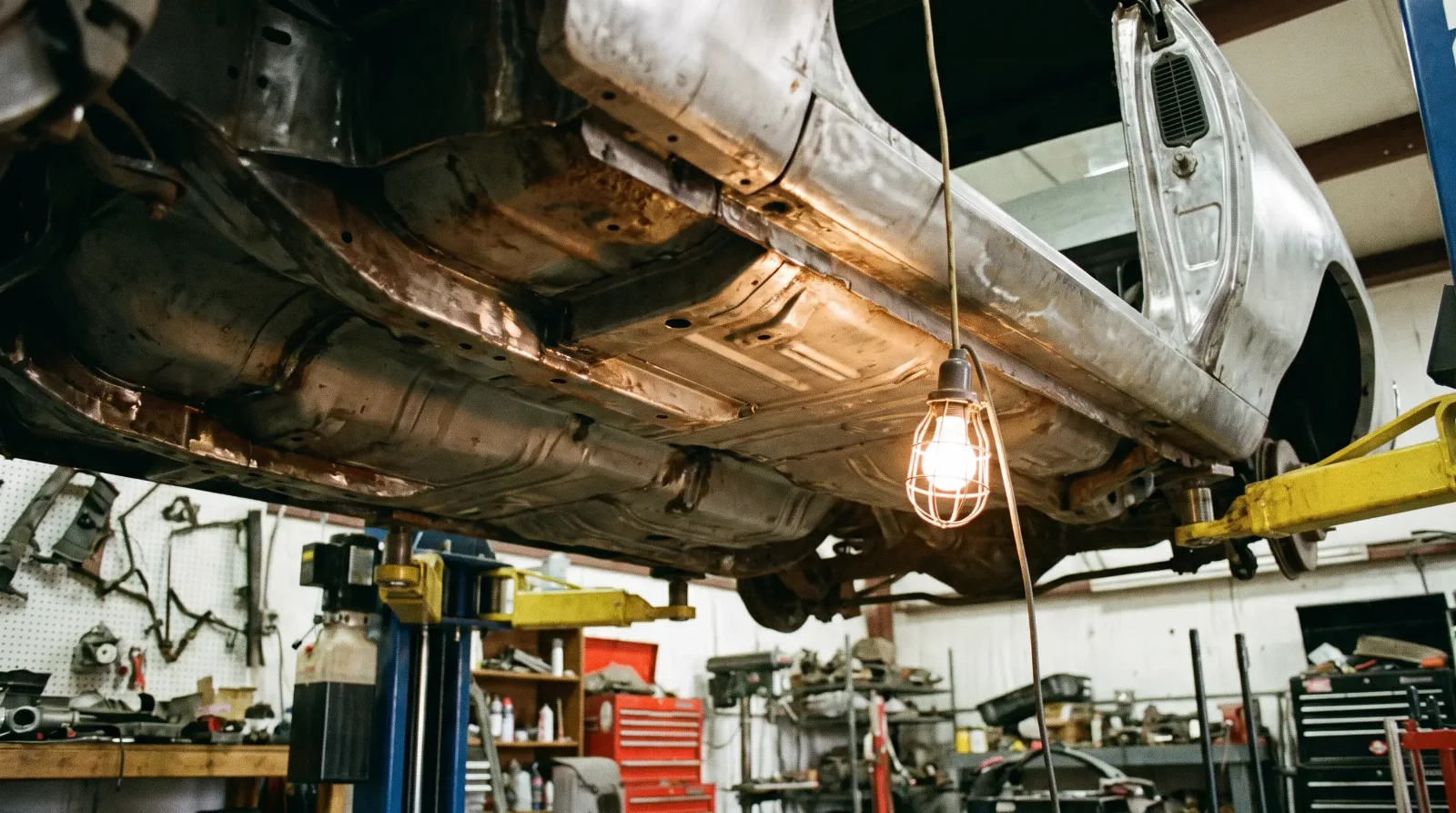
The reason these cars rot in predictable places comes down to how they were built. Body-on-frame construction, spot-welded seams that trap moisture, and drain holes that plug with leaves and dirt all create pockets where water sits and never dries. Learn the pattern once and you can assess any muscle car in twenty minutes with a flashlight and a screwdriver. Anyone who takes the restoration guide seriously starts with the metal, because everything else is cosmetics by comparison.
The floors and trunk pans
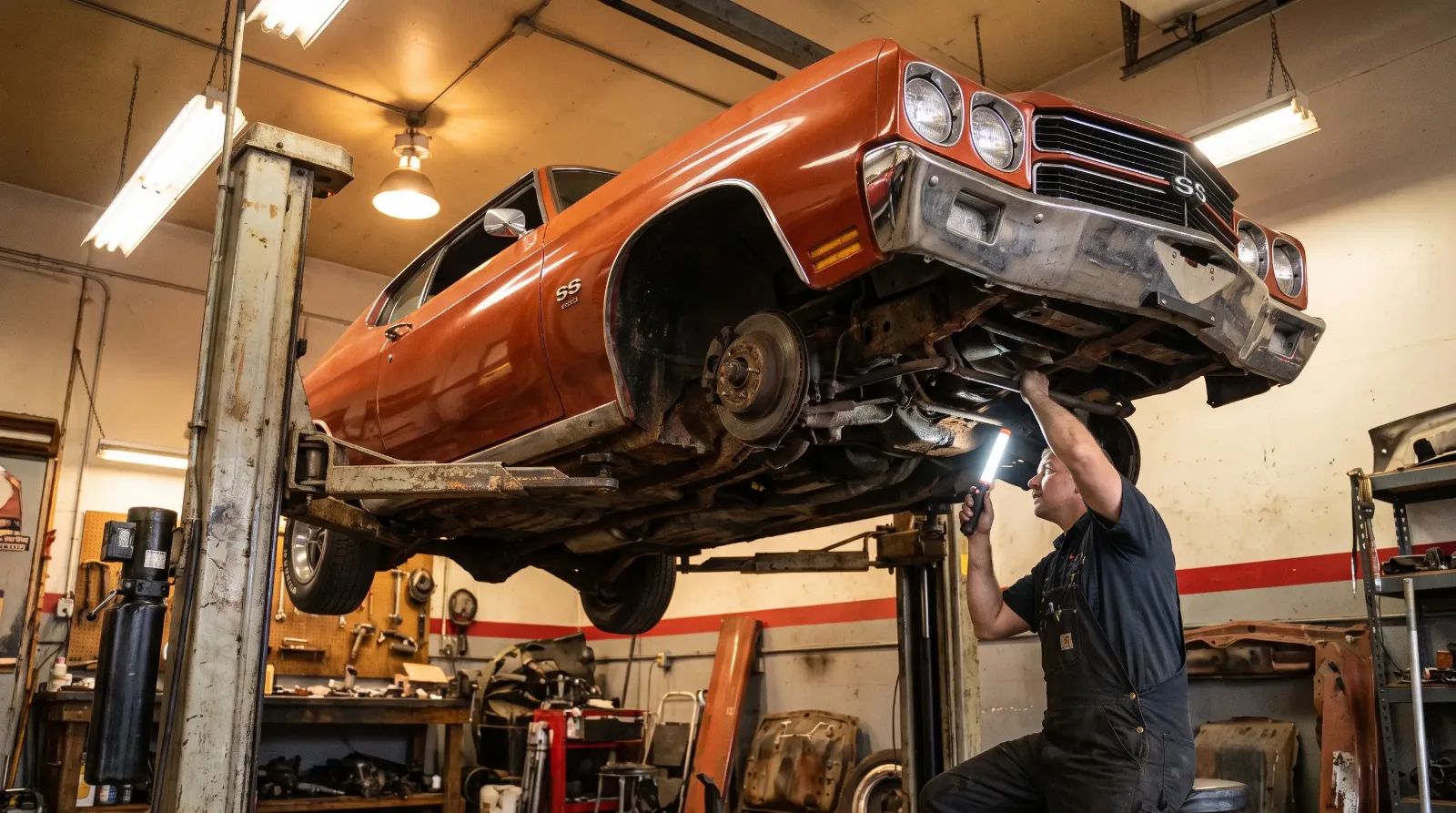
Start with the floors, because this is where the money hides. Pull the carpet if you can, or at least reach under it and press. Solid floor feels like solid floor. A rotted floor flexes, crunches, or gives way under a screwdriver tip. The usual culprits are under the seats, along the rocker seams, and around the seat mounts where spilled drinks and leaking windshields fed moisture for decades.
The trunk pan is the same story one compartment back. Lift the mat and the spare. Rear window seals leak, water pools in the trunk, and the pan rots from the top down while the trunk looks fine from a glance. Check the drop-offs behind the rear wheels and the corners where the pan meets the quarters. Floor and trunk pan replacement is doable, but it is $3,000 to $8,000 in labor and metal on a full job, so you want to know before you buy, not after.
Rockers, quarters, and lower fenders
The rocker panels are structural on most of these cars, and they rot from the inside because that is where the drains clog. There is an outer rocker you can see and an inner rocker you cannot, and the inner one is what holds the body's shape. Tap along the rocker and listen. Solid steel rings. Rusty or filler-packed rocker sounds dull and dead. Magnets do not stick to body filler, so a cheap magnet is one of the best tools you can carry.
Quarter panels and lower fenders rot at the bottom edges and behind the wheel openings where road spray collects. Bubbling paint low on a quarter is rust pushing through from behind, and by the time it shows on the surface the damage inside is usually worse than it looks. When you are browsing and want to compare a solid car against a rusty project, check out current muscle car listings and look hard at the photos of the lower body seams before you drive anywhere.
| Rust area | How to check | Repair severity |
|---|---|---|
| Floor pans | Lift carpet, press and probe | High, structural |
| Trunk pan | Lift mat and spare | Moderate to high |
| Rocker panels | Tap-test, use a magnet | High, structural |
| Quarter panels | Look for low bubbling | Moderate to high |
| Frame rails | Get under with a light | Very high, structural |
| Cowl and windshield channel | Look for interior water stains | High, labor intensive |
The cowl, the frame, and the places sellers hope you skip
The cowl is the hidden killer. It is the box structure below the windshield that feeds the vents, and it rots from leaves and water that collect inside where you cannot see or reach. A rotted cowl leaks water onto the floors and the kick panels, and repairing it means pulling the windshield and cutting into the top of the firewall. It is one of the worst jobs on the car. Look for water stains inside on the kick panels and a musty smell, both signs the cowl is feeding water into the cabin.
Then get under the car and inspect the frame rails with a good light, not a phone. Surface rust on a frame is normal and fine. Scaly, flaking, or perforated frame steel is a different conversation, because a compromised frame is a safety issue and an expensive repair. Body-on-frame muscle cars can hide frame rot under undercoating, so probe anything that looks freshly sprayed.
🔧 Inspection Priorities
- Frame rails first. Structural frame rot is the most expensive and dangerous. Probe under any fresh undercoating with a screwdriver before you trust it.
- Floors and trunk pan second. Lift carpet and mats. Soft or patched pans mean thousands in metal work.
- Rockers with a magnet. Filler does not hold a magnet. A packed rocker hides structural rot.
- Cowl for water intrusion. Stains and mustiness inside point to a cowl repair, one of the costliest jobs on the car.
"A car that looks clean at fifteen feet can be junk underneath. I trust a magnet and a flashlight over any seller's paint job, every time."
Mike Sullivan
What rust means for the buy
Surface rust is nothing. It cleans up and gets sealed. Rot that has eaten structure, floors, rockers, frame, cowl, is what turns a fair-priced car into a money pit. A car with clean structure and some cosmetic surface rust is worth paying up for. A car with rotted floors and a soft frame is only worth buying if the price reflects a full metal restoration, and most sellers price them as if the metal is fine.
Rust also touches originality. Heavy structural repair can affect how a numbers-correct car is judged and valued, so if you care about that side of the hobby, factor it in. It ties directly into whether the car's identity holds up, and if that matters to you, read the full story on what numbers-matching really means. Between the metal and the numbers, most of a muscle car's real value is decided in places you have to crawl under the car to see. For the broader picture of why these cars are worth the trouble at all, our muscle car coverage fills in the rest.
Related Reading
Have a
Classic Car
for Sale?
Reach thousands of serious classic car collectors across the US.
Sell It Here →
Are You a Classic Car Dealer?
List your full inventory and connect with targeted classic car buyers.
Join as a Dealer →

About the author
Mike Sullivan
Detroit-area muscle car enthusiast and restoration specialist with three decades of hands-on experience working on American iron.
More in Restoration & Tech
Comments (1)
G
Gene Przybylski
2 months ago
The part about rebuilding vs. replacing is important. In some segments, period-correct rebuilds are valued over replaced-with-original components. Know your market.