
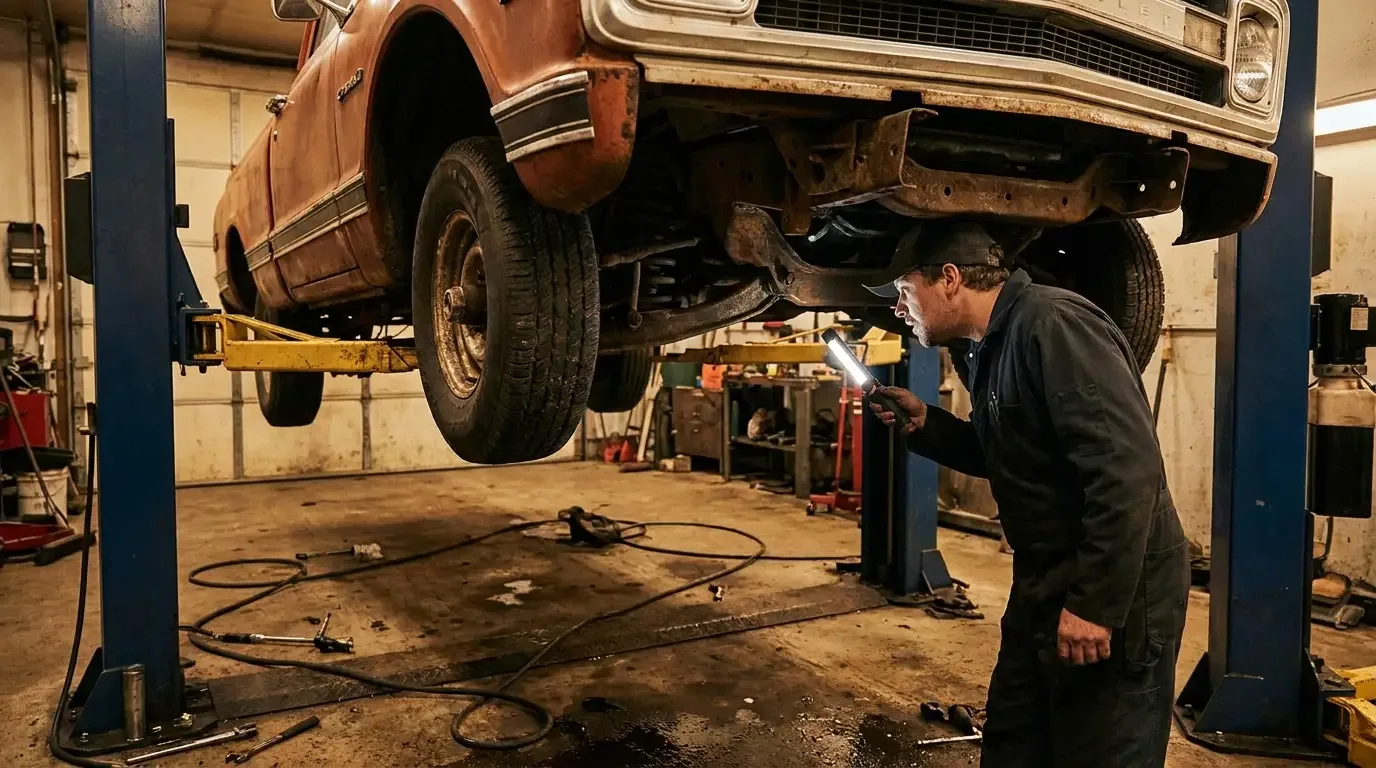
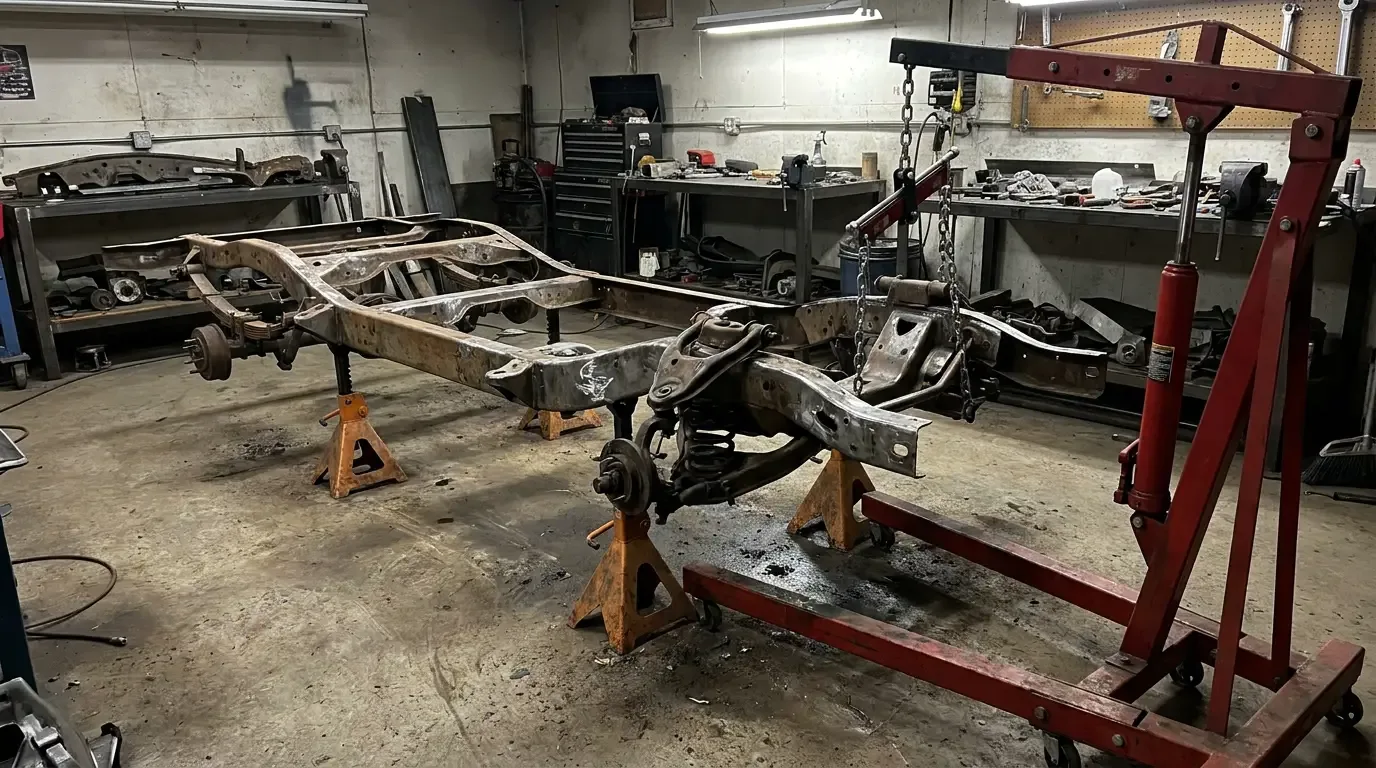
A bent frame does not announce itself. The truck still starts, still drives, still looks fine parked at a show, and that is exactly why so many buyers miss it until they have already signed the title over. I have had guys call me two weeks after a purchase asking why their new C10 pulls to the right on the highway, and half the time the answer is not the alignment. It is the frame underneath everything else, sitting a half inch out of true from some accident nobody ever mentioned.
Restoration & Tech
6 min read
How to Inspect a Classic C10 Frame for Straightness
A bent frame on a C10 rarely announces itself. Here is how to measure frame straightness properly before it costs you a lot more than the truck did.
Why a bent frame goes unnoticed for years
Body mounts and fresh paint hide a lot. A truck can get a full cosmetic restoration, new bushings, a repaint, and still be sitting on a frame that got tweaked in a collision a decade before the current owner bought it. Nobody checks frame straightness during a walkaround inspection because it is not visible from outside the truck, and most sellers genuinely do not know if their own frame is straight. They have simply never had a reason to check.
The signs that point to a problem
Tire wear that is uneven side to side with no obvious suspension cause. Doors that do not close the same way they used to, or gaps around the cab that changed after a fender bender years back. A truck that tracks slightly sideways down the road, crabbing rather than driving straight. None of these prove a bent frame by themselves, but two or three of them together on the same truck is worth taking seriously before you buy it, not after.
What usually bends a C10 frame in the first place
Most bent C10 frames were not damaged at a stoplight. They were bent by decades of actual work, and that is worth remembering when you are looking at a truck that spent its life on a ranch or a job site instead of in a garage. Overloading a half-ton truck for years at a time flexes the frame in ways that add up slowly, especially around the rear spring hangers where the load actually transfers to the frame rails. A truck that towed a stock trailer loaded past what it was rated for, or hauled gravel week after week with the springs sagged out, can end up with a frame that is measurably out of square without ever being in a single reportable accident.
Collision damage is the other obvious cause, and it tends to be more localized. A frame bent from a wreck usually shows a sharper deviation concentrated around one corner rather than a gradual twist across the whole chassis, and that pattern is one more reason the diagonal measurements matter more than a visual guess. Off-road use is a smaller factor on these trucks than people assume, since most C10s spent their working lives on pavement or ranch roads rather than genuine rock crawling, but it does happen on trucks that were used harder than the half-ton rating ever intended.
How to actually measure it
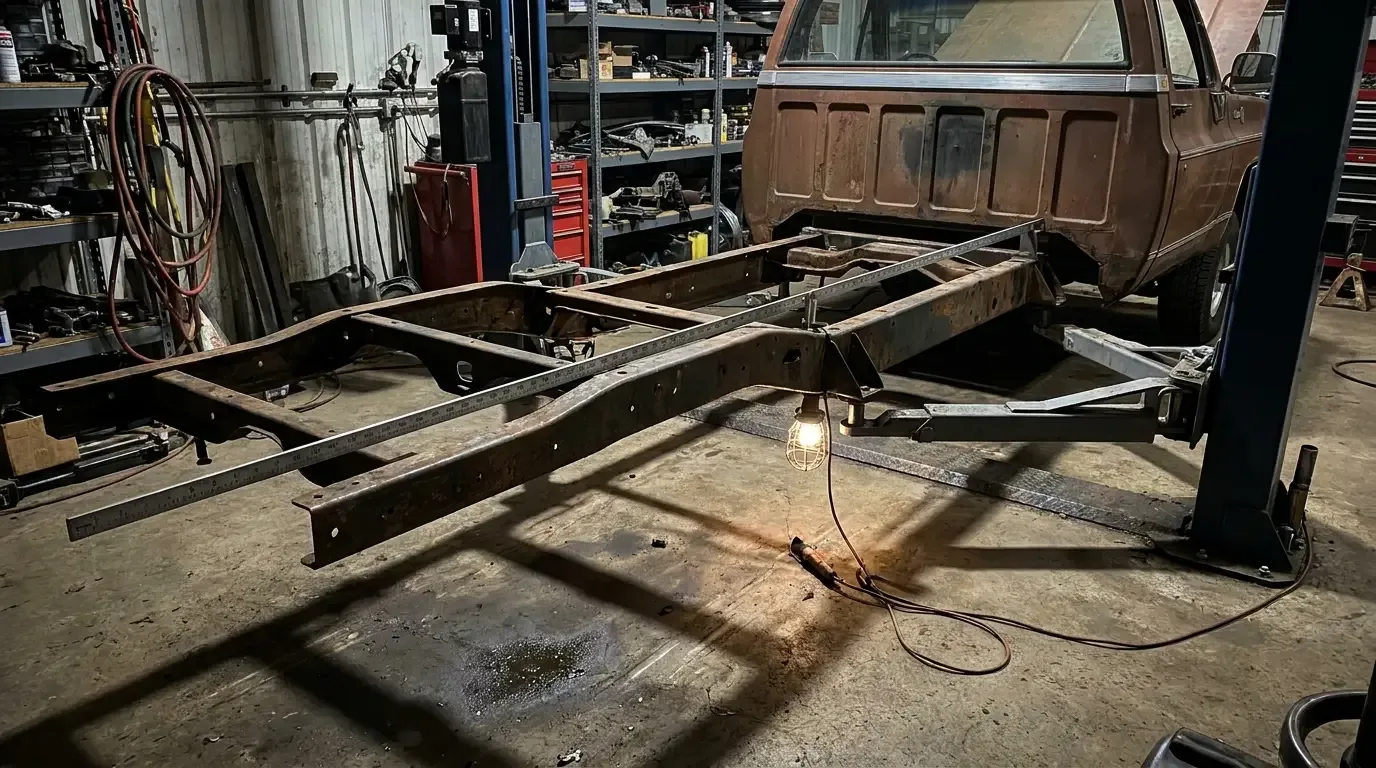
Diagonal measurements are the honest test. Pick four matching points on the frame, one at each corner, front to rear, and measure corner to corner across the diagonals. On a straight frame those two diagonal measurements come out the same, generally within about a quarter inch of each other. If they are off by more than that, something moved. A tram gauge does this properly, and you can rent one instead of buying it for a single inspection. A tape measure and patience will get you a rough answer if that is all you have got, though I would rather have the tram gauge for anything I was about to spend real money on.
🔧 Inspection Priorities
- Diagonal frame measurements at all four corners. The single most reliable check, and the one most buyers skip entirely.
- Panel gaps around doors, hood, and tailgate. Uneven gaps that do not match side to side often trace back to frame movement, not just bad bodywork.
- Tire wear pattern. Feathering or uneven wear that alignment alone will not explain.
- Weld quality at any repair point on the frame rails. A clean factory frame has consistent seam welds. A repaired one usually does not, and that repair is worth understanding before you buy, not after.
What a bent frame drags down with it
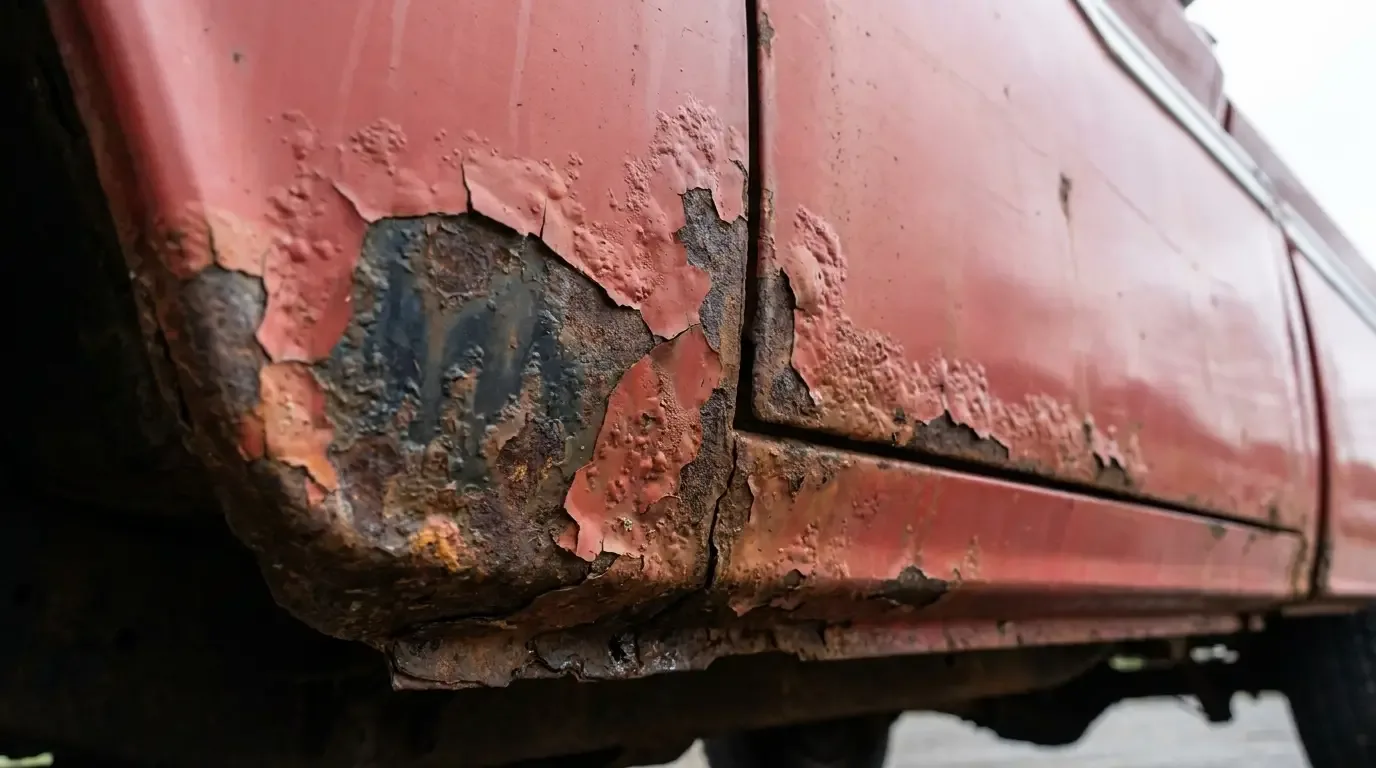
A frame that is out of square puts stress on everything bolted to it, and that stress does not stay in one place. Body mounts wear unevenly. Panel gaps open up over time even after a fresh restoration. And a frame that is already compromised is far more likely to be hiding the rust spots that hide on a bent frame, because a truck that has been in an accident often got patched up fast and cheap rather than properly, and cheap patchwork rusts faster than factory metal ever did. Anyone doing real due diligence should be looking at both problems together, not treating frame straightness and rust as separate questions.
Deciding whether to fix it or walk away
A frame that is off by a small amount can usually be straightened by a competent frame shop, and it is a job worth paying a specialist for rather than attempting with a chain and a tree in the backyard. A frame that is badly bent, or one where a previous repair was done wrong, is a different conversation entirely, and sometimes the right answer is to walk away and keep looking. Understanding the C10 story explains why so many of these trucks led hard working lives before anyone thought about restoring them, and a rough life is exactly how frames end up tweaked in the first place. If you have already found a truck you like and you are planning the rest of the work, the full restoration guide covers what comes after the frame checks out.
"I have never regretted walking away from a truck over a bad frame. I have absolutely regretted the one time I told myself it was probably fine."
Mike Sullivan
Check the frame before you fall in love with the truck. Everything else can be fixed on a schedule you control. A bent frame controls you instead.
Sources and notes
Related Reading
Have a
Chevrolet C10
for Sale?
Reach thousands of serious classic car collectors across the US.
Sell It Here →
Are You a Classic Car Dealer?
List your full inventory and connect with targeted classic car buyers.
Join as a Dealer →

About the author
Mike Sullivan
Detroit-area muscle car enthusiast and restoration specialist with three decades of hands-on experience working on American iron.
Related Listings - Chevrolet C10
More in Restoration & Tech
Comments
Be the first to comment on this article.