
Drop spindles are the right way to lower a C10 front end, and cutting or swapping to a shorter spring is the wrong way, and I'll die on that hill. A shorter spring gets the truck low fast, but it eats into the suspension's travel to do it, so the truck rides lower and worse at the same time. A drop spindle changes where the spindle mounts relative to the ball joints, which lowers the truck without stealing any of the travel your shocks and springs still need to do their job.
Restoration & Tech
6 min read
Installing Drop Spindles on a C10 Front End
Why drop spindles beat cut springs for lowering a C10 front end, what's in a quality kit, and how to install them without ruining the front-end geometry.
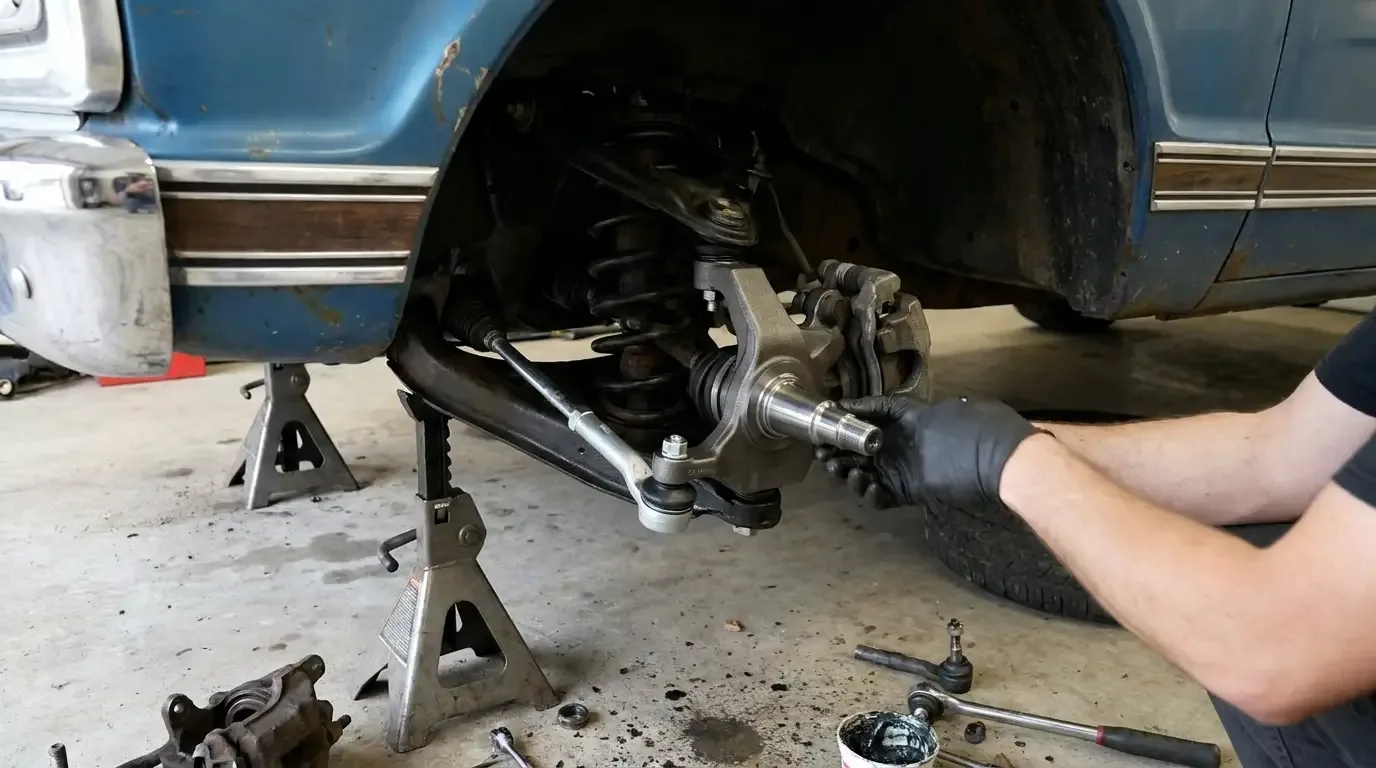
This isn't a complicated install compared to a lot of front-end work, but it's one where sloppy execution shows up immediately, in the form of bad camber, a truck that pulls to one side, or tie rod ends fighting an angle they were never built for. Do it in the right order and it's a solid weekend job.
Why spindles instead of just cutting springs
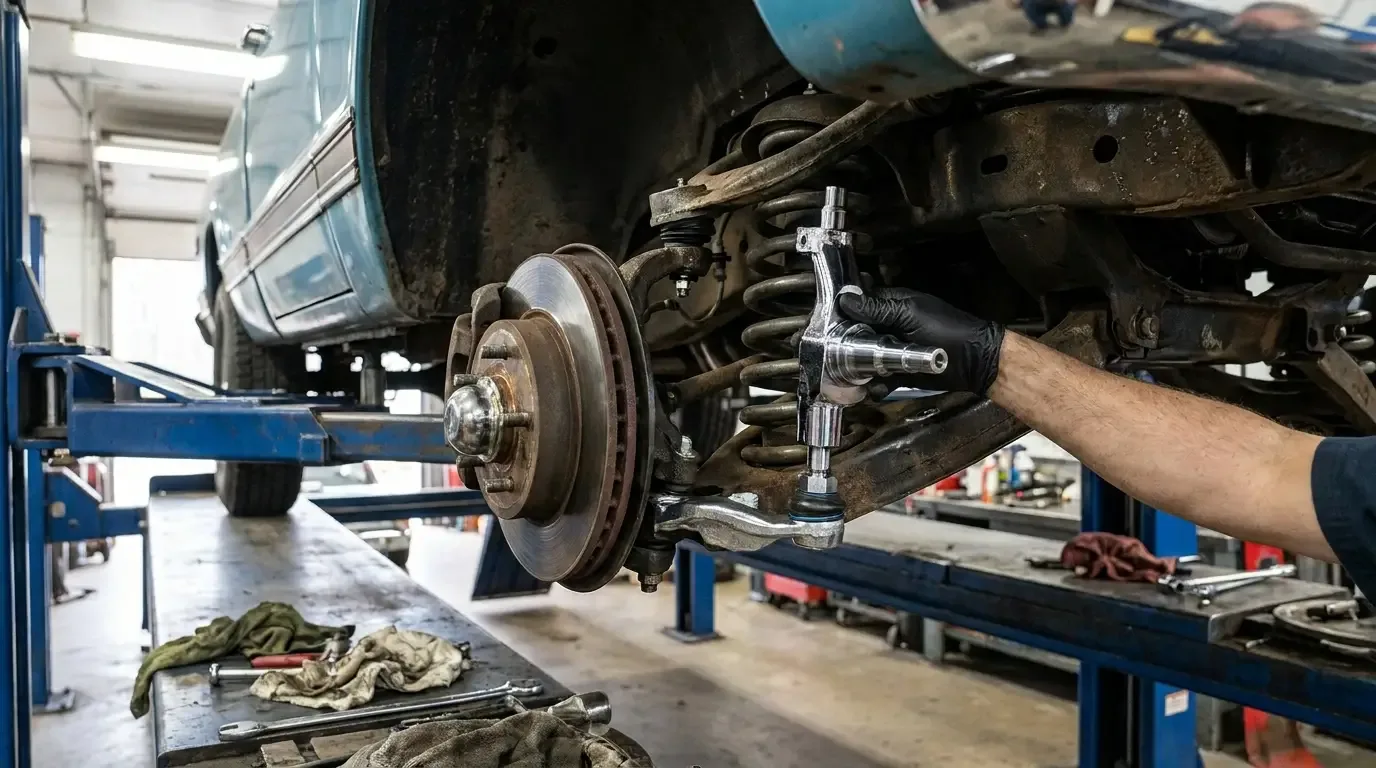
A spindle is the part that holds your wheel bearing, hub, and brake caliper, and connects to the upper and lower ball joints. A drop spindle relocates the steering arm and ball joint mounting points higher relative to the wheel center, which drops the truck's ride height without shortening anything in the spring or shock. Suspension travel stays where it was designed to be, so the ride quality holds up even after the truck comes down two or three inches.
Cut springs, or a cheap shorter aftermarket spring with no other changes, take the easy road and just compress the working range of the suspension. You get the drop, but you also get a stiffer, harsher ride and less room before the suspension bottoms out over a pothole. I've pulled enough of these off trucks that came in riding rough to know the difference isn't subtle once you're driving it.
What's actually in a quality spindle kit
A proper drop spindle kit includes the spindles themselves, matched to your truck's specific front suspension generation, along with new ball joints if the kit doesn't reuse factory ones, and usually new tie rod ends since the steering arm angle changes and old, worn ends won't hold up to the new geometry the way fresh ones will.
| Drop amount | Typical use case | Ride impact |
|---|---|---|
| 2 inch | Mild stance, daily driver | Minimal, close to stock feel |
| 3 inch | Common show-and-drive setup | Noticeable, still livable daily |
| 4 inch or more, spindle paired with lowering springs | Aggressive stance builds | Requires added attention to bump steer and tie rod angle |
A spindle alone typically tops out around 2 to 3 inches of drop. Anything beyond that comes from pairing the spindle with a shorter spring or a coilover, not from the spindle's mounting-point shift by itself, so don't expect a spindle-only kit to get you to an aggressive stance on its own.
Don't buy a spindle kit off price alone. Cheap castings have shown up over the years with porosity issues or dimensions slightly off from what the ball joints actually need, and a spindle is not the part of the truck where you want to find that out at speed.
Putting them in correctly
Support the truck properly, at the frame, with the front wheels hanging free so the control arms can droop to full extension. Pull the old spindle off with the ball joints separated, and before you set the new one aside for good, compare the steering arm angle and ball joint stud taper against the old part. It should match. If it doesn't, you've got the wrong kit for your truck's front suspension year, and that's worth catching now instead of after everything's torqued down.
Torque every fastener to spec, not to what feels tight, particularly the ball joint studs and the tie rod end castellated nuts, since those get cotter-pinned for a reason. A ball joint that backs off at speed on a truck weighing well over three thousand pounds is not a minor problem.
Alignment and geometry after the swap
Get an alignment done after the spindles go in. Not optional, not "I'll check it later." Camber and toe both shift when you change spindle geometry, and driving a freshly lowered truck on old alignment numbers is how you cup a brand new set of tires in a few thousand miles. Bring the truck straight to an alignment shop, or check it yourself with a quality gauge if you've got one, before you put real miles on it.
If you're doing the front spindles as part of a full lowering job rather than a front-only stance change, work through the lowering guide for the sequence that keeps the truck's ride height and geometry matched front to back. Doing the front alone and leaving the rear stock is how you end up with a truck that looks like it's aimed at the ground, nose down, which isn't the look anybody's actually going for.
"A drop spindle is a precision part disguised as a simple bolt-on. Get the angle right and it rides better than stock at the new height. Get it wrong, or buy the cheap casting, and you'll be back under the truck chasing a pull that an alignment shop can't fix because the part itself is the problem."
Mike Sullivan
Getting the rear to match
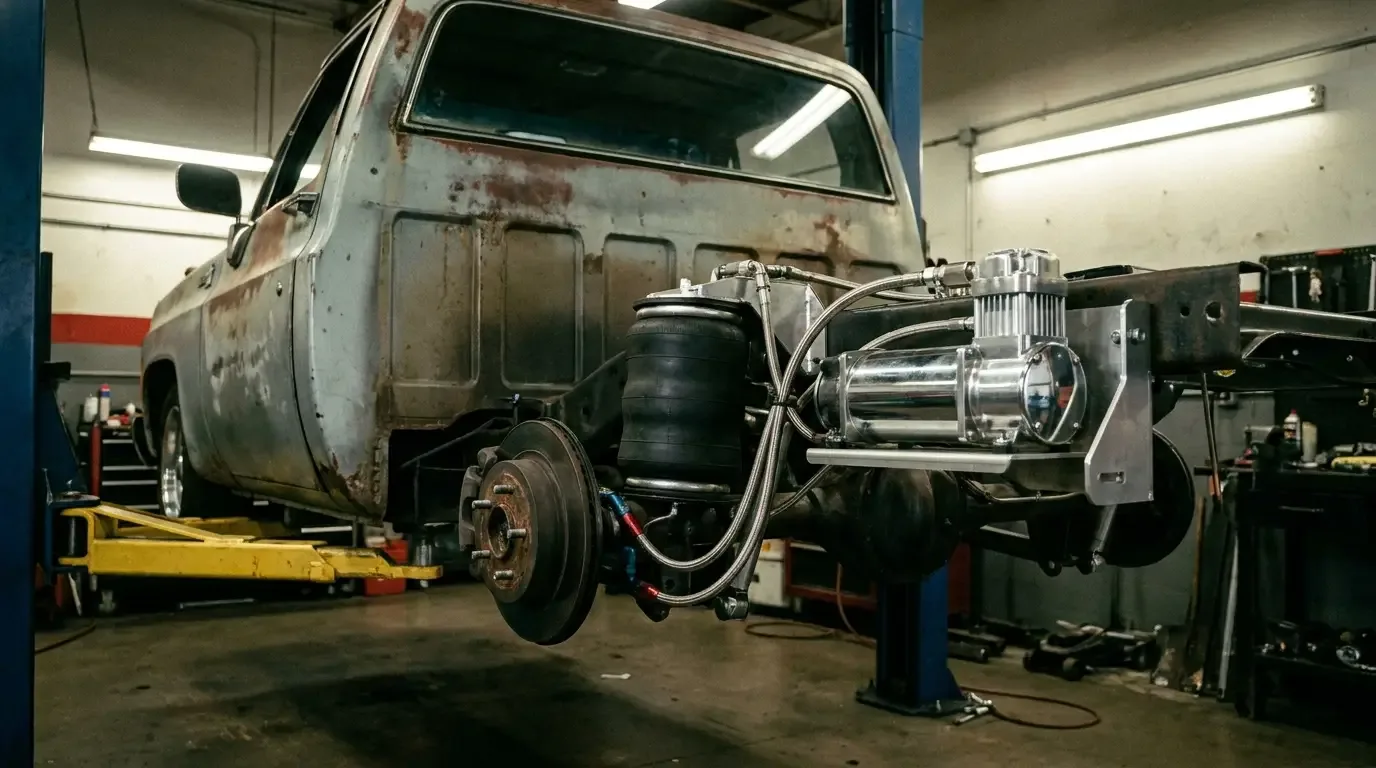
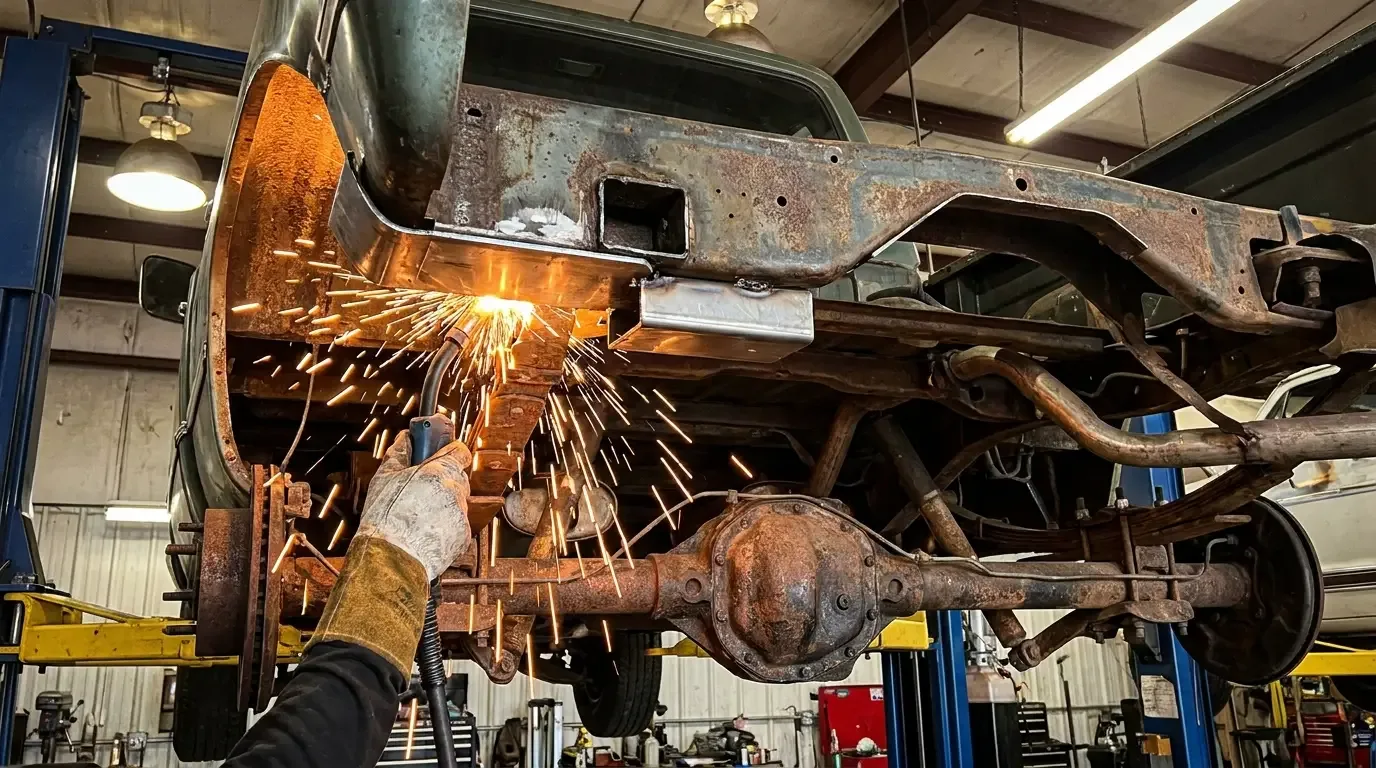
Once the front's sorted, the rear needs to come down to the same visual line, and depending on how low you're going and how much rear axle travel you've got left, that might mean blocks and shackles, or it might mean frame work. If you're going aggressive enough that the rear axle housing is close to the frame rail at ride height, you're looking at the C-notch that gets the rear down to match, which is a bigger job than anything up front but the only real way to get a low, level stance without the axle hitting the frame on the first big bump.
A drop spindle install by itself is a solid, contained weekend project. Just don't stop there and call the truck done if the rear hasn't been addressed. A truck that's low in front and sitting at stock height in back looks unfinished, and it usually is.
Sources and notes
Related Reading
Have a
Chevrolet C10
for Sale?
Reach thousands of serious classic car collectors across the US.
Sell It Here →
Are You a Classic Car Dealer?
List your full inventory and connect with targeted classic car buyers.
Join as a Dealer →

About the author
Mike Sullivan
Detroit-area muscle car enthusiast and restoration specialist with three decades of hands-on experience working on American iron.
Related Listings - Chevrolet C10
More in Restoration & Tech
Comments
Be the first to comment on this article.