
Every C10 owner who wants the truck sitting lower eventually asks the same question at a swap meet or in a forum thread: static or air? Both get the frame rails down where they look right, and both have people who will swear their way is the only correct answer. Neither one is wrong on its own. They solve different problems, and picking the system that doesn't match how the truck actually gets driven is how people end up redoing a suspension job twice.
Restoration & Tech
7 min read
Static Drop vs Air Ride: Choosing a C10 Suspension System
Static drop and air ride both lower a C10, but they solve different problems. A shop-floor comparison of cost, complexity, and which system actually fits how the truck gets driven.
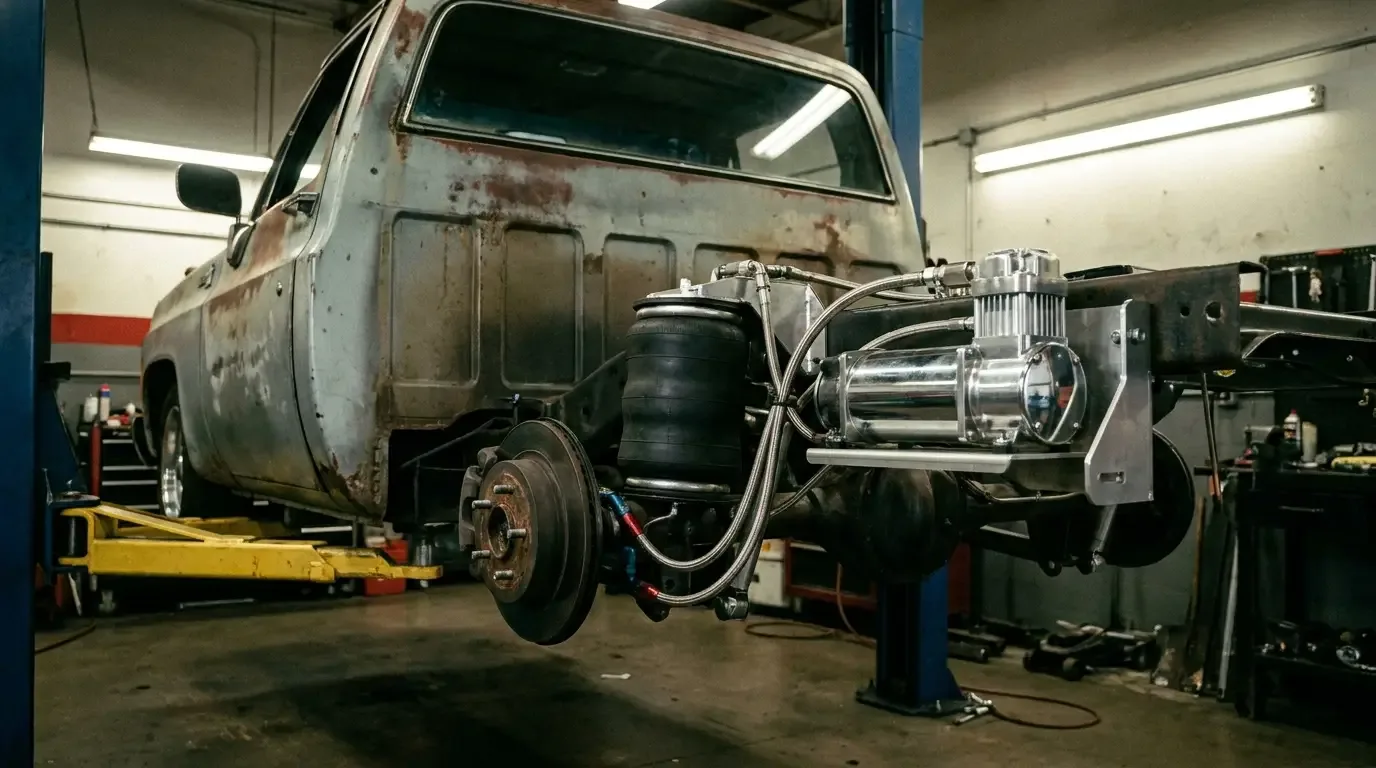
I've put both under trucks, and I've pulled both back out when the owner picked wrong the first time around. This isn't really a debate about which setup is better. It's about matching the system to actual use, because a truck that sits in a heated garage all winter has different needs than one that gets driven to work every day, over the same speed bumps and the same steep driveway.
What static drop actually gets you
Static means the truck sits at one ride height, set by springs, drop spindles, lowering blocks, or some combination, and it stays there. No compressor, no air tank, no bags to fail, no controller to wire up. It's the cheaper path, and it's the more reliable one in the sense that there's less hardware between you and the ground doing something a bag or a fitting could eventually stop doing.
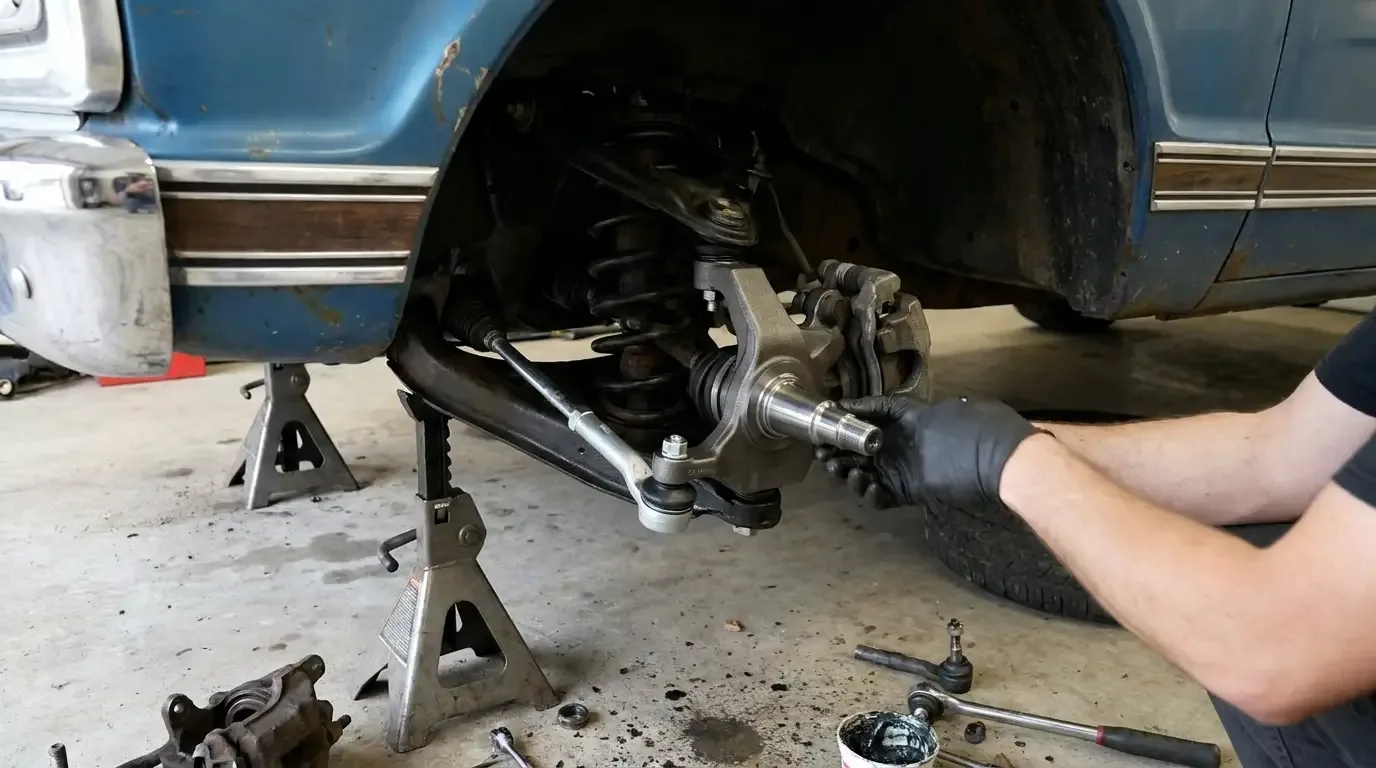
If you're going static up front, drop spindles if you're going static are usually the first real move, since they drop the truck without eating into spring travel the way a shorter spring on its own will. A shorter spring alone can get you low fast, but it also shortens how far the suspension can move before it's out of travel, and that's where a static setup starts riding rough instead of just riding low.
The tradeoff is obvious once you live with it. Whatever height you set is the height you've got, every day, over every driveway lip and every speed bump on the way to work. Go too low and you're scraping things a factory-height truck never touches.
What air ride buys you that static can't
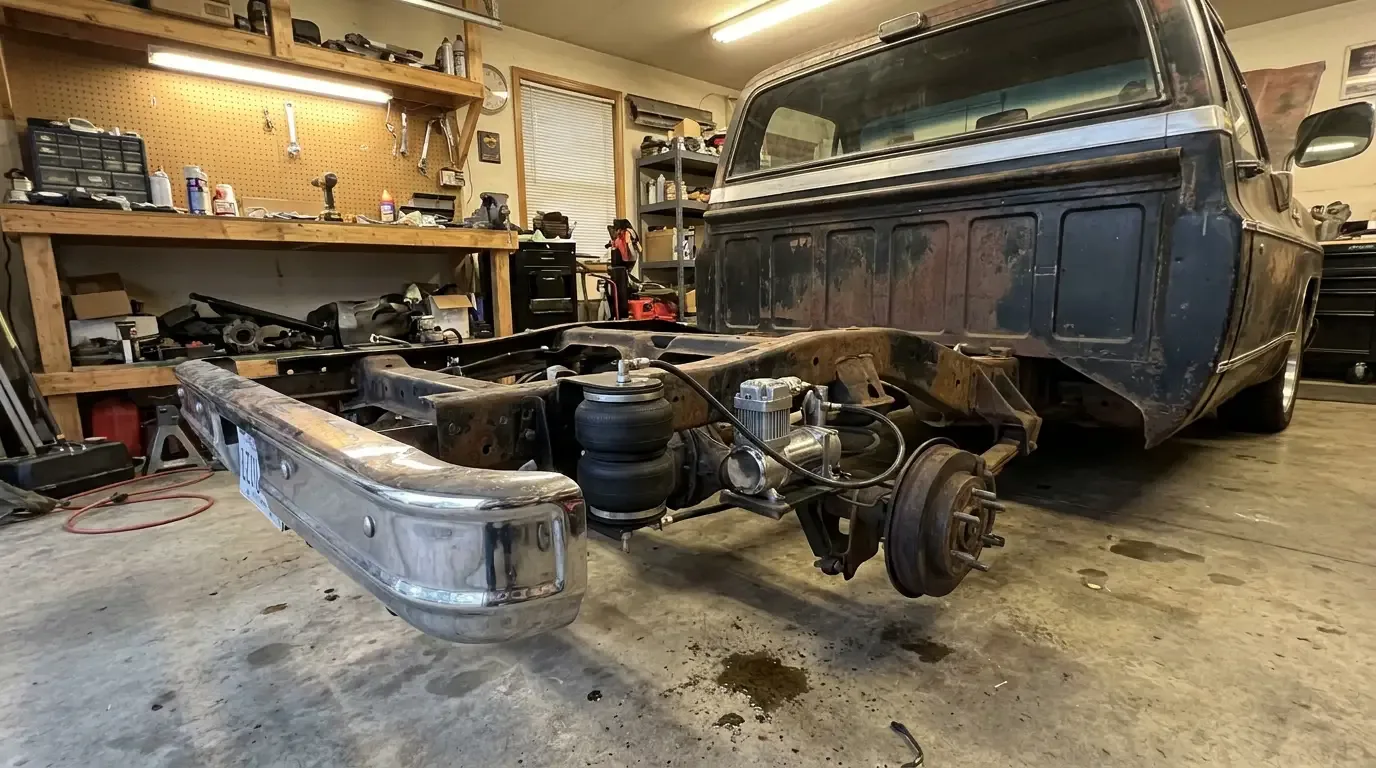
Air ride swaps the fixed spring for a bag at each corner, plus a compressor, tank, valves, and a controller to manage pressure on the fly. The whole point is adjustability. Slam it to the frame for a show, air up enough to clear a gas station driveway apron on the way home, and do both without touching a wrench in between.
That flexibility costs you in parts count and points of failure. A bag can develop a slow leak. A compressor can burn out if it's undersized for the tank and cycles too often. Wiring for the controller has to be done right or you get inconsistent height corner to corner, which reads as a suspension problem when it's actually an electrical one. None of this makes air ride a bad system. It makes it a system with more to maintain, and more to diagnose when something isn't behaving.
| Factor | Static drop | Air ride |
|---|---|---|
| Ride height | Fixed, set once | Adjustable on demand |
| Typical parts cost | Lower, often a few hundred dollars for coils or blocks | Higher, often $1,500-$5,000+ installed for a complete kit |
| Points of failure | Few, mostly mechanical | More, mechanical and electrical |
| Daily-driver friction | Low ride height is permanent | Air up for speed bumps and steep driveways |
| Maintenance | Minimal after install | Ongoing, compressor and bag checks |
Where the swap meet arguments miss the point
Most of the online arguing skips the part that actually matters, which is what happens to the rest of the suspension geometry once you drop the truck, static or air. Change the ride height and you change control arm angles, driveline angle, and how much bump steer you're fighting on rough pavement. A truck lowered without addressing any of that will look right parked and drive wrong on the highway, wandering under braking or darting on expansion joints.
Anyone serious about doing this right should work from the full lowering guide rather than just picking parts off a catalog page, because the order you do things in matters. Spindles before springs. Driveline angle checked before you call the front end done. Skip a step and you'll be back under the truck within a month chasing a vibration or a clunk that traces back to something you should have caught during the install.
These trucks were built as work vehicles first, which is part of the C10 story that gets lost once people start chasing a stance. The factory suspension was engineered around hauling capacity, not ground clearance minimalism, and every inch you take out of it has to come from somewhere in the geometry. Respect that and the truck rides fine lowered. Ignore it and you'll fight the truck every time you turn the wheel.
Cost, complexity, and what breaks
A static drop, done right with matched spindles and springs, is a weekend project for someone comfortable with a floor jack and a spring compressor, and the parts bill often stays in the low hundreds of dollars for the kit itself. Air ride is a bigger investment up front, in both money and install time, and it keeps costing you afterward in ways a static setup doesn't. Compressors wear out. Bags eventually crack, usually from age and UV exposure rather than a single failure event. Wiring corrodes.
None of that means air ride is a mistake. It means you're signing up for a system that needs attention the same way a modern car's air suspension does, and if you're not willing to check fittings and listen for compressor cycle time, you'll eventually get stranded with a truck sitting on the bump stops in a parking lot.
"People ask me which one's better like there's a right answer. There isn't. There's a right answer for how you actually drive the truck. If it's a trailer queen that goes to three shows a summer, air makes sense. If you're driving it to work every day over the same lousy road, static and the right spindle is usually less to worry about."
Mike Sullivan
What I'd actually run
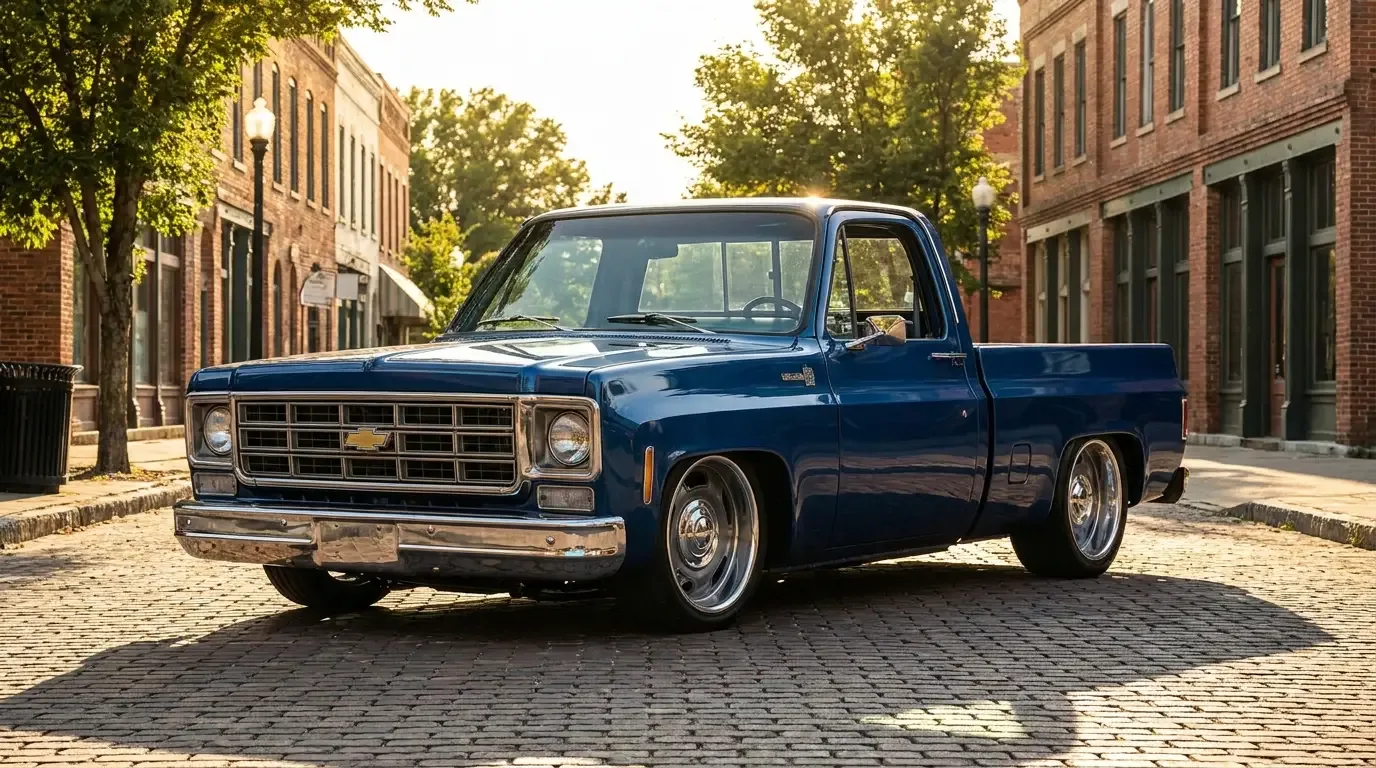
For a truck that's driven regularly, I lean static, done properly with drop spindles up front and matched blocks or springs out back, set at a height that actually clears real-world driveways. It's less to think about, less to fail on a road trip, and cheaper to keep running right for the next twenty years.
For a truck built specifically for shows, where the whole point is sitting on the frame for photos and then driving home at a normal height, air ride earns its complexity. Just go in knowing you're buying a system that needs maintenance, not a set-it-and-forget-it upgrade. Either way, don't skip the geometry work just because you picked a bag over a spring. The truck doesn't care which one you chose. It only cares whether the angles are right.
Sources and notes
Related Reading
Have a
Chevrolet C10
for Sale?
Reach thousands of serious classic car collectors across the US.
Sell It Here →
Are You a Classic Car Dealer?
List your full inventory and connect with targeted classic car buyers.
Join as a Dealer →

About the author
Mike Sullivan
Detroit-area muscle car enthusiast and restoration specialist with three decades of hands-on experience working on American iron.
Related Listings - Chevrolet C10
More in Restoration & Tech
Comments (1)
T
Tom Addison
2 months ago
The documentation point can't be overstated. I've seen beautiful cars pass at auction because the seller couldn't back up what they were claiming.