
Half the parts on a good rat rod were never meant to go on a car. That is the whole point. A steering wheel off a boat, a shift knob that used to be a doorknob, a fuel tank that started life as a fire extinguisher. The rat rod builders who came up in the late 1980s and 1990s worked out of junkyards and back barns because that is where the cheap iron was, and the found-object habit stuck. It is still the cheapest, most honest way to build one.
Restoration & Tech
7 min read
Junkyard Parts and Found-Object Building
Farm implements, industrial scrap and donor drivetrains make a rat rod cheap and honest, but brakes, steering and fuel are where found-object building has to stop.
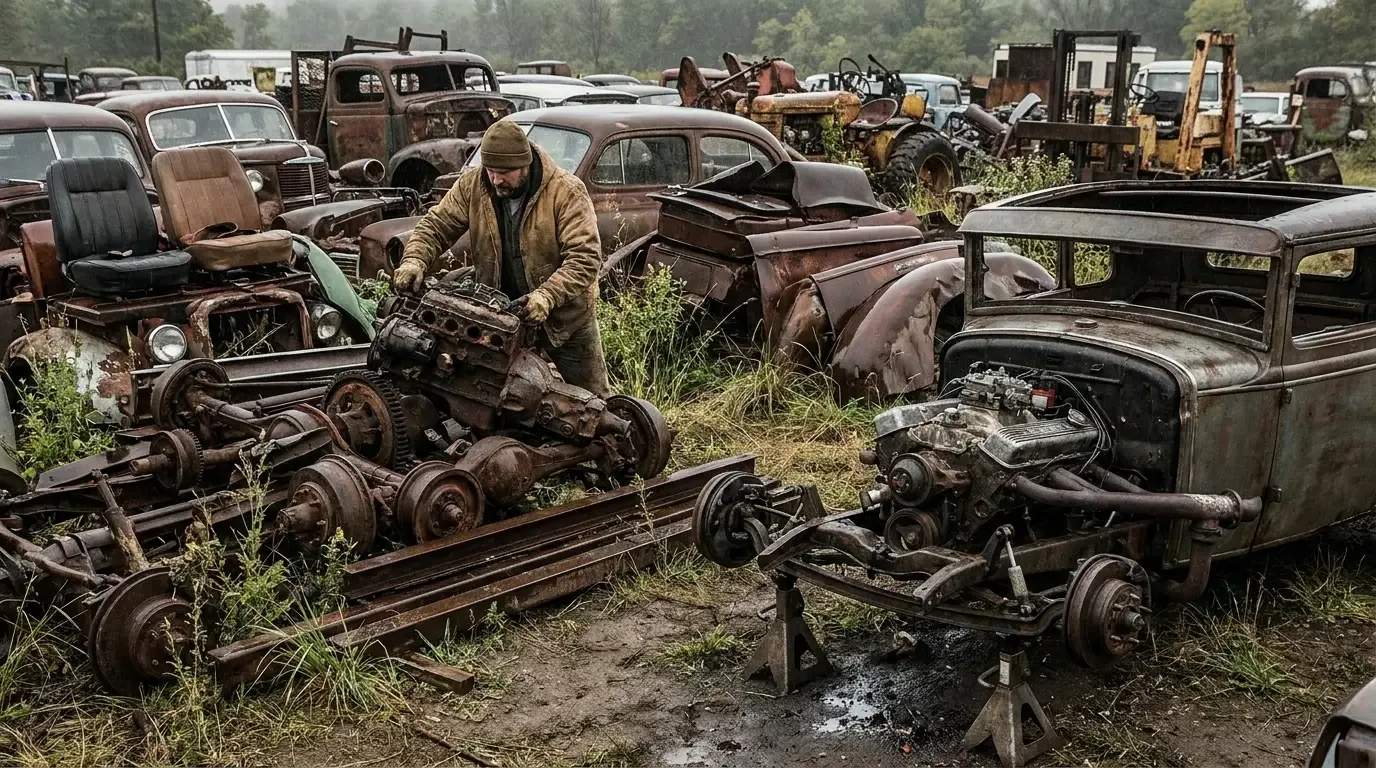
I have turned wrenches on enough of these to tell you where the ingenuity pays off and where it will get somebody hurt. Both things are true at the same time. You can build most of a rat rod out of scrap and salvage. You cannot build the parts that stop it and steer it out of whatever fits, and I will keep saying that until it sinks in.
Where the junkyard actually pays off
The body, the frame stock, the cosmetic bits, the interior. That is where salvage and found objects earn their keep. Old fenders, running boards, gauge clusters, seats out of a wrecked pickup, all of it can come from a yard for pocket change compared to a catalog. A traditional builder wants matching, correct, refinished parts. A rat rod wants the opposite, so the pile of rejected stuff at the back of the yard is a parts store.
Farm country is the best hunting. Old implements are heavy steel, they sat outside for decades, and nobody wants them. A lot of what ends up on a rat rod started on a tractor or a combine.
- Hand-crank fuel valves and old brass fittings off farm tanks and implements.
- Steel tractor seats, still one of the classic rat rod perches.
- Toolboxes, milk cans and ammo cans turned into consoles, battery boxes or fuel cells.
- Industrial gauges, switches and levers off machinery and old shop equipment.
- Chain, sprockets and hand-wheels used as trim, pedals or shifters.
None of that is load-bearing in a way that will kill you if it fails. A tractor seat that rusts through is a bad day, not a wreck. That is the line to keep in your head: cosmetic and comfort parts can be found objects, and if you want the full walkthrough on assembling a build this way, our guide on how to build a rat rod covers the order of operations.
Donor drivetrains: the smart man's shortcut
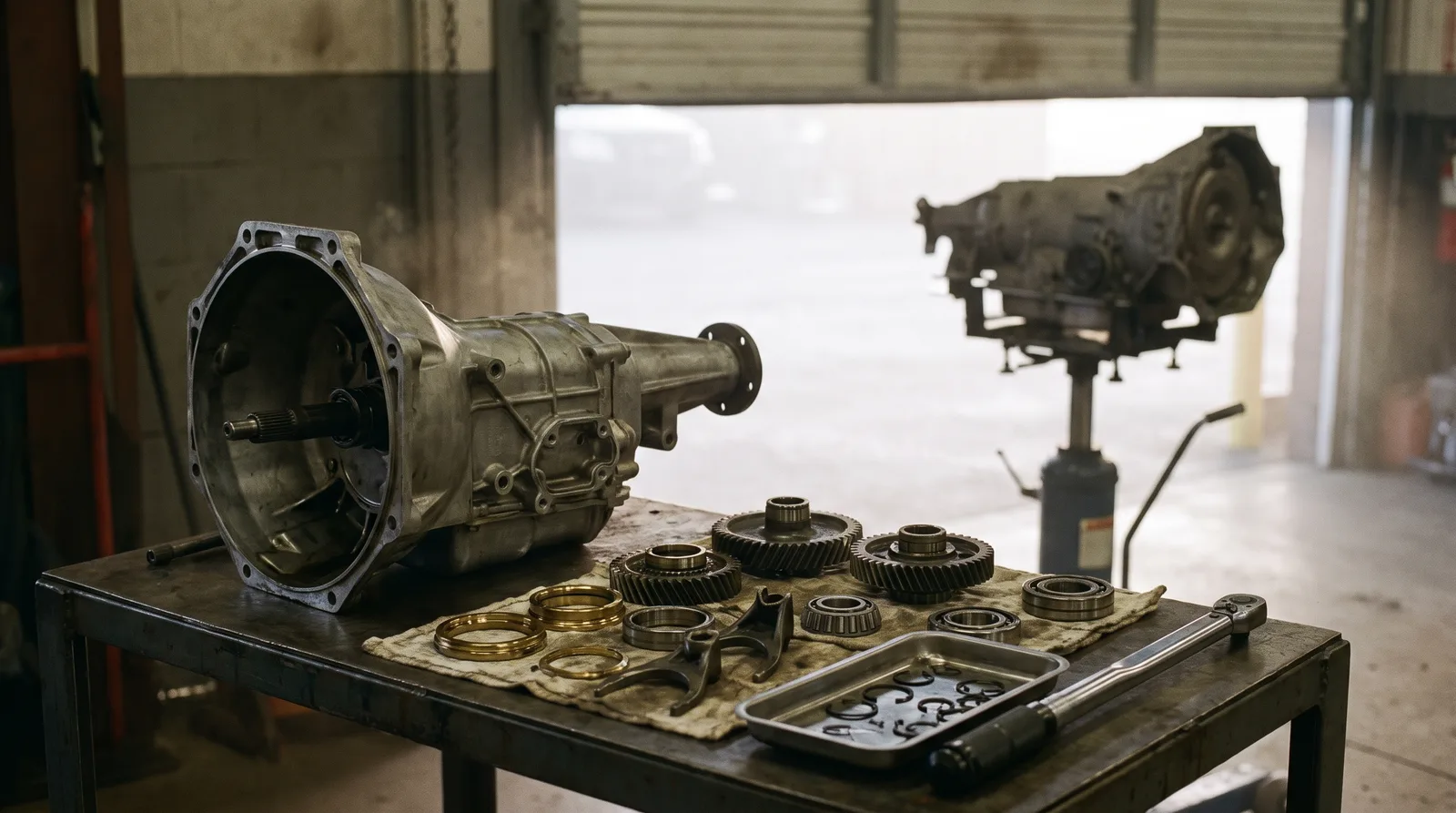
Here is where the ingenuity gets real. You do not need a period engine to build a rat rod, and pretending you do is how people go broke. A whole running drivetrain out of a wrecked pickup or a dead sedan is the single best value in the hobby. Small-block Chevy, Ford 302, Chrysler slant-six, a diesel out of an old work truck. Buy the engine, the transmission, the wiring, the pedals and the rear axle from one donor and half your fabrication headaches disappear because the parts already talk to each other.
A junkyard drivetrain gives you a few things a pile of mismatched parts never will. Matched bellhousing and starter. A transmission that already bolts to that block. An accelerator linkage that works. Motor mounts you can copy the geometry from. When you mix a 1950s engine with a 1990s trans and a shade-tree adapter plate, you buy yourself weeks of grief. When you pull it all from one truck, it just works.
| Salvage source | What you pull | Why it works on a rat rod |
|---|---|---|
| Wrecked pickup (small-block) | Engine, trans, rear axle, pedals | Matched, plentiful, cheap parts everywhere |
| Old diesel work truck | Engine, heavy trans | Big low-rpm torque, runs on a budget |
| Farm implement / tractor | Seat, gauges, hand valves, steel | Cosmetic character, free-to-cheap steel |
| Industrial / shop scrap | Switches, levers, toolboxes | Interior and controls with real patina |
Farm implement diesels and old truck diesels are their own conversation because the torque is huge and the fuel is cheap, and they suit the anti-show attitude that Rat Rod Body and Cab Choices gets into on the body side. A tired diesel does not need to rev to move a light rat rod down the road.
Where found-object building has to stop
Now the part nobody wants to hear. Rat rods earned a reputation for cut-corner brakes and steering, and it was earned honestly, because some people built the whole car out of whatever fit including the parts that keep it out of a ditch. Do not be that guy.
Brakes, steering, fuel lines and the seat mounting are not the place for a clever junkyard swap that "looks about right." A found-object shifter is character. A found-object brake pedal that flexes under a panic stop is a lawsuit and a funeral. The stuff that carries load, holds pressure or points the front wheels gets built to a standard, out of parts rated for the job, with the right fasteners.
Steering is the one I see butchered most. People weld up a steering setup out of mismatched boxes and shafts with slop in every joint and call it done. It is not done. Bump-steer and a loose box will kill you at forty. Same with fuel: an old repurposed tank with no proper vent, no baffle and rubber line run near the exhaust is a fire waiting for a reason.
🔧 Inspection Priorities
- Brake system. No junkyard mystery master cylinders. Use a matched, properly sized master, good hard lines and rated flex hose. A dual-circuit system is cheap insurance.
- Steering. Every joint tight, no welded-shut slop, no improvised shafts. Correct u-joints rated for steering, not driveline scrap.
- Fuel storage. A proper tank or a real fuel cell, vented and baffled. No decorative found-object containers holding gasoline near heat.
- Seat and belt mounts. Bolted to structure, not to sheet metal or a rusty tractor bracket. Belts anchored to something that will hold.
"Build the body out of the whole junkyard if you want. I do not care. But the master cylinder, the steering box and the fuel cell come from the catalog, rated for the job, torqued to spec. That is the deal. Character stops where load starts."
Mike Sullivan
Doing it right on the cheap
None of this means spend a fortune. It means spend the money where it counts and scrounge everywhere else. A good rat rod builder is cheap about the right things. Body panels, trim, gauges, seats, consoles, all the character parts come from the pile. The engine and trans come as a matched donor set. Brakes, steering and fuel get bought new or rebuilt to standard even if that is the only shiny new stuff on the whole car.
That balance is what separates a rat rod that drives for twenty years from a yard ornament that scares its owner. The found-object habit is the soul of the thing. The discipline about safety systems is what keeps it on the road. Get both right and you have built something honest for a fraction of what a show car costs, and you did it with your own hands out of parts other people threw away.
Sources and notes
- Period and modern rat-rod and hot-rod press covering salvage-based builds and found-object fabrication.
- Builder and wrench interviews on donor-drivetrain swaps and junkyard sourcing.
- General engine and chassis references for flathead and small-block production history and swap practice.
- Brake, steering and fuel-system safety guidance from standard automotive service practice.
- Show and club records documenting farm-implement and industrial-part use on rat rods.
Related Reading
Have a
Classic Car
for Sale?
Reach thousands of serious classic car collectors across the US.
Sell It Here →
Are You a Classic Car Dealer?
List your full inventory and connect with targeted classic car buyers.
Join as a Dealer →

About the author
Mike Sullivan
Detroit-area muscle car enthusiast and restoration specialist with three decades of hands-on experience working on American iron.
More in Restoration & Tech
Comments
Be the first to comment on this article.