
The body is the first thing anyone sees on a rat rod, and it sets the whole tone of the build before the engine even fires. Pick a chopped coupe and you get one attitude. Drop an old pickup cab on a bare frame and you get another. The body you start with decides how much fabrication you sign up for, how the car sits, and whether it reads as a mean little street terror or a tall, rusty work truck with a hot-rod heart. This is the decision I spend the most time on with anybody starting a build in the driveway, because getting it wrong means fighting the metal for the next two years.
Restoration & Tech
7 min read
Rat Rod Body and Cab Choices
Coupes, sedans, pickup cabs, Model A vs later steel, chopping and mixing: how to pick the right rat rod body for a driveway build.
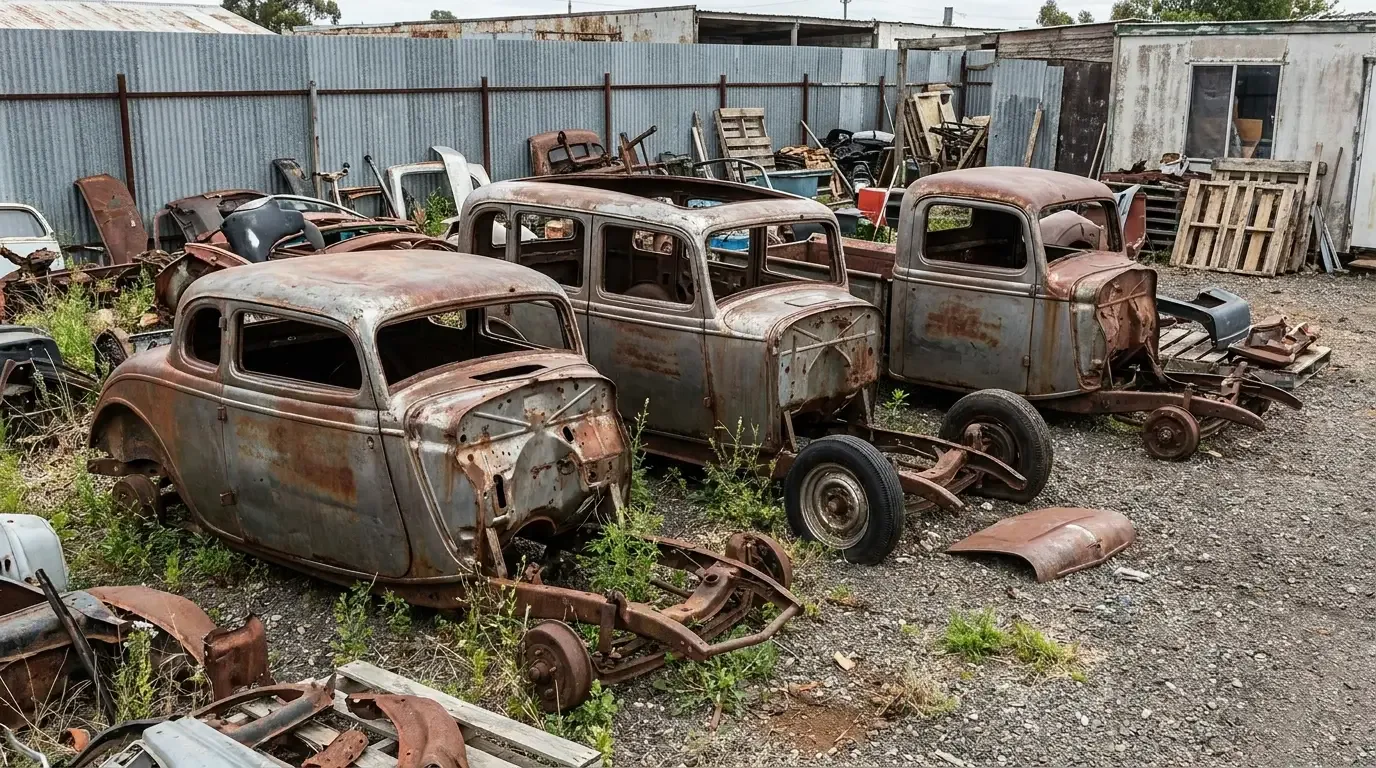
Before you commit, it pays to understand the rat rod story and where the low-buck, anti-show attitude came from, because the body you choose either honors that or fights it. A rat rod is supposed to look raw and get built cheap. The body is where that promise lives or dies.
Coupes, sedans and roadsters: the classic starting points
Most people picture a coupe when they hear rat rod, and there is a reason. A two-door coupe from the late 1920s through the 1930s has short proportions, a tall greenhouse you can cut down, and just enough room for two people who do not mind sitting close. It looks aggressive stock and looks meaner chopped. The Ford Model A and the 1932 through 1934 Fords are the icons here, though genuine steel bodies for those have gotten expensive enough that the cheap-build spirit takes a hit.
Sedans give you back doors and a taller roofline, which some builders love because there is more metal to work with and you can carry passengers or gear. A four-door sedan is usually cheaper than the equivalent coupe because fewer people want them, and that price gap is exactly why a budget builder should look twice at one. Roadsters, the open cars with no fixed roof, are the lightest and the purest hot-rod shape, but they leave you exposed to weather and offer nowhere to hide a rough chop.
Here is how the common body styles stack up for a driveway build:
| Body style | Seats | Relative cost | Best for |
|---|---|---|---|
| Two-door coupe | 2 | High (steel) | Classic aggressive stance, easy chop |
| Four-door sedan | 4-5 | Low to medium | Cheap entry, room to work |
| Roadster | 2 | Medium | Lightest weight, open-car purity |
| Pickup cab | 2-3 | Low | Simple lines, bed for hauling |
Pickup cabs: the cheap, honest choice
If money is tight, an old pickup cab is hard to beat. Truck cabs from the 1930s through the early 1950s show up in fields and back lots all over the country, they are simple slabs of steel with straight lines, and nobody guards them the way they guard a 1932 coupe. A cab bolts to a frame with a fixed floor and a back wall already in place, so you fight less rust repair and less patching than an open sedan gives you. You also get a bed, or you build one, which means the truck actually hauls something.
Truck cabs carry that working-class honesty that fits the rat rod idea perfectly. This is the machine that used to work for a living, dragged back out and made fast. When people ask me for how to build a rat rod without going broke, a tired truck cab is almost always my first suggestion, right alongside the other The Cheapest Platforms to Start a Rat Rod worth chasing down.
Model A versus later bodies: what changes
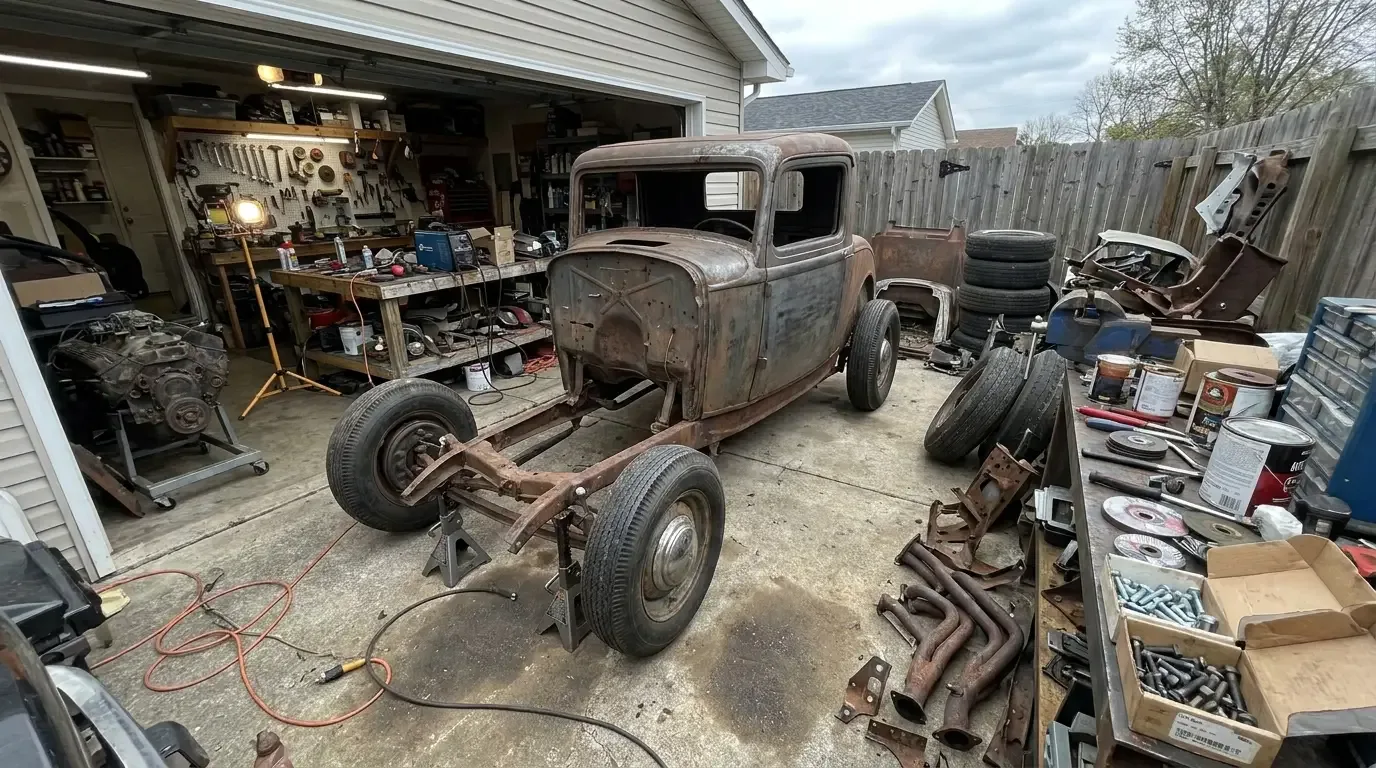
The Model A, built 1927 to 1931, is the traditional rat rod body, and for good reason. The steel is relatively thin and simple, the panels are flat enough that a beginner can work them, and the proportions are short and tall in a way that looks right chopped and channeled. The downside is age. These bodies are close to a century old now, real steel ones are getting scarce, and the rust in a car that has sat outside since the Eisenhower years can eat through a floor completely.
Later bodies, meaning postwar cars and trucks from the late 1940s into the 1950s, are heavier, wider and rounder. They give you more interior room and often better base structure, but that rounded sheet metal is harder to chop cleanly and the curves fight you when you try to blend a modified roofline. A Model A chops with straight cuts. A rounded 1949 fights back at every corner. Neither is wrong. Just know which fight you are picking before you buy the body.
"I tell every first-timer the same thing. Buy the body for the car you actually want to drive, not the one that looks coolest in a photo. A tall truck cab you can climb into and drive to work beats a slammed coupe you have to fold yourself into and never finish."
Jim Vasquez
Chopping and mixing bodies
The chop, cutting down the height of the roof, is the single move that most defines a rat rod's look. Slice a few inches out of the pillars, drop the top back down, reweld it, and the car goes from upright to menacing. A coupe or a truck cab with flat, near-vertical pillars chops with the least drama. Cars with heavily slanted or curved pillars need the roof stretched or shrunk to close the gaps, which is real fabrication and not a weekend job.
Mixing bodies is where the found-object spirit really shows. Builders drop a car roof on a truck cab, splice two cabs together for more length, or graft a different grille shell and cowl onto a body that never wore it. There are no rules here except that everything has to line up and hold together. That freedom is the fun of it, and it is also where a lot of first builds go sideways when the panels do not want to marry up.
Steel versus the patina you want
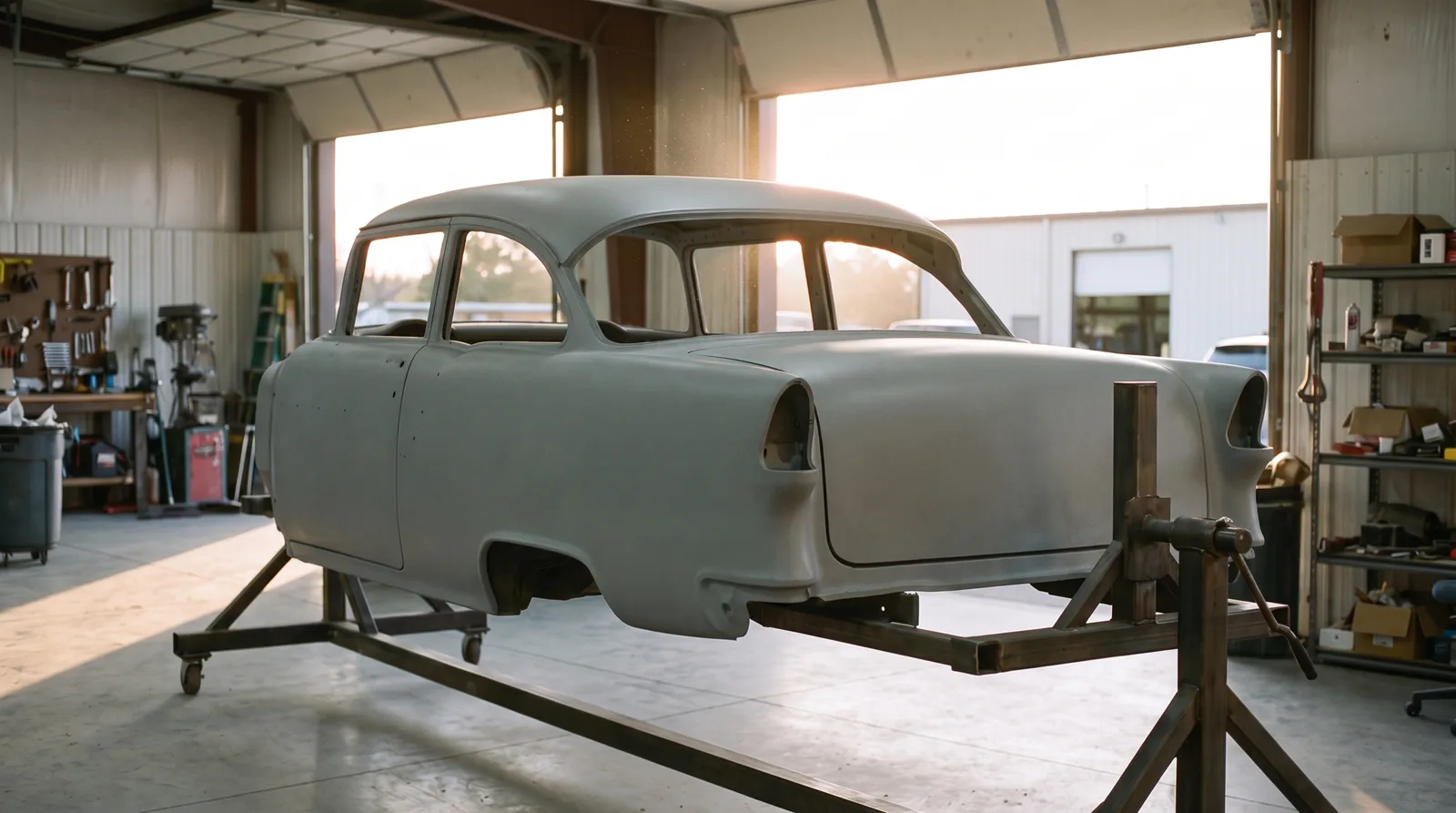
Purists insist on all-steel bodies, and for good reason. Steel takes the clear-coated rust and honest patina that defines the look, it welds to the frame, and it earns the authenticity the crowd respects. The catch is that clean steel bodies now cost real money, which cuts against the low-buck idea. Fiberglass reproduction bodies exist and are cheaper and rust-free, but they cannot wear genuine patina, they do not weld, and a lot of builders consider them a cheat on a rat rod. That is a judgment call only you can make.
Whatever you choose, be honest about the finish. A body wearing decades of real weathered surface is one thing. Fake bolt-on rust and spray-can patina on a fiberglass shell is another, and the crowd can tell the difference from across the show field. If you want the raw look done right, start with steel that earned its surface, then protect it. When you are ready to skip the fabrication and buy something already sorted, browse the rat rods for sale and see how other builders handled the body question before you commit your own weekends to it.
Sources and notes
- Period hot-rod and rat-rod press coverage of body styles, chops and channeling.
- Builder interviews on driveway fabrication, body mixing and cab swaps.
- Chassis and body reference guides for Model A and postwar Ford dimensions.
- Vintage Ford body-style production records for the 1927 to 1931 Model A range.
- Show and club records documenting steel versus fiberglass judging attitudes.
Related Reading


Have a
Classic Car
for Sale?
Reach thousands of serious classic car collectors across the US.
Sell It Here →
Are You a Classic Car Dealer?
List your full inventory and connect with targeted classic car buyers.
Join as a Dealer →

About the author
Jim Vasquez
Southern California hot rod and custom car builder with roots in the traditional kustom kulture scene.
More in Restoration & Tech
Comments
Be the first to comment on this article.