
Ask ten guys at a swap meet whether a long bed or short bed C10 lowers better and you'll get ten confident answers, most of them wrong in some detail. The truth is both trucks respond to a drop differently, and the difference isn't cosmetic. It's wheelbase, leaf spring length, and driveline angle, and if you ignore any of the three you'll end up with a truck that looks right in the driveway and rides like it's fighting you on the highway.
Restoration & Tech
6 min read
Lowering a C10 Long Bed vs Short Bed: Geometry Differences
A long bed and short bed C10 don't lower the same way. Wheelbase, leaf spring length, and driveline angle change the math, and the short bed forgives fewer mistakes.
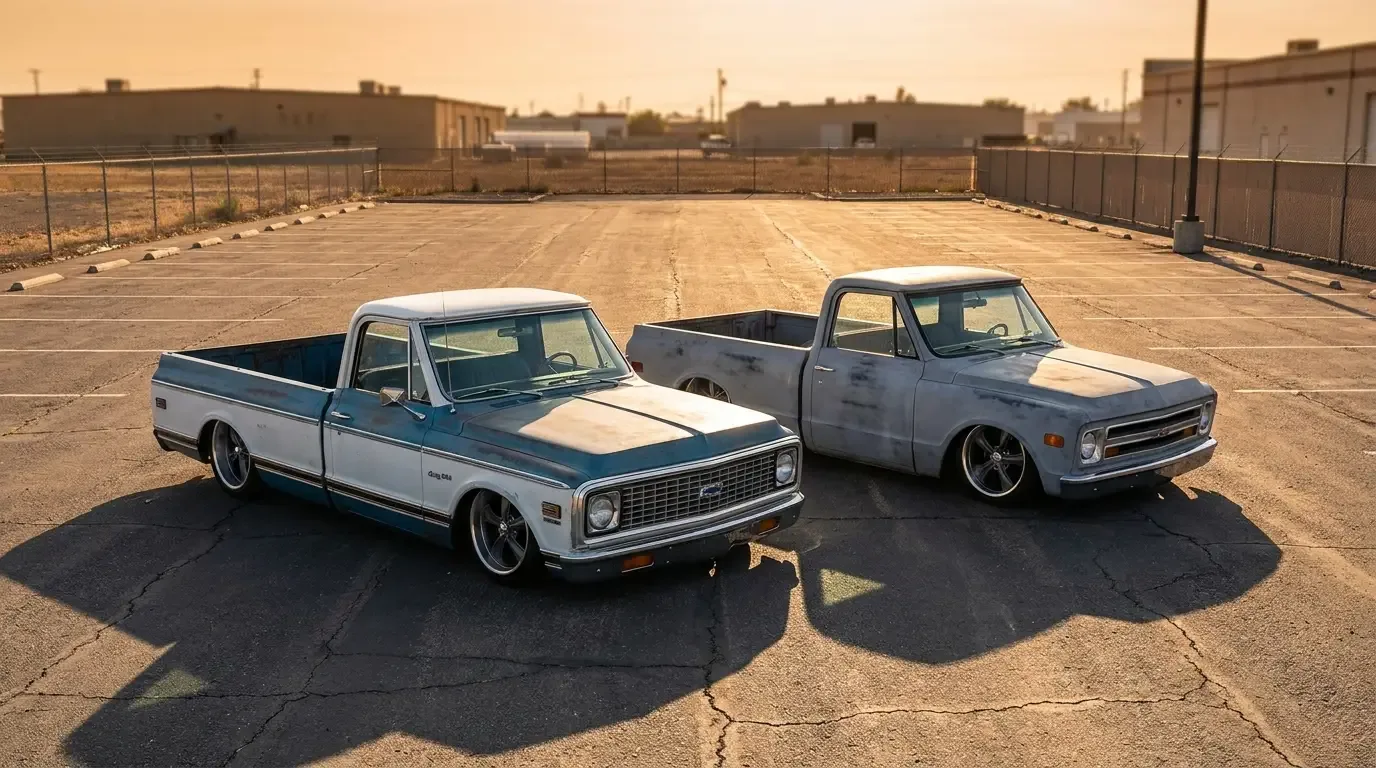
I've dropped both configurations more times than I can count, and the short bed always surprises people. It's the one that looks like it should be simpler, and it's usually the one that needs more attention once the frame gets close to the axle.
Wheelbase is the number that changes everything
A long bed C10 rides on a longer wheelbase than the short bed, and that number matters more once you start removing ride height. A longer wheelbase spreads the truck's mass over a bigger footprint, which settles the ride and reduces how much a given drop changes the pitch of the cab relative to the frame. Shorten that wheelbase and the same drop in inches reads as a bigger visual and functional change, because there's less truck between the axles to absorb it.
This is why a short bed dropped to the same static height as a long bed often looks lower even when the numbers on paper are identical. It's not an illusion. Less distance between the axles means the eye reads the rake differently, and the suspension geometry is working with less leverage to keep things settled.
Leaf spring length and how it behaves under a drop
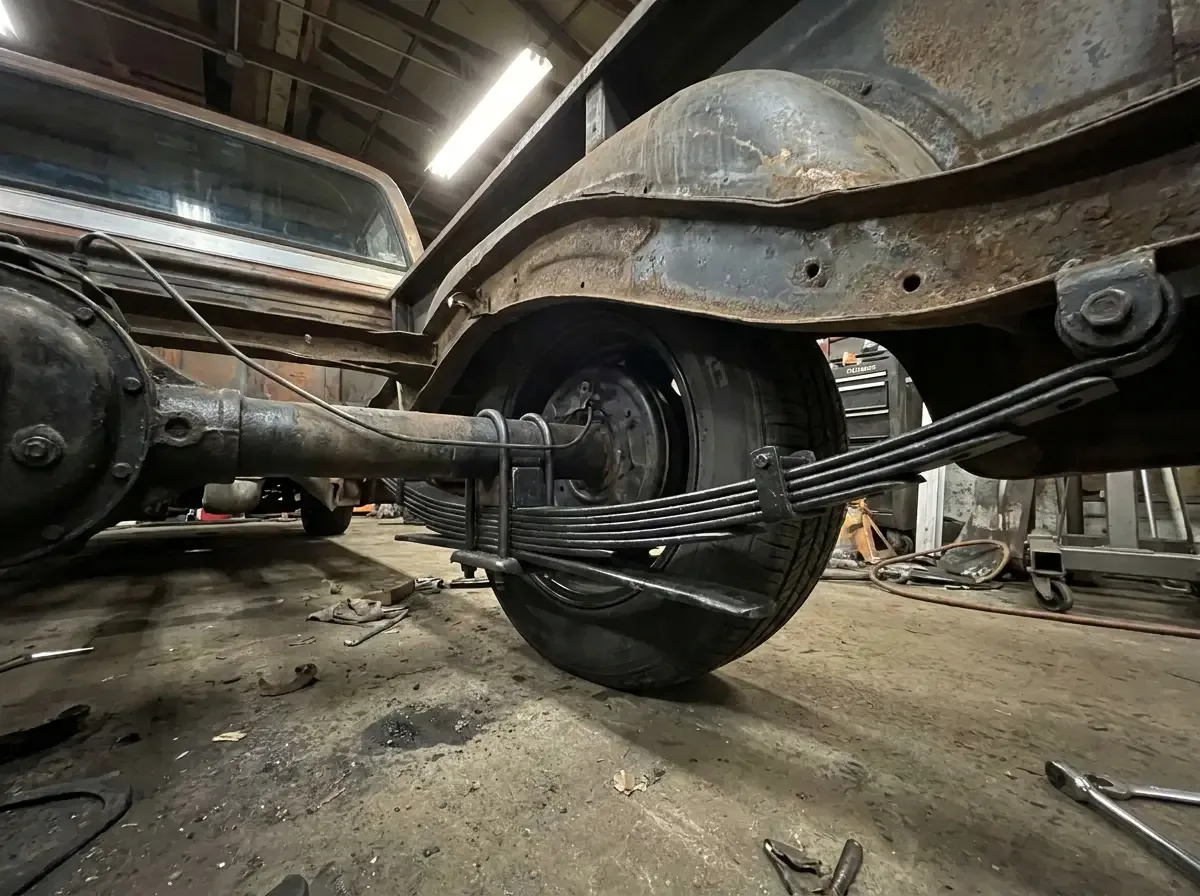
The rear leaf packs are not the same length front to back between the two beds, and that changes how a lowering block or a shorter spring performs. A long bed's rear springs, being the longer piece in the equation, tend to tolerate a moderate drop with less axle wrap and less change in pinion angle than what you'll see out back on a short bed running a shorter pack to begin with.
Drop a short bed too aggressively with the wrong spring and you'll get wheel hop under hard acceleration, because there's less spring length available to control axle movement once you've already eaten into the available travel. This is one of those things that doesn't show up on a test drive around the block. It shows up three weeks later, merging onto a highway, when the truck hops and the owner calls asking what's wrong.
Anyone working through a drop on either bed length should start with the lowering guide before ordering parts, because the sequence, spindles before springs, springs before blocks, matters more than which specific parts you buy.
| Factor | Long bed | Short bed |
|---|---|---|
| Relative wheelbase | Longer | Shorter |
| Rear leaf pack length | Longer, more travel to work with | Shorter, less margin before wrap |
| Visual rake at equal drop | Reads more subtle | Reads more aggressive |
| Driveline angle sensitivity | More forgiving | Changes faster per inch of drop |
| Wheel hop risk if over-dropped | Lower | Higher |
Driveline angle and what actually changes between the two beds
Every inch of drop changes the angle between the transmission output shaft and the pinion, and a shorter wheelbase amplifies that change faster than a longer one does for the same amount of lift removed. On a long bed, you can often get away with a moderate drop and a slightly shimmed pinion angle. On a short bed, the same drop can put you outside the range a double cardan or a standard u-joint likes, and you'll feel it as a vibration that gets worse with speed rather than better.
This is the part people skip because it's not visible from outside the truck. Nobody walking around a lowered short bed at a show is checking pinion angle with a protractor. But the owner driving it home is the one who finds out the hard way if that step got skipped.
What actually needs attention on each bed length
On a long bed, the priority is usually the front end. Drop spindles, matched to a moderate spring drop, get you most of the stance without touching the rear geometry much at all. The rear tolerates a mild block without much drama because there's more spring and more wheelbase absorbing the change.
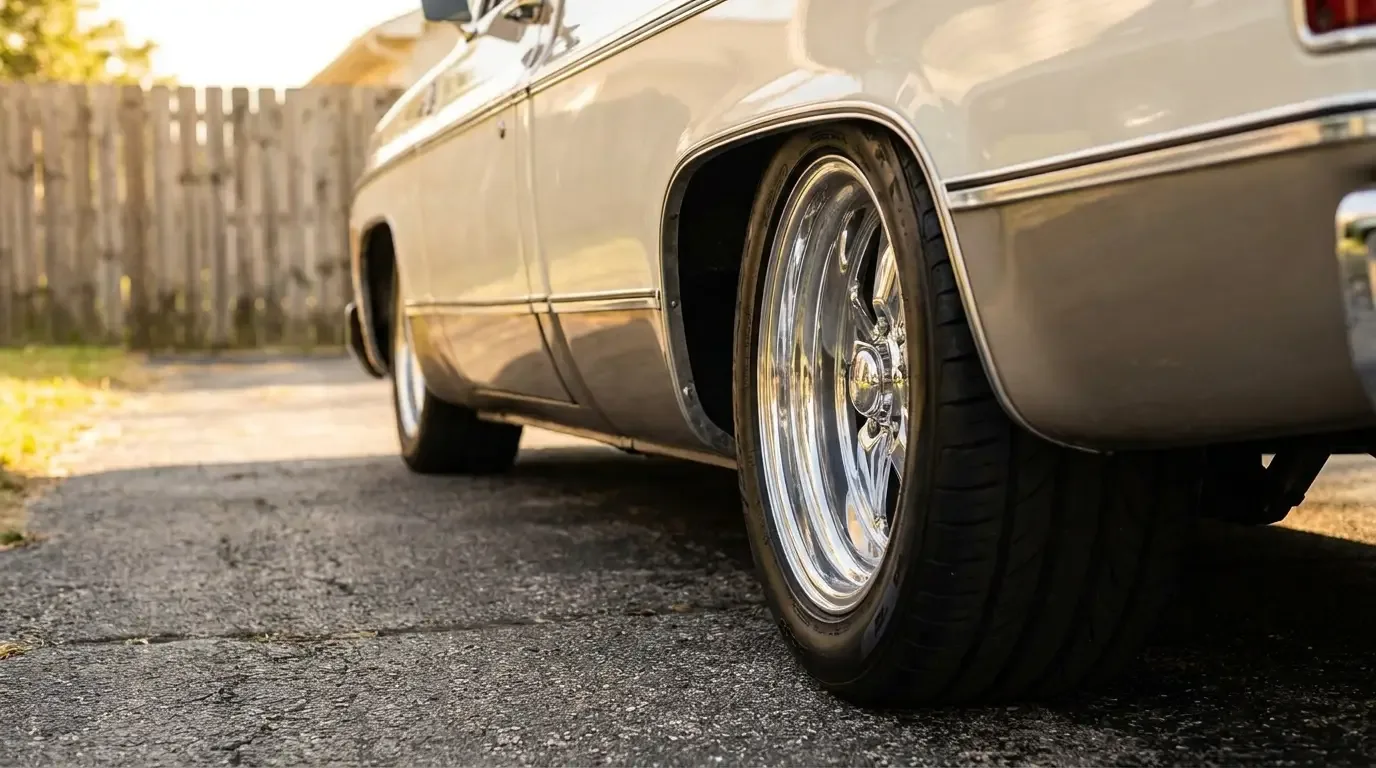
On a short bed, treat the rear with more respect. Don't just stack blocks to chase a number. Match the spring rate to the actual weight sitting over the axle, check pinion angle after the drop rather than assuming it landed where you wanted, and don't be surprised if it takes a shorter, properly valved shock to keep the ride from turning harsh. Once the geometry is sorted, the finished stance still comes down to the tire profile that finishes the stance, because a perfect drop with the wrong sidewall height still looks unfinished parked next to the fender lip.
"I've had more short beds come back for a second round of suspension work than long beds, and it's almost always the same story. Somebody dropped it to a number they saw on a truck at a show without checking whether that number worked with a shorter wheelbase and a shorter spring pack. The long bed forgives more mistakes. The short bed doesn't."
Mike Sullivan
What I'd tell somebody starting either project
Don't pick a drop height off a photo. Pick it based on what the truck's geometry can actually tolerate, and treat the short bed with more caution than the long bed even though it's the one that looks like the simpler job. Measure the pinion angle before you call it finished, not after somebody complains about a vibration. And remember the wheelbase difference isn't a footnote. It's the reason the same drop kit behaves differently depending on which bed is bolted to the frame.
Sources and notes
- C10 generation overview, including short bed and long bed wheelbase figures
- GM Square Body forum thread confirming 117.5 in / 131.5 in wheelbase specs
- Forum discussion explaining axle wrap and how weaker or shorter springs worsen wheel hop
- Traction bar tech article on axle wrap and wheel hop after lowering
- Hagerty 1973-1987 Chevrolet/GMC truck buyer's guide
Related Reading
Have a
Chevrolet C10
for Sale?
Reach thousands of serious classic car collectors across the US.
Sell It Here →
Are You a Classic Car Dealer?
List your full inventory and connect with targeted classic car buyers.
Join as a Dealer →

About the author
Mike Sullivan
Detroit-area muscle car enthusiast and restoration specialist with three decades of hands-on experience working on American iron.
Related Listings - Chevrolet C10
More in Restoration & Tech

Comments
Be the first to comment on this article.