
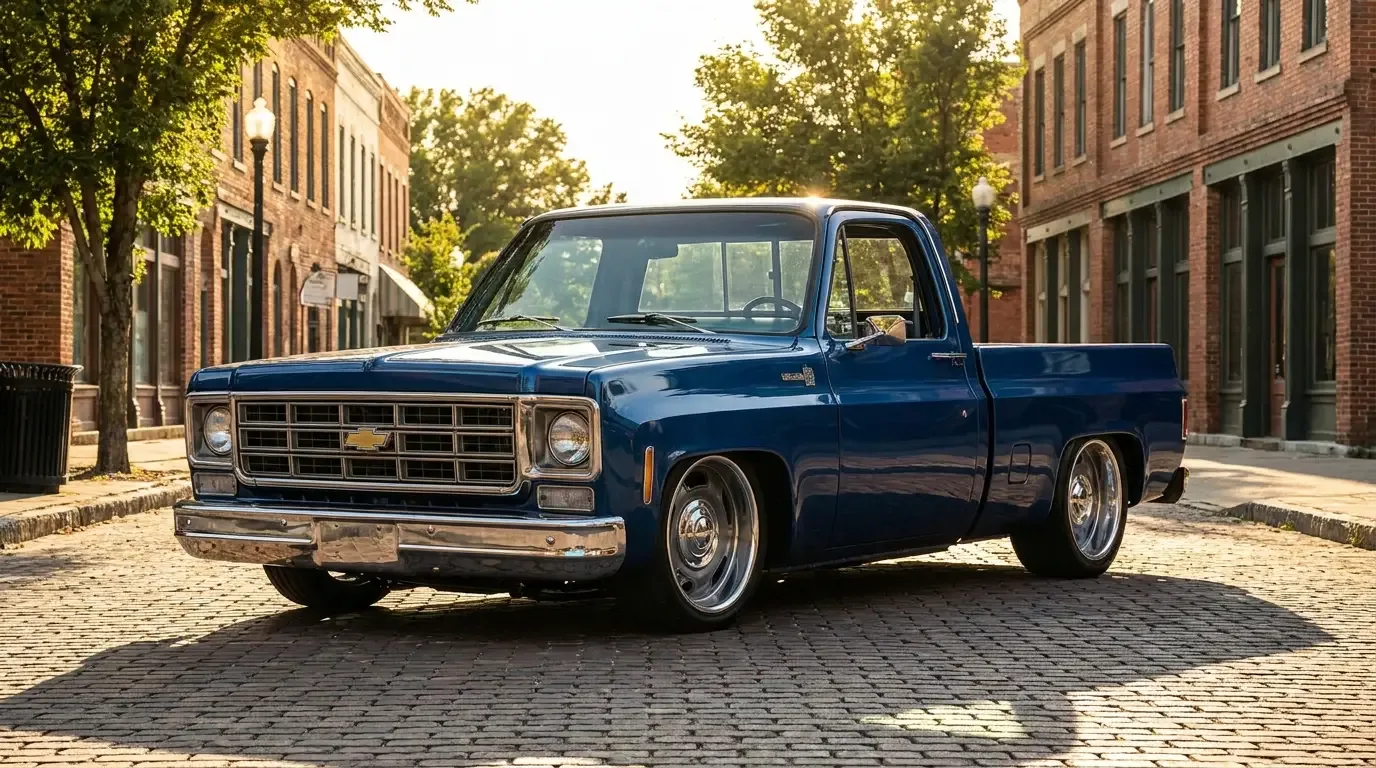
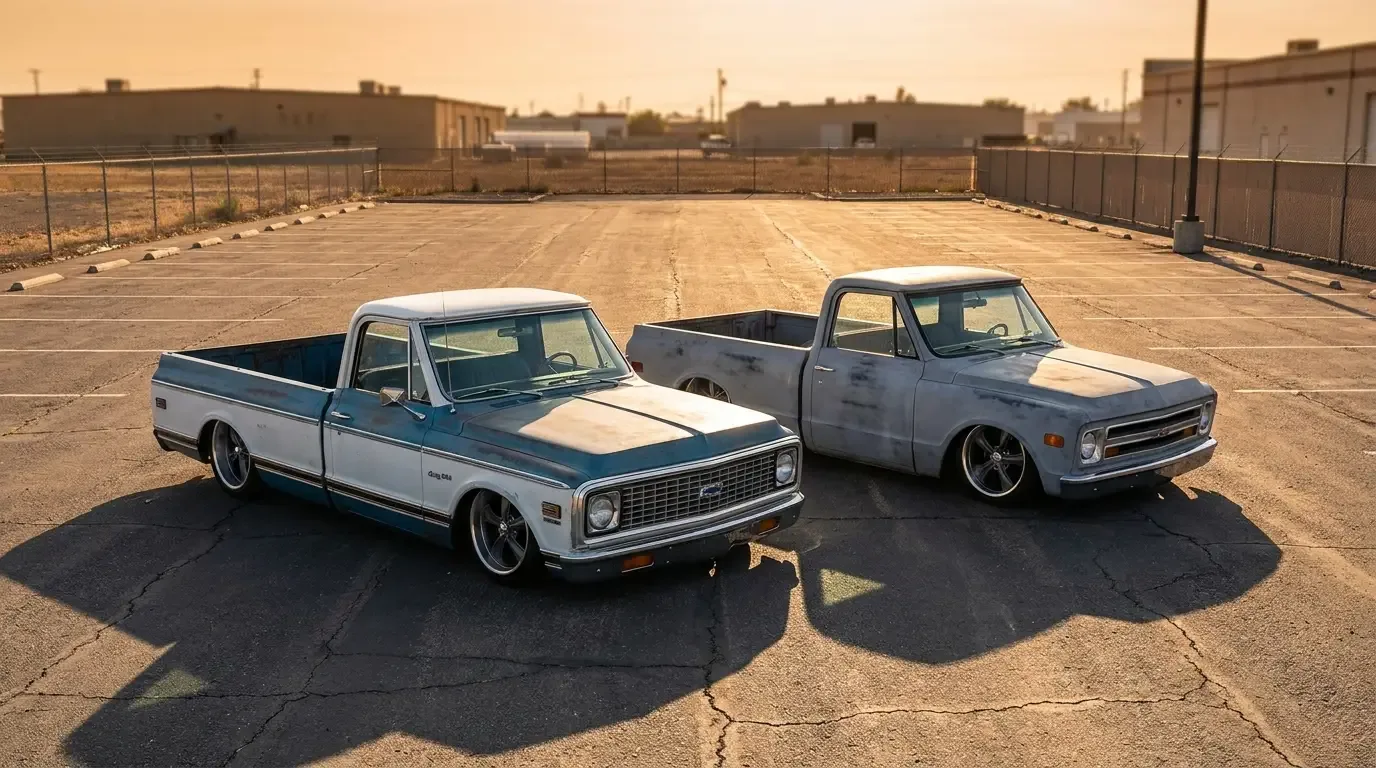
A 4/6 drop is the classic C10 stance. Four inches out front, six out back, enough rake to look right without turning the truck into a low rider that scrapes every driveway apron in town. But the drop is only half the equation. Get the tire sizing wrong and you'll either have a gap under the fender that undoes the whole look, or a sidewall rubbing the inner fender liner every time you turn the wheel hard in a parking lot.
Restoration & Tech
6 min read
Choosing Tire Profile for a 4/6 Drop C10
Getting tire size right on a 4/6 drop C10 means solving two different clearance problems, front and rear, not picking a size off a chart.
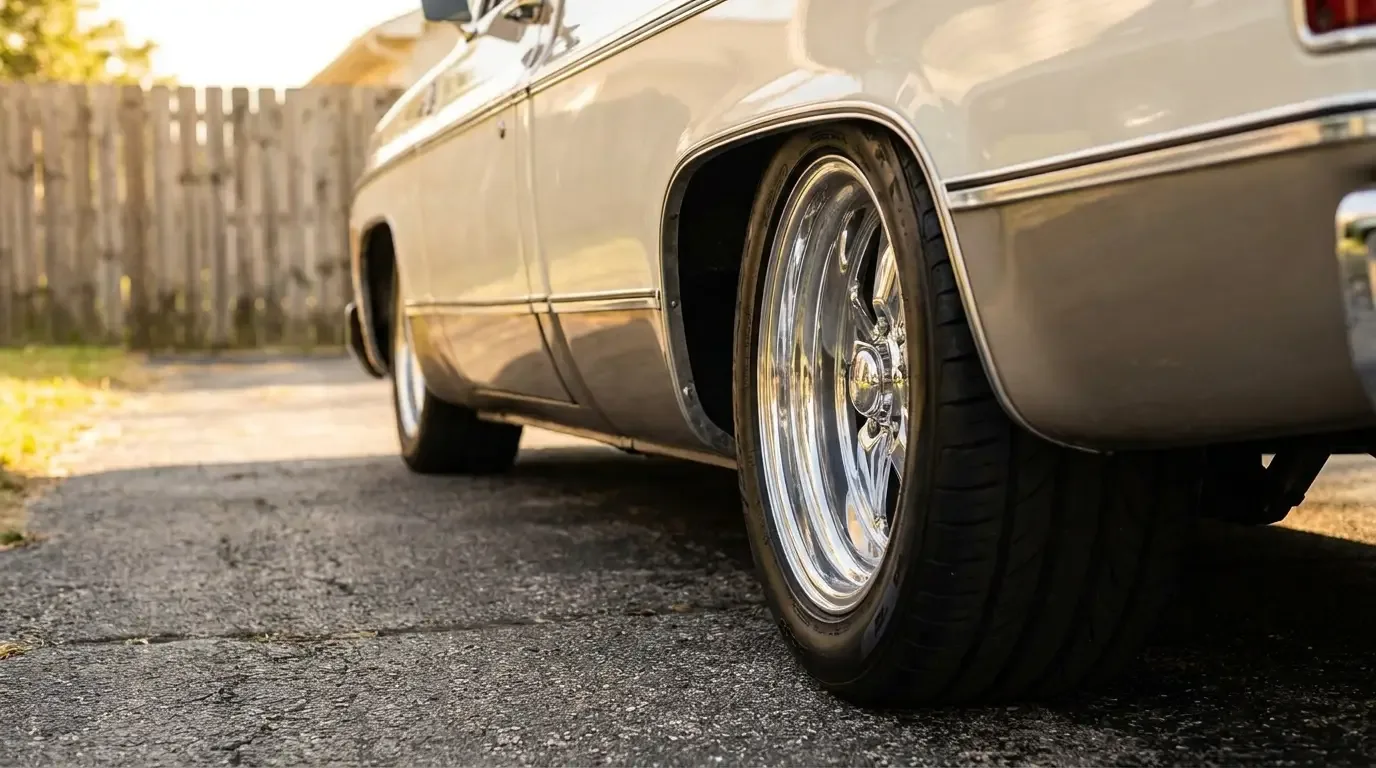
I've seen guys nail the suspension work and then blow the finished look entirely because they ordered tires off a size chart without thinking about how a shorter sidewall reads once the truck is actually sitting at ride height. The tire is doing as much visual work as the suspension. Treat it that way.
What a 4/6 drop actually asks of your tires
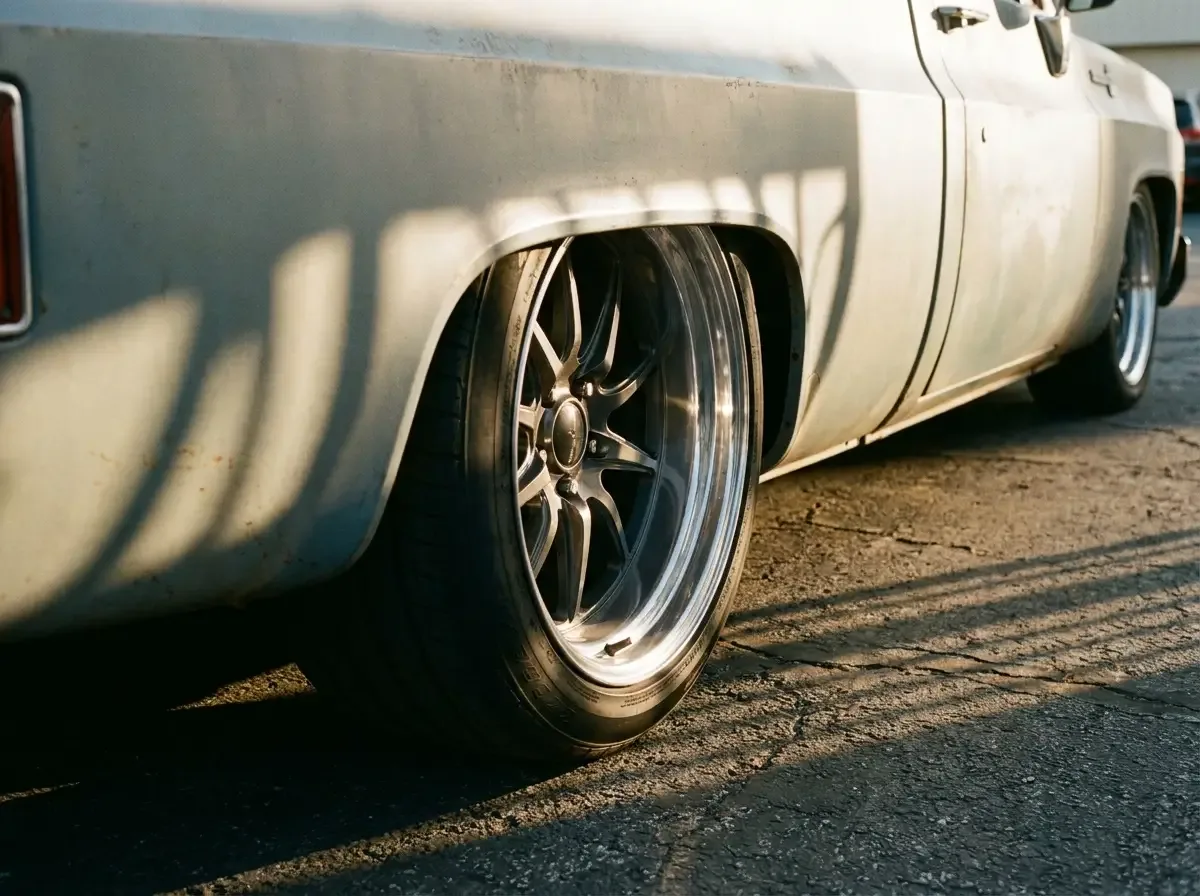
Dropping the front four inches and the rear six changes the available space in the wheel well in ways that aren't equal front to back. The front well has less vertical travel to spare because the spindle and control arm geometry are already closer to the fender lip after the drop. The rear well, with the leaf pack and shocks doing the work, usually has a bit more room before the tire starts kissing anything, but that room disappears fast if you also go wider than stock on the wheel.
This is the piece that trips people up. A 4/6 drop isn't a single number you plug into a calculator. It's two different clearance problems, front and rear, and the tire has to solve both without you finding out the hard way over a speed bump.
Front fitment: sidewall height and rub points
Up front, the goal is a shorter sidewall that fills the wheel opening without the tread rubbing the inner fender lip at full lock. A taller sidewall on a dropped front end will hit the lip in a hard turn long before it hits anything at ride height going straight, so don't judge fitment by parking the truck and eyeballing it. Turn the wheel all the way to lock in both directions before you call the front done.
Most guys running a 4 inch front drop land on a tire that's noticeably lower profile than what the truck came with from the factory, and that's by design. The stock spare-tire-era sidewall height was never meant to sit in a dropped wheel well. Anyone doing this for the first time should work through the full lowering guide before ordering rubber, because tire size is the last decision in the sequence, not the first.
Rear fitment: filling the wheel well without hitting the bed
The rear is where people get greedy. A six inch drop out back opens up room for a genuinely wide tire, and that's part of the appeal of the 4/6 stance, a meaty rear tire tucked under the bed. But wide isn't free. Go too wide on the rear wheel and you'll be rolling the inner bed lip or grinding clearance at full suspension travel over a dip, which is exactly the moment you don't want metal touching rubber.
The safe approach is to measure backspacing on the actual wheel you're running, not a generic spec off a forum post, and to cycle the suspension through its full travel with the tire mounted before committing to a final size. A tire that clears sitting still can still hit at full compression on a rough road.
| Position | Common approach | What to watch |
|---|---|---|
| Front | Lower profile sidewall, moderate width | Rub at full steering lock |
| Rear | Wider tire, taller sidewall tolerated | Bed lip clearance at full compression |
| Wheel backspacing | Measured per wheel, not assumed | Inner fender and frame clearance |
| Typical size spread front to rear | Noticeably staggered | Confirm against your specific wheel offset |
Common size combinations that actually work
Rather than chasing an exact number, think in terms of ratios. The front tire needs enough sidewall to ride comfortably but short enough to clear a dropped spindle at full lock. The rear can run noticeably wider and slightly taller without trouble, as long as backspacing is correct and the bed lip clearance has been checked at full compression, not just at rest. Guys running 4/6 setups on stock-width beds tend to stay conservative on rear width for exactly this reason, while a tubbed truck opens up more room to go wider.
None of this replaces test-fitting. A size that works on one truck's specific wheel offset and backspacing can rub on another truck built to the same drop numbers, because small differences in shock mounting and spring choice change the available clearance.
"Tire size is the part everybody wants a straight answer for, and there isn't one that fits every truck. I've had two C10s sitting at the same 4/6 drop need different tire widths out back because one had a slightly different rear shock setup eating into the clearance. Measure your own truck. Don't copy somebody else's spec sheet and assume it transfers."
Mike Sullivan
Getting the stance right without guessing
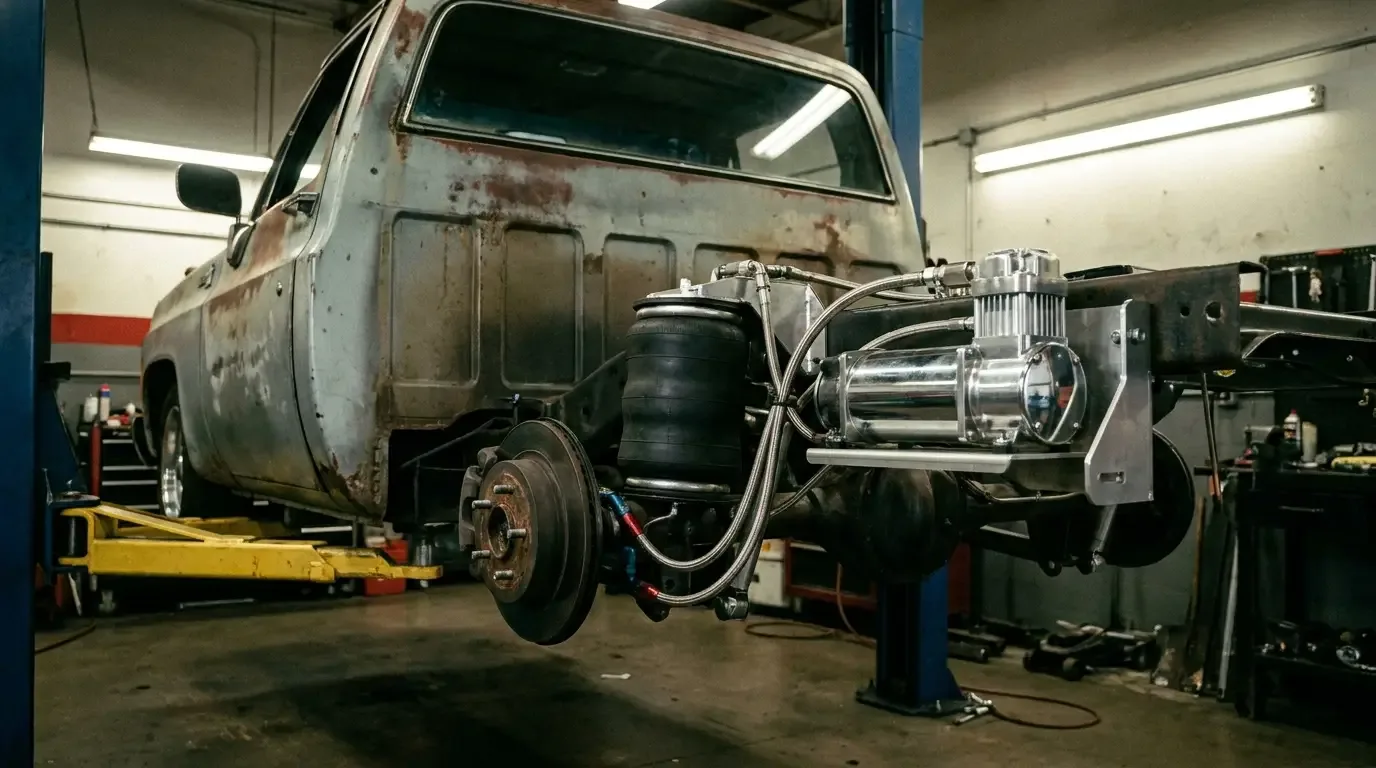
Before you settle on tire size, make sure the suspension underneath it is actually finished, including deciding between static and air in the first place, because an air ride truck that changes height on demand needs tire clearance checked at its lowest setting, not just its cruising height. Static trucks are simpler in this regard since the height doesn't move, but the clearance check still has to happen at full suspension travel, not just parked in the driveway.
These trucks were built as work vehicles, part of the C10 story that gets overlooked once the conversation turns entirely to stance. The wheel wells were never engineered with a 4/6 drop and a staggered tire package in mind, which is exactly why test-fitting before you buy four tires matters more here than on almost any other part of the build.
Sources and notes
- Chevy C10 Truck Forums thread on real-world tire fitment for a 4/6 dropped C10
- GMT400 forum thread on 4/6 drop tire sizing
- 67-72 Chevy Trucks message board thread on picking tire sizes for a 4/6 drop
- GM Square Body forum thread on wide rear tire fitment
- Hagerty 1973-1987 Chevrolet/GMC truck buyer's guide
Related Reading
Have a
Chevrolet C10
for Sale?
Reach thousands of serious classic car collectors across the US.
Sell It Here →
Are You a Classic Car Dealer?
List your full inventory and connect with targeted classic car buyers.
Join as a Dealer →

About the author
Mike Sullivan
Detroit-area muscle car enthusiast and restoration specialist with three decades of hands-on experience working on American iron.
Related Listings - Chevrolet C10
More in Restoration & Tech
Comments
Be the first to comment on this article.