
Pro touring is the branch of the restomod world that cares about corners. Not just the drag strip, not just the show field. A pro touring car is a classic that has been rebuilt to go around a track, hard, and then drive home on the freeway without cooking you or beating you up. The look stays close to stock. The way it moves does not.
Restoration & Tech
7 min read
Pro Touring Explained
Every pro touring car is a restomod, but not every restomod is pro touring. Here is what separates a corner-carving build from a show cruiser.
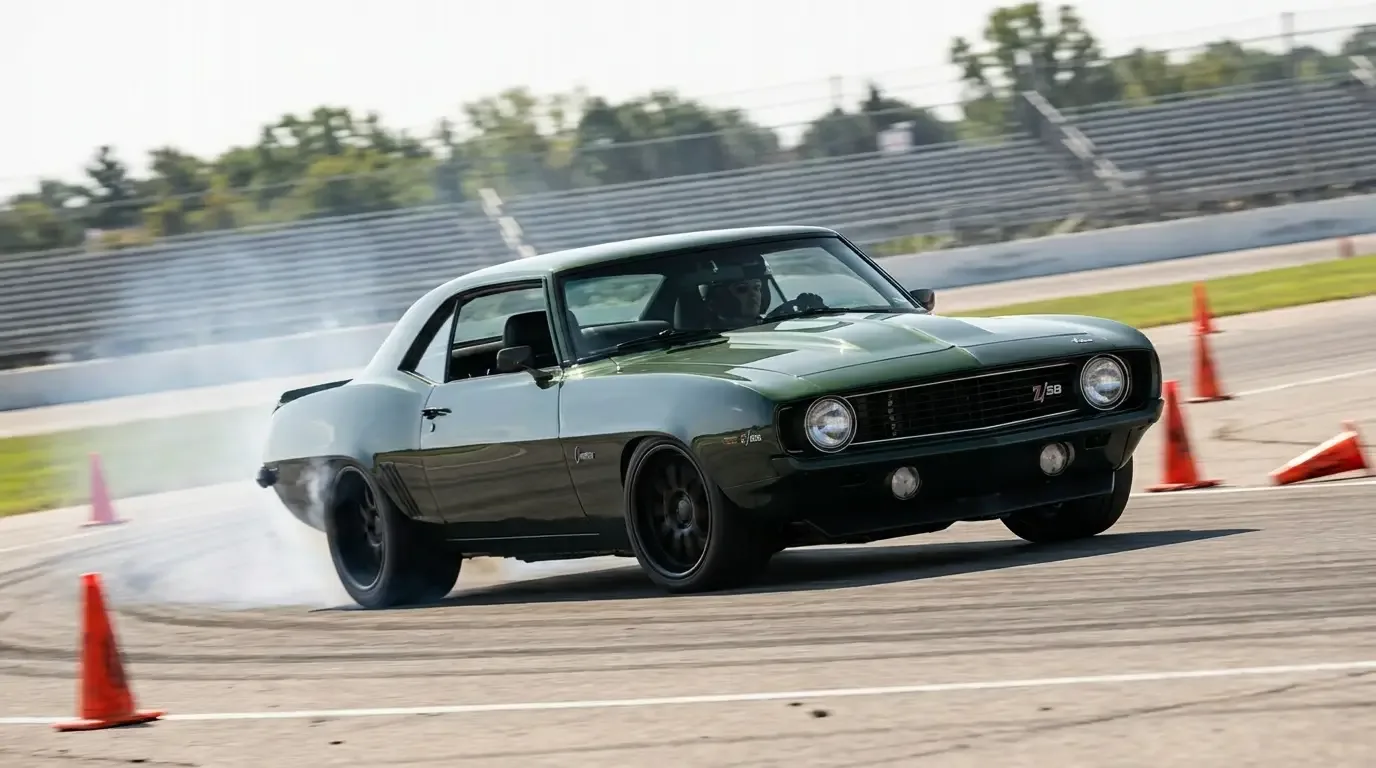
People mix up the terms all the time. Every pro touring car is a restomod. Not every restomod is pro touring. A show restomod can sit on a fat modern drivetrain and never turn a wheel in anger. A pro touring build is aimed at grip, balance, and repeatable stops. That difference shows up in the parts you bolt on and the money you spend, and it shows up the first time you push the thing into a fast sweeper.
Where pro touring came from
The idea grew out of autocross and open-track days in the 1990s. Guys were bringing muscle cars, first-gen Camaros, Chevelles, early Mustangs, to events built for sports cars, and getting embarrassed in the corners. A stock 1969 muscle car has a live rear axle on leaf springs, drum brakes or small discs, skinny tires, and steering that feels like stirring a bucket of sand. Straight-line speed it had. Cornering it did not.
So a handful of builders and magazine guys started fixing the chassis instead of just the engine. Bigger sway bars. Stiffer springs. Better shocks. Wider wheels with real tires. Brakes that could take a beating. The goal was a muscle car that could run with a modern sports car on a road course and still look like it rolled off the line in 1968. That whole approach sits inside the wider subject of restomod chassis work, and if you want the full picture on frames and dampers, start with pro touring as the parent topic before you dig into any single upgrade.
What actually makes a car pro touring
Three things separate a pro touring build from a show restomod: the suspension, the brakes, and the rubber. Get those right and the engine almost becomes the easy part. A stock small block with good bolt-ons will outrun most drivers if the chassis can put the power down.
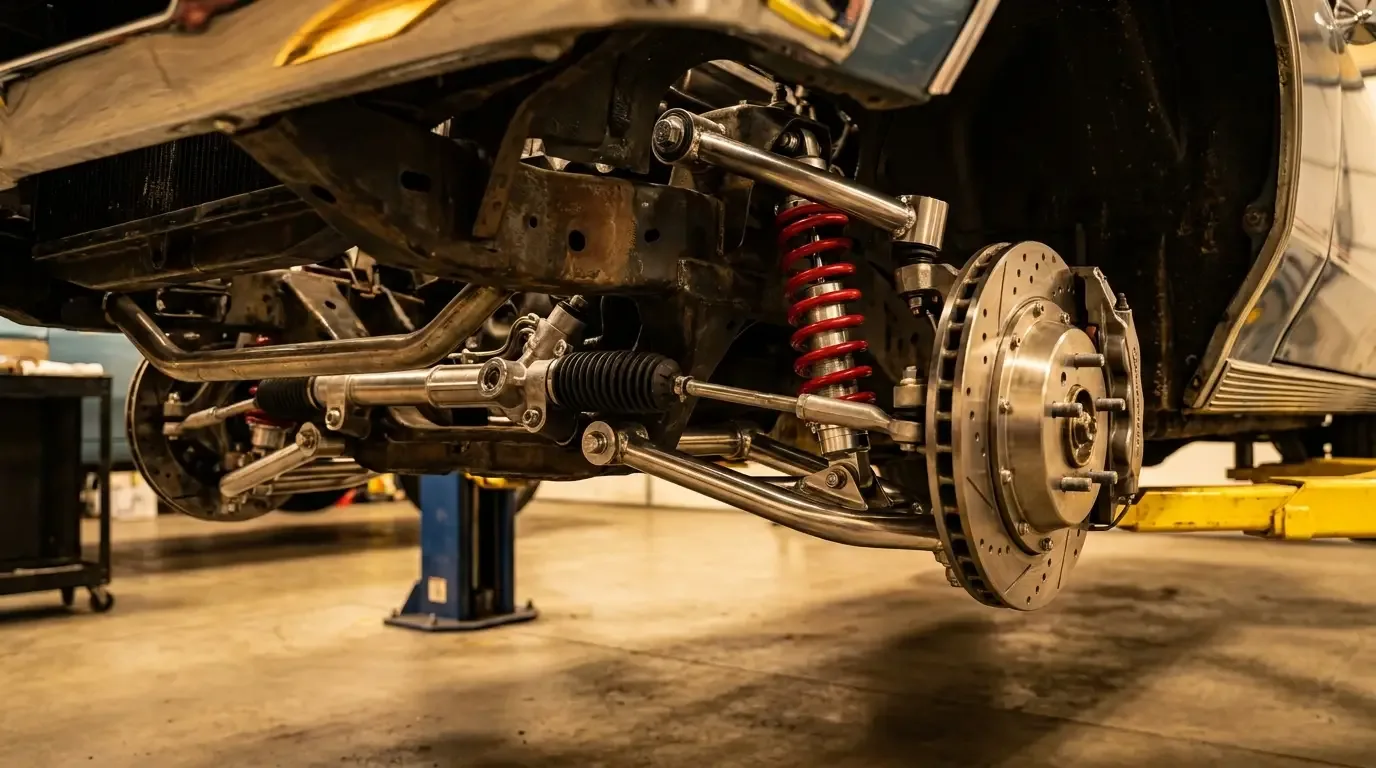
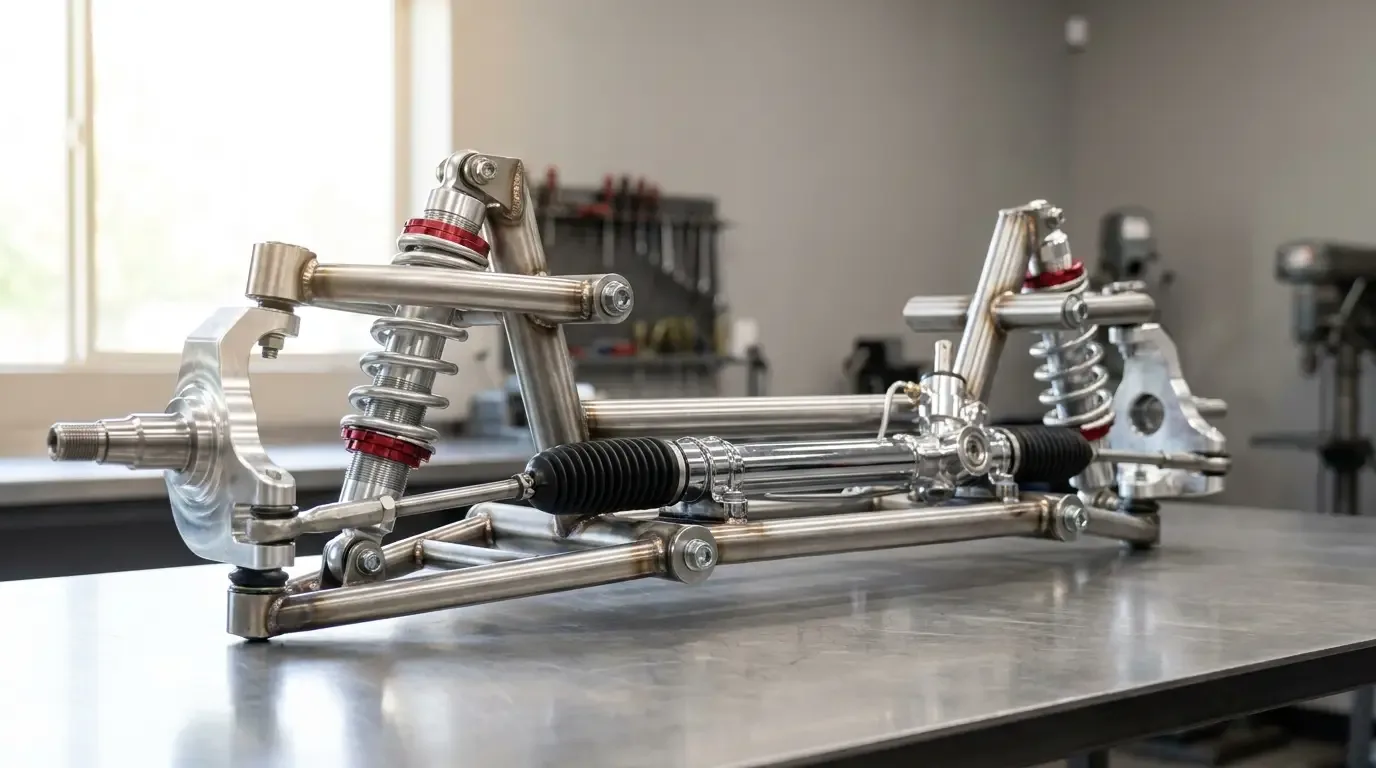
Modern suspension is the foundation. That usually means dropping the old front stub and going to an independent setup. A proper front end sharpens turn-in and lets you run a real alignment, which is why so many builds start with a Restomod Independent Front Suspension before anything else gets touched. Out back you either keep the live axle located properly with a four-link and coilovers, or you go to a full independent rear if the budget allows.
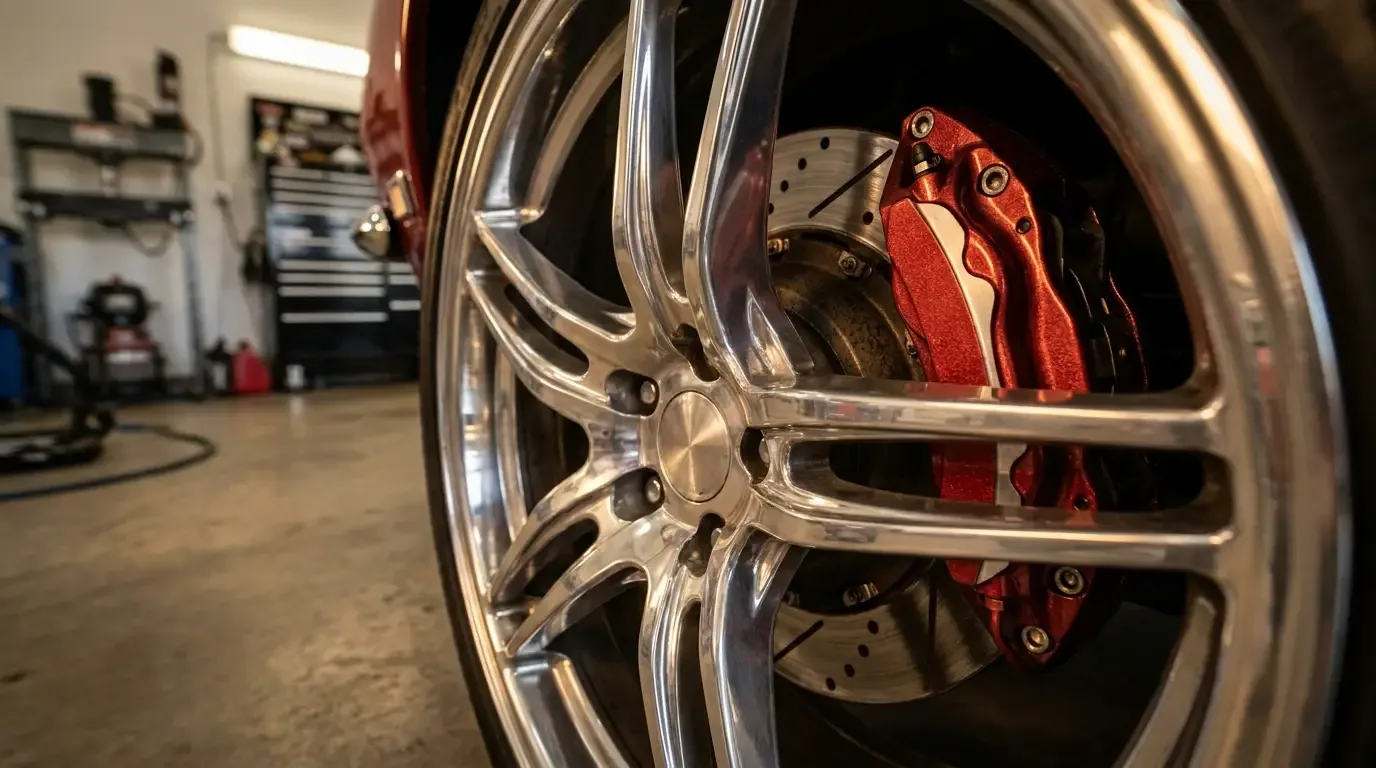
Then the brakes. Big rotors, four or six piston calipers, and enough pad to survive session after session on track. Factory drums were never meant to stop a car being driven this way, and even a mild disc conversion runs out of fade resistance once you start doing repeated hard stops from real speed. Cooling matters as much as raw clamping force. A brake that works great on the first stop and cooks itself on the fourth is no good on a road course.
And the tires. Wide, sticky, modern compound rubber on 17 to 18 inch wheels, sometimes bigger, because grip is what turns all that suspension work into lap time. This is where the whole thing comes together. You can spend a fortune on the frame and the dampers, but the tire is the only part touching the road, and a narrow hard tire throws all that money away. Fit the widest quality tire the body will clear and the car changes character completely.
Steering gets attention too. A lot of these cars came with slow, vague recirculating-ball boxes. Swapping to a quicker ratio box or a rack conversion makes the front end talk to you, which matters a lot when you are trying to place a wide car precisely at speed. None of this shows up in a photo, but you feel every bit of it from the driver seat.
| System | Show restomod | Pro touring build |
|---|---|---|
| Front suspension | Rebuilt stock or mild drop | Independent front, adjustable geometry |
| Rear suspension | Stock axle, better shocks | Four-link or IRS, coilovers |
| Brakes | Front disc conversion | Big four to six piston, vented all round |
| Wheels and tires | Style-first, moderate width | Wide, sticky, sized for grip |
| Setup priority | Ride and looks | Balance, stopping, repeatability |
How it differs from a show restomod
A show restomod is built to be looked at and cruised. Soft ride, deep paint, clean engine bay, maybe air ride so it lays on the ground at a meet. Nothing wrong with that. It is a different job.
A pro touring car gives up some of that comfort on purpose. Stiffer springs mean you feel the road. A big brake package can be noisy cold. Wide tires tramline on grooved pavement. The payoff is a car that stays flat in a corner, stops straight from speed, and does it lap after lap without fading. You build a show car to win a trophy. You build a pro touring car to win a corner.
"I tell people the same thing every time. A show car makes you look good standing still. A pro touring car makes you look good when the road gets nasty. Spend the money on the chassis, not the chrome, and the car will pay you back every single lap."
Mike Sullivan
What it costs to chase corners
Pro touring is not the cheap end of the hobby. The suspension, brakes, and wheels alone run into serious money before you touch the engine. A quality independent front end, a rear four-link with coilovers, a big brake kit at all four corners, and a set of wide wheels and tires can add up fast, often well past the price of the car itself on an older muscle car.
But here is the honest part. You do not have to build it yourself. Plenty of finished and started cars change hands already, and a well-sorted pro touring build can be a better buy than a pile of boxes in your garage. If you want to see what running examples go for before you commit to a build, browse the classic restomods for sale and compare a finished car against your parts list.
Sources and notes
- Period American performance press covering the pro touring and autocross movement of the 1990s and 2000s.
- Aftermarket suspension and brake manufacturer technical references for independent front ends, four-link kits, and big brake packages.
- Builder and shop interviews on chassis setup, corner balancing, and alignment practice.
- Open-track and autocross event records used to frame handling goals for muscle-era classics.
Related Reading
Have a
Classic Car
for Sale?
Reach thousands of serious classic car collectors across the US.
Sell It Here →
Are You a Classic Car Dealer?
List your full inventory and connect with targeted classic car buyers.
Join as a Dealer →

About the author
Mike Sullivan
Detroit-area muscle car enthusiast and restoration specialist with three decades of hands-on experience working on American iron.
More in Restoration & Tech
Comments
Be the first to comment on this article.