
The front suspension is where most old cars show their age. A stock kingpin-and-beam setup or a worn factory A-arm design wanders on the highway, dives under braking, and fights you through a corner. Swapping in a modern independent front suspension is usually the single biggest change you can make to how a classic drives. An IFS conversion turns a car that tramlines and floats into one that tracks straight and turns in like it means it.
Restoration & Tech
7 min read
Restomod Independent Front Suspension: The IFS Conversion Guide
An IFS conversion is the single biggest change to how a classic drives. Here's what it replaces, what it costs, and how to plan the install.
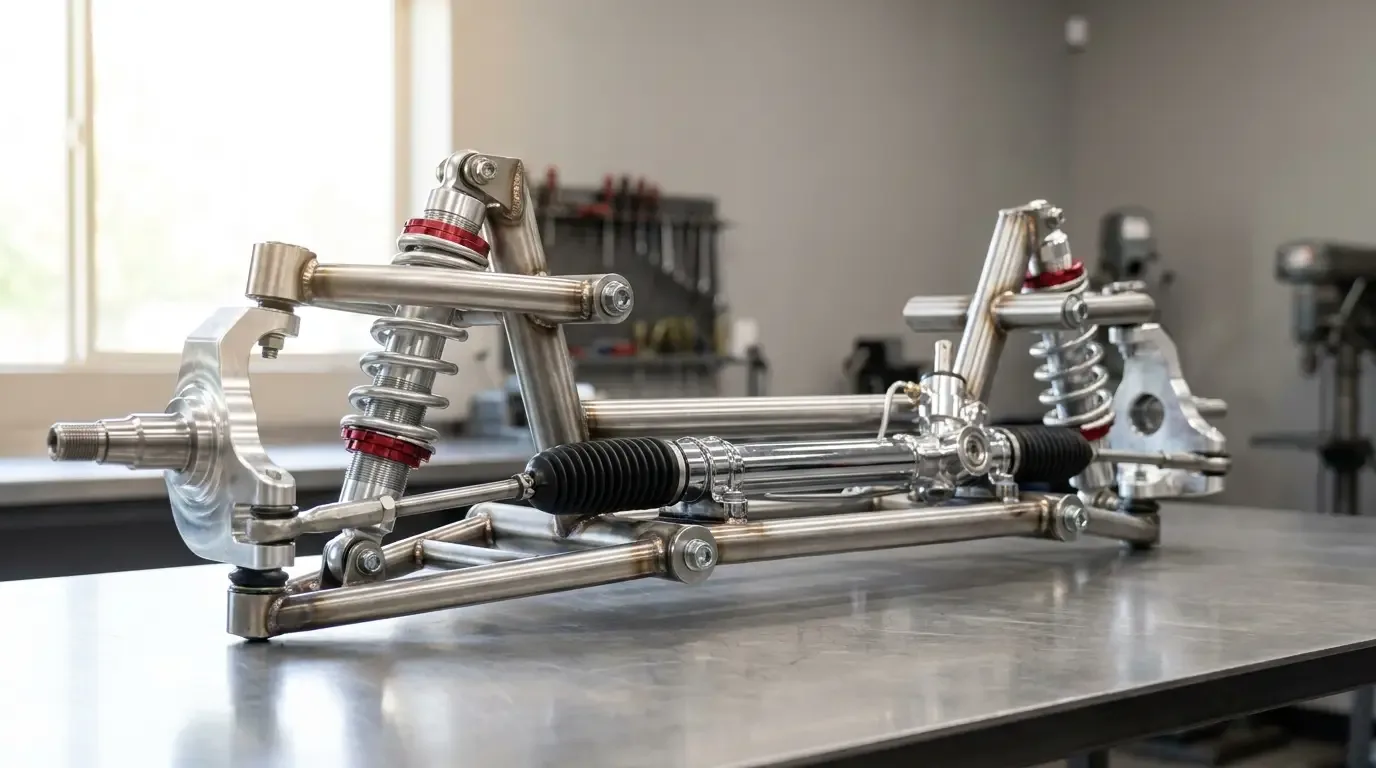
I have installed a lot of these over the years, and the results are consistent. The car sits an inch or two lower, the steering effort drops, and the whole front end stops feeling like it belongs to a different decade than the tires. This is the foundation of any serious handling build, and it is the first step most people take when they want a car that looks vintage and drives new. If you want the wider background on why people rebuild classics this way, read the story of the restomod.
What an IFS conversion actually replaces
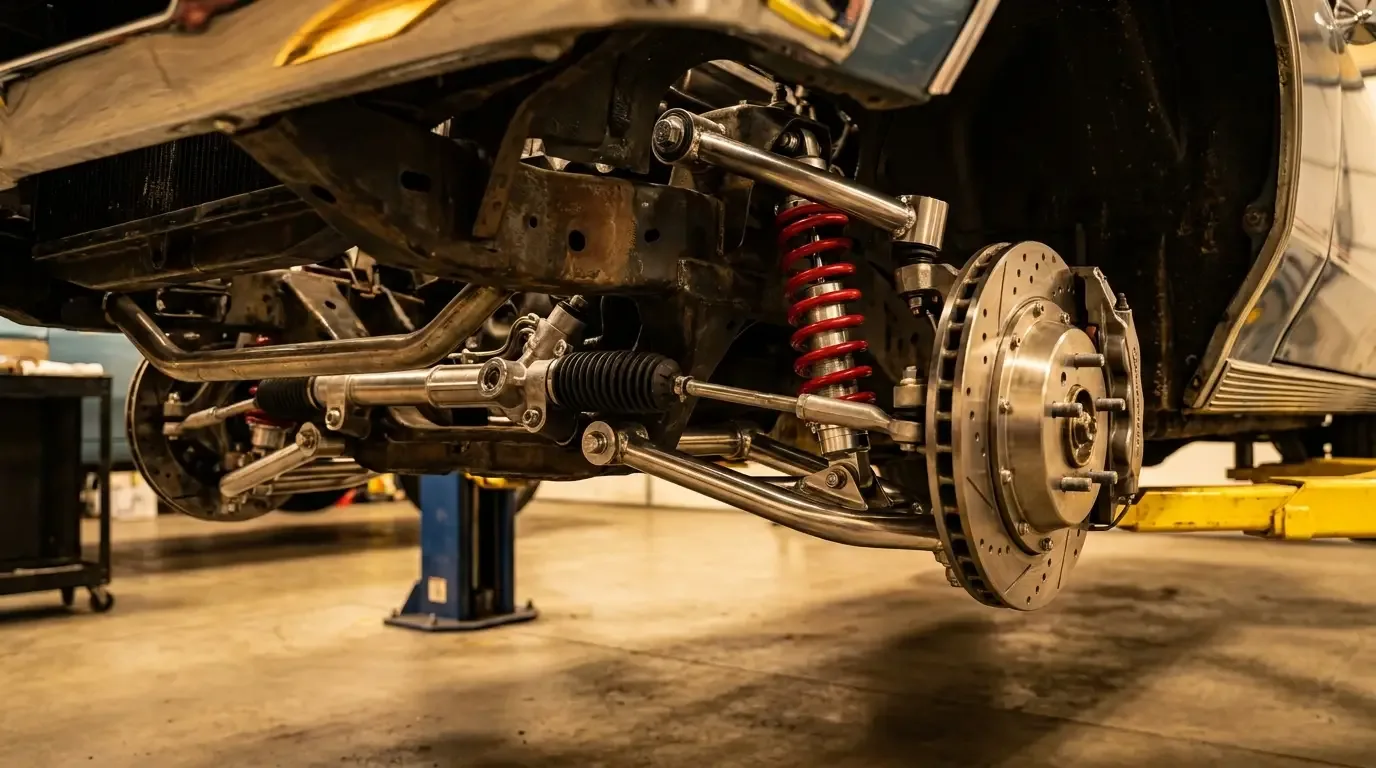
Most IFS kits come as a bolt-in or weld-in front subframe, sometimes called a crossmember or clip. The unit carries the control arms, spindles, steering, and springs as one assembly. You remove the original front suspension and the crossmember it hangs from, then fit the new one in its place. On cars that used a solid front axle or an early independent design with kingpins, this is a complete architecture change, not a parts swap.
The good kits are engineered around a specific chassis. A 1955 to 1957 Chevy subframe is not the same part as one for a 1967 Mustang or a 1948 Ford. Companies like Fatman Fabrications, Heidts, Roadster Shop, and Art Morrison have done the measuring so you do not have to. A bolt-in unit uses the factory frame mounting points and hardware. A weld-in clip replaces a section of the frame rails entirely and demands a competent welder and a level surface to set ride height and caster correctly.
- Upper and lower control arms. Tubular arms with modern geometry, greased or sealed ball joints instead of kingpins.
- Spindles and hubs. Often sourced from a common donor like the GM Metric or Mustang II, which keeps replacement parts cheap and available.
- Springs and shocks. Either conventional coil-over-shock units or an adjustable coilover, sometimes air springs.
- Steering. A rack-and-pinion in place of the old recirculating-ball box and drag link.
Coilovers and rack-and-pinion do the real work
The two components that change the driving experience most are the coilovers and the steering rack. A coilover puts the spring and damper on one adjustable shaft. You set ride height with a threaded collar and, on the better units, dial in compression and rebound damping separately. That means you can corner-balance the car and tune it for the roads you actually drive, instead of living with whatever a 60-year-old leaf or coil rate gives you.
Rack-and-pinion steering is the other half. The old recirculating-ball boxes have slop built in, and they get worse with age and mileage. A rack removes the idler arm, the pitman arm, and most of the linkage, replacing all of it with a direct gear. The wheel talks to the tires with far less lag. Pair that with power assist, hydraulic or electric, and a heavy classic steers with one hand in a parking lot and still feels planted at 75 mph.
What you gain, and what it costs
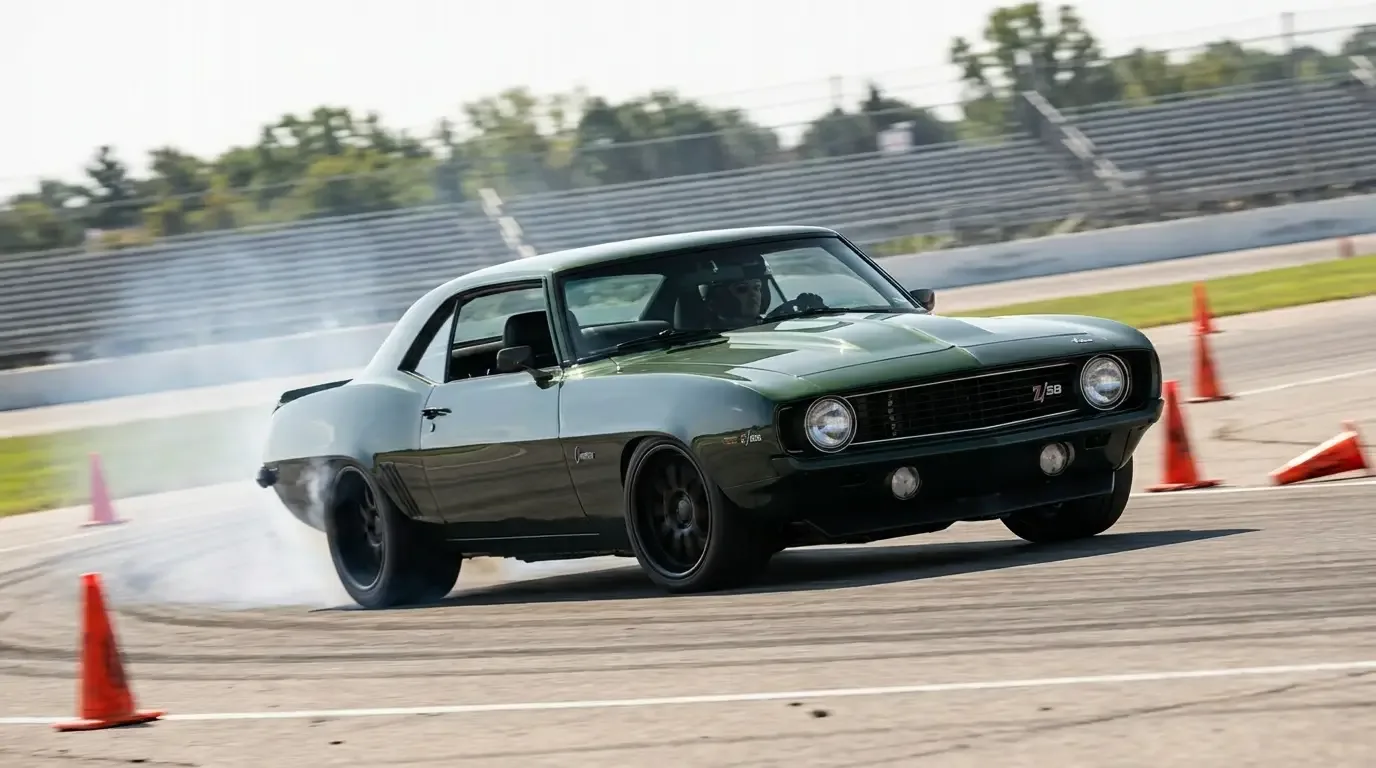
The handling gain is real and immediate. Better geometry means the tires stay flatter on the road through a corner, so you get more grip and more predictable behavior at the limit. Lower unsprung weight from tubular arms helps the suspension follow bumps instead of skipping over them. Add the coilover adjustability and the sharper steering, and a car that was a handful becomes something you trust. This is the front-end foundation of a pro touring build, where the whole point is late-model handling under vintage sheetmetal.
The cost is where people flinch. A basic bolt-in crossmember with control arms and standard shocks can run a few thousand dollars in parts. Add quality adjustable coilovers, power rack-and-pinion, and the disc brakes you will want to go with it, and a complete front-end package climbs toward five figures before any labor. A weld-in clip installed by a shop costs more still because of the fabrication time. None of it is cheap, but it is the change you feel every single time you drive the car.
| Item | Rough parts cost | What it buys you |
|---|---|---|
| Bolt-in crossmember + control arms | Around $2,000 to $4,000 | Modern geometry, ball joints, tunable stance |
| Adjustable coilovers (pair) | Around $700 to $1,500 | Ride height and damping control |
| Power rack-and-pinion | Around $600 to $1,200 | Direct, low-effort steering |
| Weld-in clip (installed) | Around $6,000 and up | Full frame section, best geometry, needs a shop |
Prices are approximate and vary by chassis, brand, and how much of the work you farm out. Treat these as ballpark planning numbers, not quotes.
"People ask me if the IFS is worth it before they ask about horsepower. My answer is always the same. Fix how it stops and turns first. A fast car you do not trust in a corner is just a scary car."
Mike Sullivan
Planning the install so it works the first time
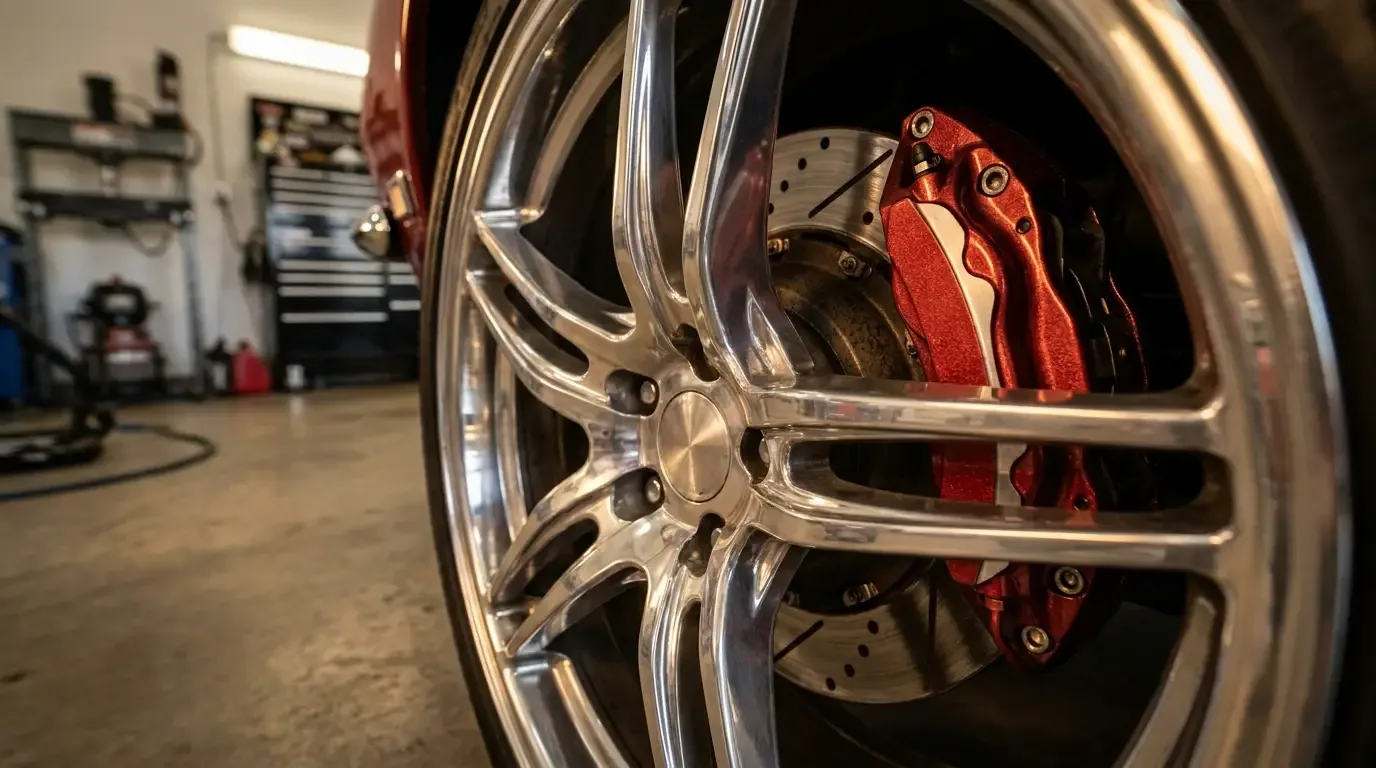
The mistakes I see are almost never the suspension itself. They are the things around it. Ride height set wrong so the geometry is off. A rack mounted at the wrong angle so you get bump steer. Brakes and wheels ordered before anyone checked the new spindle's bolt pattern and backspacing. Do the measuring before the wrenching, and an IFS swap is a satisfying weekend or two of work rather than a car stuck on jack stands for a season.
An IFS conversion is not the flashiest thing you can do to a classic. Nobody hears it at a car show. But it is the change that makes every other upgrade worth having, because a car that turns and stops the way a modern one does is a car you will actually drive. That, more than any dyno number, is the whole point of the exercise.
Sources and notes
- Aftermarket suspension manufacturer catalogs and fitment guides (crossmember and coilover makers).
- Builder and shop interviews on IFS installation practice.
- Period and enthusiast press coverage of Mustang II and GM Metric donor suspensions.
- Hands-on installation experience; cost figures are approximate planning ranges, not quotes.
Related Reading
Have a
Classic Car
for Sale?
Reach thousands of serious classic car collectors across the US.
Sell It Here →
Are You a Classic Car Dealer?
List your full inventory and connect with targeted classic car buyers.
Join as a Dealer →

About the author
Mike Sullivan
Detroit-area muscle car enthusiast and restoration specialist with three decades of hands-on experience working on American iron.
More in Restoration & Tech
Comments
Be the first to comment on this article.