
Here is the truth nobody tells you at the car show. The engine is the easy part. Bolt in a crate motor, wire it, and you have made noise. But a car that goes fast and cannot turn or stop is a liability with chrome on it. The chassis, the suspension, and the brakes are what turn a heavy old body into something you actually trust at 80 mph on a back road. This is the discipline the hobby calls pro touring, and it is where most of a serious build's real money and real thinking go.
Restoration & Tech
10 min read
Restomod Chassis, Suspension and Brakes
The engine is the easy part. Here is how IFS, coilovers, subframes, rack steering and disc brakes turn an old body into a car you can trust.
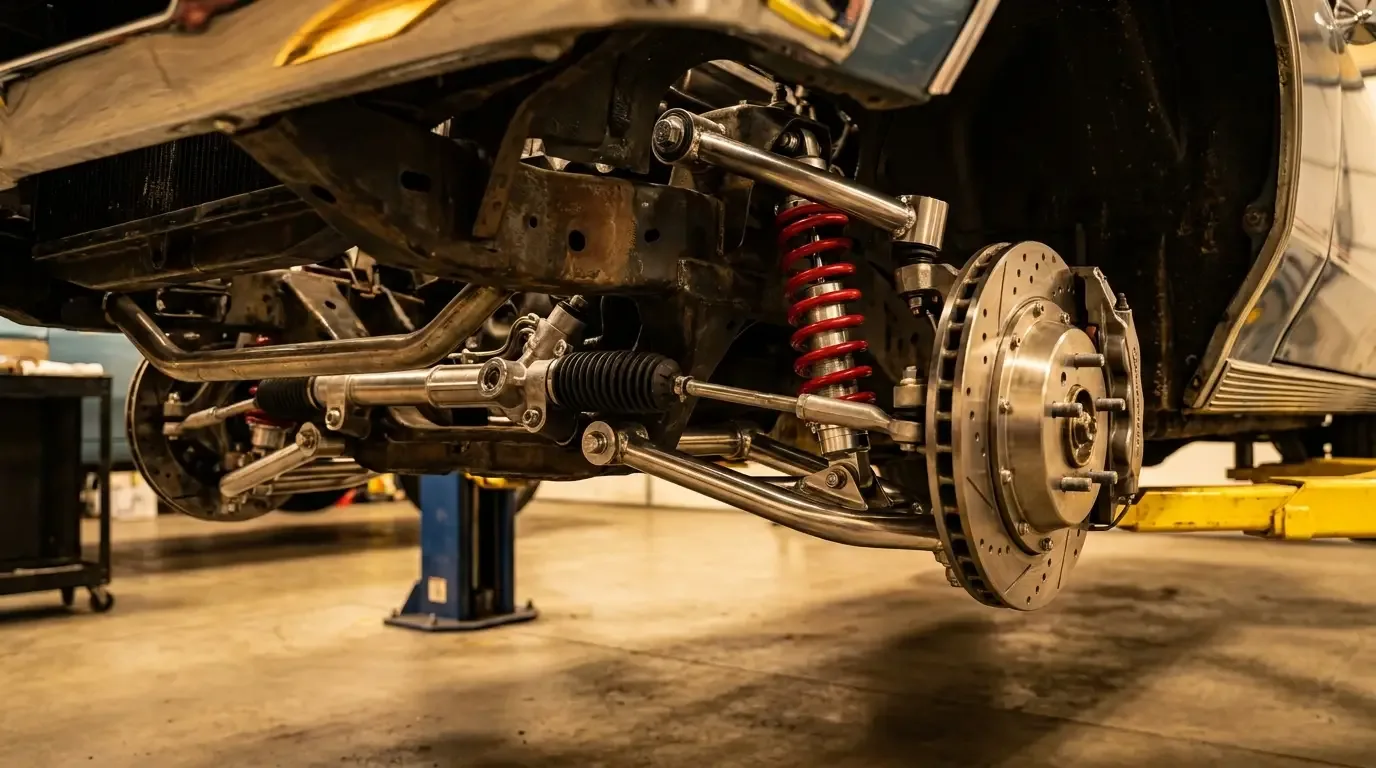
I have spent more hours under old cars than I care to add up, and the pattern never changes. People fall in love with the horsepower number and forget that a 1968 muscle car was engineered to stop from 60 in a distance that would fail a modern safety test. If you want to understand where all this came from, read the story of the restomod. Right here I want to talk about the hardware that makes the thing drive like a car built this decade.
Why the factory chassis was never the plan
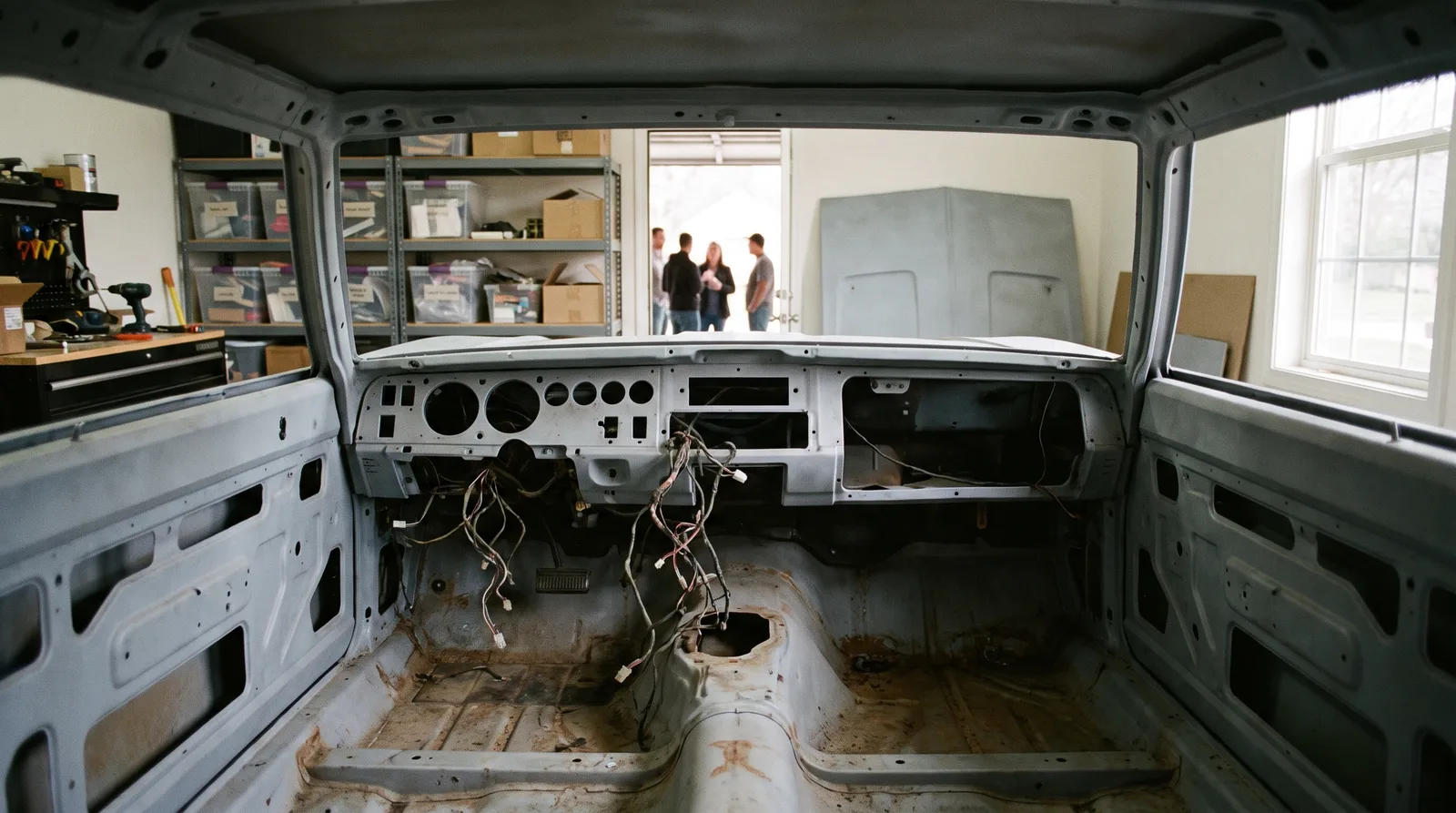
Most American classics from the 1950s through the early 1970s rode on a body-on-frame layout with a solid front axle or a basic short-and-long-arm front end, recirculating-ball steering, and leaf springs holding up a live rear axle. That setup was cheap to build and easy to service. It was not built for grip. The steering has slop in it. The geometry changes badly when the body rolls in a corner. The whole car leans, pushes wide, and generally tells you to slow down.
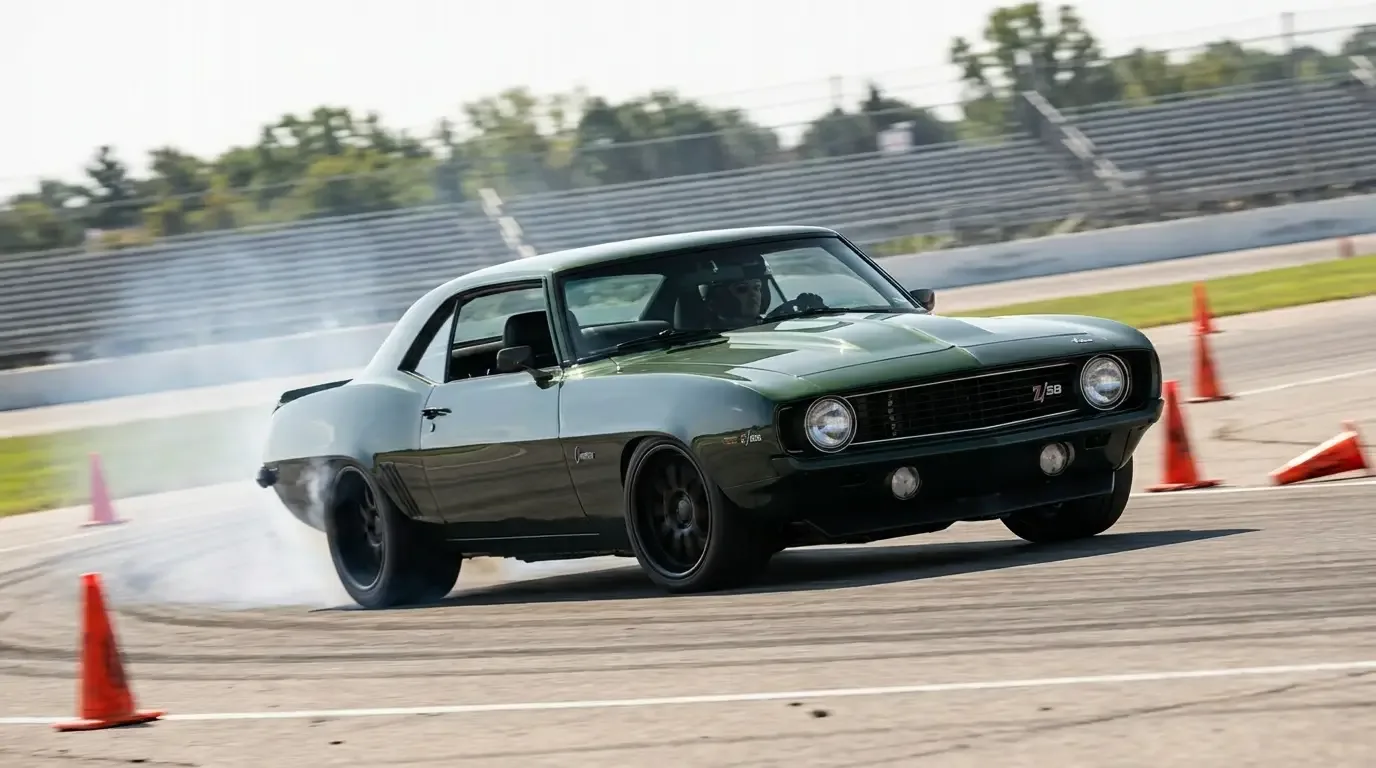
A modern car turns flat because engineers control how the wheel stays planted through its travel. That is the job you are taking on when you rework a classic chassis. You are not just lowering it for looks. You are trying to keep the tire's contact patch square to the road while the body moves. Get that right and an old heavy coupe can carry corner speed that embarrasses the guys who only chased dyno numbers.
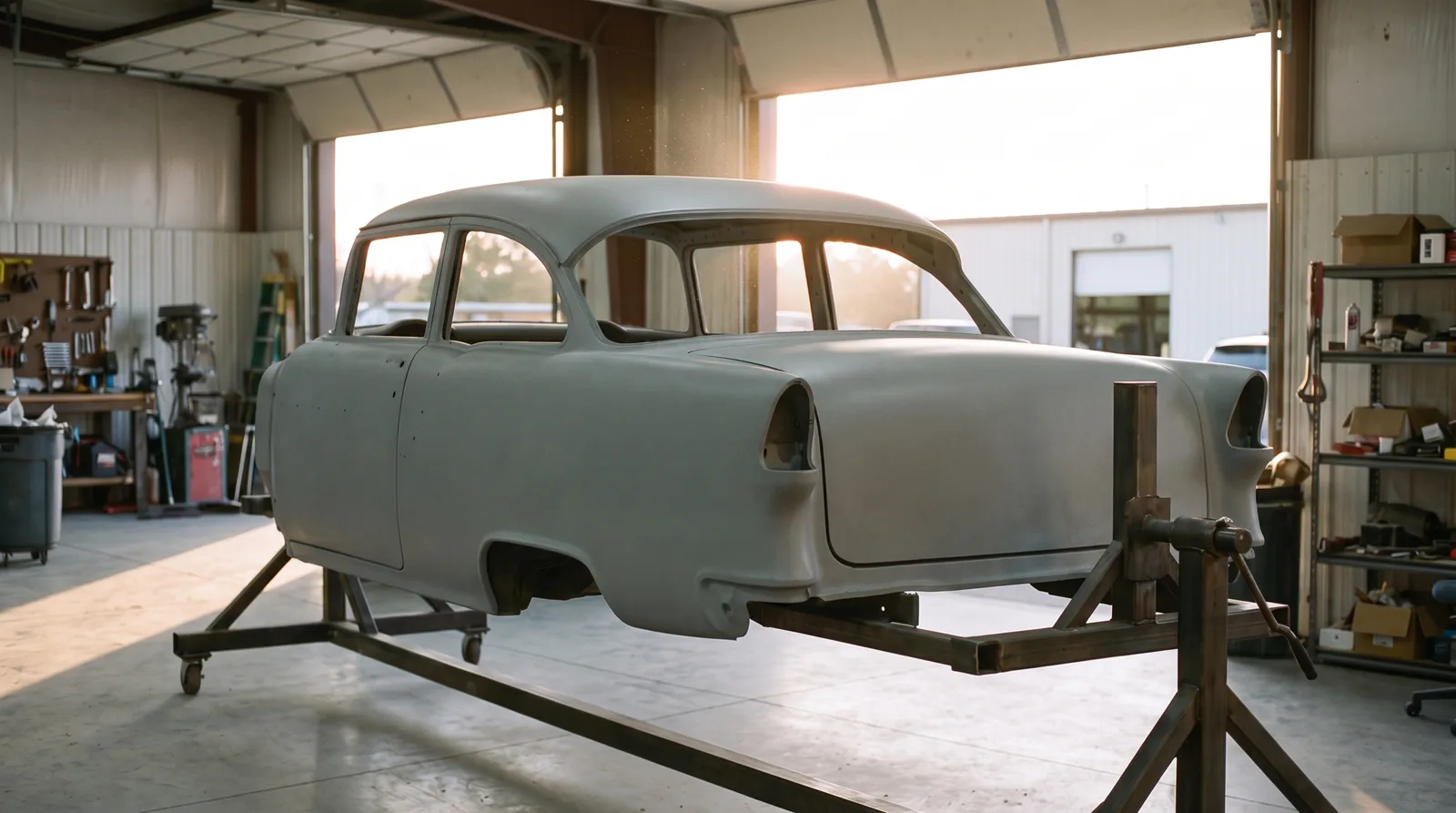
There are three honest paths. Rework the original frame with better components. Bolt a fabricated subframe under the front. Or set the whole body on a purpose-built aftermarket chassis. Each one costs more than the last, and each one buys you more.
IFS: the front end that changes everything
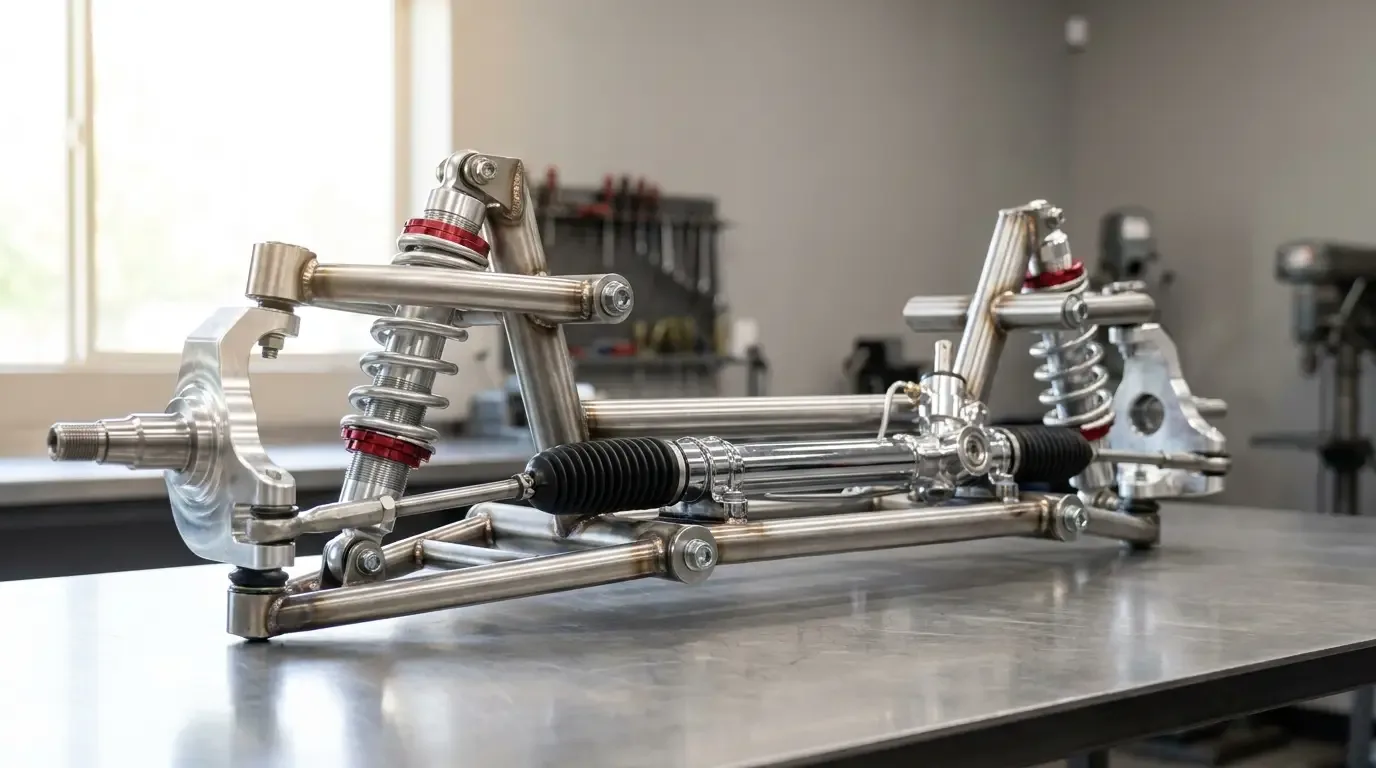
Independent front suspension, IFS for short, is the single biggest handling upgrade on most classics. Each front wheel moves on its own control arms instead of being tied to a beam axle or a tired old A-arm setup. The tire stays more upright through bumps and body roll, so it keeps grip when the original design would have given up.
The common way to get there is a bolt-in tubular crossmember, sometimes called a Mustang II style front clip because the geometry traces back to that era of parts, though modern kits from the major suspension houses have moved well past the original 1970s pieces. A quality kit brings tubular control arms, coilover or air shocks, a rack-and-pinion steering unit, and mounting for disc brakes, all engineered to work together. That last point matters. Mixing random parts is how people build cars that bump-steer and dart on the freeway.
Rack-and-pinion steering is the other half of the story. The old recirculating-ball box has play built in and a slow ratio, so you saw at the wheel to make the car change direction. A rack ties the steering directly to the wheels with far less lost motion. You think about turning and the car turns. Nothing feels more modern than that one swap.
Coilovers, subframes, and the leaf-spring rear
A coilover is a coil spring wrapped around an adjustable shock in one unit. It lets you set ride height and, on better units, dial in how firm the car rides and how it reacts to bumps. On a classic that means you can drop the stance for looks and still keep the suspension working instead of slamming the frame into the ground on every dip. Air suspension is the other route people take when they want to lay the car on the ground at a show and still drive it home at a normal height. Both work. Coilovers are simpler and usually the choice when the priority is handling over show stance.
For the front, if you do not want to touch the original frame, a bolt-in subframe or front clip carries the IFS, steering, and brakes as one assembly. On unibody cars a common upgrade is a stiffer aftermarket front subframe that also braces the body against flex. A body that twists under load wastes everything the suspension is trying to do, so subframe connectors tying front to rear are one of the cheapest big improvements you can make.
The rear is where builds split. The cheap and durable path keeps the live rear axle but upgrades it with a multi-leaf or a parabolic leaf setup, better shocks, and a location system so the axle does not walk around under power. The serious path swaps in a four-link or a full independent rear suspension. A four-link controls the axle precisely and lets you run coilovers back there too. Independent rear is the most expensive and, done right, the best riding. Most street cars are perfectly happy with a well-located live axle and a limited-slip differential. Do not let anyone talk you into an IRS you do not need.
- Live axle, upgraded leaf springs: cheapest, tough, fine for street and mild track use.
- Four-link with coilovers: the sweet spot for most pro touring builds, precise and adjustable.
- Independent rear suspension: best ride and grip, most cost and complexity, worth it only if you chase it.
Brakes: the upgrade that actually saves your life
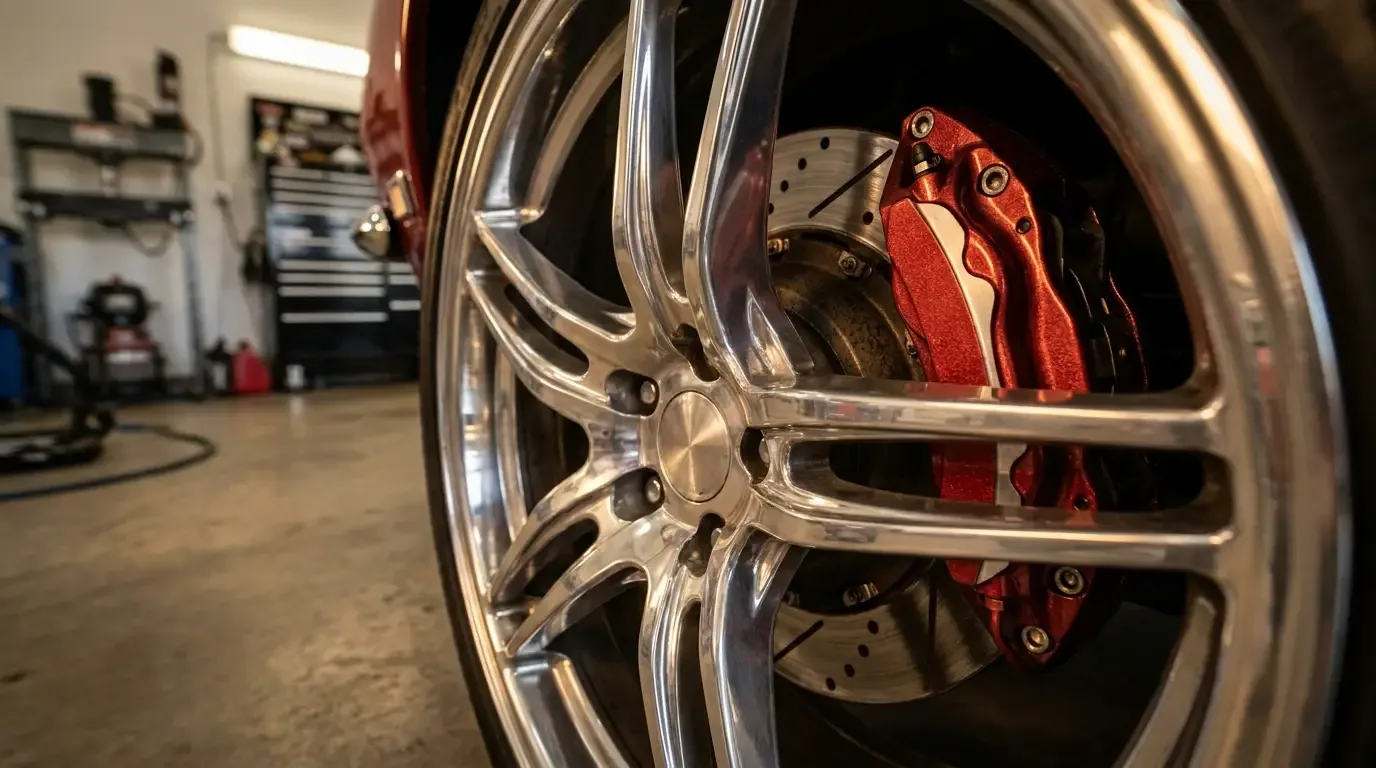
I will be blunt. If you add a modern engine to a classic and leave the original brakes, you have built something dangerous. A lot of these cars left the factory with drum brakes on all four corners. Drums fade when they get hot, which is exactly when you need them, and they pull to one side when they are wet or worn. A disc-brake conversion is not optional on a fast build. It is the first thing I do.
A disc brake clamps a rotor between pads with a caliper. It sheds heat far better than a drum, so it keeps working lap after lap or down a long grade. For a street restomod, a four-wheel disc setup with a decent vented rotor and a two- or four-piston caliper is plenty. You only need the giant six-piston brakes and 14-inch rotors if you are actually tracking the car hard, and those big rotors force you into larger wheels to clear them.
The part people forget is the plumbing behind the brakes. Old single-circuit master cylinders are a single point of failure. A modern dual master cylinder, a proportioning valve to balance front-to-rear bias, and a vacuum or hydroboost booster to give you assist are all part of doing it right. Match the master cylinder bore to the calipers or you get a pedal that is either rock hard or falls to the floor. This is the kind of detail that separates a car that stops straight and true from one that scares you.
What a real handling package costs
Numbers vary by car and by how far you push, so treat these as ballpark ranges from typical aftermarket kit pricing, not quotes, and verify against current supplier catalogs before you buy. The point is to show where the money goes so you can plan a build instead of bleeding cash one part at a time.
| Component | What it does | Rough parts cost (USD) |
|---|---|---|
| Bolt-in IFS front clip (coilover, rack, disc mounts) | Transforms front handling and steering feel | roughly $2,500 to $5,000 |
| Rear four-link with coilovers | Locates the axle precisely, adjustable | roughly $1,500 to $3,500 |
| Four-wheel disc brake conversion | Fade-free, straight, modern stopping | roughly $1,200 to $3,000 |
| Master cylinder, booster, proportioning valve | Balanced pedal and dual-circuit safety | roughly $400 to $900 |
| Subframe connectors / chassis stiffening | Stops body flex so suspension can work | roughly $300 to $800 |
| Full aftermarket chassis (body swap) | Turnkey modern platform under old body | roughly $12,000 and up |
Labor is on top of all of it, and labor is where a shop build gets expensive fast. Alignment, fabrication, and brake bleeding all take time and skill. If you are buying a finished car rather than building one, this hardware is exactly what to inspect. Plenty of project restomods for sale already carry good chassis work, and that saved labor is worth real money.
Tie it together or you wasted the money
The mistake I see most is a car built out of one great part at a time with no plan. Big brakes behind a soft, flexing chassis. A stiff front clip feeding into a rear axle that hops under power. A rack-and-pinion up front and a body that twists so badly the alignment never holds. None of it works in isolation. The chassis, the suspension front and rear, the brakes, and the wheels and tires have to be chosen as a system.
Start with the tire, because the tire is the only thing touching the road, then build the suspension to keep it planted, then match brakes and steering to what the car can now do. Get the mechanical package sorted first, before you spend on the soft stuff. Once the car drives right you can turn to the restomod interior and make it a place you want to spend hours. But a comfortable seat in a car that will not stop is just a nice place to be scared.
"I tell every customer the same thing. Spend the horsepower money last. A car that turns and stops the way this one now does will put a bigger grin on your face than another fifty at the crank ever will."
Mike Sullivan
Sources and notes
- Aftermarket suspension and chassis manufacturer catalogs and installation guides (front clip, coilover, and four-link systems).
- Period factory service manuals and original specification data for American classics of the 1950s through 1970s.
- Disc-brake conversion supplier documentation on rotor, caliper, and master-cylinder matching.
- Builder and shop interviews on pro touring chassis setup and alignment practice.
- Price ranges reflect typical published aftermarket kit pricing and should be verified against current supplier listings.
Related Reading
Have a
Classic Car
for Sale?
Reach thousands of serious classic car collectors across the US.
Sell It Here →
Are You a Classic Car Dealer?
List your full inventory and connect with targeted classic car buyers.
Join as a Dealer →

About the author
Mike Sullivan
Detroit-area muscle car enthusiast and restoration specialist with three decades of hands-on experience working on American iron.
More in Restoration & Tech
Comments
Be the first to comment on this article.