
Grab the top corner of a C10 door and give it a shake before you buy the truck. If you feel play, or if the door drops visibly at the front when you open it past the halfway point, you're looking at worn hinges. It's one of the most common wear items on these trucks and one of the easiest to diagnose from the seller's driveway, which makes it a good filter for how honestly a truck's been maintained.
Restoration & Tech
7 min read
Replacing C10 Door Hinges and Fixing Door Sag
How to diagnose worn C10 door hinges, replace them correctly, and reset panel gaps so a sagging door hangs right again.
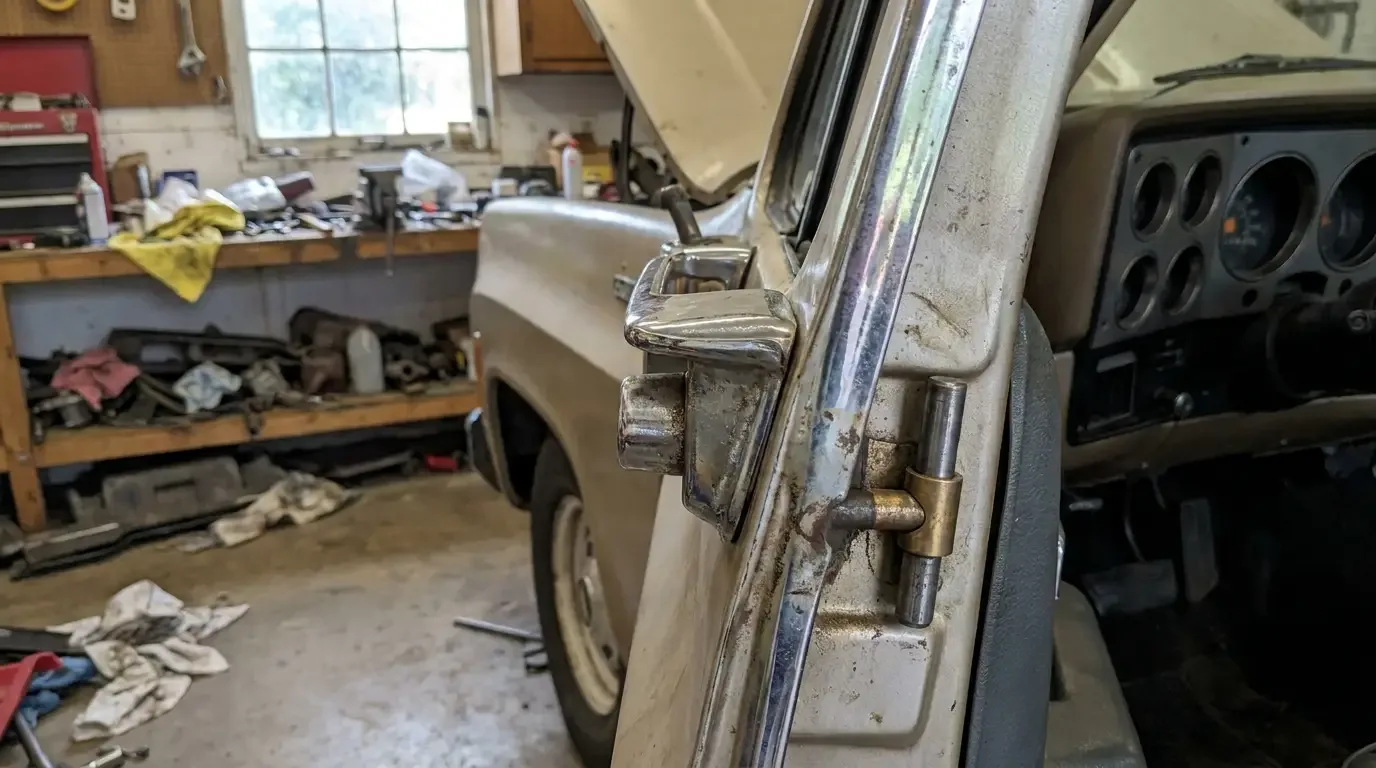
Door sag doesn't just look bad. It throws off every gap around it, makes the door harder to latch, and if it's left long enough it'll wear the striker and latch mechanism trying to compensate for a door that's not hanging where it should. This is a job worth doing right the first time rather than living with a door you have to lift and slam.
Why C10 hinges wear out
The factory hinges use a pin and bushing setup, and over decades of opening and closing, the pin wears the bushing bore oval instead of round. That elongation is what lets the door drop. Add in the weight of the door itself, which is substantial on these trucks, and the wear accelerates once it starts, since a slightly sagging door puts uneven load on the hinge every time it swings.
Trucks that spent their life as work trucks tend to be worse for this than ones that sat mostly closed in a garage, simply from the cycle count of getting in and out all day. Dirt and grit in the hinge pin area accelerates wear too, acting like fine grinding compound every time the door moves. A hinge that's never been lubricated in forty years is going to be further gone than one that got occasional grease.
Diagnosing which part is actually worn
Before you replace anything, figure out exactly where the play is coming from. Support the door with a jack or a helper so it's not hanging on the hinges, then check for movement at each hinge pin individually. Some sag comes from the upper hinge, some from the lower, and quite often it's uneven between the two, with one hinge significantly worse than the other.
Check the door striker and latch too while you're in there. A door that's been sagging for years can wear the striker plate or the latch mechanism trying to compensate, and replacing hinges alone won't fix a latch that's already worn from years of misalignment. Fix the hinges first, then reassess whether the latch needs attention once the door is hanging correctly again.
Replacing the hinges
Support the door fully before removing any hinge bolts. These doors are heavy enough that letting one swing free on a single remaining hinge risks bending the hinge or straining the door skin at the mounting points. A padded floor jack under the door, adjusted so it's taking the actual weight, makes this a two-hinge job instead of a two-person wrestling match.
Remove one hinge at a time rather than pulling both and setting the door aside completely, unless you're also doing paint or bodywork that requires the door off entirely. Working one hinge at a time keeps the door referenced in roughly the right position, which makes reinstallation and gap-setting easier than starting from a door that's been sitting on a bench.
New hinge pins and bushings, or a full replacement hinge, bolt into the factory locations. Torque the mounting bolts to spec once the door is supported and aligned, then check for play again before you move on. If there's still play after a fresh hinge is installed, check the mounting surface on the cab and door itself, since worn out mounting holes or a bent hinge mount will let a brand new hinge still show play.
Don't forget the door check strap
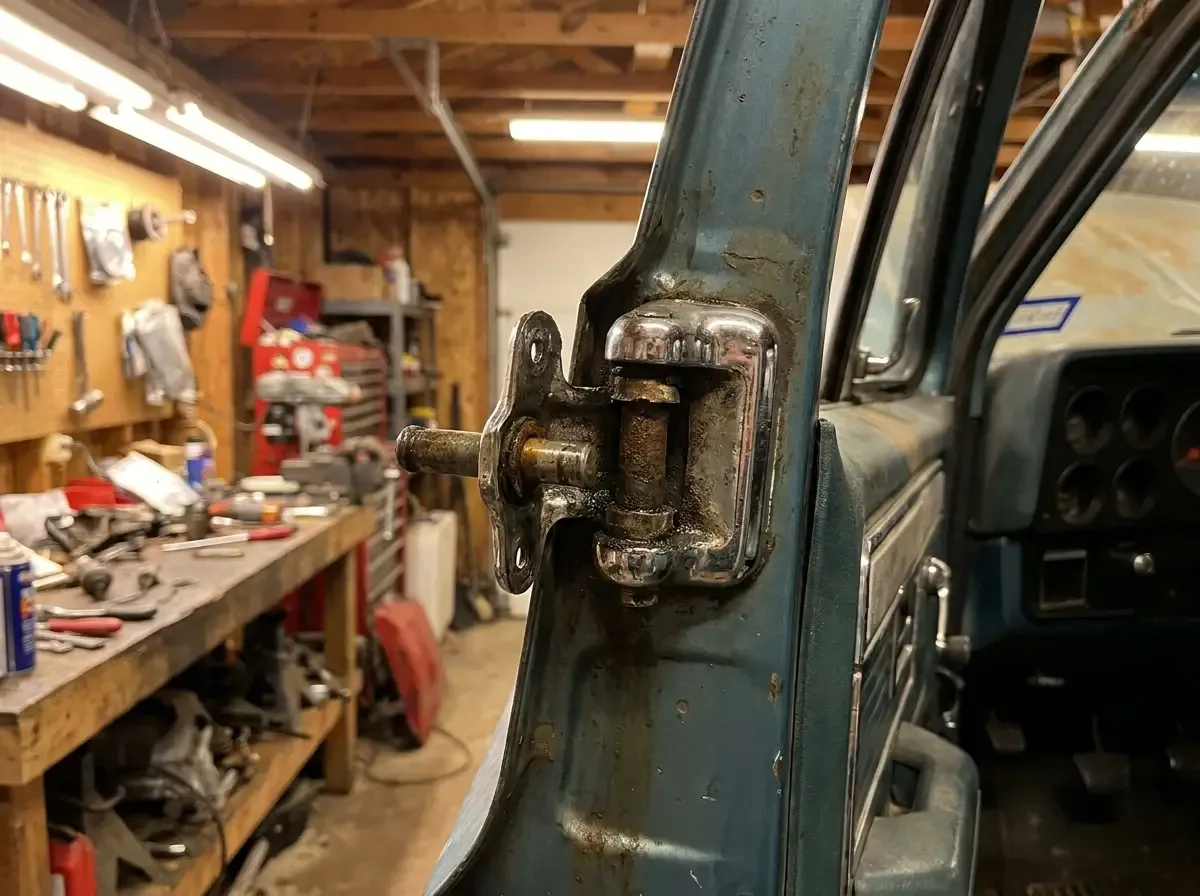
The door check mechanism, the rod and roller assembly that stops the door from swinging past a certain point, lives right next to the hinges and gets ignored during a lot of hinge jobs. If it's bent or the roller's worn flat, the door can swing further than it's supposed to and slam shock load right back into the hinges you just fixed, which is a good way to end up doing the same job twice inside a year. The check strap hardware itself varies somewhat between the early trucks and the later square-body generation, so don't assume a part or fix from one era bolts straight onto the other without confirming it against your own door. Check it while the door's off anyway. It's cheap insurance against redoing work you just finished, and it's a lot easier to inspect with the door out of the way than after everything's bolted back together.
In my experience the lower hinge carries more of the door's static weight and tends to wear first on trucks that lived a working life with the door slammed shut a dozen times a day. The upper hinge usually goes second, worn more from the swinging motion than from bearing the load. Neither one is a reason to replace just one side and call it done. If one hinge is worn enough to cause visible sag, the other has usually been carrying uneven load for a while too, and it's only a matter of time before it catches up.
Setting the gap after the hinge work
Once the new hinges are in, the door will likely need its position adjusted at the hinge mounting slots to get the gaps even again, since a sagging door and a properly hung one sit in different spots relative to the surrounding sheet metal. Loosen the hinge to door bolts slightly, work the door into position checking the gap at the cab and rocker, then tighten in stages the same way you would with a fender or hood.
Don't be surprised if fixing the hinge reveals a gap problem that was actually hiding somewhere else, like a slightly bent striker or a rocker that got tweaked during a prior repair. Hinge replacement is often the first domino in getting a door to actually sit right, not the whole fix by itself.
"A sagging door is one of those problems people live with for years because it's not dangerous, it's just annoying. But it tells you the truck's been used hard and not maintained closely. I'd rather see a truck with tired hinges that's honest about it than one where somebody shimmed around the problem to make it look tighter than it is."
Mike Sullivan
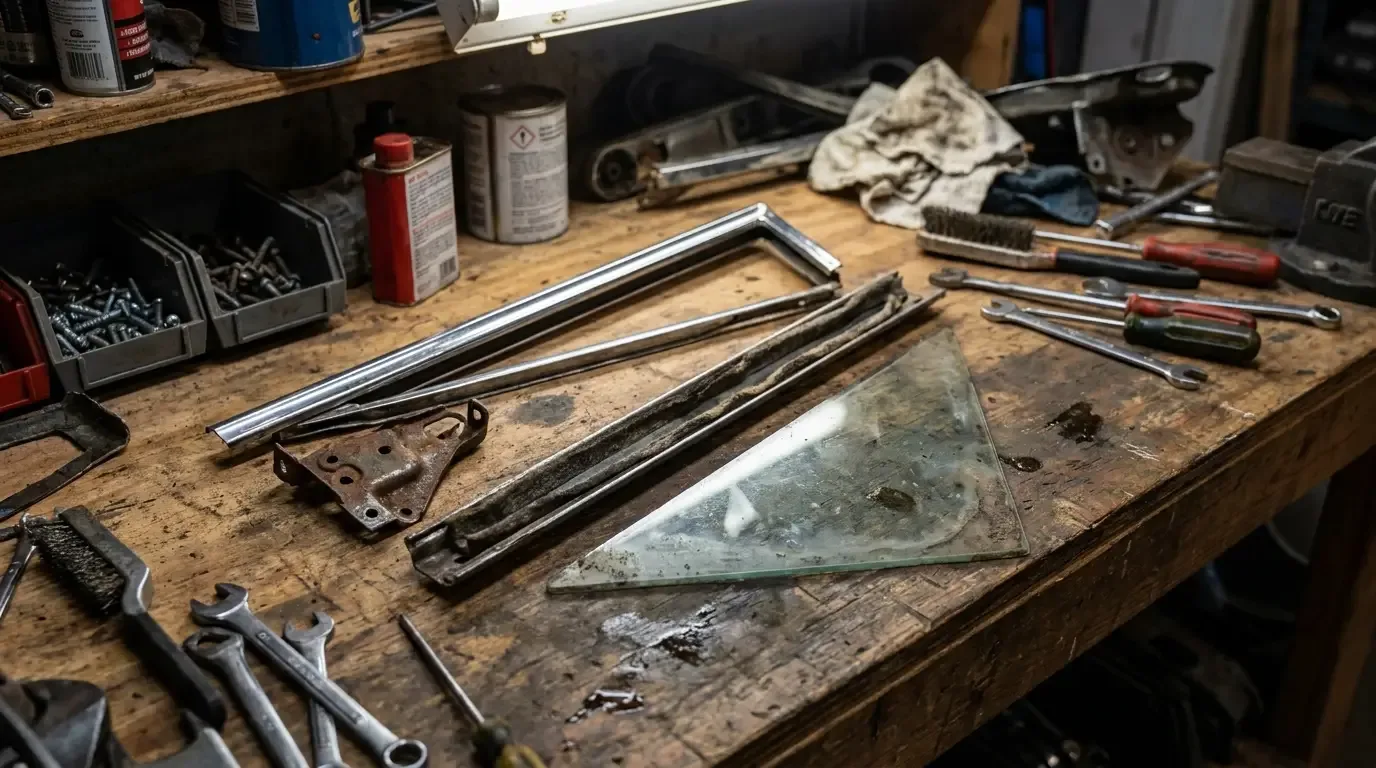
Door hinge work often comes up alongside a broader restoration pass, so if you haven't already, the C10 restoration guide is worth reading to see where this fits into a full build sequence. And while the door's apart for hinge work, it's a good time to look at the vent window that lives in that same door, since vent window seals and hardware wear out on roughly the same timeline as the hinges and you're already halfway into the door anyway.
Sources and notes
- C10 Trucks forum: door fit and hinge wear discussion
- Rust Belt OffRoad: key differences across Chevy/GMC C/K trucks, 1967-1987
- LMC Truck: 1973-87 front door components parts catalog
- 67-72 Chevy Trucks forum: 1971 vs. 1972 C10 door differences
- Full Size Chevy: complete square-body C10 guide, 1973-1987
Related Reading
Have a
Chevrolet C10
for Sale?
Reach thousands of serious classic car collectors across the US.
Sell It Here →
Are You a Classic Car Dealer?
List your full inventory and connect with targeted classic car buyers.
Join as a Dealer →

About the author
Mike Sullivan
Detroit-area muscle car enthusiast and restoration specialist with three decades of hands-on experience working on American iron.
Related Listings - Chevrolet C10

More in Restoration & Tech
Comments
Be the first to comment on this article.