
I've pulled enough carpet out of enough C10s to know what's coming before I even get a screwdriver under the sill plate. Rust doesn't announce itself. It just sits there quietly eating steel while the seller tells you the truck is "solid." Floor pans are the first place I look and usually the first place I find bad news.
Restoration & Tech
6 min read
Replacing Rusted C10 Floor Pans: A Step-by-Step Guide
A hands-on walkthrough of diagnosing, cutting out, and welding in new C10 floor pans, from finding the rust to sealing the finished weld.
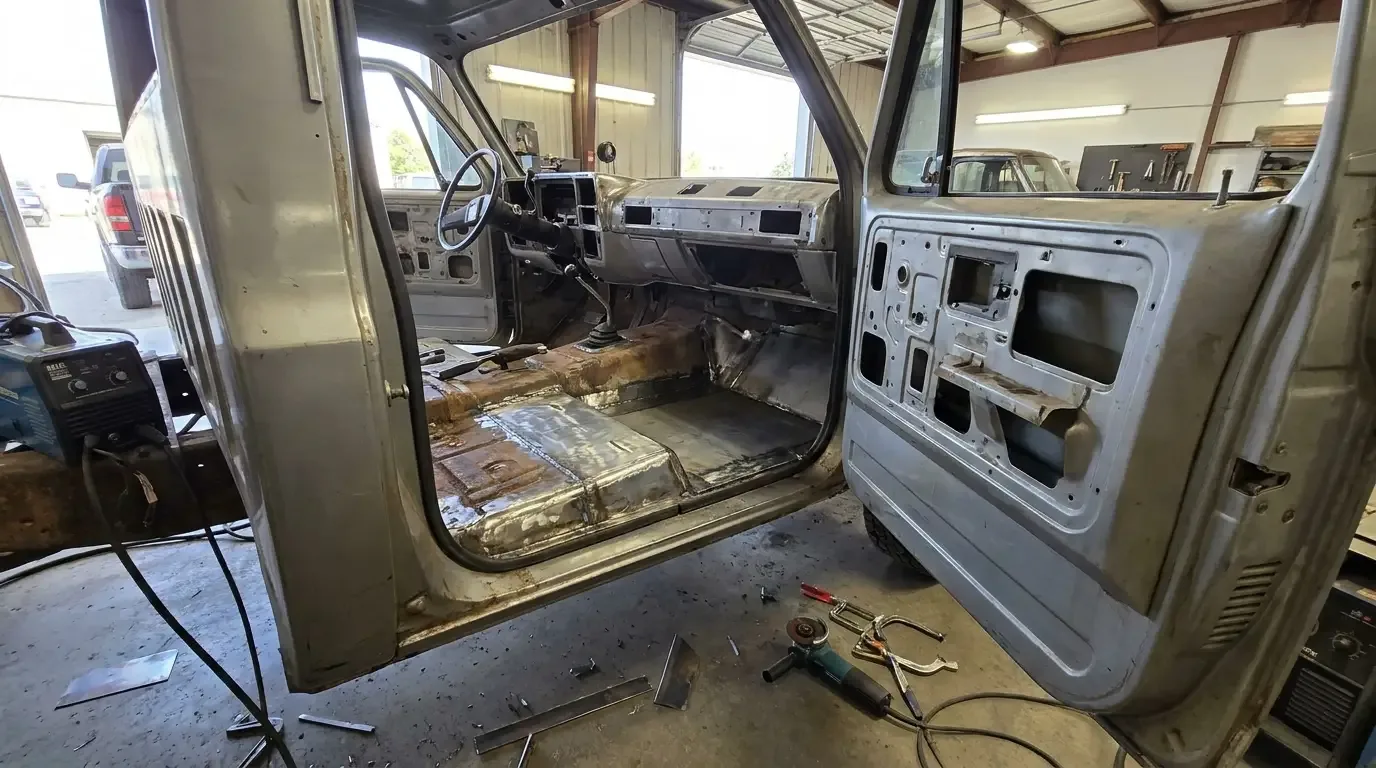
The good news is floor pan work is about as forgiving a rust repair job as you'll find on a C10. It's flat sheet metal in a mostly accessible area, the aftermarket makes full pans and patch sections for these trucks, and you don't need to be a fabricator with twenty years of stick time to get a clean result. You do need patience, a truck up on stands where you can actually work under it, and a willingness to cut out more than you think you need to.
Why C10 floor pans rust the way they do
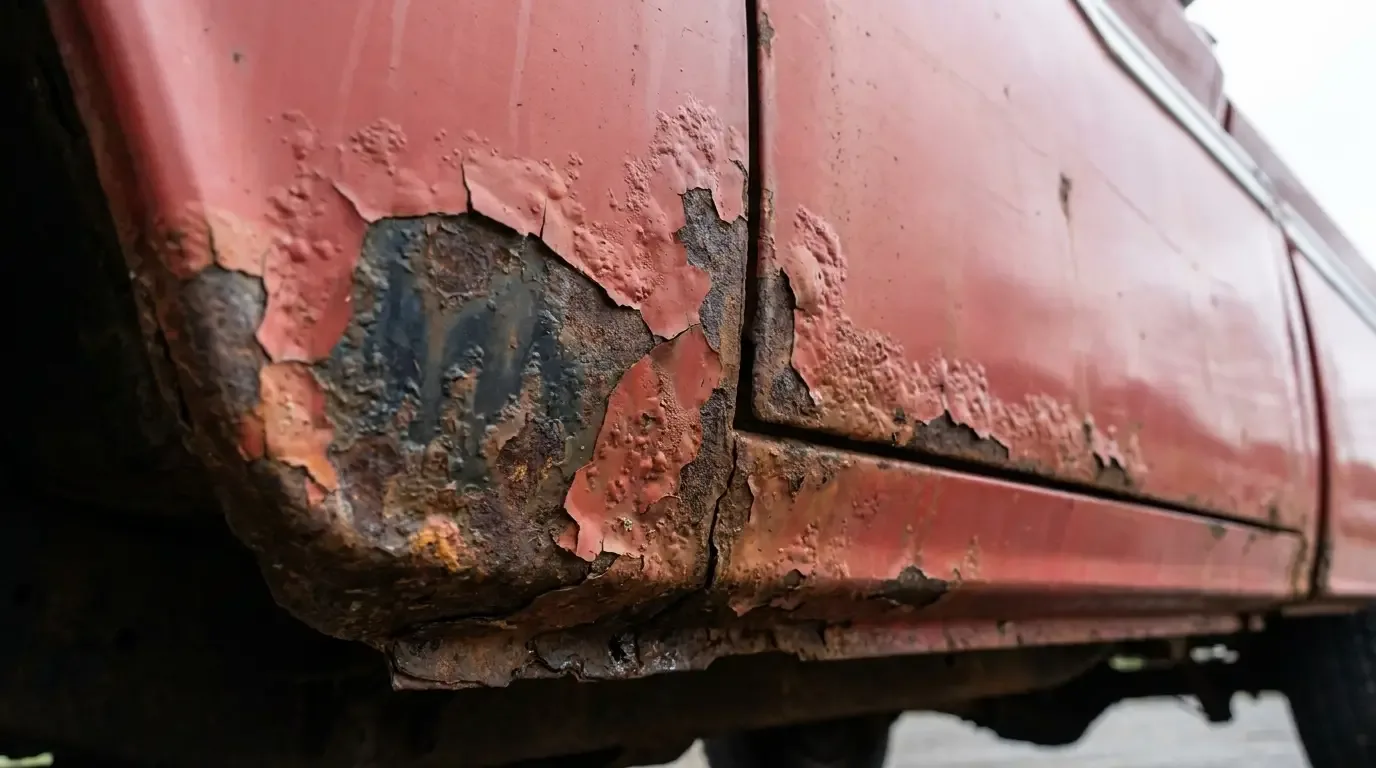
Water gets in through the cowl, through cracked door seals, through the vent window channel, and it runs down and pools right where the floor meets the rocker and the toe boards. It sits there under the carpet and jute padding, which holds moisture against bare metal instead of letting it dry out. By the time you notice a soft spot under your boot, the pan has usually been rotting from the underside for years while the top surface still looks presentable under carpet.
Cab mounts make it worse. The mounting points trap debris and hold water right at a stress location, so you'll often find the worst pan rust concentrated around the cab mount bolts rather than spread evenly across the floor. Check there first. If a magnet won't stick near a cab mount, you've already found your starting point.
Assessing how bad it actually is
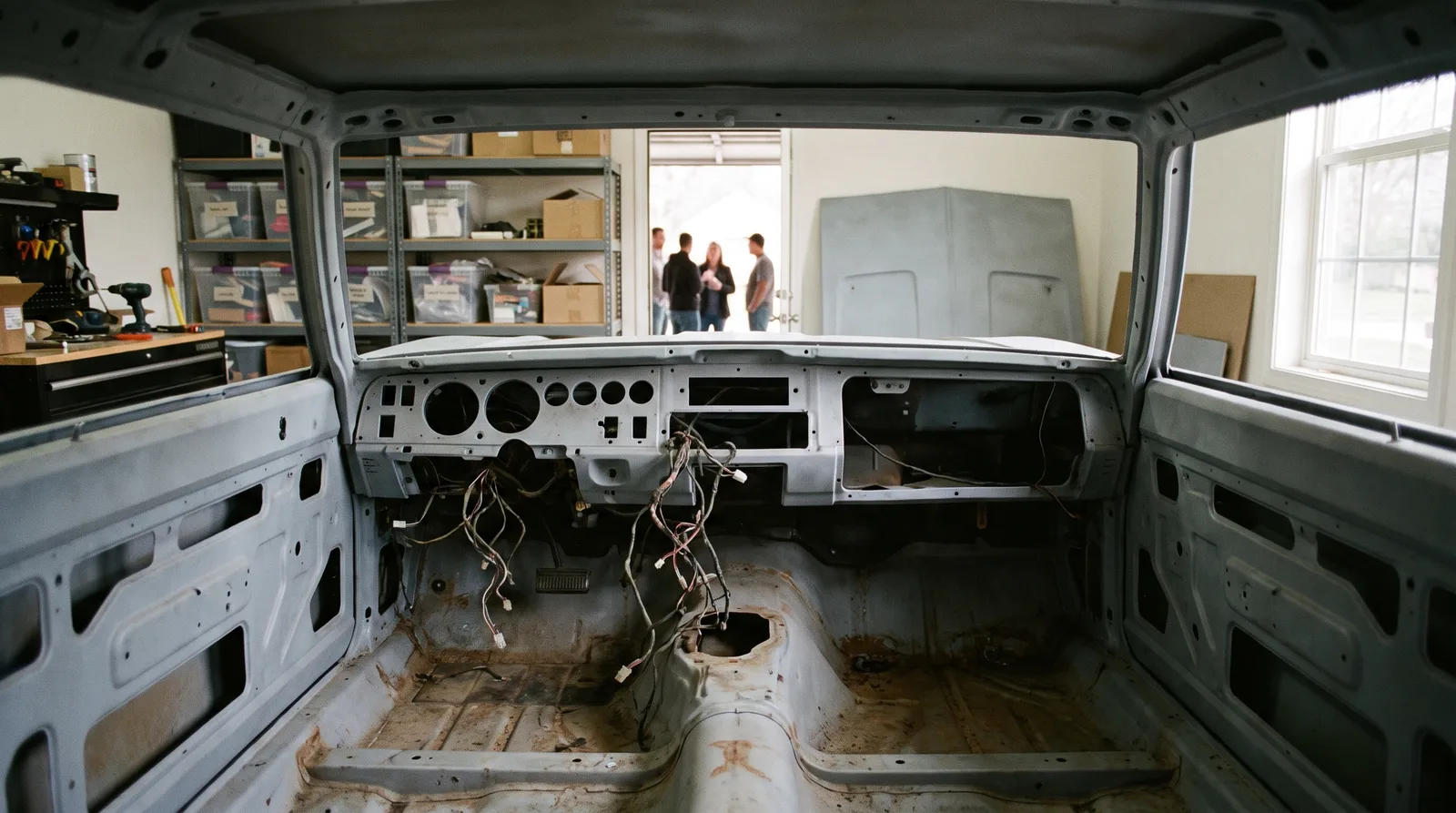
Before you cut anything, get the truck up high enough to work comfortably and pull the seats, carpet, and jute out completely. Wire wheel the surface rust off what remains so you can see actual metal condition, not just surface discoloration. Tap around with a small hammer. Solid steel gives a sharp ring. Rusted steel gives a dull thud, and thin steel will sometimes just crumble under light pressure.
Map out the damage before you decide on patch panels versus a full pan replacement. If the rust is isolated to the front footwells or the rear corners near the wheel tubs, patch panels save you time and keep more of the original structure intact. If you're finding thin metal across most of the floor, buy the full pan. Chasing rust with patch after patch usually ends up costing more in panels and labor than doing the whole floor once.
Cutting out the old metal
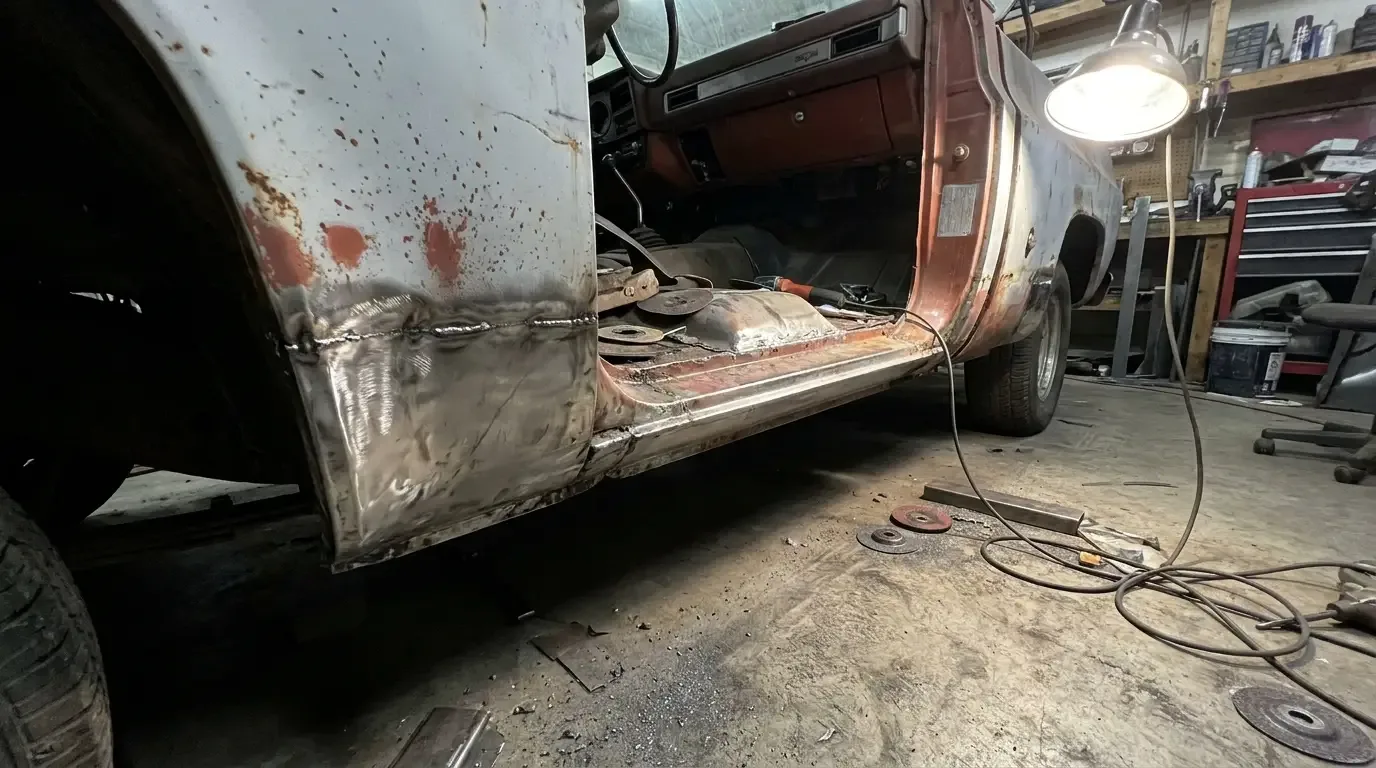
Use a cutoff wheel or plasma cutter to remove the rusted section, cutting back to metal that rings solid when you tap it. Don't cut right at the edge of visible rust. Rust migrates further than it looks, and cutting a couple inches into what appears to be good metal is cheap insurance against welding new steel to metal that's already compromised underneath.
Leave yourself a lip to weld to rather than cutting flush against a seam or brace. A butt weld with a backing strip or a slight overlap is more forgiving for a home builder than trying to get a perfect edge-to-edge fit with no support behind the joint. This is also the point where you want to check the frame and outriggers underneath, since floor rust often means the metal below it has taken on moisture too.
Fitting and welding the new pan
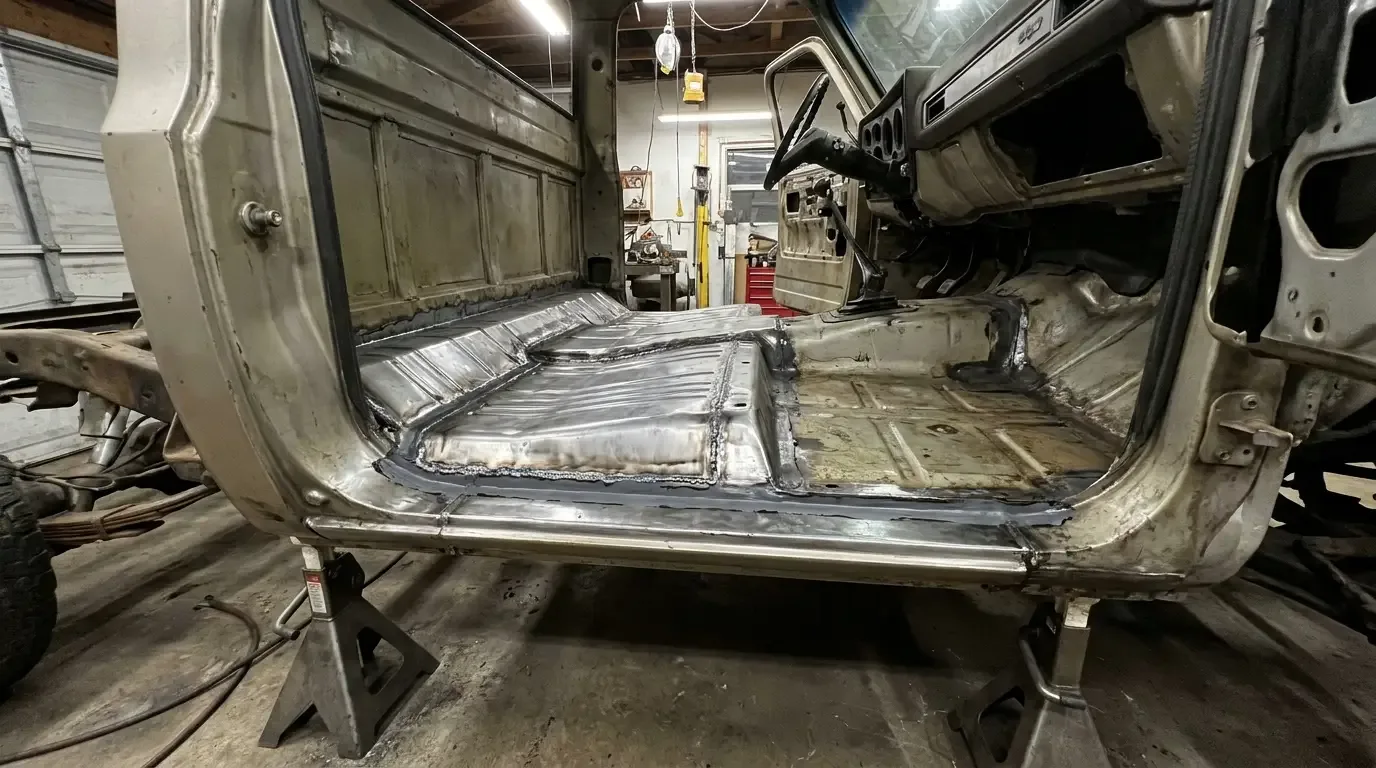
Test fit before you commit to any welding. Clamp the panel in place, check it against the door opening and the rocker, and make sure the cab mount holes line up before you strike an arc. New pans need trimming more often than you'd expect, especially around the transmission tunnel and toe board transitions where reproduction tolerances vary.
Weld in short stitches, working around the panel rather than running a long continuous bead. A continuous weld builds up heat and warps thin sheet metal, and once a floor pan is warped you'll fight it through every step that follows, from carpet fit to door gaps. Let each stitch cool before moving to the next spot. It's slower. It's also the difference between a floor that lays flat and one that looks like a washboard once you put a light across it.
Seam seal every weld from underneath once you're done, and hit the bare metal with weld-through primer before final assembly. Skipping this step means you're just setting up the next guy, maybe yourself in ten years, for the exact same job.
"A floor pan job tells you more about a truck's overall condition than almost anything else you'll touch. If the floor's been neglected, I go looking for the same neglect at the cab corners and rockers, because water doesn't stop at the floor. It just keeps traveling until it finds the next low spot."
Mike Sullivan
If you're working through this as part of a bigger restoration rather than a standalone patch job, it's worth reading through the restoration guide before you get too deep into the floor, since sequencing matters on a full build. And once the floors are solid, don't be surprised if you end up looking hard at the cab corners and rockers that usually go with them. Water that rots a floor pan rarely stops there.
What this job actually costs you
A full floor pan set runs somewhere in the $300 to $700 price range depending on the supplier, with a heavier-gauge full pan from a supplier like Dynacorn running close to $650, and that's before welder time, cutoff wheels, and the seam sealer and primer you'll go through. If you're paying a shop for labor on top of parts, budget for a full day minimum on a truck with clean, accessible rust, and more if they find surprises underneath once the carpet's out, which happens more often than not.
Do it yourself with a decent MIG welder and some patience, and you're mostly buying panels and consumables. That's the trade-off with these trucks. The work isn't exotic. It just takes time nobody wants to spend, which is exactly why so many C10s on the market have floors that look fine until you get a light and a magnet underneath them.
Sources and notes
- Speedway Motors: 67-72 C10 cab floor and rocker panel rust repair, with Dynacorn full floor pan pricing
- Chevy Hardcore: replacing a square-body floor pan with an AMD reproduction panel
- Classic Industries: Chevrolet truck floor pan parts catalog
- Auto Metal Direct: 73-87 square-body front cab floor half, drop-in style
- GMT400 forum: real-world shop quotes for rust repair labor and parts
Related Reading
Have a
Chevrolet C10
for Sale?
Reach thousands of serious classic car collectors across the US.
Sell It Here →
Are You a Classic Car Dealer?
List your full inventory and connect with targeted classic car buyers.
Join as a Dealer →

About the author
Mike Sullivan
Detroit-area muscle car enthusiast and restoration specialist with three decades of hands-on experience working on American iron.
Related Listings - Chevrolet C10
More in Restoration & Tech
Comments
Be the first to comment on this article.