
A gauge cluster that's gone dim, sticky, or just plain wrong is one of those problems people live with longer than they should. The fuel gauge reads a quarter tank when the truck's actually running on fumes. The speedo needle bounces at highway speed instead of holding steady. The lens has gone so yellow and hazy you can barely read the numbers at night. None of it stops the truck from driving, so it sits on the list behind bigger jobs, and the list gets longer every year.
Restoration & Tech
7 min read
Restoring C10 Gauges and Instrument Clusters
How to diagnose, rebuild, and calibrate a C10's fuel, temperature, oil pressure, and speedometer gauges, plus restoring a yellowed lens and bezel.
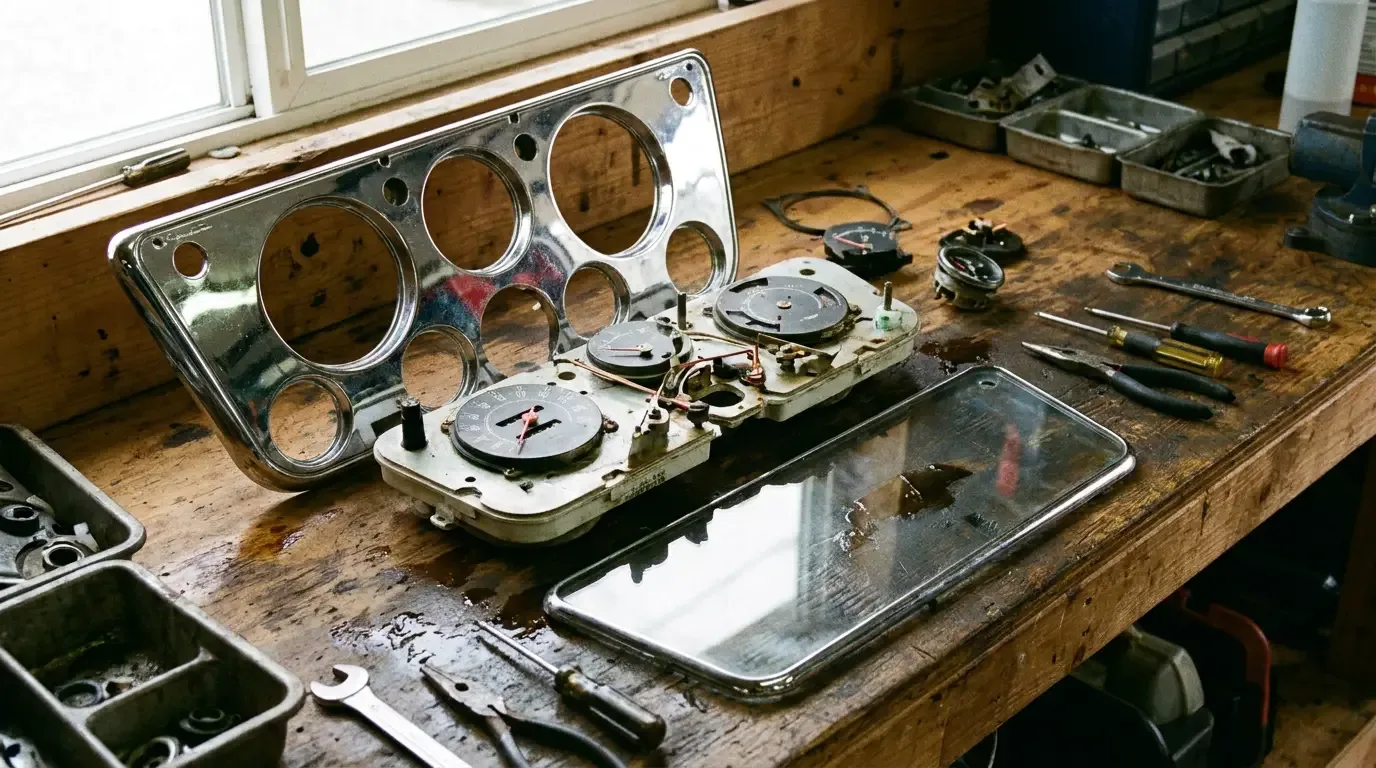
The good news is that most of what goes wrong with these clusters is mechanical and electrical, not some mystery you need a specialist for. A patient afternoon on the bench, the right small parts, and a little care with fifty-year-old plastic will bring most of these back to something that reads accurately and looks right doing it.
What actually goes wrong with these gauges over time
Fuel and temperature gauges on these trucks work off simple resistance-based senders and bimetallic gauge movements, and the gauges themselves rarely fail outright. What fails is the connections. Corroded terminals at the back of the cluster, a worn printed circuit board with hairline cracks in the traces, and grounds that have loosened over decades of vibration all cause gauges to read inaccurately long before the gauge mechanism itself actually dies. That's worth knowing before you assume you need a whole new cluster when a cleaned connection might solve it.
The speedometer has its own separate failure points, mostly the cable itself going dry or fraying inside its housing, which shows up as a needle that jumps around or a speedo that makes noise at certain speeds. The odometer gears inside the speedo head can also wear or slip, which is a different repair than anything electrical and usually means the speedo head itself needs to come apart.
Getting the cluster out
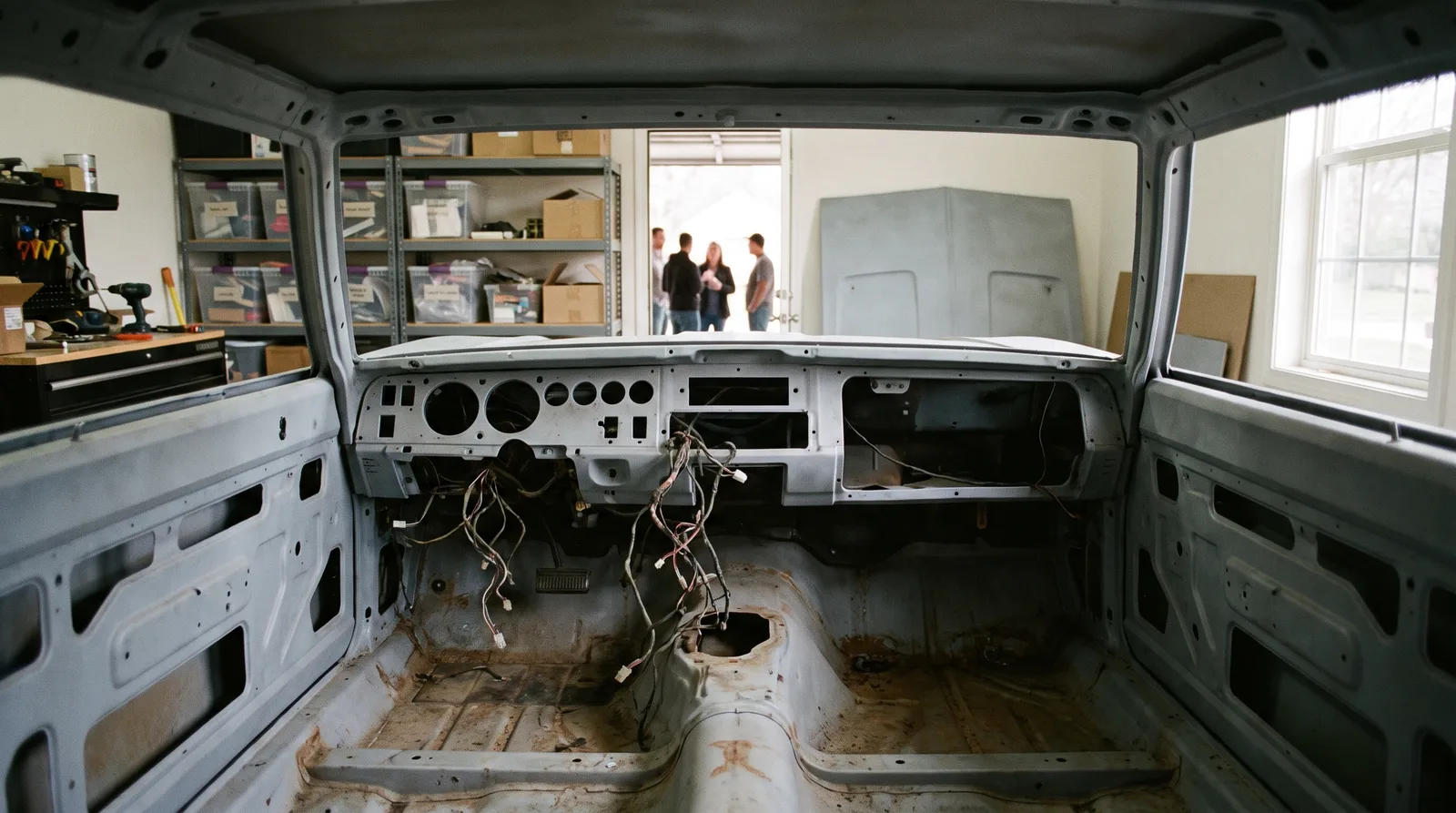
Pulling the cluster means getting into the dash, and how much of the dash has to come apart depends on the specific truck and whether you're also planning other dash work while you're in there. Disconnect the battery before you start pulling anything electrical. Photograph the wiring at the back of the cluster before disconnecting it, the same as you would with any harness work, since the connectors aren't always obviously keyed to only fit one way after decades of handling.
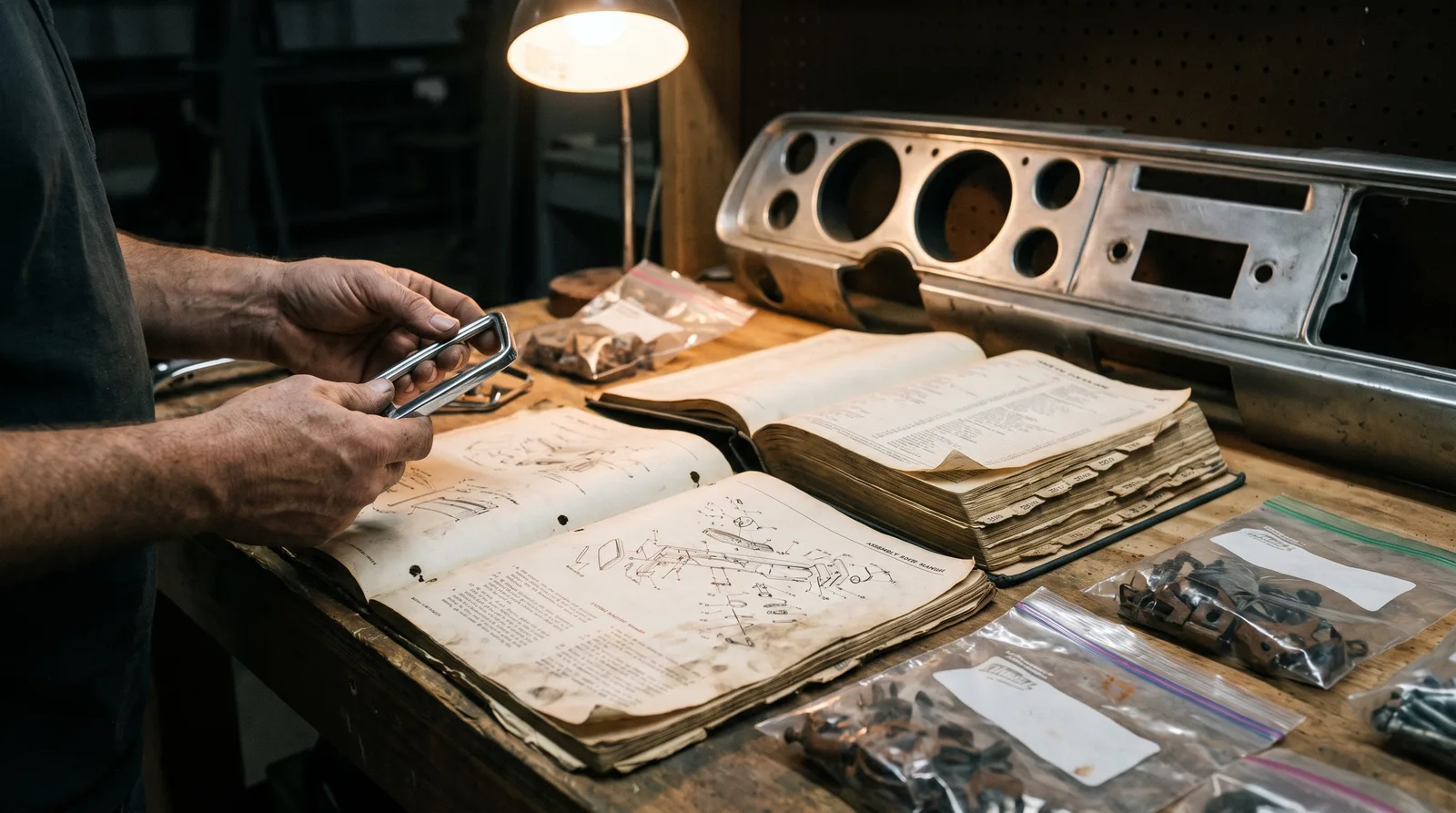
Once it's out, work on a clean bench with good light, not on the truck's fender or the shop floor where small screws and clips disappear. These clusters have more small fasteners and clip points than people expect, and losing track of which lens screw came from where turns a straightforward job into a puzzle when it's time to put it back together.
Rebuilding the individual gauges
Fuel and temperature gauges typically just need cleaned and tightened connections along with a check of the sending unit itself, since a gauge reading wrong is often the sender's fault rather than the gauge. Test the sender's resistance range separately before assuming the gauge in the dash is the problem, because swapping a perfectly good gauge won't fix a fuel sender that's stuck or corroded in the tank.
The speedometer usually needs the cable replaced if it's original, since dry-rotted cable housing and a dried out inner cable cause most of the needle bounce and noise complaints on these trucks. If the speedo head itself has odometer gear wear, that's a separate rebuild involving disassembly of the head, and it's a fussier job than the cable, worth farming out to a specialist if you don't want to source obsolete internal gears yourself. Oil pressure gauges on the mechanical type use a small capillary tube running to the engine, and a reading that's stuck usually means a kink or leak somewhere in that line rather than the gauge itself.
Lens, bezel, and needle cosmetics
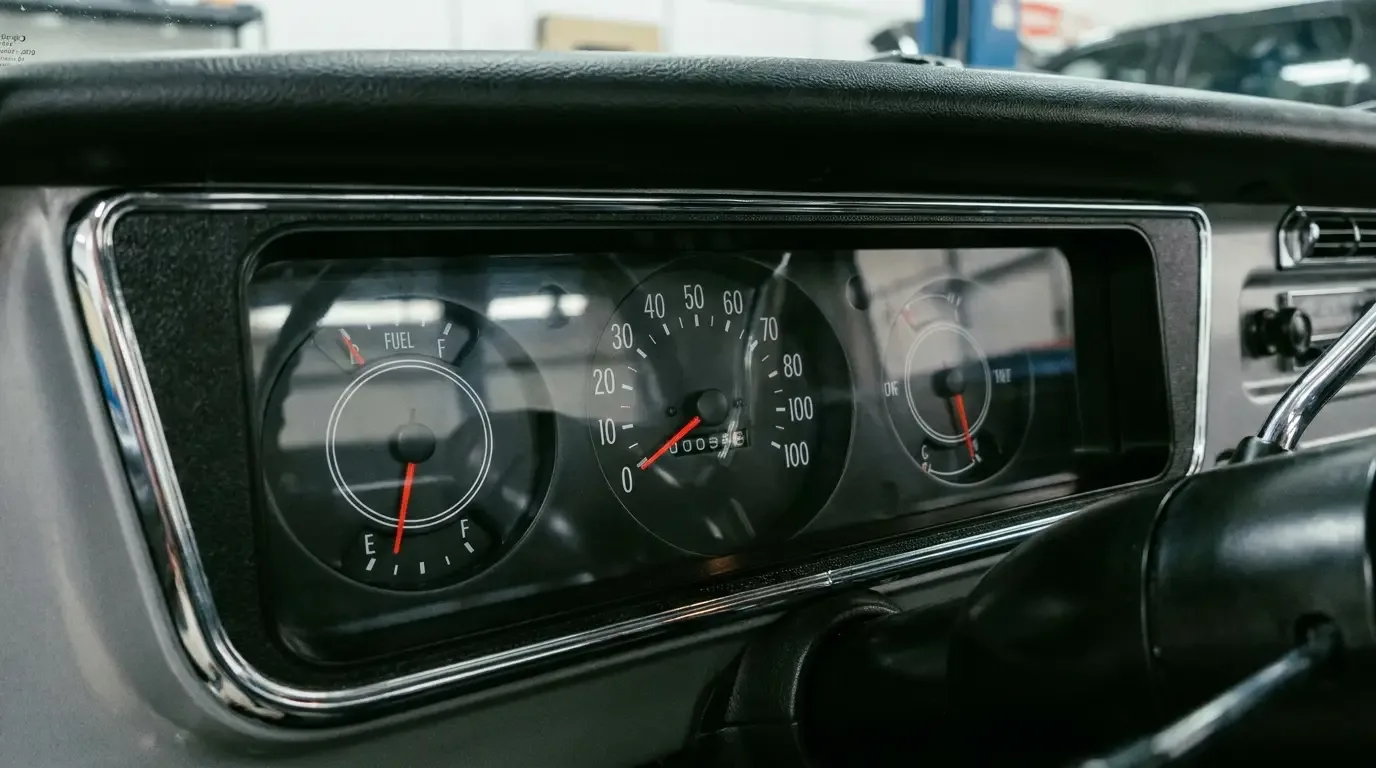
A yellowed lens is one of the more satisfying fixes on the whole truck, since a proper polish or a fresh replacement lens transforms how the dash reads at a glance. Wet sand and buff a hazy original lens the same way you'd approach clouded headlight lenses, working through progressively finer grits before polishing, and it will usually clear up dramatically. If the lens is cracked or too far gone, reproduction lenses exist for most of these clusters and are a straightforward swap.
Needles that have faded or lost their paint can be carefully touched up, though this is delicate work best done with a fine brush and a steady hand rather than a spray can anywhere near the gauge face. The bezel trim around the cluster benefits from the same kind of attention that any interior brightwork gets, since a freshly cleaned lens next to a dull, corroded bezel just draws attention to the contrast.
Reinstalling and checking calibration
Before buttoning the dash back up, reconnect the cluster and test every gauge with the engine running, not just with the key on. A fuel gauge can look right with the key on and still read wrong under actual engine vibration and electrical load. Check the speedometer against a GPS-based reference on an actual drive once everything's reinstalled, since even a properly rebuilt cluster can read a few percent off if the tire size or rear axle gear ratio doesn't match what the speedo drive gear was originally calibrated for. The math is straightforward: larger-than-stock tires cover more ground per revolution and make the speedo read slow, while a numerically higher (lower) axle ratio has the opposite effect, so if the error is more than a percent or two, work out your actual axle ratio and tire diameter and compare against a speedometer gear calculator before assuming the cluster itself is still off.
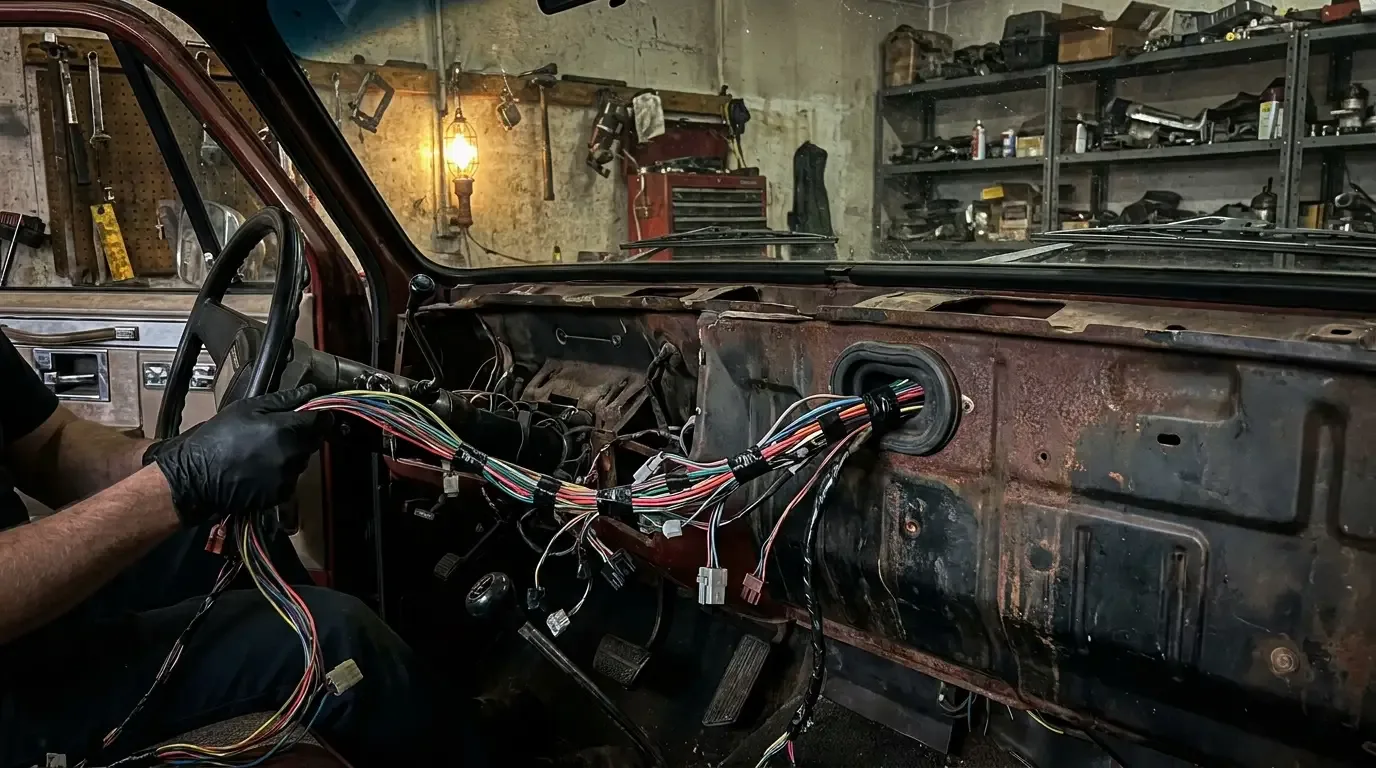
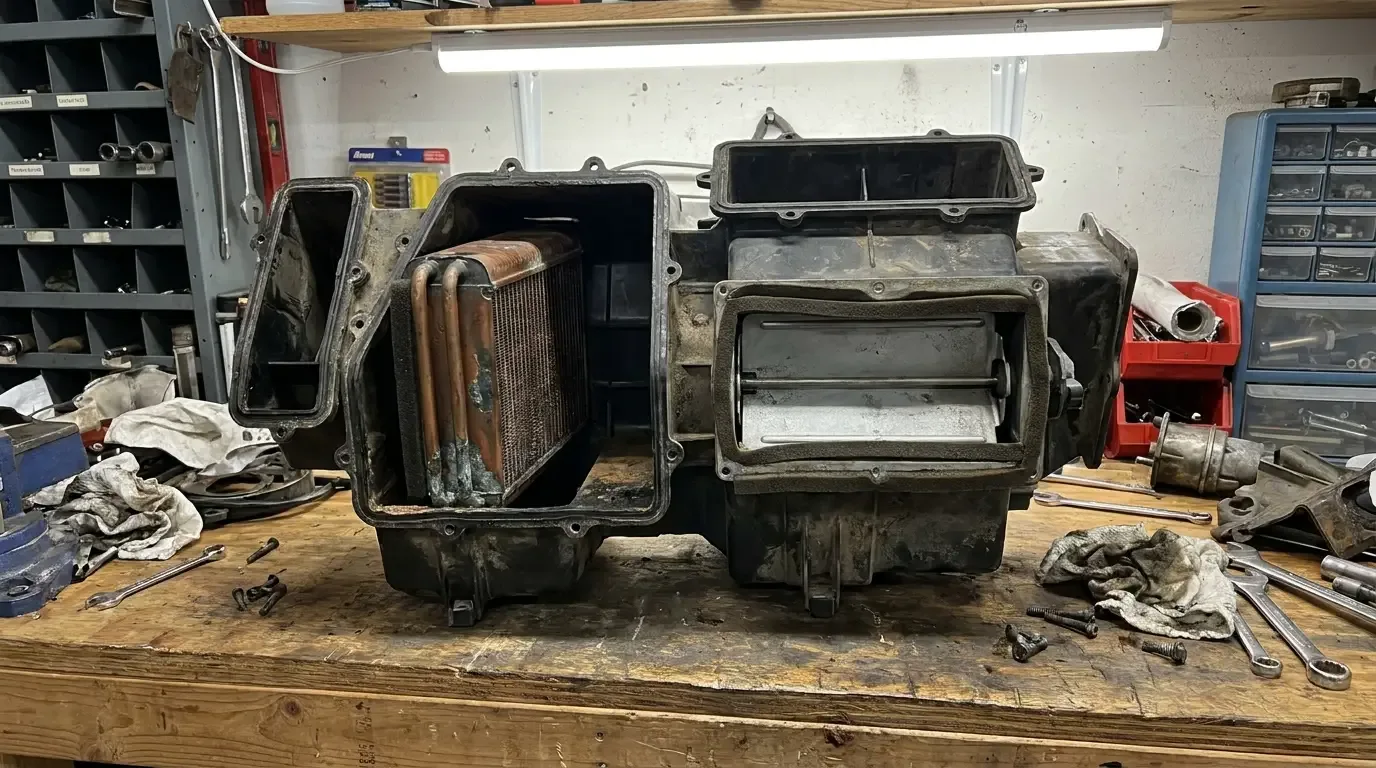
This is also a natural point in a dash-out project to think about what's mounted right behind the cluster, since the heater box sitting right behind that dash is one of the more commonly overlooked failure points on these trucks and is a lot easier to address while everything's already apart than after the dash is buttoned back up for good.
"People assume a gauge that reads wrong needs replacing. Half the time it's a dirty ground or a tired sending unit, and the gauge itself is fine. Clean the connections first. You'll save yourself buying parts you didn't actually need."
Mike Sullivan
Gauge work is one piece of a larger dash and electrical overhaul on most of these trucks, and it's worth checking the restoration guide to see where this fits relative to wiring and interior work that touches the same area.
Sources and notes
Related Reading
Have a
Chevrolet C10
for Sale?
Reach thousands of serious classic car collectors across the US.
Sell It Here →
Are You a Classic Car Dealer?
List your full inventory and connect with targeted classic car buyers.
Join as a Dealer →

About the author
Mike Sullivan
Detroit-area muscle car enthusiast and restoration specialist with three decades of hands-on experience working on American iron.
Related Listings - Chevrolet C10
More in Restoration & Tech
Comments (1)
D
Dale Pruitt
1 month ago
Any suggestions on marque clubs for this car? Trying to find someone who really knows this platform in my region.