
Most of the damage I see on muscle cars did not happen on the road. It happened sitting still. A car parked wrong for one winter can come out in spring with a flat-spotted set of tires, a varnished carburetor, mice in the heater box, and rust starting where condensation pooled. Storing a classic muscle car is not complicated, but the guys who do it badly pay for it later, and the repairs cost more than the storage ever would have.
Restoration & Tech
6 min read
Storing a Classic Muscle Car Properly
How to store a classic muscle car the right way: garage setup, fuel and fluids, battery, tires, and keeping rodents out so it starts and drives come spring.
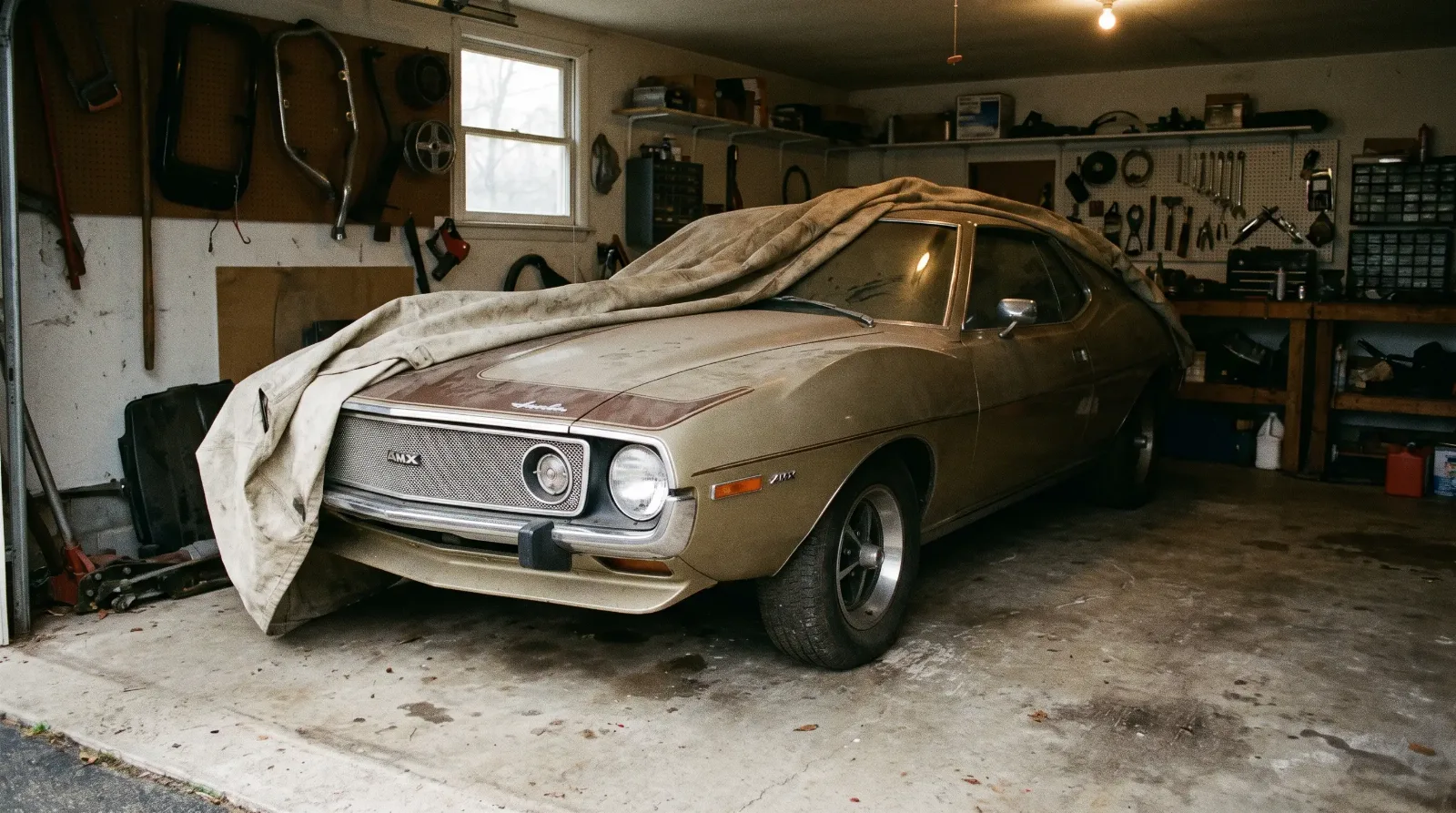
I have pulled enough cars out of long-term storage to know the pattern. The ones that were put away right start on the first crank and drive off. The ones that were just parked and forgotten need a weekend of work before they are safe to move. If you want the complete rundown on owning one of these cars, the complete rundown covers the whole ownership picture. This piece is just about doing storage right.
The building matters more than the car cover
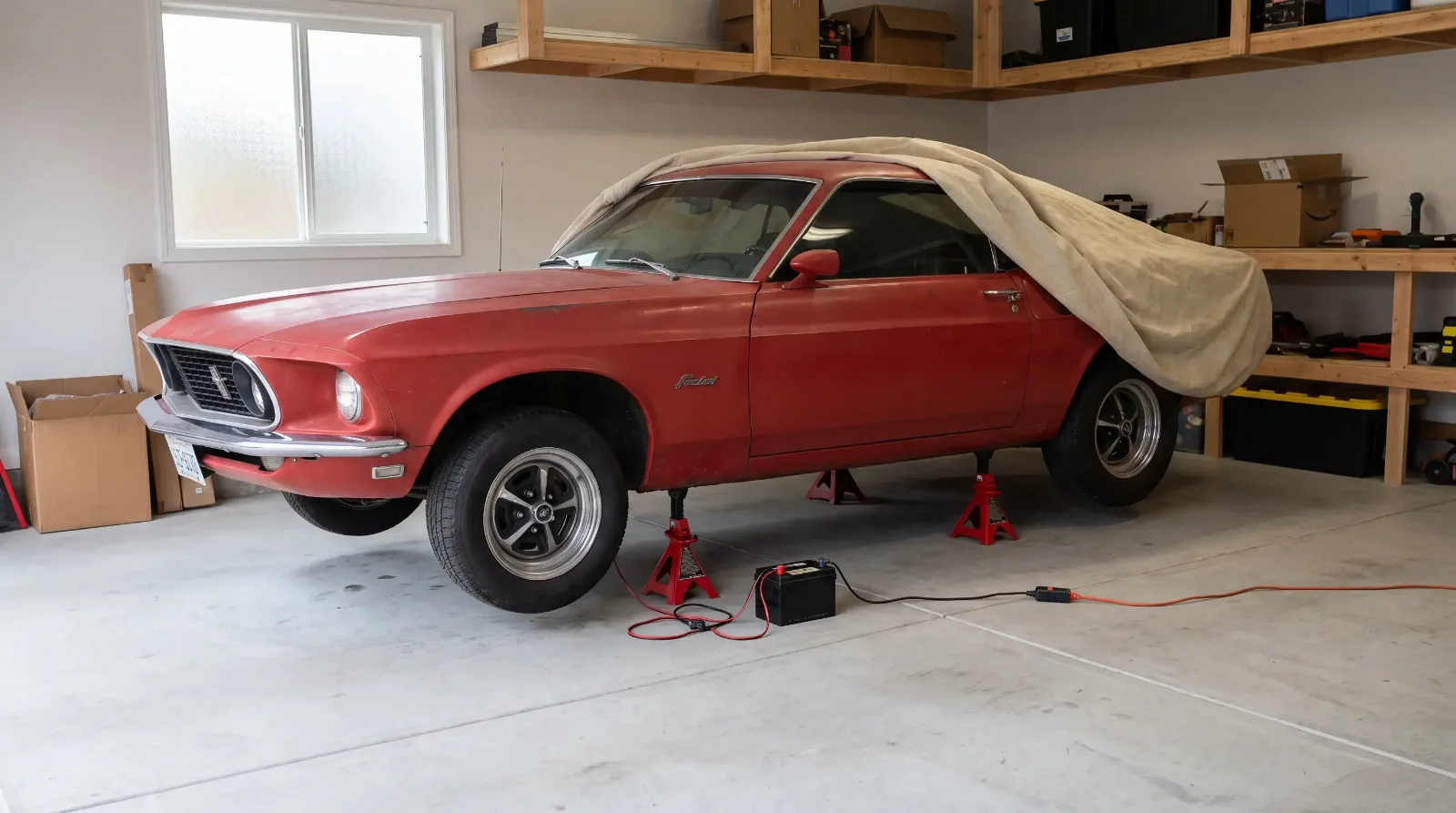
Start with where the car sits. A dry, ventilated garage beats a fancy car cover in a damp barn every time. The enemy is moisture, and moisture comes from a concrete floor with no vapor barrier, poor airflow, and big temperature swings that pull condensation out of the air and onto cold metal. If your floor sweats, put down a barrier under the car. A plastic sheet or a set of rubber mats keeps ground moisture from wicking up into the underbody.
Concrete is a heat sink, so the underside of a car parked on bare slab runs colder than the air and collects water. That water goes after the exact places these cars already like to rust. Airflow fights it. In a sealed-up building, a small fan or a couple of vents does more good than people expect. If you are fighting real humidity, a dehumidifier earns its keep. Skip the plastic tarp thrown right over the paint, though. It traps moisture against the finish and can mark it.
Fluids, fuel, and the stuff that goes bad
Fresh oil before storage, not after. Old oil carries acids and combustion byproducts, and you do not want that sitting in the bearings and on the cam for six months. Change it, run the engine to temperature so everything is coated, then park it. Top off the coolant with the right mix so the block is protected against the coldest night your area throws.
Fuel is where modern gas fights you. Ethanol-blended pump gas draws water and starts to break down in a couple of months, and it gums up carburetors and eats at fuel system parts. Fill the tank most of the way to cut down on the air space where condensation forms, add a fuel stabilizer, and run the engine long enough to pull treated fuel through the whole system, carburetor included. A full, stabilized tank stores far better than a half-empty one going stale.
🔧 Inspection Priorities
- Fuel system. Untreated ethanol gas gums a carburetor and corrodes lines within a season. Stabilize and fill before parking, or you are rebuilding the carb come spring.
- Cooling system. Wrong coolant mix cracks a block in a hard freeze. That is an engine-out repair, the most expensive miss on this list.
- Brakes. Old brake fluid absorbs water and pits cylinders and calipers from the inside. Flush before long storage.
- Tires. Underinflated tires flat-spot under the car's weight. Set them high or get the weight off them.
- Rodent entry points. Mice chew wiring and nest in air cleaners and heater boxes. Block the openings before they move in.
Battery, tires, and keeping the critters out
Pull the battery or put it on a tender. A battery left connected slowly drains, and a dead battery that sits flat all winter is usually a dead battery for good. A trickle charger or maintainer keeps it topped without cooking it. If you pull it, store it off the concrete on a shelf and keep it charged.
Tires flat-spot when a car sits on them for months, especially older bias-ply or an aging radial. Air them up above normal pressure to spread the load, or better, get the weight off them with jack stands under the frame. On rodents, this is the part people laugh about until they find a nest in the intake. Steel wool in the exhaust tips and any open air path, mothballs or dryer sheets in the cabin, traps set around the car. Mice will chew a wiring harness to pieces, and that is a miserable repair to trace.
Bringing it back out right
Recommissioning is where a well-stored car pays you back. Before you crank it, walk around and undo whatever you disabled. Pull the steel wool. Reconnect and check the battery. Look under the car for fresh fluid spots and for any sign that something moved in. Check tire pressures and bring them back to spec.
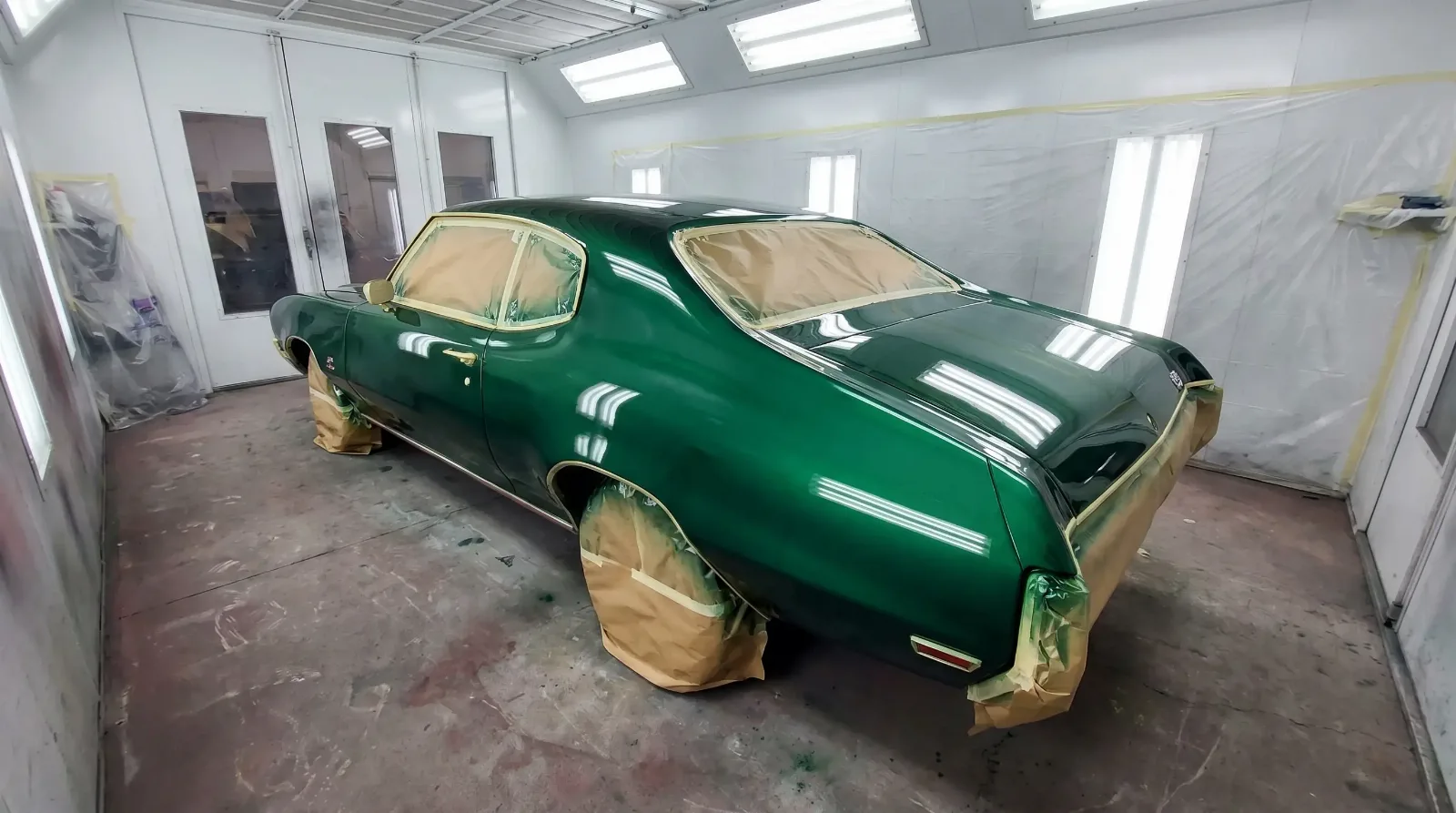
Then take a minute before the first start. Verify oil and coolant levels, glance at the fuel for anything that looks like water separation, and if it sat a long time, it is not a bad idea to prime the oil system before it fires. A car put away correctly rewards all of this by starting easily and driving like you left it. Storage done right is the cheapest protection you can put on the work already in the car, and it sets up whatever comes next, whether that is a fresh respray or just a good driving season. When paint is on the list, read the full story on getting factory finishes right.
"Nobody wrecks a muscle car on purpose. They just park it wrong, walk away for a winter, and let condensation and stale gas do the damage a crash never could."
Mike Sullivan
Put the car away dry, with fresh oil, treated fuel, a maintained battery, and the weight off the tires, and block the mice out. Do that and storage stops being a risk. It becomes the thing that keeps the car exactly as good as the day you parked it.
Related Reading

Have a
Classic Car
for Sale?
Reach thousands of serious classic car collectors across the US.
Sell It Here →
Are You a Classic Car Dealer?
List your full inventory and connect with targeted classic car buyers.
Join as a Dealer →

About the author
Mike Sullivan
Detroit-area muscle car enthusiast and restoration specialist with three decades of hands-on experience working on American iron.
More in Restoration & Tech
Comments
Be the first to comment on this article.