
Ask ten street rod builders what goes under the front of the car and nine of them say the same three words: Mustang II front end. It has been the default answer for forty years, and there is a good reason for that. The little independent front suspension that Ford put under an economy car in 1974 turned out to be the cheapest, easiest way to make a pre-war frame ride, steer, and stop like something built in this century. If you are working through a street rod build and trying to figure out what to hang off the front rails, this is the decision that shapes everything else.
Restoration & Tech
7 min read
Street Rod Front Suspension and the Mustang II IFS
The Mustang II IFS has been the default street rod front end for forty years. Here is how it stacks up against a dropped straight axle.
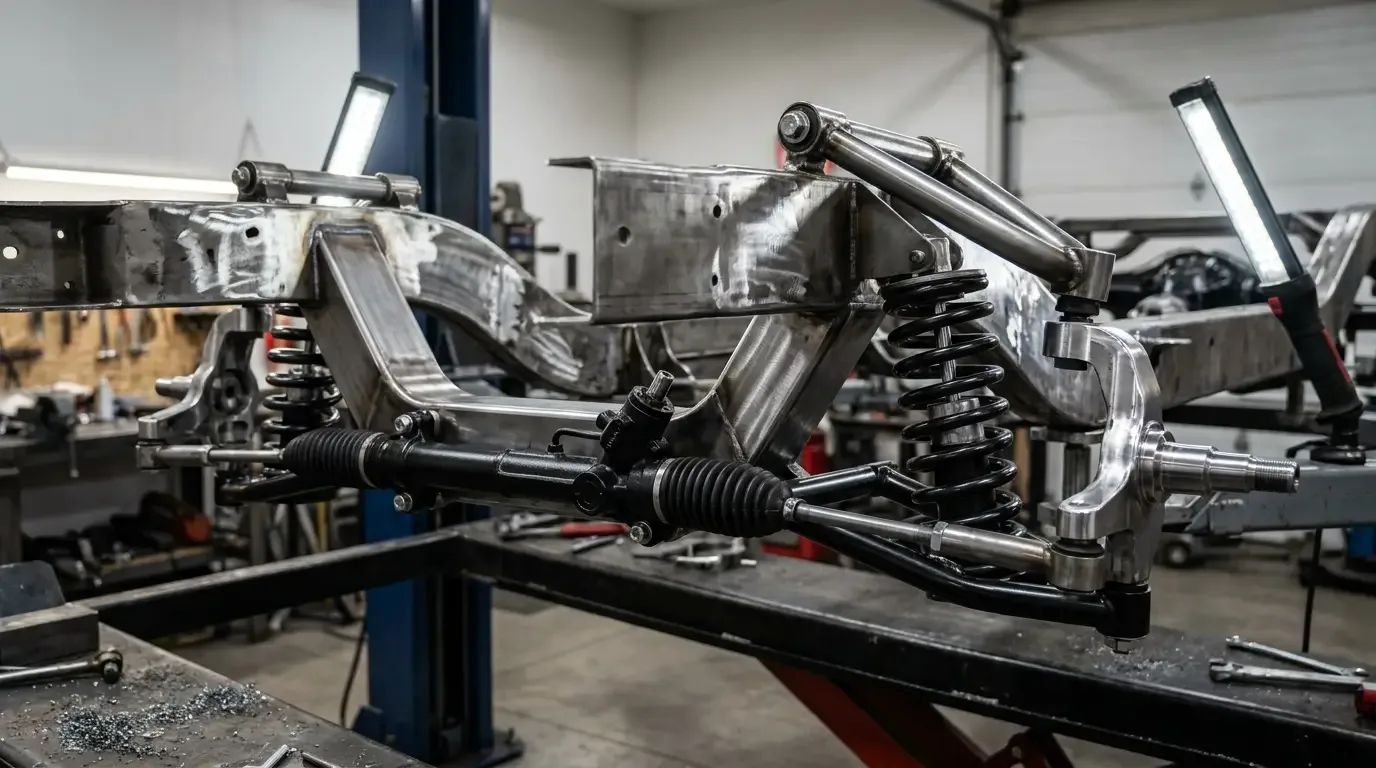
Why the Mustang II became the default
The original front end on a 1932 Ford, or almost anything else from that era, is a solid beam axle on transverse leaf springs. It works. Rods ran that way for decades. But a beam axle ties both front wheels together, so when the left wheel hits a pothole the right wheel feels it too, and the steering box that came bolted to those frames was slow, loose, and vague by the time you bought the car.
The Mustang II unit is a compact independent front suspension, meaning each wheel moves on its own control arms. It came from the factory with coil springs, a rack and pinion steering unit, and spindles that accept disc brakes without any drama. Aftermarket companies figured out early that the whole geometry could be shrunk into a bolt-in or weld-in crossmember narrow enough to fit between the frame rails of a Model A or a Deuce. Once a handful of suppliers were stamping those crossmembers, the parts got cheap, the instructions got good, and the Mustang II won by default. Today you can buy a complete kit, crossmember, arms, spindles, springs, rack, from a shelf, and every alignment shop in the country knows how to set one up.
Dropped straight axle versus IFS
Not everybody wants independent suspension, and they are not wrong to think twice. The traditional alternative is a dropped straight axle: a solid beam, usually forged and dropped in the middle so the car sits low without cutting the frame. On a highboy roadster or a channeled coupe going for a period-correct look, a chrome dropped axle hanging out in the wind is the whole point. It says the car was built the old way, and the stance it gives is honest hot rod.
The trade-off is in how the car behaves on the road. Here is the plain version of it.
- Ride. IFS lets one wheel move without the other. Over broken pavement and expansion joints the car stays settled instead of hopping and shuddering the way a beam axle does.
- Steering. A rack and pinion is quick and tight. A dropped axle usually runs a cross-steer or older box that has more play and takes more arm to place the car.
- Bump steer. A poorly set up straight axle can dart when both wheels hit a bump. A properly built Mustang II keeps the toe stable through travel.
- Look. The straight axle wins on traditional attitude. The IFS tucks up out of sight, which some builders like and some think is cheating.
- Effort. The Mustang II is a known quantity with off-the-shelf everything. A good dropped axle setup takes more knowledge to get the geometry right.
Neither one is wrong. It comes down to what the car is for. A long-distance driver that you want to take on the highway all summer wants the IFS. A weekend show car built to look like 1958 wants the axle.
"I have built cars both ways and I will tell you the truth. The straight axle looks meaner sitting in the driveway. But two hundred miles into a trip, on a rough interstate, the Mustang II car is the one your wife still wants to be in. Ride comfort is not a small thing when the whole point is driving the car."
Mike Sullivan
What the Mustang II actually gains you
The real payoff is not one thing, it is the stack. You get a modern coil-sprung ride, a quick rack, a spindle that bolts up to disc brakes, and a bolt pattern the aftermarket supports with wheels, bearings, and hardware you can buy anywhere. That last part matters more than people think. When a bearing or a tie rod end wears out ten years from now, you want a part number you can order, not a piece off a car nobody stocks.
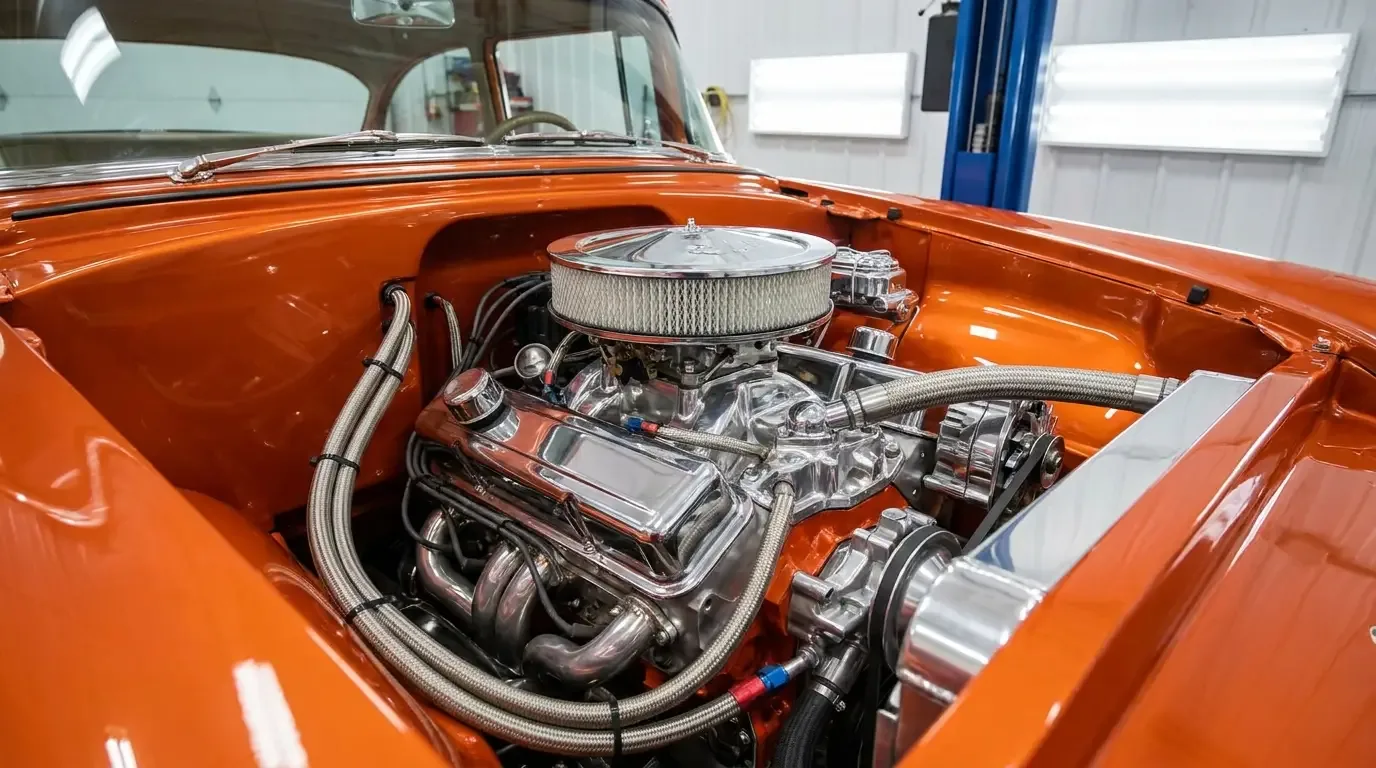
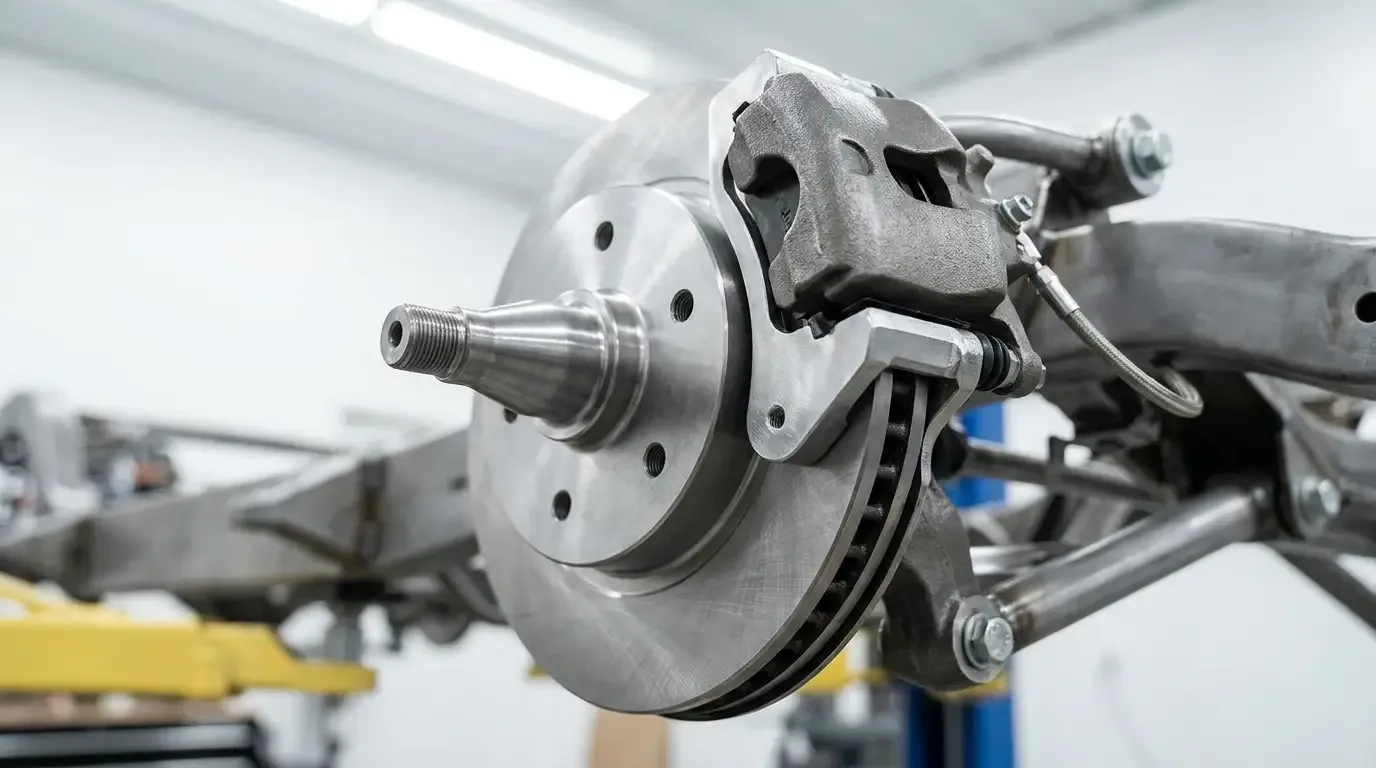
The IFS also frees up the front of the frame. With the crossmember doing the work, you get clearance for a modern engine and its accessories, and room to route steering and brake lines cleanly. Speaking of brakes, the spindle you choose decides your caliper options, so plan the front end and the stopping power together. Our guide to Street Rod Disc Brakes walks through matching calipers and rotors to the common Mustang II spindles.
| Feature | Dropped straight axle | Mustang II IFS |
|---|---|---|
| Ride over rough roads | Firm, choppy, both wheels tied | Compliant, independent |
| Steering feel | Slower box, more play | Quick rack and pinion |
| Brake fitment | Depends on axle and spindle | Bolt-on discs, well supported |
| Traditional look | Strong, period-correct | Hidden, modern |
| Parts availability | Varies | Excellent, off the shelf |
| Setup difficulty | Higher, geometry-critical | Lower, kit-based |
Getting the install right
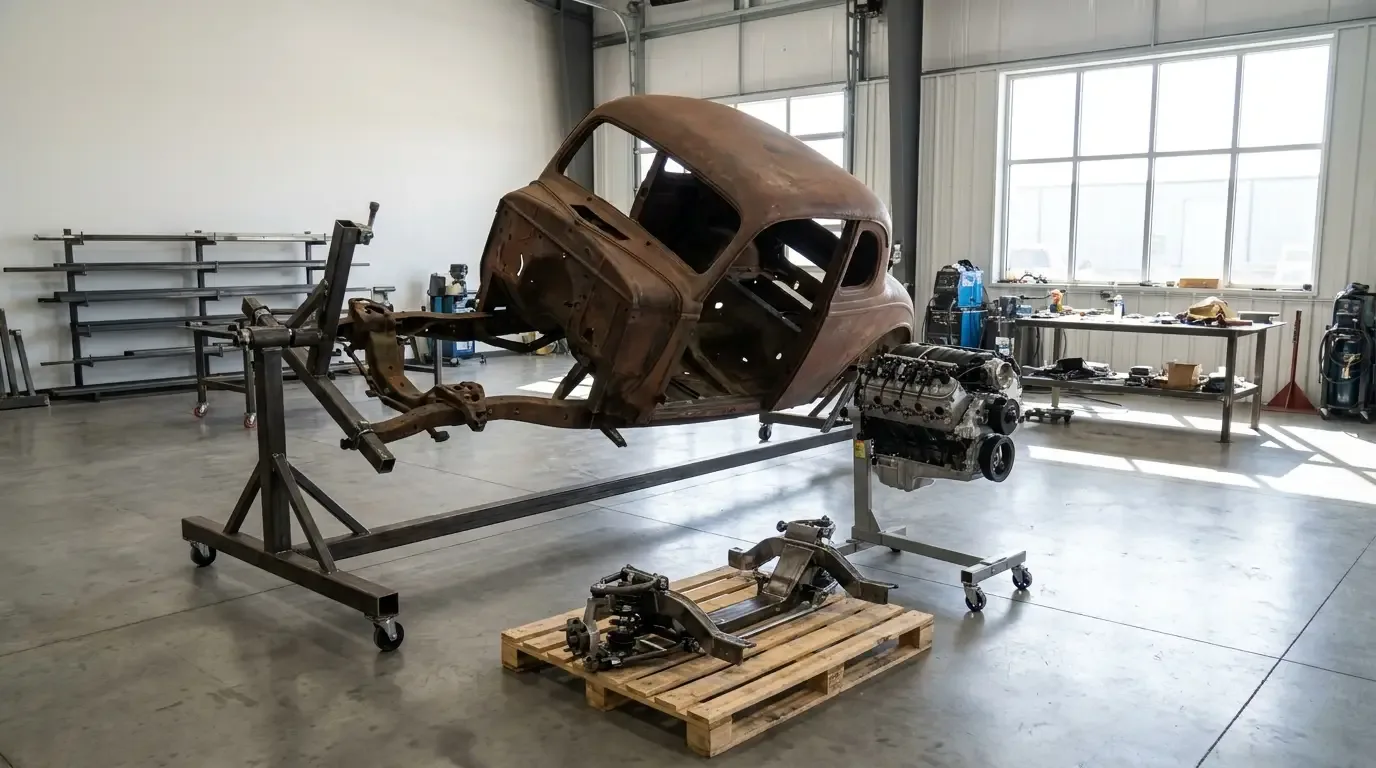
A Mustang II kit is forgiving, but it is not foolproof. The crossmember has to sit square and level in the frame, because everything downstream, ride height, caster, camber, and steering, follows from where that piece lands. Rushing the crossmember is where most bad-riding cars go wrong. Take the time to measure, tack, measure again, then weld.
Done right, the swap transforms how a pre-war car drives. The front end stops fighting the road, the steering wakes up, and the car finally feels like something you would choose to drive a few hundred miles instead of something you tolerate for a few blocks. That is the whole promise of a street rod, and the front suspension is where you either deliver on it or you do not.
Sources and notes
- Period and current street rod press coverage of front suspension conversions.
- Aftermarket Mustang II crossmember and IFS kit reference material.
- Ford factory chassis references for the original Mustang II front suspension.
- Builder interviews and shop experience on dropped axle versus IFS setup.
- Club and registry technical notes on street rod chassis modifications.
Related Reading
Have a
Classic Car
for Sale?
Reach thousands of serious classic car collectors across the US.
Sell It Here →
Are You a Classic Car Dealer?
List your full inventory and connect with targeted classic car buyers.
Join as a Dealer →
#IFS
#rack and pinion
#mustang ii front end
#street rod front suspension
#dropped straight axle
#street rod chassis

About the author
Mike Sullivan
Detroit-area muscle car enthusiast and restoration specialist with three decades of hands-on experience working on American iron.
More in Restoration & Tech
Comments
Be the first to comment on this article.