
Ask ten builders what engine to drop in a classic and nine of them say the same two letters. LS. It has been that way for close to two decades now, and the reason is not fashion. The GM LS family is cheap, light, tough, and small enough to tuck between framerails that were never meant to hold anything modern. When people talk about an engine swap as the heart of a good restomod, this is almost always the engine they mean.
Restoration & Tech
7 min read
The LS Swap: Why Everyone Does It
Nine builders out of ten reach for an LS. Here is why, which variant to pick, what it really costs, and the swap gotchas nobody warns you about.
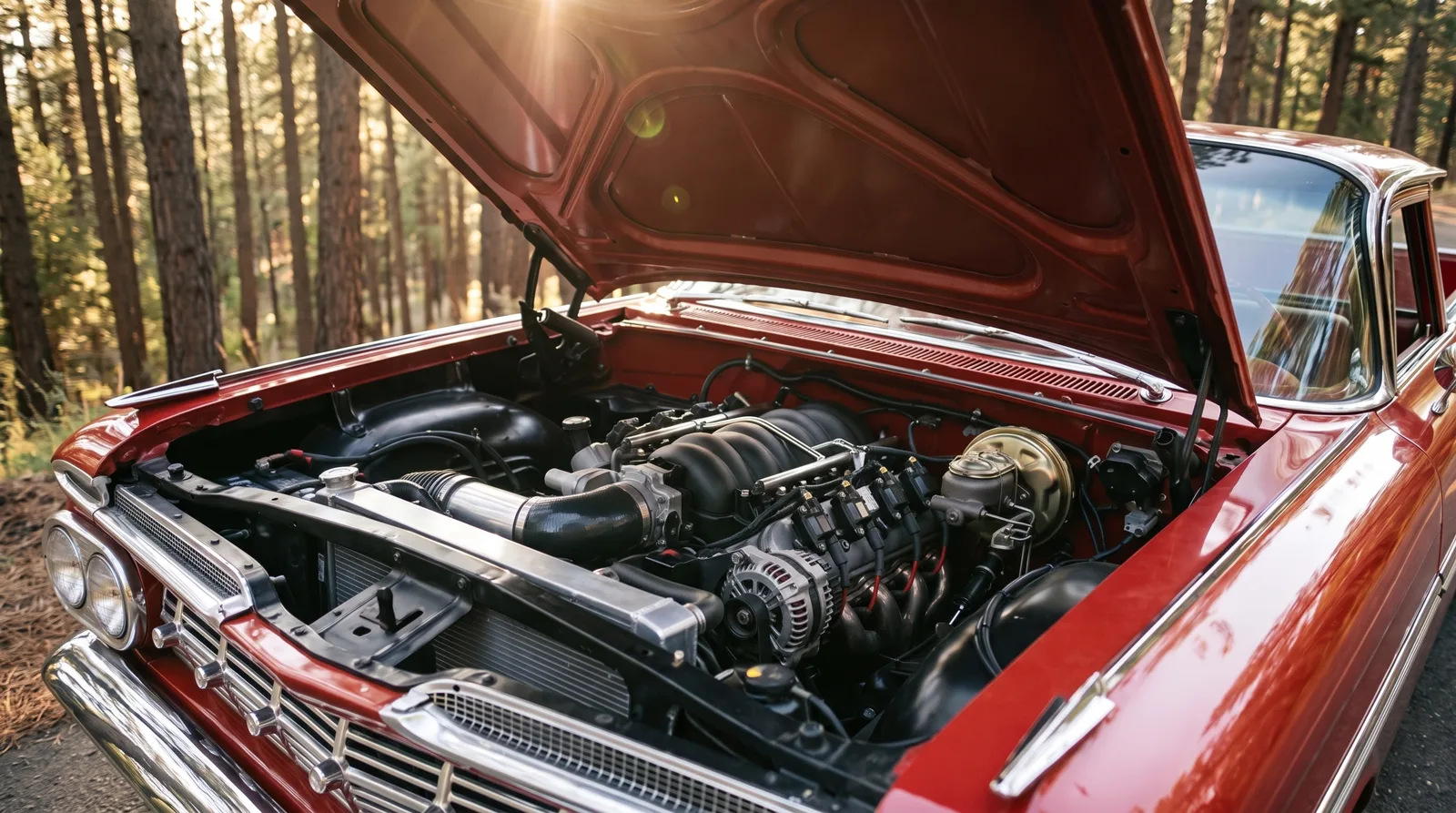
I have pulled tired small-blocks out of muscle cars and dropped LS motors in their place more times than I can count. The car comes out lighter, faster, and it starts every morning without a prayer. That combination is what the whole restomod idea is built on, and it is a big part of the story of the restomod as we know it today.
Why the LS became the default swap
The LS is GM's all-aluminum (or iron-block, in the truck versions) V8 that launched in the 1997 Corvette and then went into everything: Camaros, GTOs, trucks, SUVs, cop cars. That last part matters. GM built millions of them. When a factory floods the country with a good engine, the junkyards fill up a decade later and prices drop through the floor.
Here is what makes it the right tool. It is physically compact, roughly the same footprint as an old Chevy small-block, so it fits where a 350 used to live. The aluminum versions are light, which takes weight off the front end and helps the car turn. And the design is stout. These things take boost and abuse and keep running. You get modern fuel injection, better cooling, and real reliability out of a motor you can find for the price of a used lawnmower if you are patient.
The variants you will actually run into
You do not need to memorize every RPO code, but you should know the three or four that matter. The truck engines are the budget play. The car engines and crate motors are where you spend more and get more.
| Engine | Displacement | Stock power (approx) | Best for |
|---|---|---|---|
| 5.3L (LM7 and family) | 5.3L / 325 ci | around 285 to 320 hp | Cheapest junkyard swap, boost-friendly |
| 6.0L (LQ4 / LQ9) | 6.0L / 364 ci | around 300 to 345 hp | Iron block, cheap torque, great turbo base |
| LS3 | 6.2L / 376 ci | 430 hp (C6 Corvette rating) | Drop-in modern power, aluminum, refined |
The 5.3 is the people's champ. They are everywhere, they respond to a cam and a tune, and they take a turbo like they were built for it. The 6.0 is the same idea with more cubes and an iron block, which is heavier but nearly bulletproof under boost. The LS3 is the one you buy new when you want it done right the first time. It is the 6.2-liter aluminum motor rated at 430 hp from the factory in the C6 Corvette, and as a crate engine it is about as close to plug-and-play as this hobby gets. If you are cross-shopping engine families, it is worth reading The Coyote Swap Explained to see how Ford's answer stacks up before you commit.
"People get hung up chasing the fancy motor. Nine times out of ten a junkyard 5.3 with a cam and a tune will embarrass the car it came in, for a third of the money. Spend the savings on brakes, because now you can actually get out of your own way."
Mike Sullivan
What it actually costs
This is where people fool themselves. The engine is the cheap part. A running junkyard 5.3 might run you $500 to $1,200. An LS3 crate engine is a different animal, usually north of $8,000 to $9,000 by the time you have it in your hands. But the long pole in the tent is everything around the engine.
You have to budget for mounts, an oil pan that clears the crossmember, a wiring harness and standalone ECU or a reworked factory one, the transmission and its crossmember, a fuel system that can feed injection, an accessory drive that fits the engine bay, headers, and cooling. A budget 5.3 swap with a junkyard trans can come together for a few thousand dollars if you do the labor. A polished LS3 build with a modern automatic and all-new supporting parts can pass $20,000 in components alone before paint. Know which project you are starting.
Mounts, wiring, and the transmission
The mechanical side is well solved, and that is the other reason the LS wins. Swap-mount kits exist for nearly every popular chassis, so you bolt in engine mounts that locate the LS correctly and give you room for steering and oil pan. Buy the kit designed for your car. Do not fabricate from scratch unless you have to.
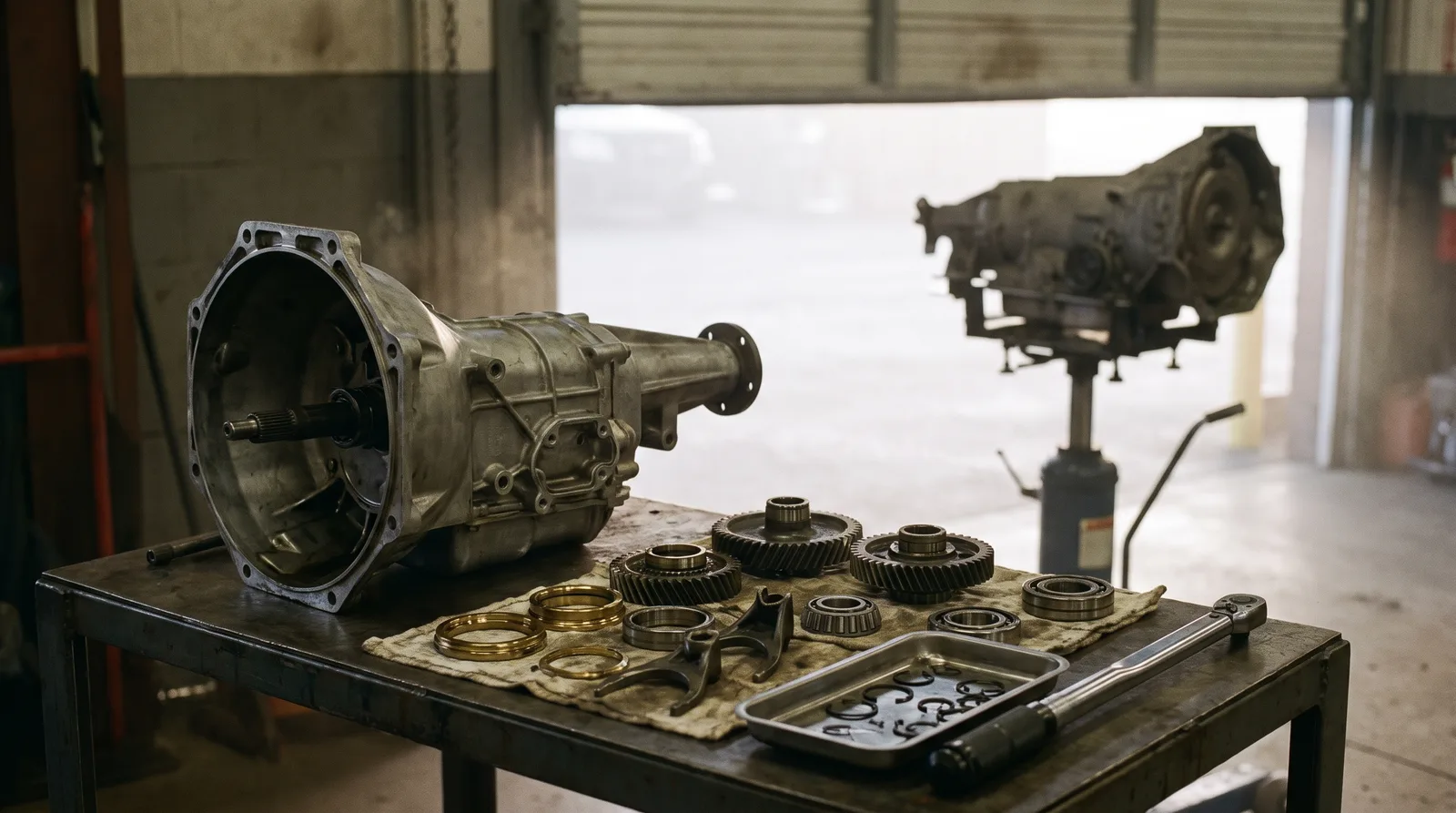
Wiring is where most first-timers stall out. A factory harness is full of circuits your classic does not have and does not want. You either pay to have the harness stripped down and re-pinned, or you run a modern standalone ECU built for swaps. The standalone route costs more but saves you nights with a multimeter. For the transmission, common pairings tell the story:
- 4L60E / 4L80E automatics. The 4L80E is the heavy-duty choice behind big-power builds; the 4L60E is fine for milder combos and cheaper.
- T56 / TR6060 manuals. The six-speed you want if you row your own gears, though bellhousing and clutch parts add cost.
- Modern overdrive automatics (6L80 and up). More electronics to control, but the highway manners are worth it in a driver.
Match the trans to the engine's bolt pattern and to how you drive. An overdrive gear is the single biggest quality-of-life upgrade in a swap, because it drops your cruising RPM and makes the car livable on a long trip.
The gotchas nobody warns you about
The LS swap is common, not automatic. The mistakes are predictable. Oil pan interference is the classic one, followed by accessory drive parts that hit the frame or steering. Fuel is another: carbureted classics have a low-pressure return-style system, and injection wants high pressure, so you are into a new pump, lines, and often an in-tank setup.
Then there is the wiring and the tune. An LS will not run right on a lazy tune, and a bad ground will drive you insane chasing a misfire that is not mechanical. Do the electrical carefully and pay a good tuner. Finally, remember the rest of the car has to catch up. More power into a chassis with drum brakes and 40-year-old suspension is a liability, not an upgrade. The engine is step one, not the finish line.
Sources and notes
- GM factory engine specifications and RPO references for Gen III and Gen IV small-block V8 families.
- Period and enthusiast press coverage of the LS platform and swap kits.
- Aftermarket swap-kit and standalone-ECU manufacturer documentation.
- Builder and shop interviews on cost, transmission pairing, and common swap pitfalls.
Related Reading
Have a
Classic Car
for Sale?
Reach thousands of serious classic car collectors across the US.
Sell It Here →
Are You a Classic Car Dealer?
List your full inventory and connect with targeted classic car buyers.
Join as a Dealer →

About the author
Mike Sullivan
Detroit-area muscle car enthusiast and restoration specialist with three decades of hands-on experience working on American iron.
More in Restoration & Tech
Comments (1)
P
Paul Bergmann
3 months ago
Color combinations matter more than most buyers think. Original paint codes add real value; wrong-era repaints subtract from it.