
Before you price a restoration, find out how the car is built. Whether the body sits on a separate frame or forms the structure itself changes the order of work, the tools you need, and where the rust costs the most. The same visible damage can be a weekend repair on one car and a structural rebuild on another.
Restoration & Tech
6 min read
Unibody vs Body-on-Frame: Why It Changes the Restoration
Unibody and body-on-frame cars restore very differently. See how construction changes teardown, rust repair, alignment, and cost, and what to check before you buy a project.
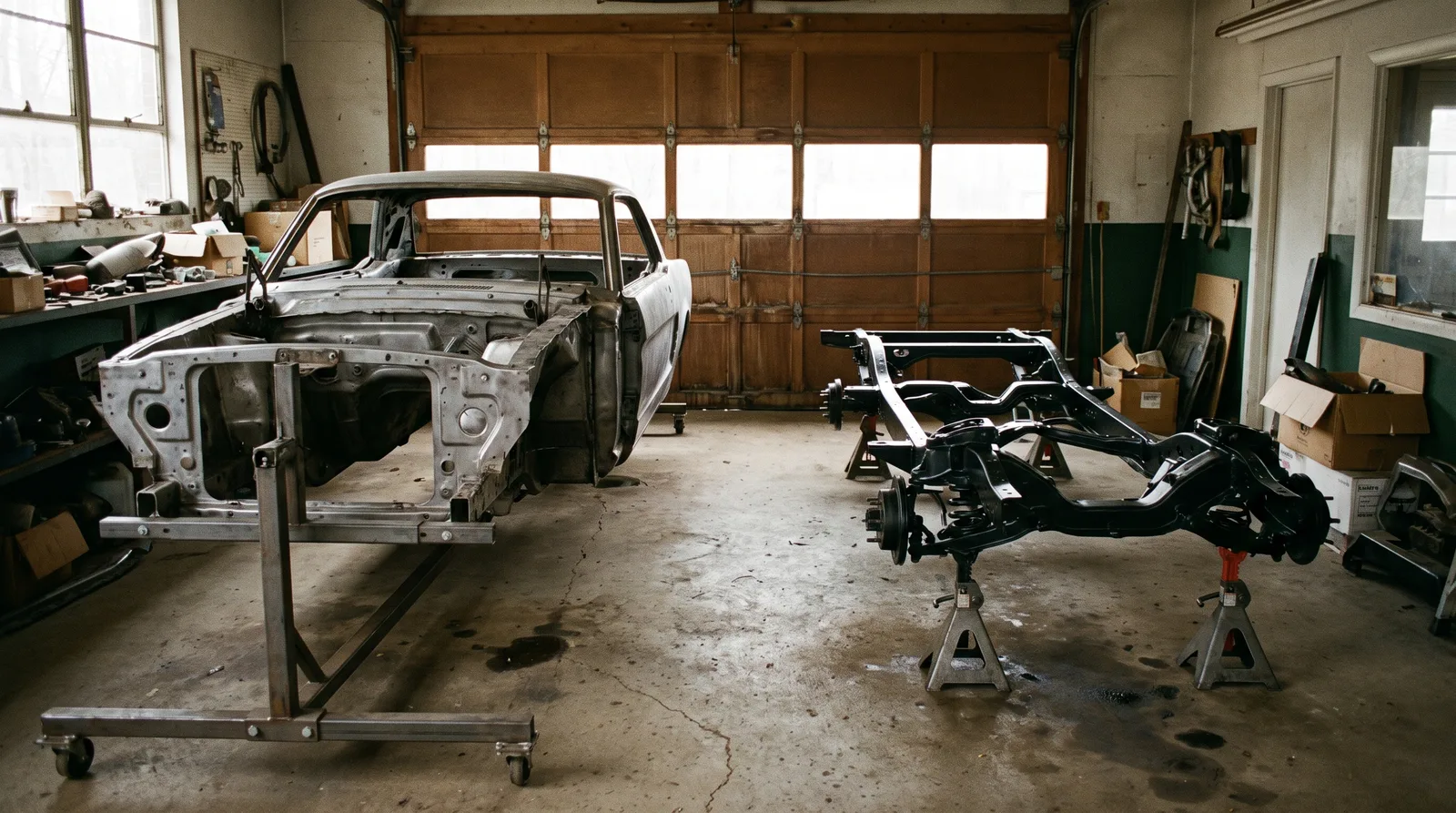
Here is how the two designs differ, and what each means once the car is in the shop.
Two ways to build a car
A body-on-frame car has a separate steel chassis that carries the engine, suspension, and drivetrain. The body is bolted to it, usually through rubber or steel mounts. Most American cars were built this way until the 1960s, and pickups and trucks never left it, and Ford's Panther-platform full-size sedans kept a separate frame until 2011.
A unibody car, also called unitized construction, has no separate frame. The floor, rails, pillars, and roof panels are welded together to form one structure, and that structure carries the loads. Sections of the shell act as the frame. Many popular cars from the 1960s onward were built this way, including the Ford Falcon, Plymouth Valiant, and Chevrolet Corvair by 1960, and the first-generation Mustang, which shares its unitized platform with the Falcon. The first-generation Camaro is a subframe, semi-unibody design. Some designs sit in between, with a unibody shell and bolted or welded front or rear subframes.
| Feature | Body-on-frame | Unibody |
|---|---|---|
| Structure | Separate chassis plus bolted body | Welded shell carries the loads |
| Body removal | Unbolt and lift off | Not possible; shell stays together |
| Rust risk | Frame rails, body mounts, floors | Rails, floors, rockers, pillars, all structural |
| Alignment work | Frame jig or straight edge | Body jig or fixture bench |
| Typical repair cost | Lower for structure | Higher for structure |
What this does to the teardown
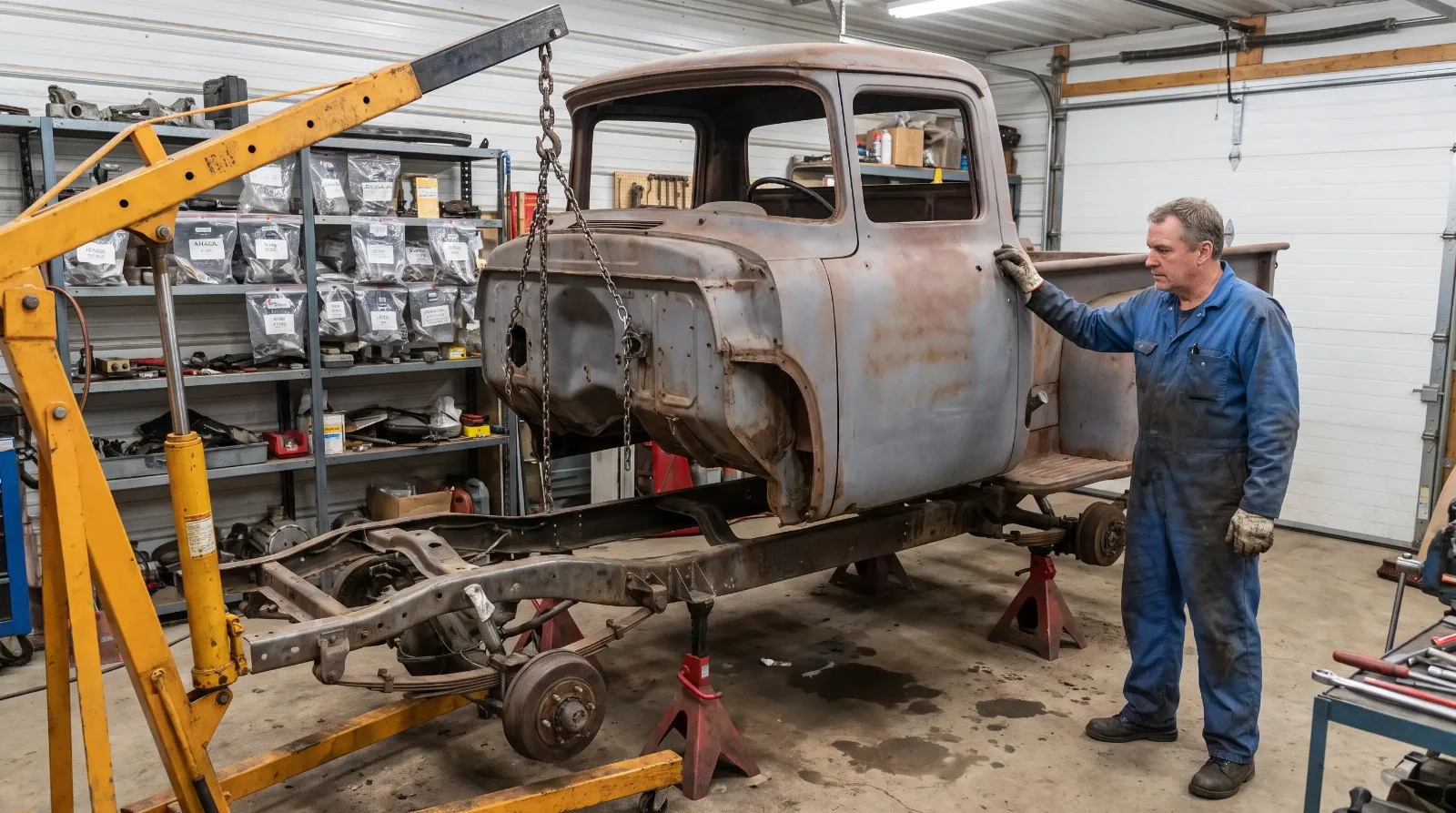
On a body-on-frame car, separating the body is a defined job. You disconnect the wiring, steering linkage, and fuel lines, unbolt the mounts, and lift the body clear. The bare frame goes to one stand and the body to another. That is the basis of true frame-off restorations, and it is why the work is easier to sequence on those cars.
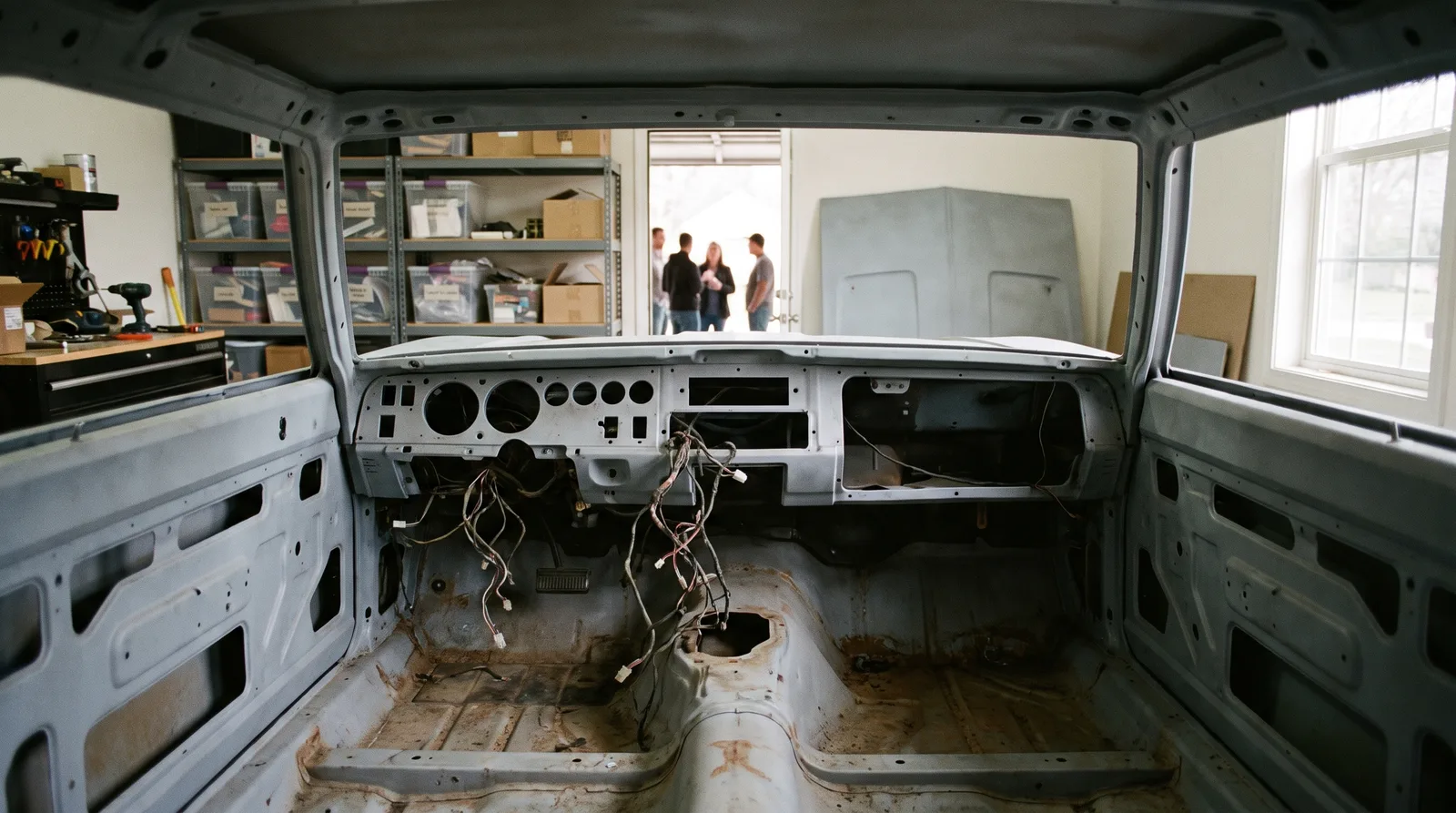
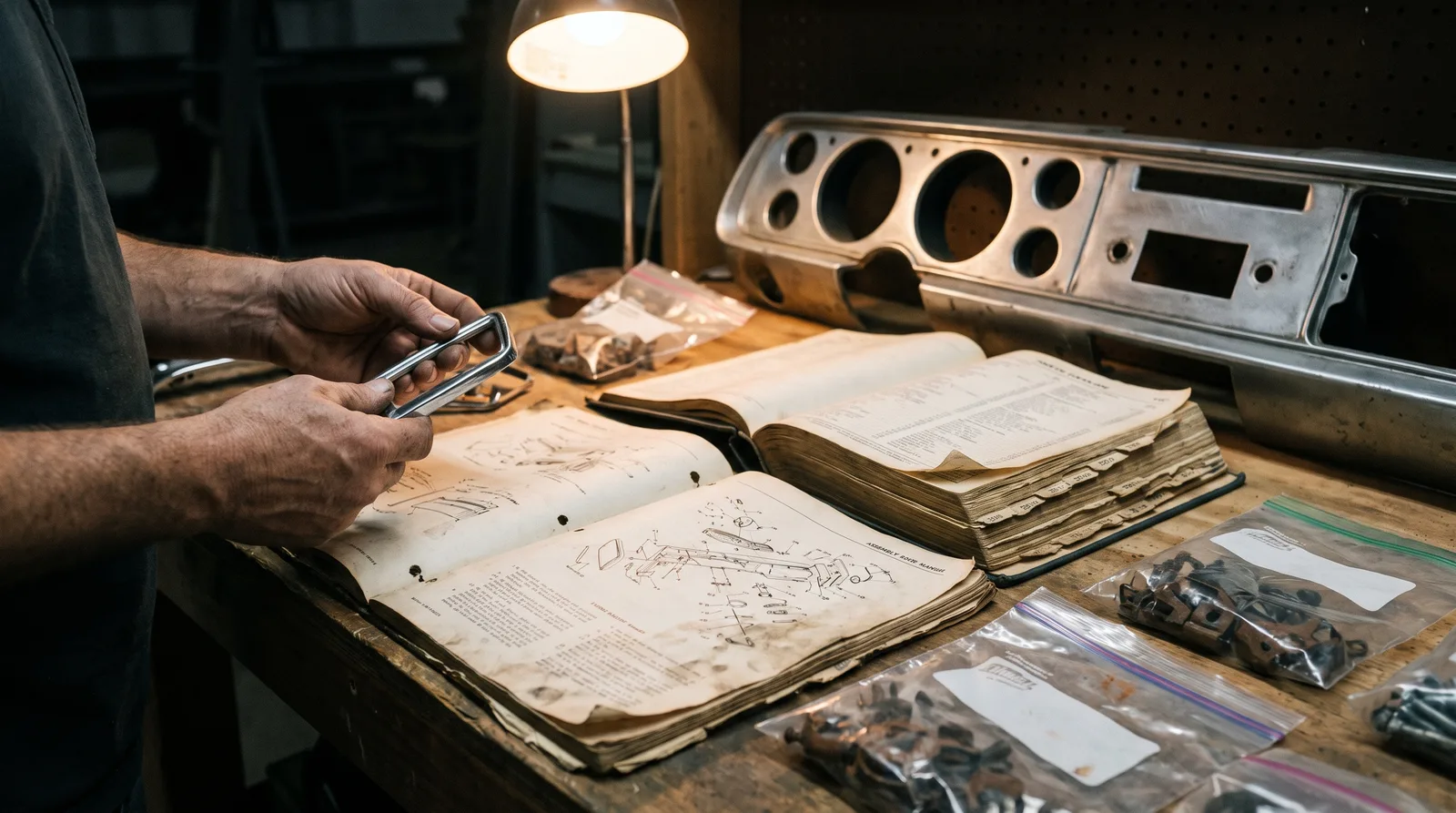
A unibody cannot be split. The shell has to be supported as a whole, usually on a rotisserie, with the floor and rails exposed. The suspension, engine, and subframes come off, but the structure stays. Before any of that, though, there is the matter of how the car comes apart in the first place. We cover that process in our guide to teardown, and it matters more on a unibody, because you will be referring back to your photos while welding.
Where the rust bites
On a frame car, rust in the body and rust in the chassis are separate problems. A rotted floor can be cut out and replaced while the frame underneath stays sound, or a damaged frame can be repaired while the body remains untouched. The mounts and the places where moisture collects, such as the rear rails and the areas around the body mounts, are the weak points.
On a unibody, rust in a floor, rocker, or rail is rust in the structure. A rusty rocker panel is not just trim. On many unibodies the rocker is part of what holds the car straight, and cutting it away without bracing the shell can let the car sag out of alignment. You can end up replacing structural sections instead of patching, and that takes jigs, measurements, and welding skill.
Alignment is the real test
The most expensive mistake on a unibody is welding it up out of square. Doors will not fit, glass will not seat, and the suspension will not align. The safeguard is to measure before you cut, support the shell on a stand or fixture, and brace it so it cannot flex when large sections are removed. Take diagonal measurements and record them. Compare them to factory dimensions if you can find them.
Box the frame before you touch the body on a body-on-frame car as well, if any rails need work. Repair the chassis while it is bare, check it for square, and only then reunite it with the body. Skipping that order means every later measurement is suspect.
"Measure twice before you cut and then measure again after you tack. A unibody remembers every shortcut you take, and it shows up as a door that will not close."
Ray Delgado
Cost and difficulty compared
As a general rule, many shops find that a unibody with significant rust costs more to restore than a comparable body-on-frame car, because more of the rust is structural and the repair requires more fabrication and alignment work. A body-on-frame car with a solid frame can be a cheaper project even when the body is rough, because the body and chassis can be handled one at a time.
That said, a clean unibody can be a very efficient restoration. If the shell is solid, there is less to fix, and reproduction floor pans and quarter panels are available for many popular models. The cost is driven by condition, not by the design.
What to check before you buy
- Look at the rails and floor from underneath. Probe seams and low points with a screwdriver, and look for fresh undercoating hiding repairs.
- Check door and trunk gaps. Uneven gaps can signal a sagging or previously damaged shell.
- Inspect the body mounts or subframe mounts. Corrosion there is expensive on either type.
- Look for evidence of past collision repair. Mismatched welds, filler, and inconsistent paint tell the story.
- Confirm parts availability. A reproduction floor pan can save weeks of fabrication.
The verdict
Know the construction before you write the budget. Body-on-frame cars give you more flexibility and simpler sequencing, while unibody cars demand careful measuring and often more fabrication. Neither is better in the abstract, but a clear understanding of which one you are buying keeps the quote realistic.
Sources and notes
- Unibody, Wikipedia, unitized construction history and the 1960 compacts
- Body-on-frame, Wikipedia, vehicles that still use a separate frame
- Chevrolet Camaro (first generation), Wikipedia, subframe, semi-unibody design
- The Ford Falcon flew high for a while, Classic Industries, the Falcon as a unibody car launched in 1959 and its chassis shared with the early Mustang
- Are any cars still made with body-on-frame? SlashGear, the Crown Victoria as the last body-on-frame passenger car, ended in 2011, and body-on-frame surviving in pickups and SUVs
- How To Align Your Imperial's Frame, diagonal measuring within a quarter inch, factory manual dimensions, and replacing a badly distorted frame
Related Reading
Have a
Classic Car
for Sale?
Reach thousands of serious classic car collectors across the US.
Sell It Here →
Are You a Classic Car Dealer?
List your full inventory and connect with targeted classic car buyers.
Join as a Dealer →

About the author
Ray Delgado
Metal fabricator and chassis builder who has spent 25 years turning flat sheet and mild steel into hot rods, gassers and restomod underpinnings.
More in Restoration & Tech
Comments
Be the first to comment on this article.