
Most owners do not have the budget for a full shop restoration and do not have the skills for a full DIY one. The answer is usually somewhere in the middle. You do the work you can do well. A shop does the work that needs equipment, experience or both. Done right, a hybrid build saves real money. Done wrong, it costs more than either extreme.
Restoration & Tech
7 min read
DIY, Shop or Hybrid? Splitting the Work With a Restoration Shop
A hybrid restoration splits the work between you and a shop. Here is which jobs to hand off, which to keep, and how to set the arrangement up so it holds.
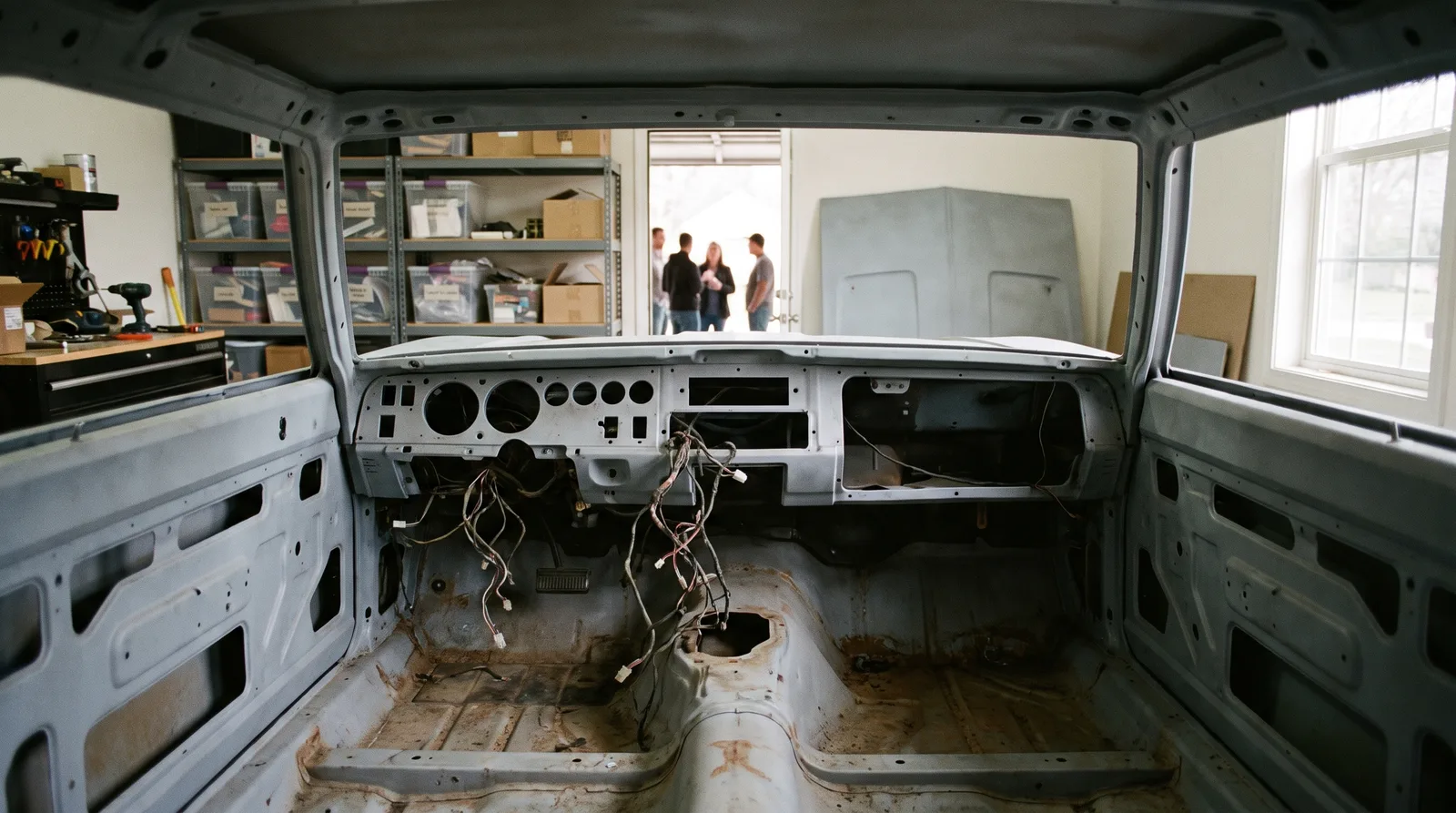
The difference comes down to one thing: where you draw the line. This article covers how to draw it, what shops will and will not accept, and how to keep the two halves of the job from fighting each other. Whether a small shop or a big facility suits a split job is covered in small shop or big facility, and the partner side of the equation is covered in picking the right partner shop.
What to keep and what to hand off
Sort the work by two questions. How much skill and equipment does it need? And how costly is a mistake? Work that is low on both is yours. Work that is high on either belongs to a professional.
| Job | Skill and tools needed | Cost of a mistake | Typical call |
|---|---|---|---|
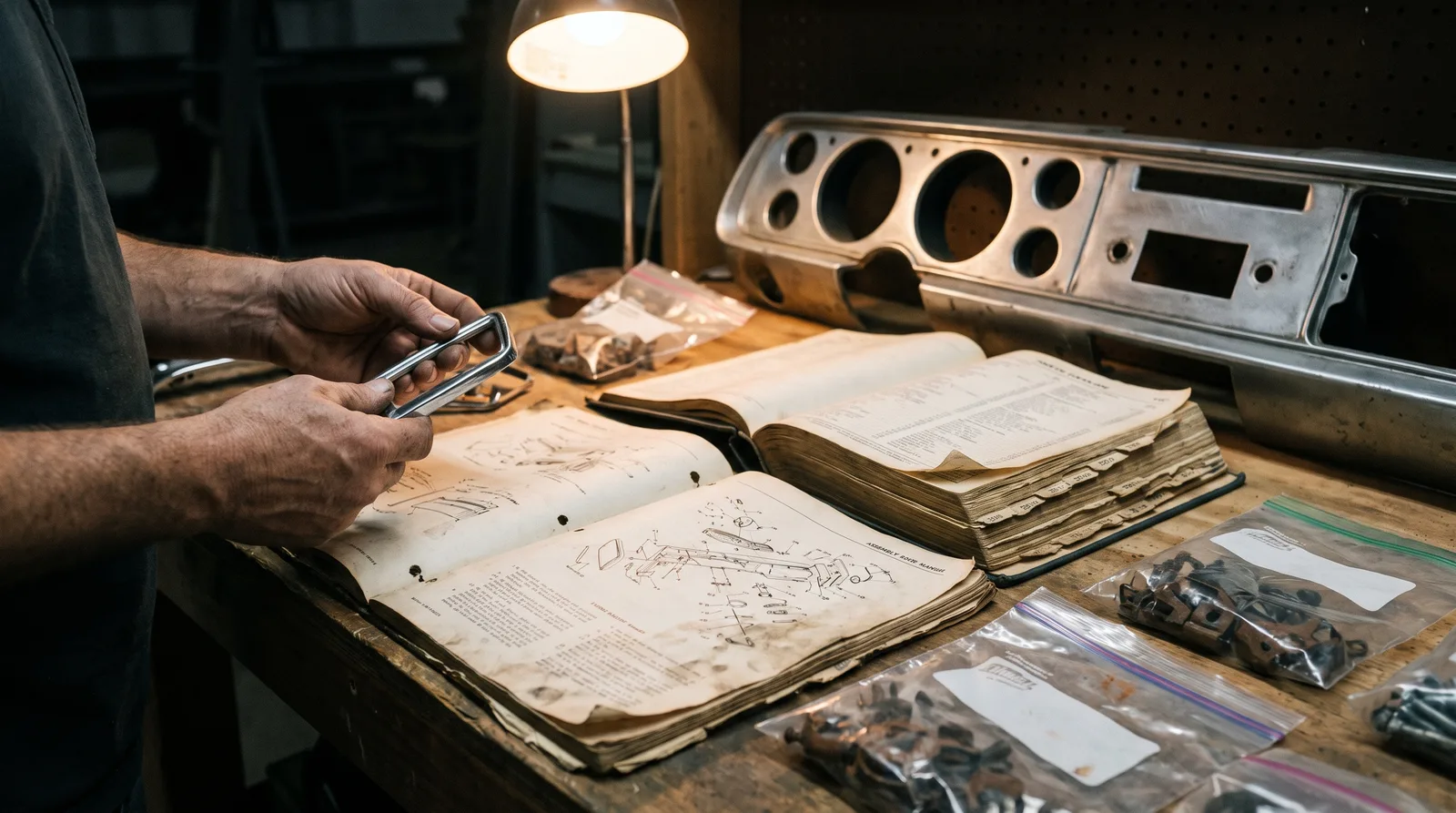
| Teardown, labeling, cleaning, parts sourcing | Low | Low | DIY |
| Interior, trim, weatherstrip, reassembly | Moderate | Low to moderate | DIY with patience |
| Brakes, suspension, basic mechanical | Moderate | High, safety related | DIY only with experience |
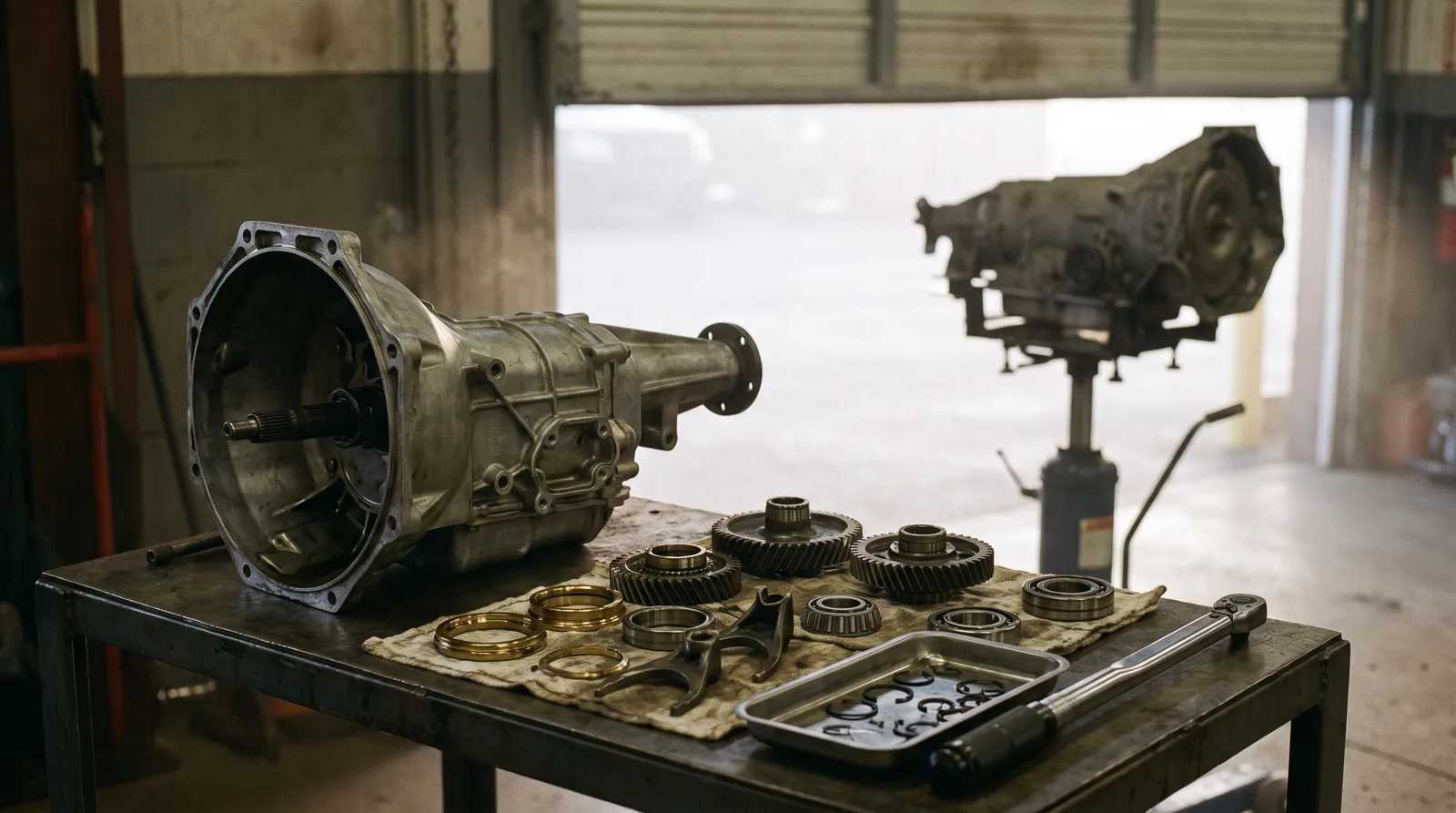
| Engine and transmission rebuild | High, machine work | High | Shop or machine shop |
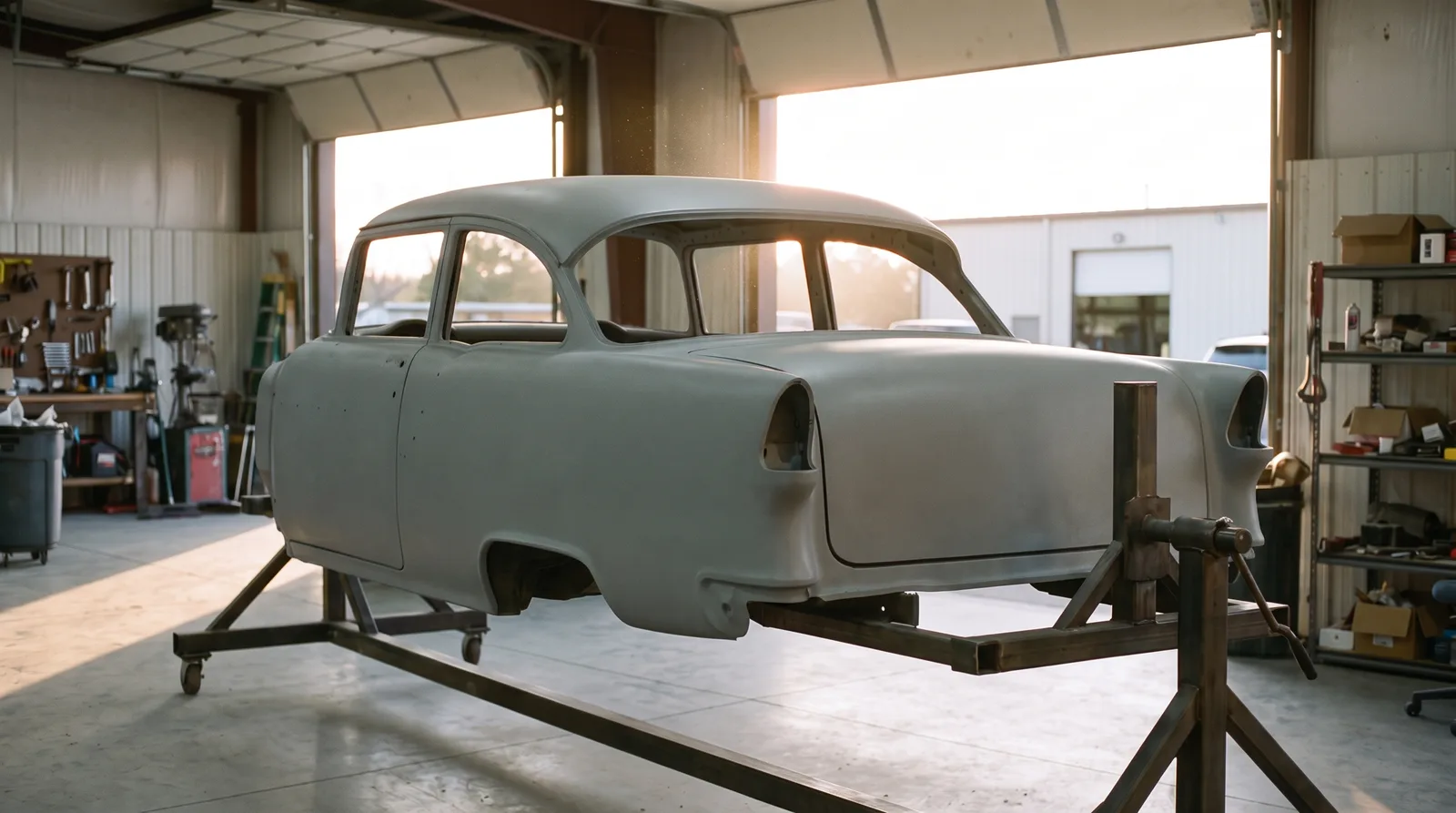
| Structural welding, rust repair | High | High | Shop |
| Bodywork and paint | High, booth and tools | High, visible | Shop |
The pattern is simple. Teardown, cleaning and reassembly are where owners save the most hours, since labor is where shop bills pile up. Metalwork, paint and precision machine work are where owners lose the most money trying to save. A bad weld costs more to cut out than to do right. A bad paint job costs a full strip. Do not let enthusiasm decide this.
Where the engine fits
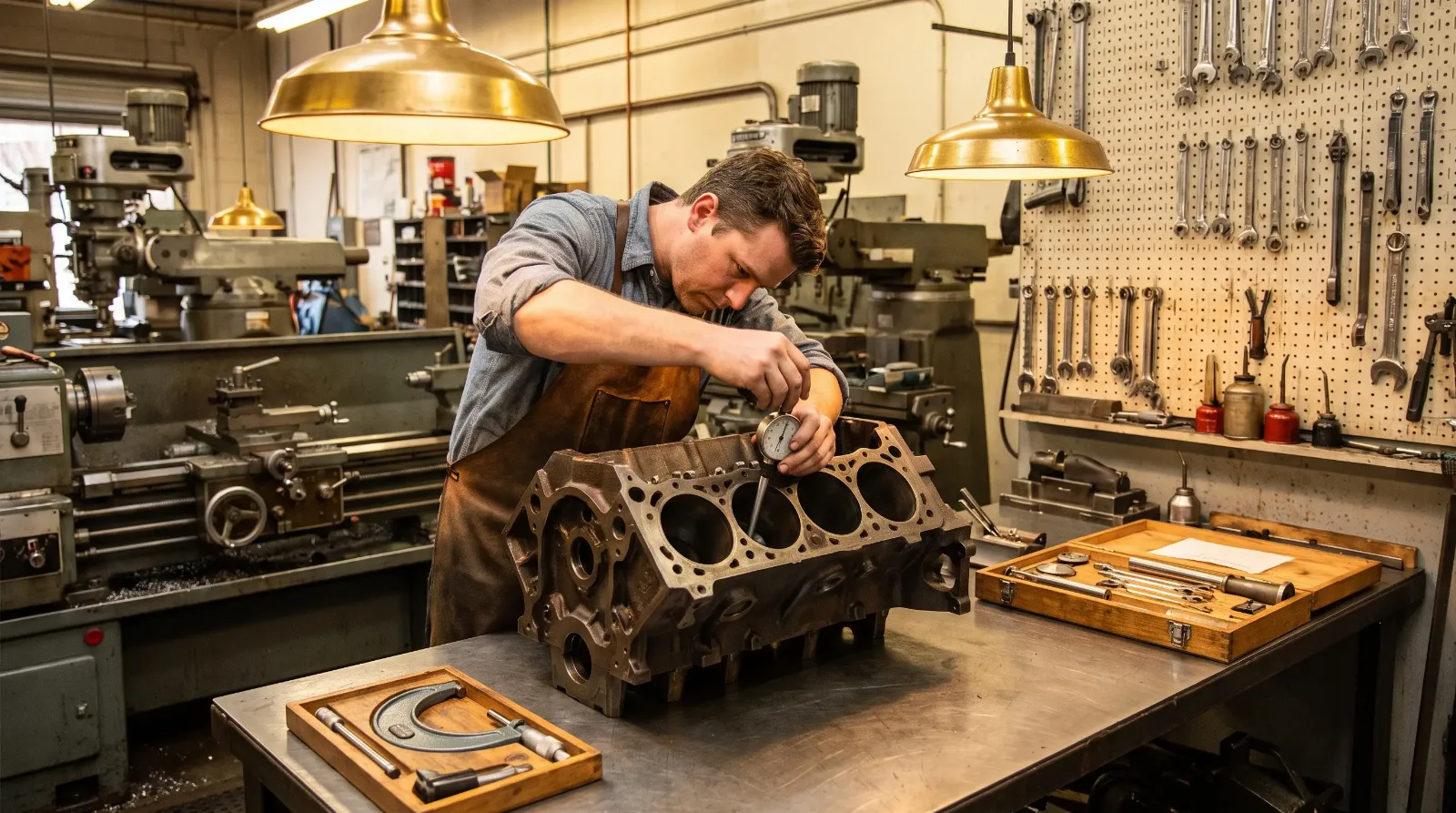
The engine is the classic split. The short block needs a machine shop and measurement tools most garages lack. Bore, deck, balance and clearance all matter, and getting one wrong costs the engine. Many owners pull the engine and clean and paint the parts at home, then hand the machining to a shop. Read the engine rebuild for what a rebuild involves and where the dollars go before you decide how much to keep.
My rule is blunt. If you cannot read a micrometer and do not own a torque wrench you trust, the engine is not your job. A rebuilt engine that makes the wrong power or the wrong noise is a failed engine. I have seen a nicely detailed engine bay hide a motor that ran rough and made well under its potential power because of a sloppy assembly. Pretty is not power.
Will a shop take a hybrid job?
Not all of them will. Shops worry about two things: liability and schedule. If you did part of the work and something fails, who pays? If you are late with your part, whose schedule slips? Many established shops decline partial jobs, or accept them only with conditions. Some happily take on the work that suits them, such as bodywork and paint, and leave the rest to you.
Ask early, and ask specifically. Raise the hybrid plan in the first conversation, not after the deposit. Ask which jobs the shop will take, whether it will warranty work that relies on parts you supplied, and whether it will inspect work you have done before building on top of it. A shop that says "we will not paint a body you have already primed" is telling you something reasonable. They cannot vouch for what is under it.
Put the split in writing. The agreement should list which tasks are the shop's, which are yours, who supplies which parts, the order of the work and the dates. Specify what happens if you miss a deadline. Without those lines, the first delay becomes an argument.
Sequencing so the work does not collide
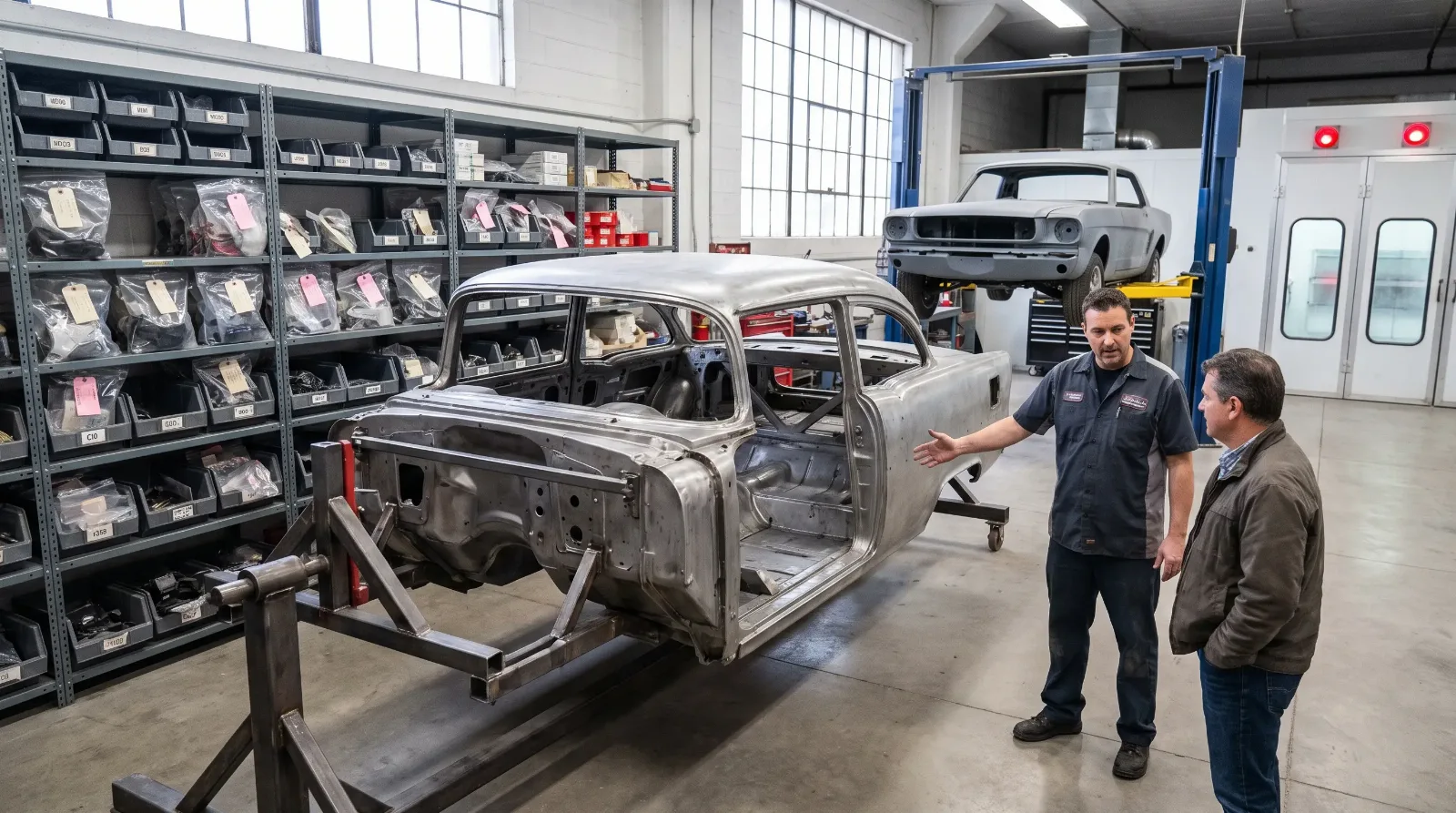
The order of the job matters more in a hybrid than in a full restoration. Metal and paint have to happen before assembly. If you are doing the assembly, the car has to leave the shop in a state you can work with. That means the shop finishes bodywork and paint, delivers a car with clean, protected surfaces, and you take it home to put the pieces back.
The risk is the middle. Paint is a fragile finish, and a hybrid build tempts owners to bolt on parts at home after the shop is done, which leads to chips and scratches. Cover fresh paint, use soft-surface blankets, and take your time fitting trim. Order and test parts before the car goes to the shop, since a part that does not fit after paint means an expensive correction. Test-fit doors, fenders, bumpers and glass at the shop's stage, with the shop, so any adjustments happen before color goes on.
"Do the work that costs you time. Pay for the work that costs you mistakes. Know which is which before you start."
Dan Reeves
Budget and time: what a hybrid really saves
A hybrid build can cut cost, but not as much as owners expect. Labor is usually the biggest line on a full shop restoration. At roughly $85 to $150 an hour, a driver-level job of 500 to 1,000 hours puts labor alone in the tens of thousands of dollars, and frame-off labor alone can pass $100,000. Taking on teardown, cleaning, mechanical reassembly and interior work yourself can trim that meaningfully. What it will not trim is the work that has to be done by someone with a booth, a lift and welders.
Count your own hours honestly. A first-time builder commonly takes much longer than a professional on the same task. If the car sits in your garage for four years because life got in the way, the savings carry a price: time, deterioration and a cooling of motivation. Set a schedule, and set a point at which you hand the rest to a shop if you fall behind.
It also helps to look at the question from the other direction. Our look at the trade-offs between DIY and professional work lays out the full spread of costs, and for higher-end cars there is a separate analysis in how DIY and shop restoration play out on luxury marques. Marques with complex mechanics and rare trim raise the cost of mistakes, which pushes the line toward the shop.
Starting with the right car
The best hybrid projects start with a car that suits the plan: complete, rust-free where it counts, and well supported by the parts market. A complete car with a sound body leaves the shop with only specific jobs to do. A rotten shell with missing parts turns the whole plan into a full restoration. If you are still shopping, browse a project car to start on and judge each one by how much of the work you can reasonably split.
The rule holds across every build. Keep the work that costs hours. Hand off the work that costs mistakes. Write it all down, agree the order, and the hybrid does what it promises.
Sources and notes
- Hagerty: What does it cost to restore my classic car?, supports DIY teardown as a way to cut labor and the point that restoration costs are rarely recouped
- The Vault: DIY or professional car restorations?, supports the skills, time and shop-capability trade-offs
- Wikipedia: Car restoration, supports farming out specialist jobs to shops with the equipment
- Wikipedia: Micrometer, supports precision measurement tools used in machining and engine work
- Wikipedia: Honing, supports precision finishing of engine cylinder bores
Related Reading
Have a
Classic Car
for Sale?
Reach thousands of serious classic car collectors across the US.
Sell It Here →
Are You a Classic Car Dealer?
List your full inventory and connect with targeted classic car buyers.
Join as a Dealer →

About the author
Dan Reeves
Performance engine builder from North Carolina's motorsports corridor, focused on swaps, forced induction and making real, repeatable power.
More in Restoration & Tech
Comments
Be the first to comment on this article.