
Most restoration disputes I see in an appraisal file are not about quality. They are about money that moved faster than the work. A shop holds $40,000 of the owner's cash against a car that is still in primer, the shop hits a cash crunch, and the project stalls. The owner has paid for work he cannot see, on a car he cannot easily move. A sound restoration shop payment schedule exists to prevent that, and it is worth more attention than the choice of paint color.
Restoration & Tech
6 min read
Paying a Restoration Shop: Deposits, Progress Billing and Escrow
How restoration shops get paid: deposits, monthly progress billing, milestone schedules and escrow. What to agree in writing so your money tracks the work on the car.
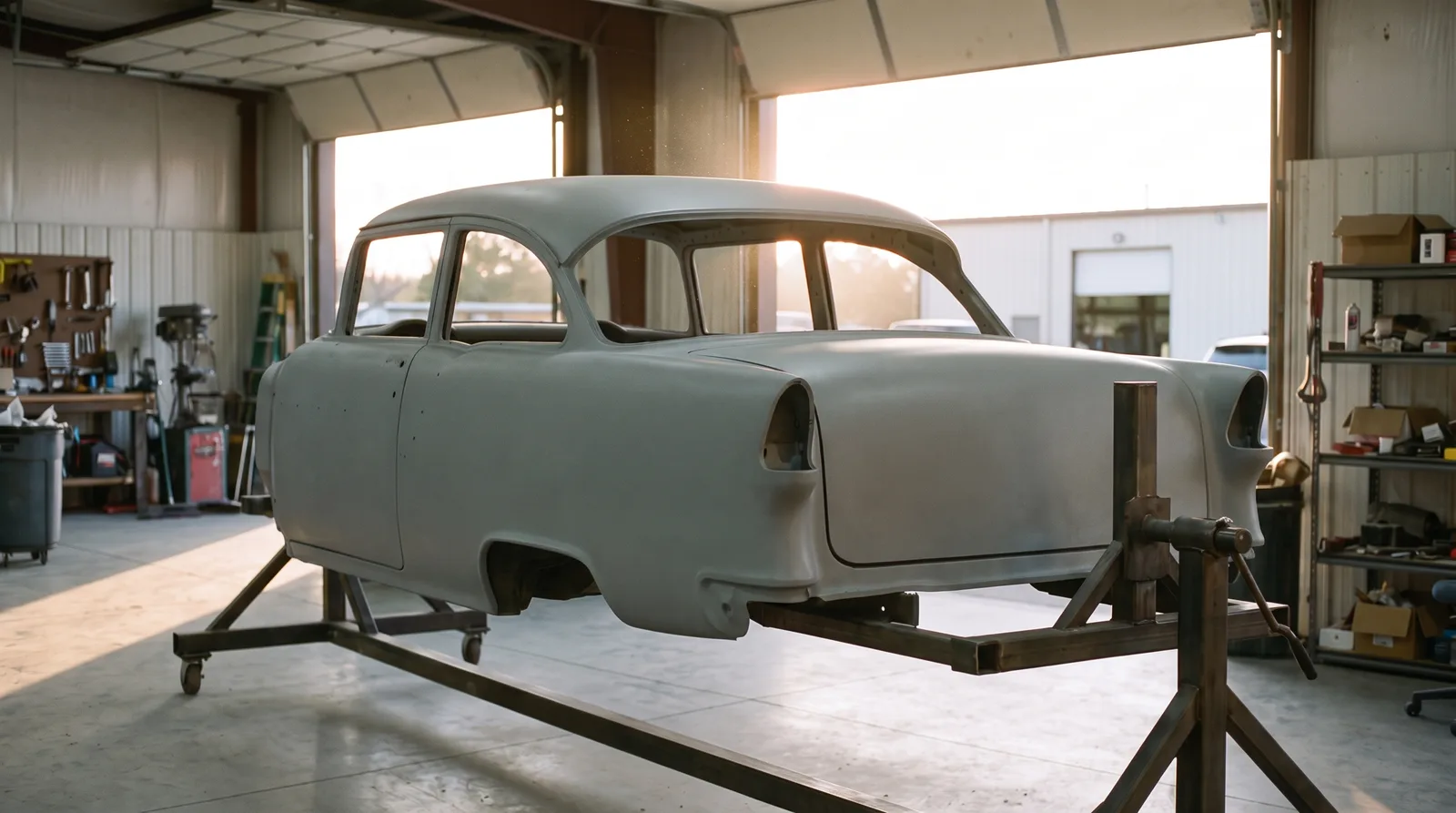
Payment terms are also a risk document. Every dollar paid ahead of the work is an unsecured loan to the shop. Your job is to size that loan so a bad month at the shop does not become a bad year for your car.
The three common payment models
Shops fall into three camps, and the model tells you something about how the shop is run. Time and materials billing, usually monthly, is the most common for full restorations because nobody can price a rusted unibody before it is stripped. Milestone billing ties payments to stages such as teardown complete, metalwork complete, paint complete, assembly complete. Fixed price is rare on anything beyond a mechanical job or a paint job, and when a shop offers it on a full restoration, ask what is excluded.
| Model | How money moves | Owner risk | Best used for |
|---|---|---|---|
| Time and materials, monthly | Invoice for hours and parts each month | Open ended total, but payment tracks work done | Full restorations with unknown rust |
| Milestone | Fixed payment at each completed stage | Moderate, depends on how stages are defined | Well documented cars with a clear scope |
| Fixed price | Deposit, then installments to a set total | Scope disputes and change orders | Paint, interior, mechanical rebuilds |
What a reasonable deposit looks like
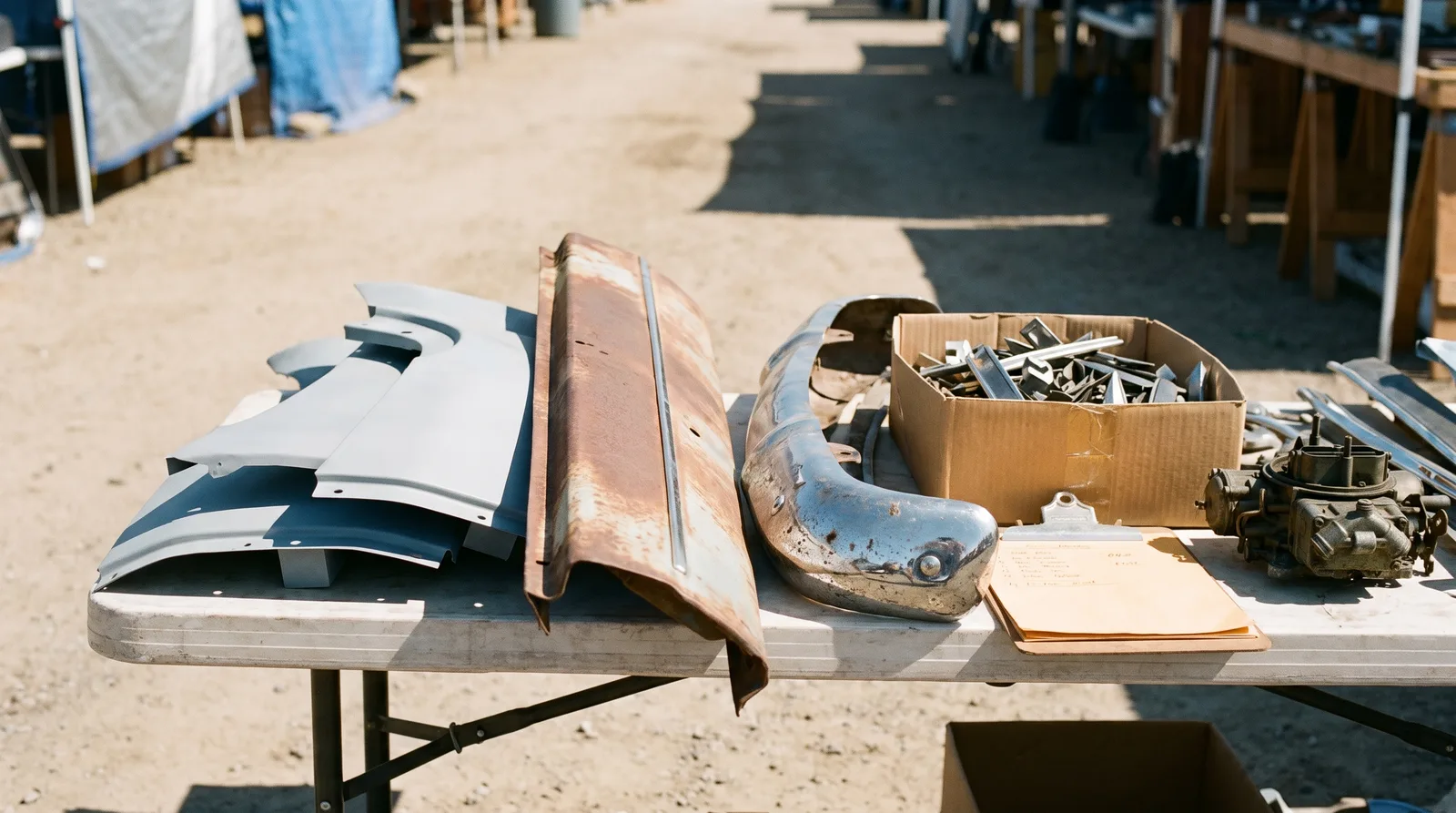
Expect to be asked for something, but keep it modest. A deposit secures the shop's calendar and covers parts ordering and early labor, not a big upfront chunk of the budget. Published advice on choosing a shop is blunt on this point: some veteran writers treat a request for even 15 or 20 percent of the estimate as a reason to look elsewhere, and note that the most reputable shops bill monthly and carry the cost until the first invoice. The usual exception is an unavoidable outside purchase, such as a reproduction body shell. On a smaller job such as paint or an engine rebuild, a proportionally larger deposit is more common because materials make up a bigger share.
Ask what the deposit is for. If it buys parts, the parts should be itemized and should belong to you, with ownership noted in the contract. If it buys scheduling, ask what happens to it if the shop cannot start by the agreed date. A refundable deposit with a clear start date is a different instrument from a nonrefundable retainer, and the paperwork should say which one you signed.
Progress billing: keep payment behind the work
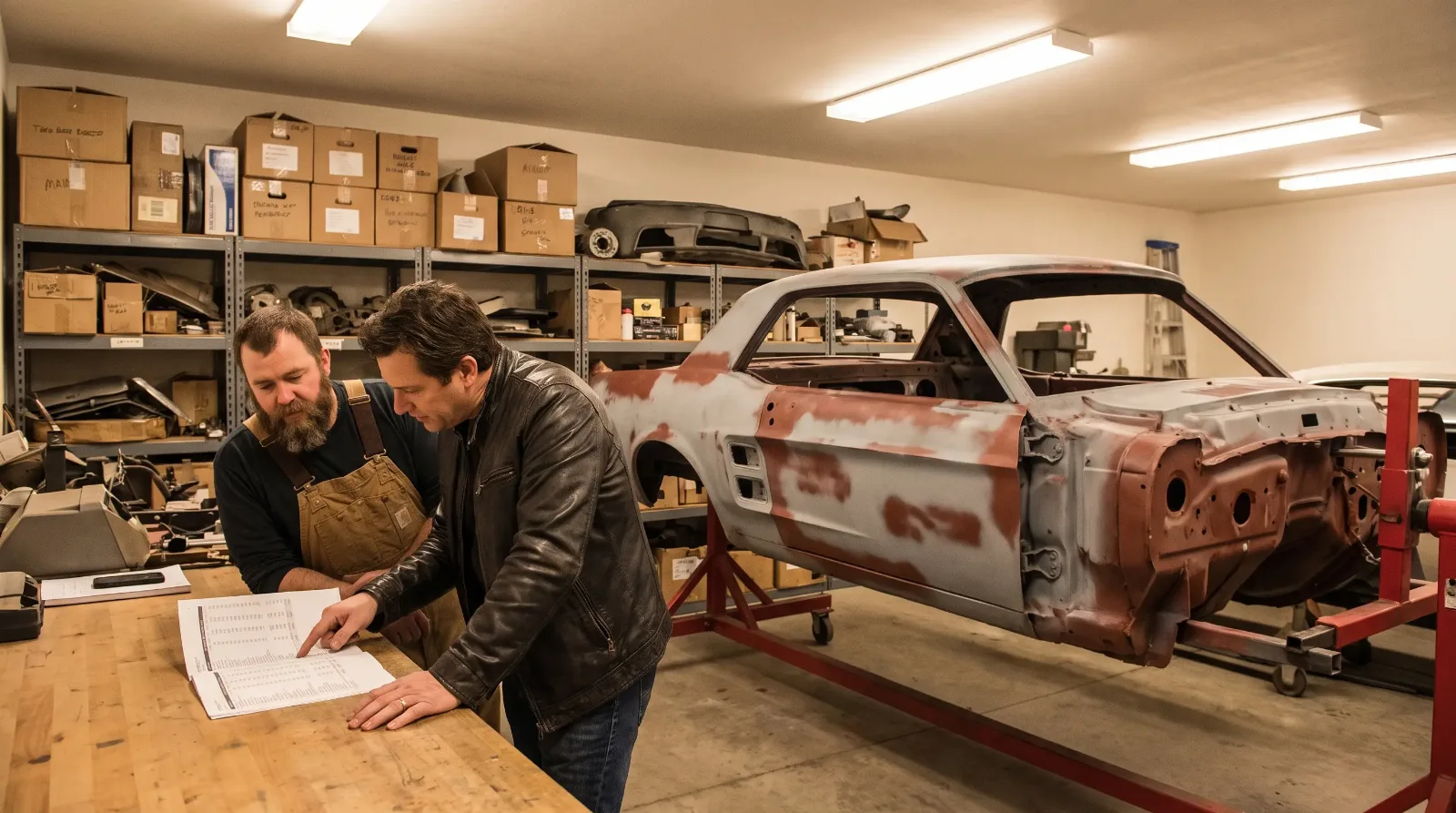
Monthly progress billing works when invoices are detailed and when you inspect between them. The invoice should list hours by task, the hourly rate, parts and outside services separately, and a running total against the estimate. A single line reading "bodywork, 140 hours" is not an invoice. It is a request for trust. Itemized hourly detail also gives you something to compare against what you see on the car.
For a sense of what those hours add up to, our breakdown of classic car restoration costs shows how labor typically splits across metalwork, paint and assembly. Use it to sanity check any estimate before you sign.
Escrow and holdbacks
Escrow is underused in this hobby. In a restoration context it means a neutral third party, often an attorney or a licensed escrow agent, holds your money and releases it against documented milestones that both sides have signed off. It costs a fee, and many small shops will not use it. That reluctance is information, but it is not proof of bad faith. A simpler alternative is a holdback: you pay monthly invoices in full but withhold a retainage, often around 10 percent of each payment, until delivery.
If the shop accepts a credit card, ask whether paying by card for large parts purchases is allowed. Card protections can matter if parts never arrive, though shops that pass on card fees will say so. Cash is the hardest form of payment to recover once it is gone, so a paper trail and a check or wire are always better than cash.
Protect the car, not just the money
The payment schedule only works if you can walk away with the car. Check three things before the first deposit. First, the shop's garage insurance, including who covers the car while it is in their care, and how that interacts with your own policy. Second, a clause stating the car and all removed parts are your property, regardless of any dispute over invoices. Third, a written change order process so scope growth is approved before it is billed. Rust is the usual reason an estimate grows, and a change order turns a surprise into a decision.
"A payment schedule is a map of who is carrying the risk. If the shop is holding your cash and you are holding a car in pieces, the schedule is wrong."
Marcus Feld
Before you commit
The payment terms tell you about the shop, so read them alongside everything else you know about the operation. If you have not already done it, work through how to vet a shop first, including references from owners whose cars were finished, not just started. Then compare terms across a few classic car restoration shops so you know what is normal in your region.
Finally, decide where the money comes from before the first invoice arrives. A project that depends on loan draws or a home equity line has its own timing, and the draw schedule should match the shop's billing cycle. That is a separate decision from the contract, and it is covered in financing the project. Get both pieces lined up and the cash flow stops being the thing that sinks the build.
Sources and notes
- Avoiding the Restoration Blues, Sports Car Market, percentage-of-completion payments, typical 10 percent retainage, and ownership of the car and parts if the deal ends
- How to pick the right restoration shop for your project, ClassicCars.com Journal, caution on sizable upfront deposits, monthly billing and itemized statements
- Classic car restoration shop bookkeeping guide, Beancount.io, billing deposits against completed phases rather than the calendar
- Mechanic's lien, Cornell Legal Information Institute, a repairer's right to retain property until paid
- Escrow, Wikipedia, how a neutral third party holds and releases funds against agreed conditions
Related Reading
Have a
Classic Car
for Sale?
Reach thousands of serious classic car collectors across the US.
Sell It Here →
Are You a Classic Car Dealer?
List your full inventory and connect with targeted classic car buyers.
Join as a Dealer →

About the author
Marcus Feld
Accredited collector-car appraiser who reads the market through hammer prices, condition tiers and risk.
More in Restoration & Tech

Comments
Be the first to comment on this article.