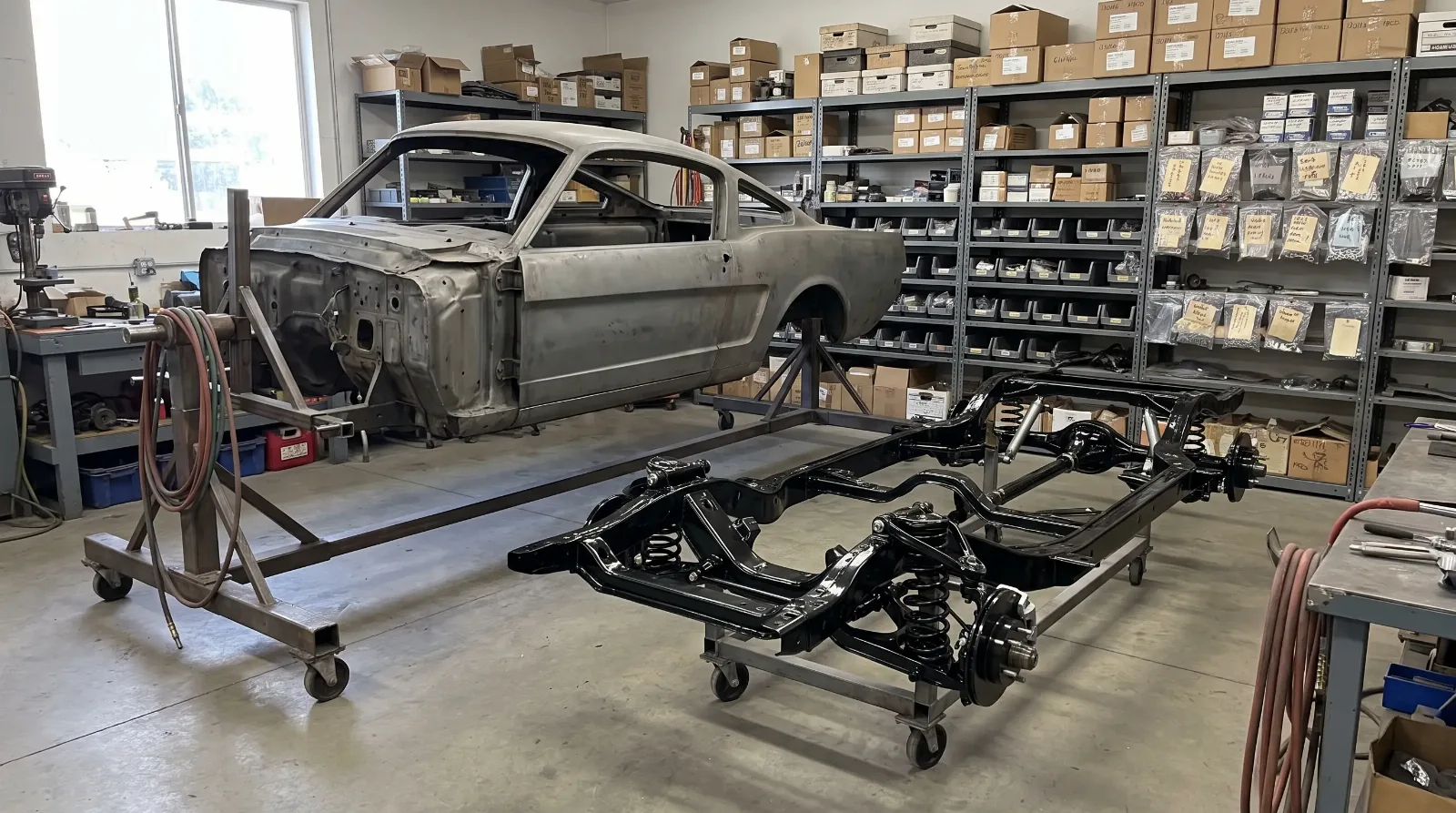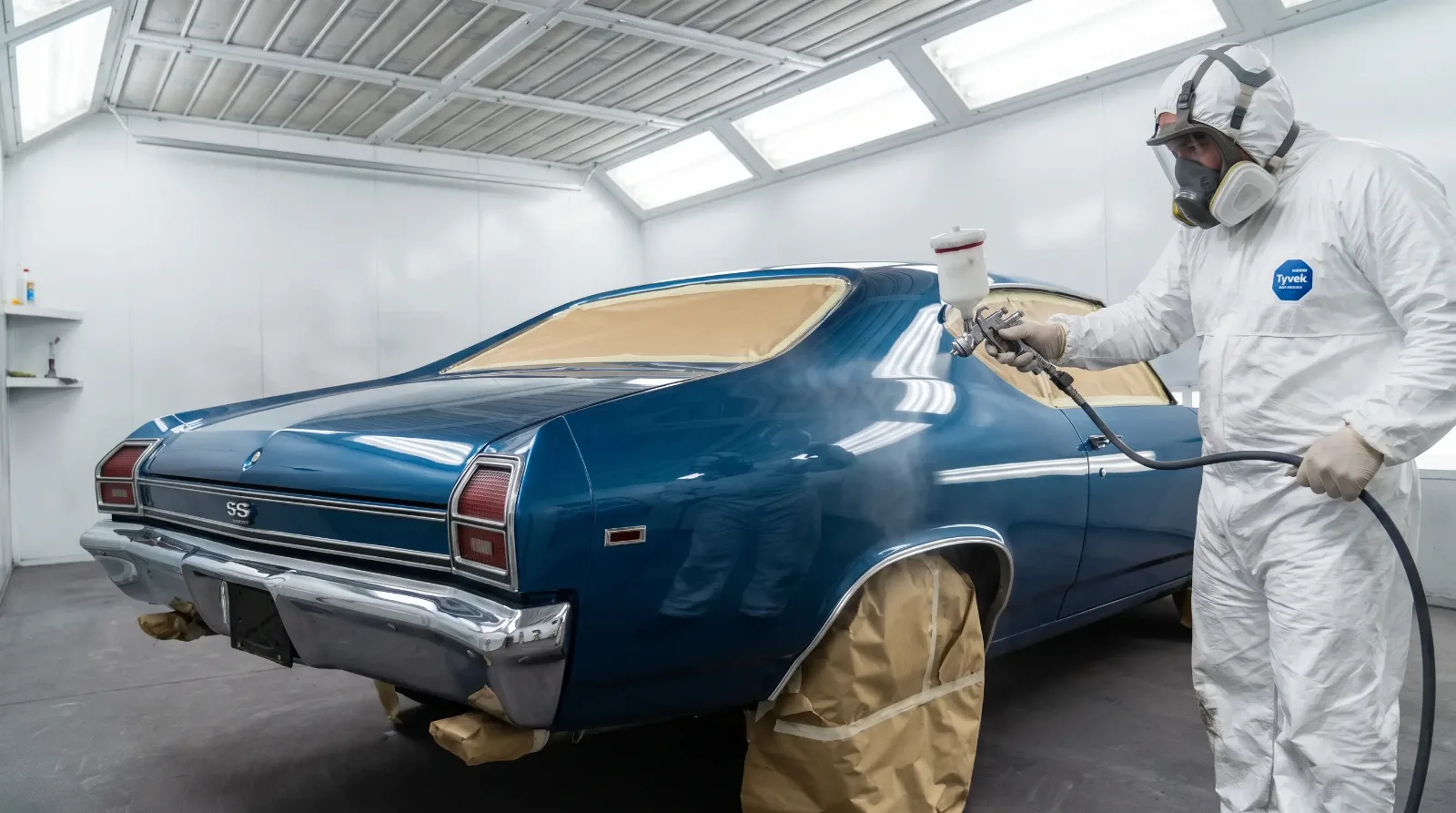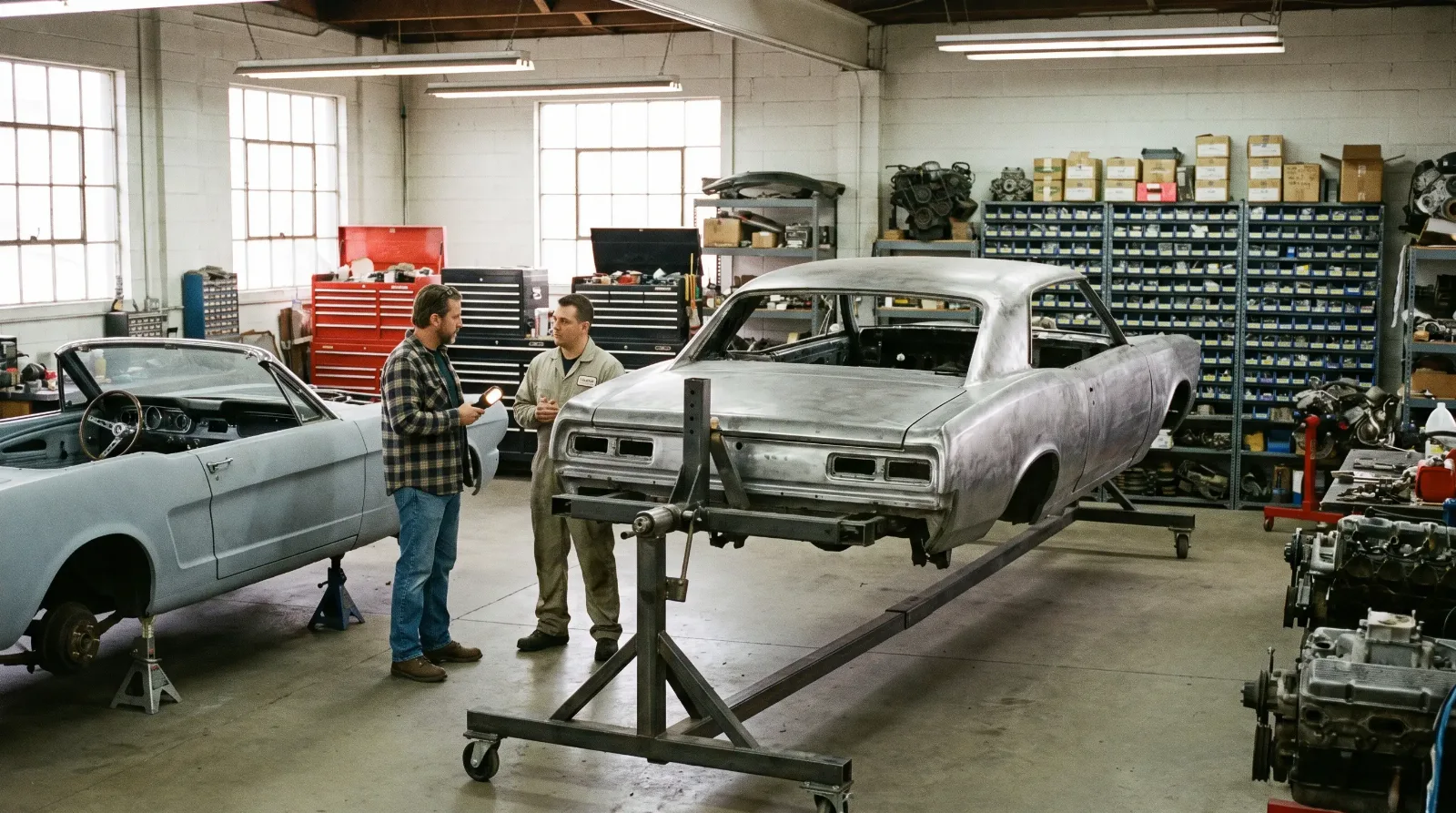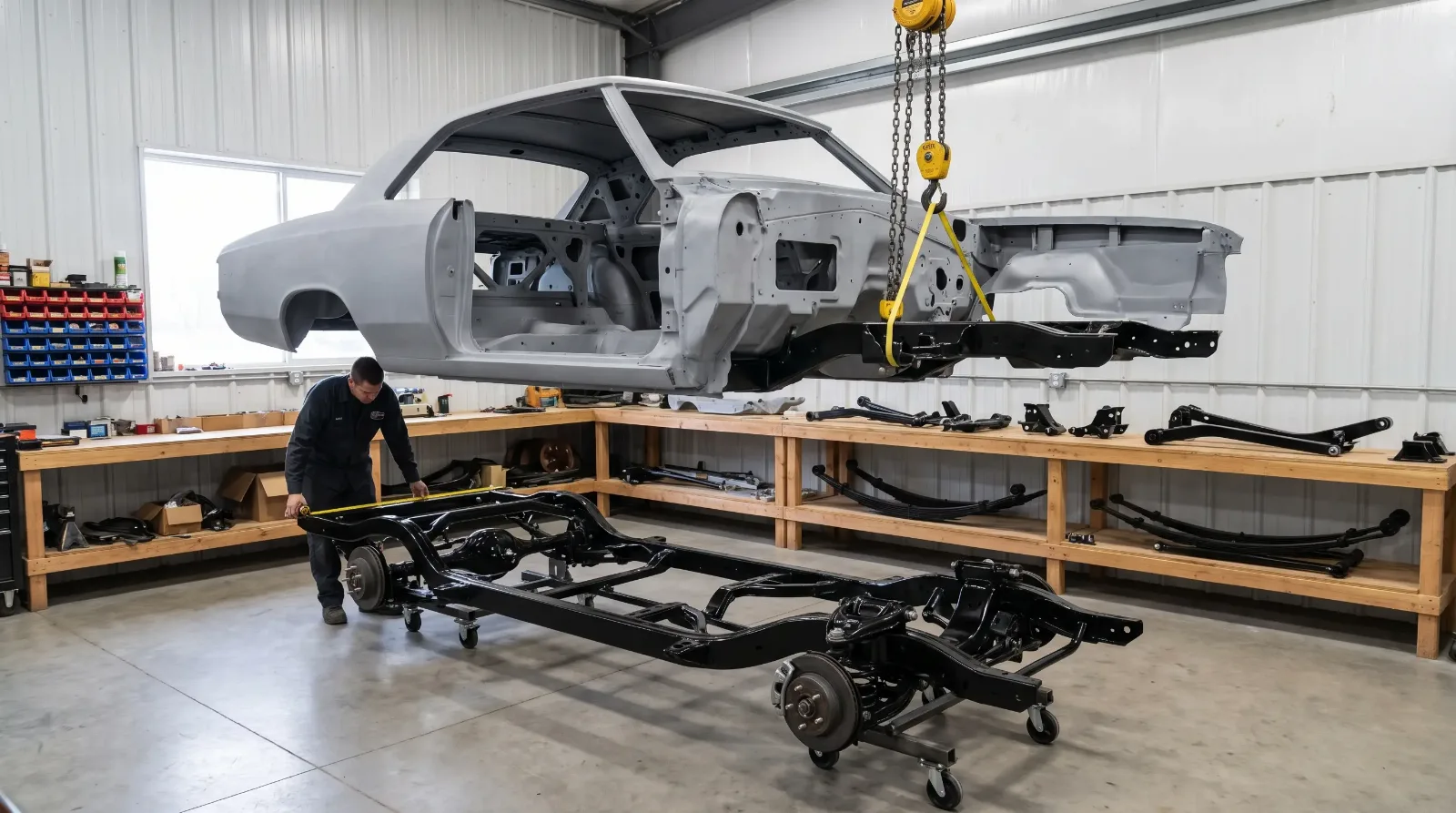
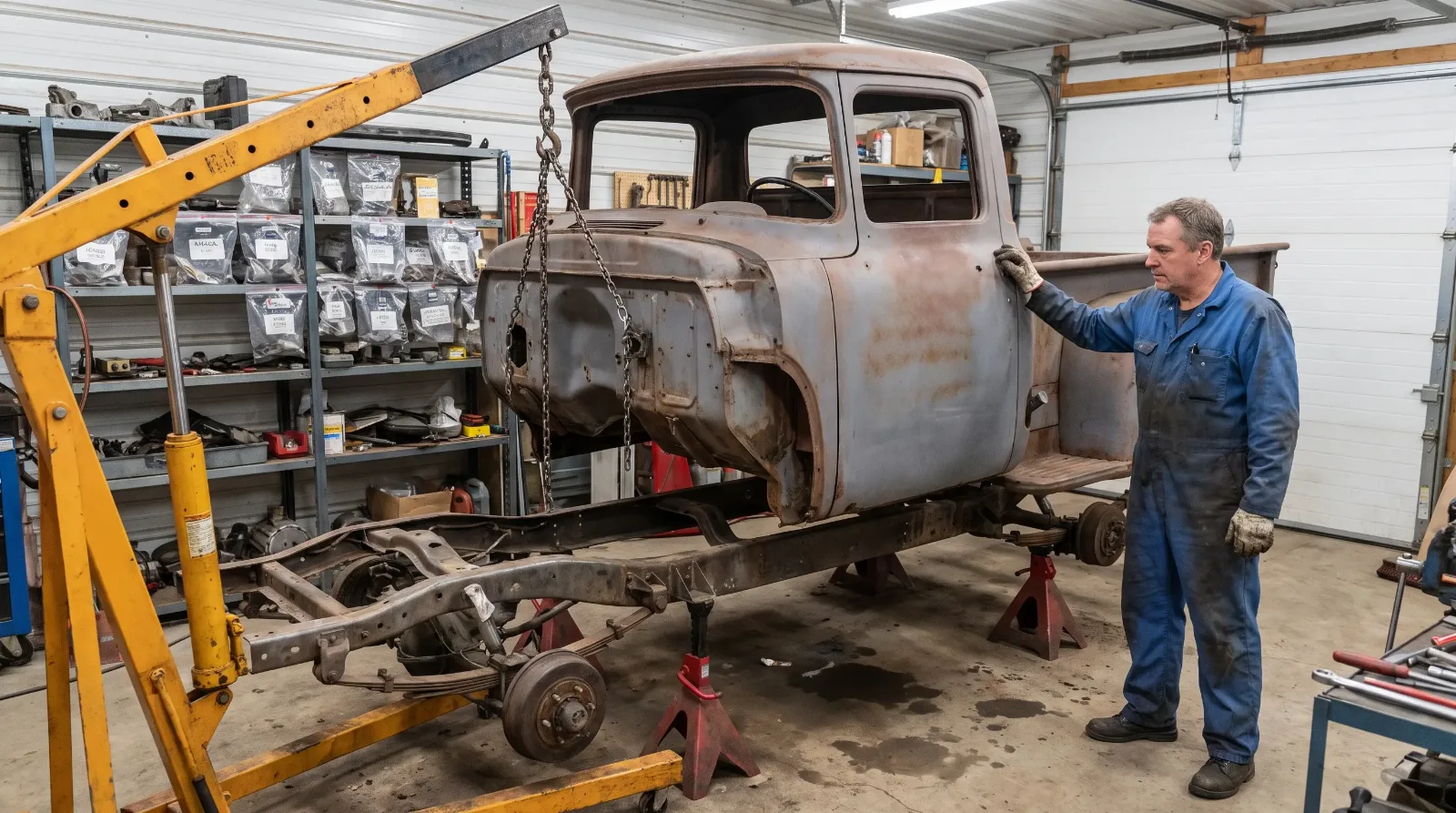
A frame off restoration starts the day somebody unbolts the body from the chassis and lifts it clear. Everything after that moment is a different job than the one most owners think they bought. The words get thrown around loosely at shows and in listings: frame-off, rotisserie, body-off, nut and bolt, concours. They are not interchangeable. Each one describes a different amount of disassembly, a different sequence of work, and a very different invoice at the end.
This piece lays out the levels in the order a shop would actually approach them, from a sorted driver up to a car built to be judged. If you know which level you are paying for before the first bolt comes out, you will spend less money arguing about it later.
Why the level of restoration matters before you start
The level you pick decides how far the car comes apart, how many hours go into it, and what standard every part is held to when it goes back together. Pick the level first. Then pick the shop. Then pick the budget. Owners who reverse that order end up with a driver-grade chassis under a show-grade paint job, which is the most expensive way to own a car that is neither.
It also decides how you talk to a shop. "Make it nice" is not a scope of work. "Frame-off, chassis restored to factory finish, body media blasted, driver-level interior" is. When you start calling around through our restoration shop directory, that second sentence gets you comparable quotes. The first one gets you a guess.
And it decides what the car is worth when you are done. A concours-level car and a driver-level car of the same model can be tens of thousands of dollars apart at sale, and that gap is almost never as wide as the gap in what they cost to build.
The four levels side by side
Most shops and most of the hobby work from four rough tiers. The names shift a little from region to region, but the work behind them does not.
| Level | How far it comes apart | Typical shop hours | Rough 2026 cost range | Built for |
|---|---|---|---|---|
| Driver (body-on) | Body stays on frame; panels, glass and trim as needed | 500 to 1,000 | $45,000 to $100,000 | Regular use, local shows |
| Frame-off / body-off | Body lifted from chassis; both restored separately | 1,000 to 2,000 | $75,000 to $200,000 | Show and drive, long ownership |
| Rotisserie | Bare shell mounted on a rotating fixture, stripped to metal | 1,200 to 2,500 | $90,000 to $225,000 | Unibody cars, full rust repair, show |
| Concours | Every part removed, inspected, restored or replaced to factory spec | 2,500 to 5,000 or more | $200,000 to $400,000 or more | Judged events, top-tier sale |
Treat the dollar figures as estimates. Labor rate drives most of the spread, and most independent shops bill somewhere around $85 to $150 an hour depending on region, with marque and concours specialists charging $175 or more. Restorers often say the old rule of thumb of about 1,000 hours for a high-end muscle car restoration has roughly doubled as standards have risen, and rust repair always comes on top. Parts availability moves the rest. A common muscle car with full reproduction support lands at the low end of each range. A low-production car where every trim piece has to be found used or remade lands at the top, or past it.
Driver restoration: the honest starting point
A driver restoration leaves the body on the frame. The shop fixes what is wrong, refreshes what is tired, and leaves alone what is sound. Mechanical systems get the most attention here: brakes, steering, suspension bushings, cooling, wiring, fuel delivery. The engine may be rebuilt or may just be sorted. Paint is often a respray over repaired panels rather than a strip to bare metal.
Here is where it goes wrong. A body-on job cannot fix what it cannot see. Body mounts, the tops of the frame rails, the inside of the rockers and the floor seams under the seat track all stay hidden. If the car came from a salt state, those areas are where the rot lives. A driver-level job on a rusty car is money spent on the outside of a problem.
Done on a solid car, though, a driver restoration is the best value in the hobby. You end up with something you can drive every weekend without flinching at a rock chip. Most classic cars on the road were restored to this level, and most of them should have been.
Frame-off restoration: what actually happens
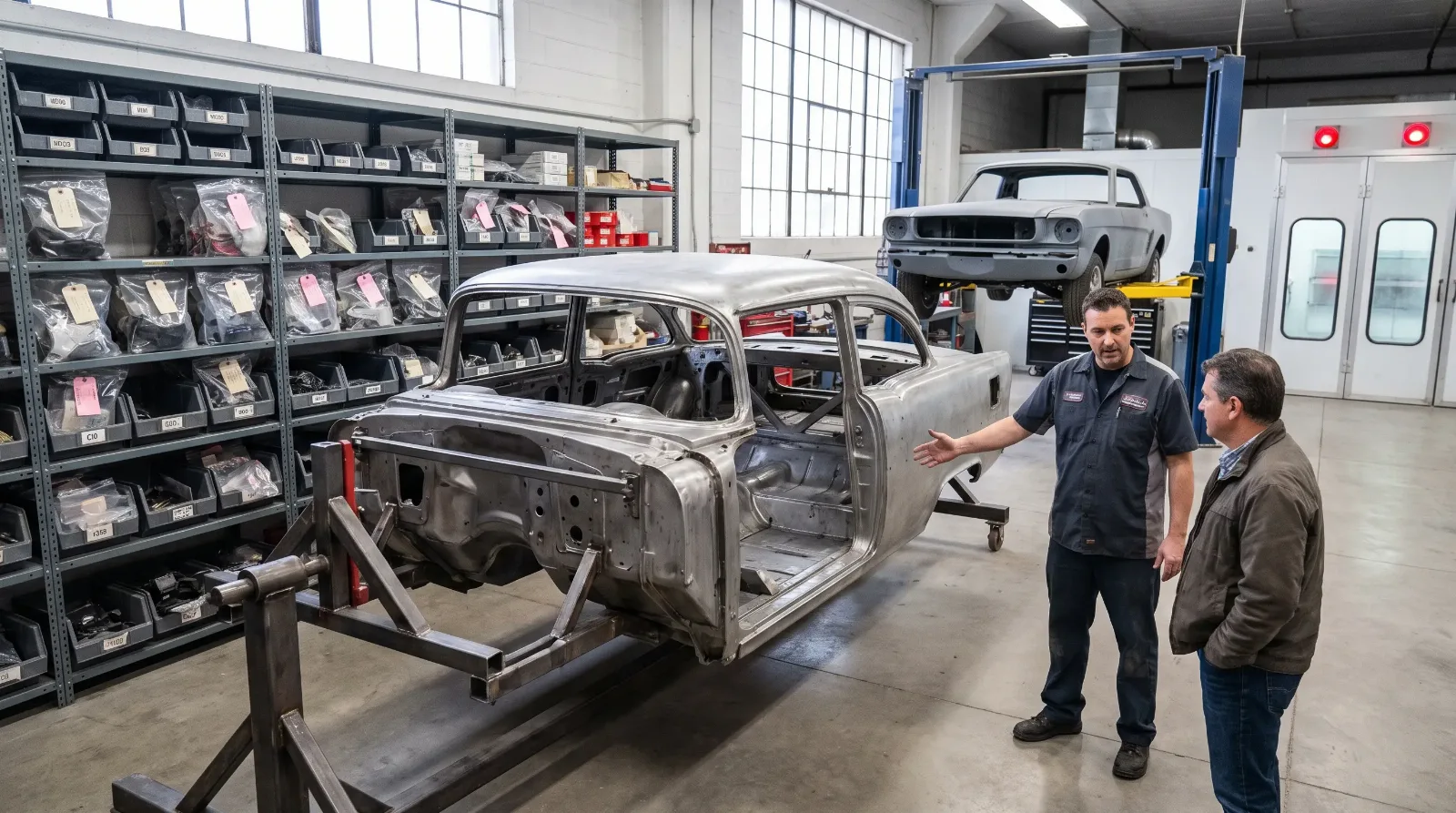
On a body-on-frame car, a frame off restoration means the body is unbolted and lifted from the chassis, usually with a hoist or a gantry, and set on a dolly or stands. From that point the car is two projects running side by side. The sequence matters, so here it is in the order a good shop runs it.
- Document before teardown. Photograph every bracket, clip, wire route and fastener. Bag and tag hardware by location. This step costs a day and saves weeks at reassembly.
- Measure the frame. Check it against factory dimensions with the body still on and again after it comes off. A frame that has been hit or has sagged will show it here, and it has to be corrected on a jig before anything else happens.
- Strip the chassis bare. Suspension, steering, brake lines, fuel lines, axles and drivetrain all come off. The bare frame gets blasted to metal so cracks, old repairs and thin sections show up.
- Repair and finish the frame. Weld up cracks, replace rotted sections, gusset where the factory design is known to fail. Then prime and finish, whether that is factory-correct semi-gloss black or powder coat.
- Rebuild the rolling chassis. New bushings, rebuilt or new suspension components, new brake and fuel lines, rebuilt steering box. Engine and transmission often go back in at this stage.
- Restore the body off the frame. Media blast or chemical strip, rust repair, panel replacement, metal finishing. Body mounts and floor pans get replaced while access is easy.
- Remarry body and chassis. New body mount cushions, shims set to restore panel gaps, then wiring, glass, interior and trim.
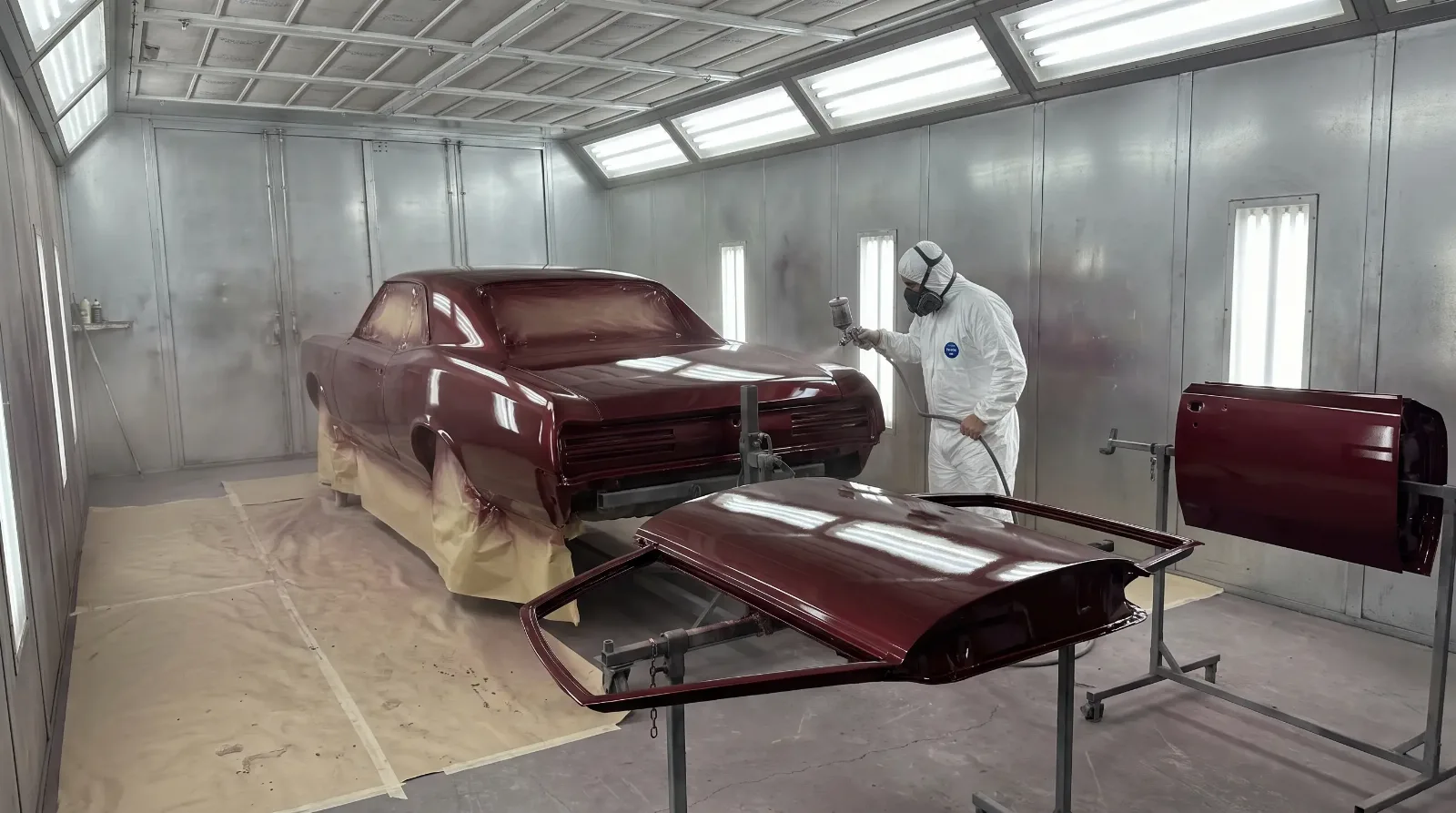
The body work in step six is where the biggest single chunk of hours goes on most cars, and it deserves its own planning. Our guide to paint and bodywork covers how that phase is scoped and priced.
Rotisserie restoration: the unibody answer
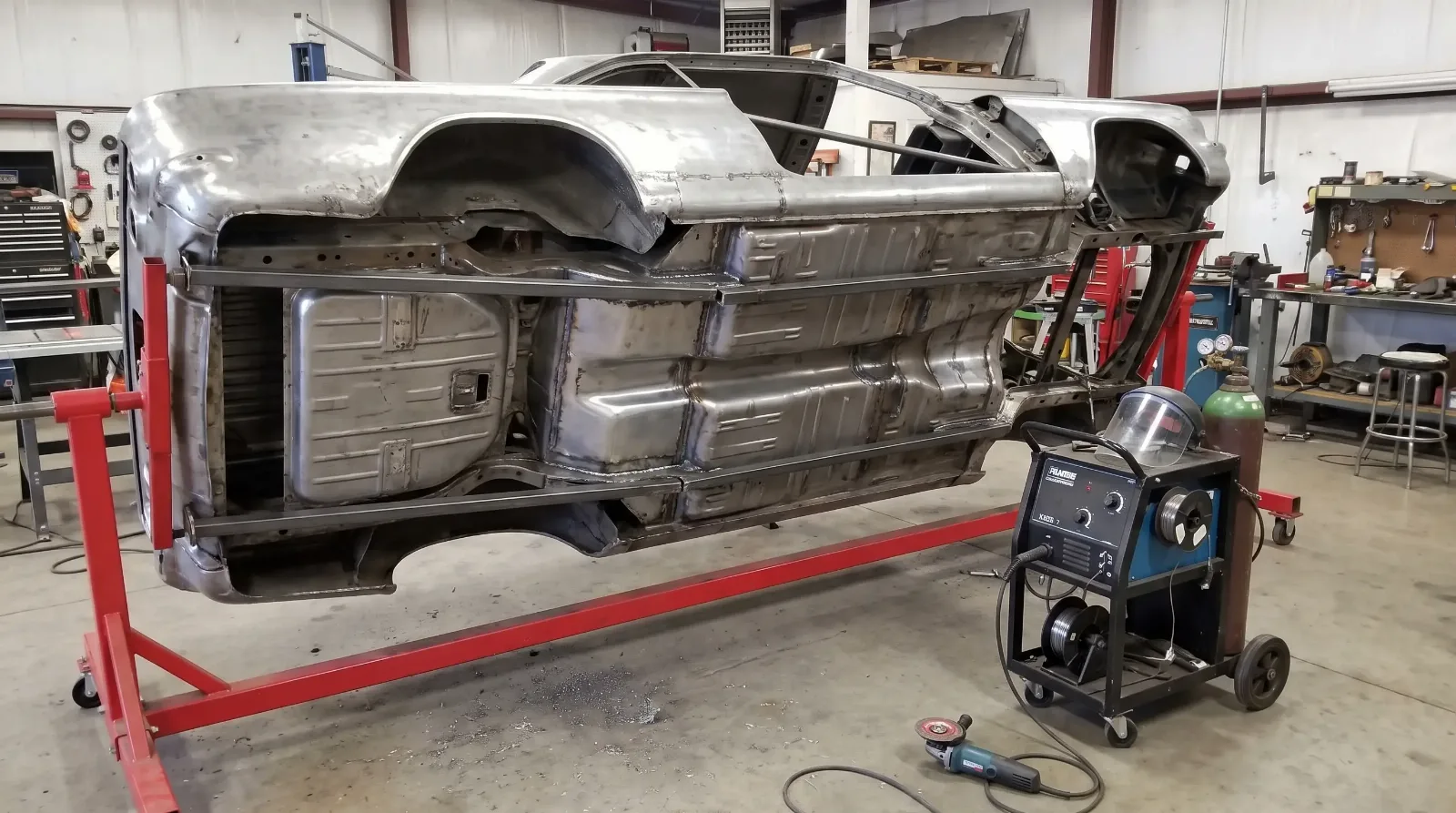
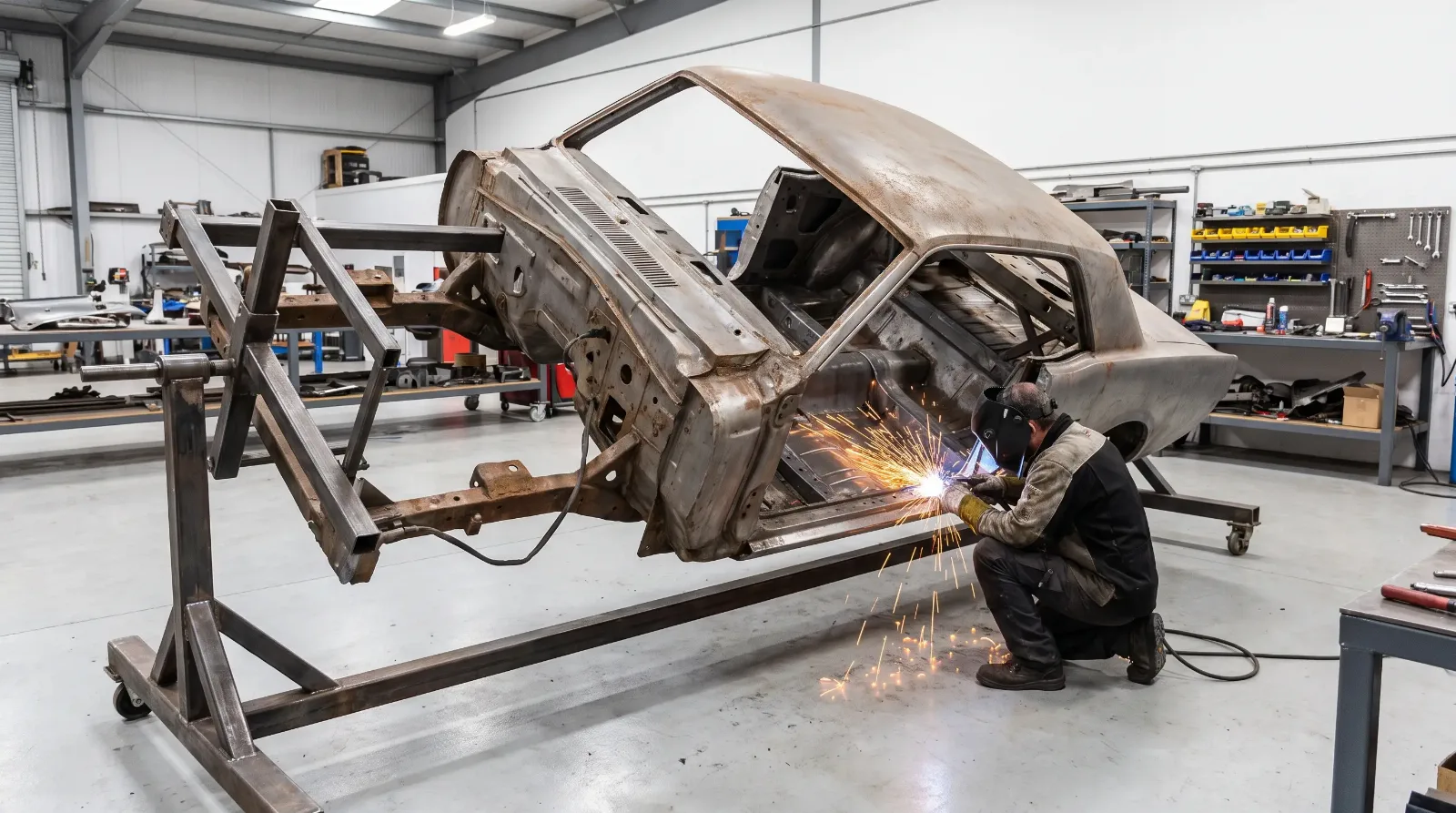
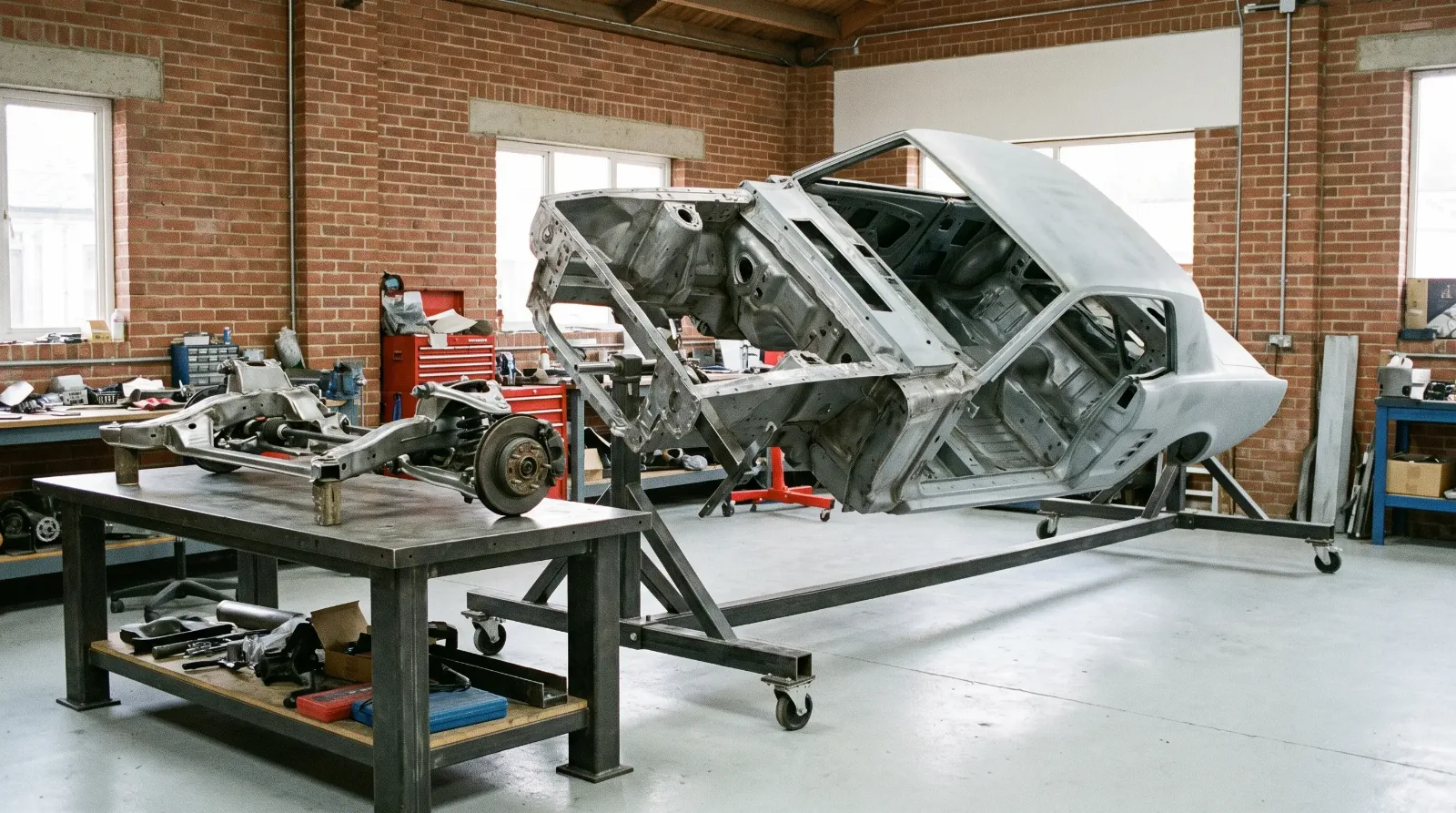
A unibody car has no separate frame to lift a body from. The floor pan, rockers and subframe rails are welded into the shell, and the shell carries the load. On those cars the closest equivalent to a frame-off is a rotisserie restoration: the shell is stripped of everything, bolted at each end to a rotating fixture, and turned so every surface can be reached.
That rotation is the point. Underside welding goes from overhead work on your back to flat work at bench height. Seam sealer goes on cleanly. Undercoating and paint reach the places a lift never shows you. On a car with structural rust in the floors, torque boxes or rear rails, I would not take on the repair any other way.
The warning: a stripped unibody shell is not stiff. Before any structural panels get cut out, the shell needs bracing across the door openings and between the strut towers, and it needs to be measured against factory reference points. Cut the rockers out of an unbraced shell and the door gaps will close on you before the new metal is tacked in.
Some shops also put body-on-frame bodies on a rotisserie once they are off the chassis. In listings you will see "frame-off rotisserie restoration," which simply means both were done. It is a fair claim when the photos back it up.
🔧 Inspection Priorities
- Teardown photo record. No photos of the bare frame or bare shell means you cannot confirm the work was done. Without them, the restoration level is just a claim.
- Frame or shell measurements. Ask for the dimension sheet. A car that was never measured may carry old collision damage under fresh paint, and correcting it later means undoing the restoration.
- Body mounts and floor seams. On a real frame-off these are new. Old cushions or original seam sealer on a "frame-off" car tells you the body never came off.
- Weld quality under the car. Look at replaced floors and rails. Clean, penetrated welds on panels set in properly are good. Globs of filler or panels lapped over rot are a structural problem.
- Brake and fuel lines. They should be new and routed like factory. Old lines on a restored chassis mean the chassis work stopped early.
Concours: building to the judge's sheet
A concours restoration goes past frame-off in one specific way. The car is not just restored, it is restored to how it left the factory, and every part is held to that standard. That means correct fasteners with correct head markings, correct finishes on each bracket, factory inspection marks reproduced where they belonged, and components dated to the build of the car.
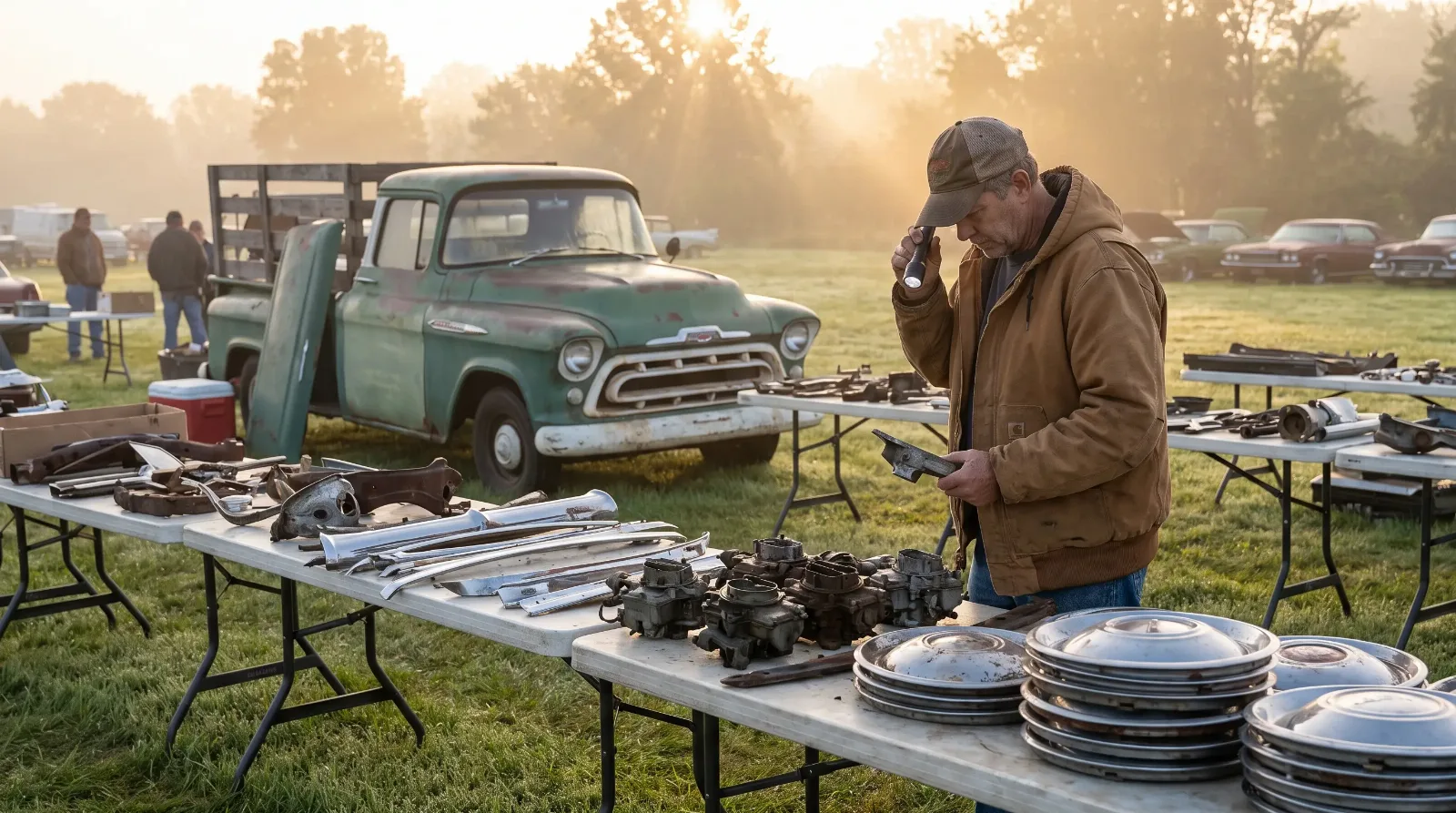
That last part is where the hours go. Finding a date-coded part that matches a car's build window can take months of searching swap meets and registries. If a club has a judging guide for your model, buy it before you start. Marque clubs such as NCRS for Corvettes publish detailed judging manuals, and NCRS scores each car by deducting points from a perfect 4,500 against how it left the factory. A Top Flight award needs 94 percent or better.
A concours car is also not a car to drive much. Correct finishes on bare metal parts are not durable, and road grime costs points. Be honest with yourself about this. Plenty of owners pay for concours and then find they want to drive the thing.
"Pick the level before you pick the shop. A concours chassis under a driver-grade body is just an expensive way to argue with yourself for two years."
Ray Delgado
Matching the level to the car and to your plans
The rule I would give anyone is simple: the restoration level should follow the car's value and the way you will use it, not the other way around. A frame-off on a common model can cost more than a finished one sells for. That does not make it wrong, but go in knowing it.
- Solid, rust-free car you plan to drive: driver level, with the money spent on brakes, steering and wiring.
- Body-on-frame car with rot in the floors or mounts: frame-off. There is no honest way to fix that with the body on.
- Unibody car with structural rust: rotisserie, braced and measured before any cutting.
- Rare, well-documented car with original drivetrain: concours or close to it, because the value is in correctness.
Sometimes the smartest move is not to restore at all. Buying a car somebody else already finished at the level you want usually costs less than building it, because sellers rarely recover their full restoration cost. Browse classic cars for sale and price a finished example against your quote before you commit. And if you would rather have modern brakes, fuel injection and a stiffer chassis than factory correctness, that is a different path with different rules, laid out in our piece on choosing between a restoration and a restomod.
Reading restoration claims in a listing
Sellers use these terms freely, so check them. A genuine frame-off car comes with a photo record of the bare frame and the body on a dolly. A rotisserie car comes with photos of the shell turned on its fixture with the underside in bare metal or primer. A concours claim should come with judging sheets or awards from a named event, plus a record of where the parts came from.
Look underneath with a good light. Fresh undercoating sprayed over old seams is a body-on job wearing a frame-off label. Original-looking body mount cushions, untouched factory spot welds on the floor, and decades-old brake lines all point the same direction. None of that makes the car bad. It just tells you what level you are actually looking at, and you should pay for that level and no higher.
The levels are a ladder, not a ranking of right and wrong. A driver done well beats a frame-off done in a hurry every time. Know which rung you are standing on, and make sure the work and the invoice agree.
Sources and notes
- Hagerty: What does it cost to restore my classic car?, shop labor rate floor and why most restorations do not recoup their cost at sale
- Classic car restoration shop bookkeeping guide (2026), average shop rate near $125 an hour, driver and concours labor hours, frame-off and concours cost bands
- Wikipedia: Vehicle frame, Big Three unibody compacts by 1960, the Panther platform ending in 2011, pickups keeping separate frames
- NCRS: Judging awards, deduction scoring from 4,500 points and the 94 percent Top Flight threshold
- National Corvette Restorers Society, judging against factory originality and the club's judging manuals
- Wikipedia: Car restoration, concours as the top level, value-guide quality scales, restorations often costing more than the finished car is worth