
A stock clutch fan on a swapped C10 usually fails at the worst possible moment: idling at a stoplight in July, coolant temp climbing past 220, and no airflow because the fan clutch was engineered around an engine and a fan shroud that aren't in the truck anymore. That's not bad luck. It's physics. The mechanical fan pulls air based on engine RPM and clutch lockup temperature, and once you've changed the engine, the pulley ratio, or the space in front of the radiator, the whole system it was tuned for is gone. Dual electric fans fix the actual problem: airflow that doesn't depend on engine speed, sized to the radiator you actually have.
Restoration & Tech
7 min read
Upgrading a C10 Cooling System with Dual Electric Fans
Why the stock clutch fan can't keep up after an engine swap, and how to size, wire, and shroud a dual electric fan setup that actually cools a C10.
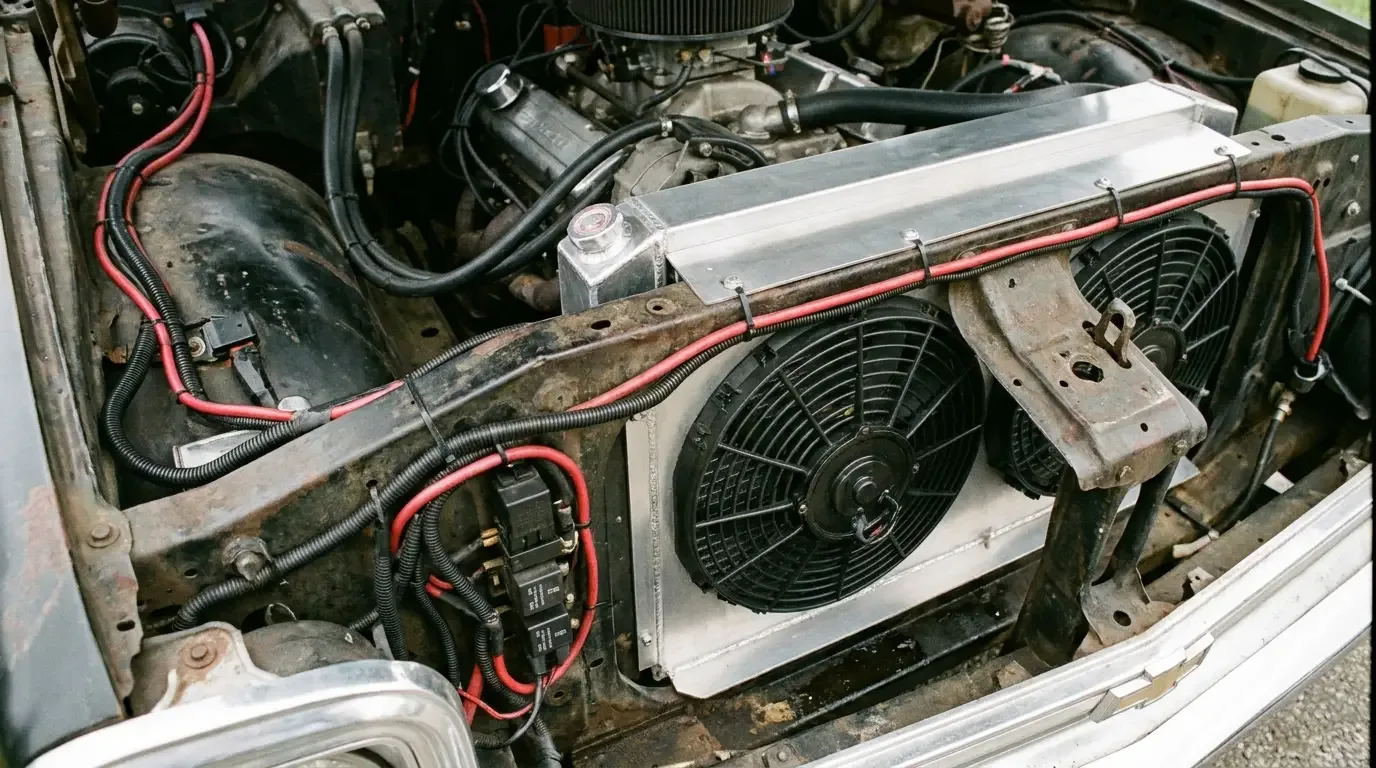
The number that matters here is CFM, not fan diameter. Two 11-inch fans rated around 1,300-1,500 CFM combined will out-cool a single stock clutch fan at idle almost every time, because the clutch fan does most of its work at higher RPM and does almost nothing sitting at a light. If a shop tells you fan size is the spec, ask for the CFM rating instead. That's the number the radiator actually cares about.
Why the stock fan clutch doesn't survive a swap
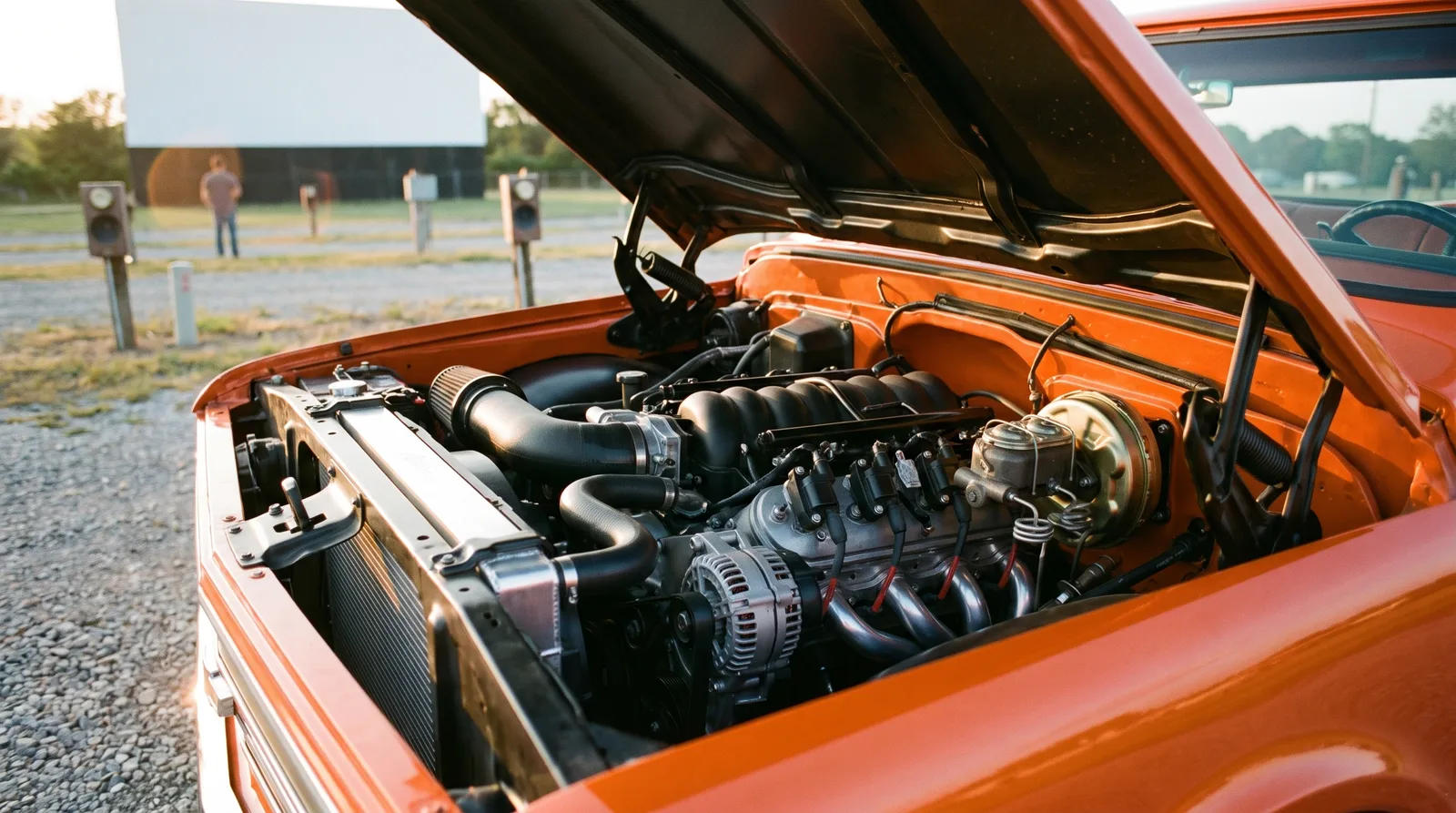
The factory clutch fan was matched to a specific water pump pulley ratio, a specific shroud, and a specific engine's heat output. Change the engine in the kind of build covered by the LS swap guide, and at least two of those three things change immediately. An LS accessory drive spins the water pump at a different ratio than the factory small-block did. The shroud opening may not line up with the new water pump's fan mount depth. The clutch itself is calibrated to lock up at a coolant temperature and airflow demand that assumed the old engine's thermal output, not the new one's.
None of this shows up on a test drive at highway speed, where ram air through the grille does most of the cooling work regardless of fan condition. It shows up in stop-and-go traffic, at idle in a parade, or sitting at a show with the engine running. That's exactly when a marginal fan setup fails, and it's exactly when you can't just drive faster to fix it.
CFM numbers that actually cool a big engine bay
Sizing dual fans starts with radiator core size, not engine displacement. A C10 running a common aftermarket aluminum radiator in the 26 to 28-inch core width range generally benefits from combined airflow in roughly the 2,000 to 2,500 CFM range to handle a swapped small-block or LS under real load, meaning a hot day, low speed, and the AC compressor running. Two fans in the 11 to 12-inch range rated around 1,200 to 1,400 CFM each get you into that window with margin. Buying two fans rated at 1,000 CFM combined because they were the cheapest kit at the parts store is how guys end up right back in the same overheating spot they started in, just with electric fans instead of a clutch fan. Cooling problems on these trucks aren't new. Anyone who's read the C10 story knows the factory cooling system was sized conservatively for the era, and it has even less margin once a bigger, harder-working engine goes in.
| Fan configuration | Typical combined CFM | Best suited for |
|---|---|---|
| Single 16-inch electric fan | around 1,600-2,000 CFM | Mild small-block, no AC, mostly highway driving |
| Dual 11-inch electric fans | around 2,000-2,300 CFM | Swapped small-block or LS, AC equipped, city/show driving |
| Dual 12-inch electric fans | around 2,500-3,000 CFM | Built engines, towing, or hot climates with heavy idle time |
Wiring it so it doesn't overheat the truck electrically
Two fans pulling real CFM draw real amperage, often 15-20 amps each under startup load, and that's not a load you run through a factory-gauge wire off the ignition switch. Every dual electric fan install needs a relay, a dedicated fuse, and wire gauge sized for the actual combined draw, not the smallest wire that happened to be in the parts bin. A separate temperature-controlled switch or a programmable controller triggers the relay, keeping the actual switching current off the factory harness entirely. Skip the relay and run fans straight off a switched circuit, and you'll cook a connector or a switch within a season, usually at the exact moment you need the fans running.
Run the ground as carefully as the power side. A fan that spins slow and pulls more amps than it should is as often a bad ground as a bad motor. Ground straight to the frame or the block with a clean, dedicated wire rather than trusting a factory body ground point that's been through fifty years of corrosion.
Shroud and mounting: making two fans fit one core support
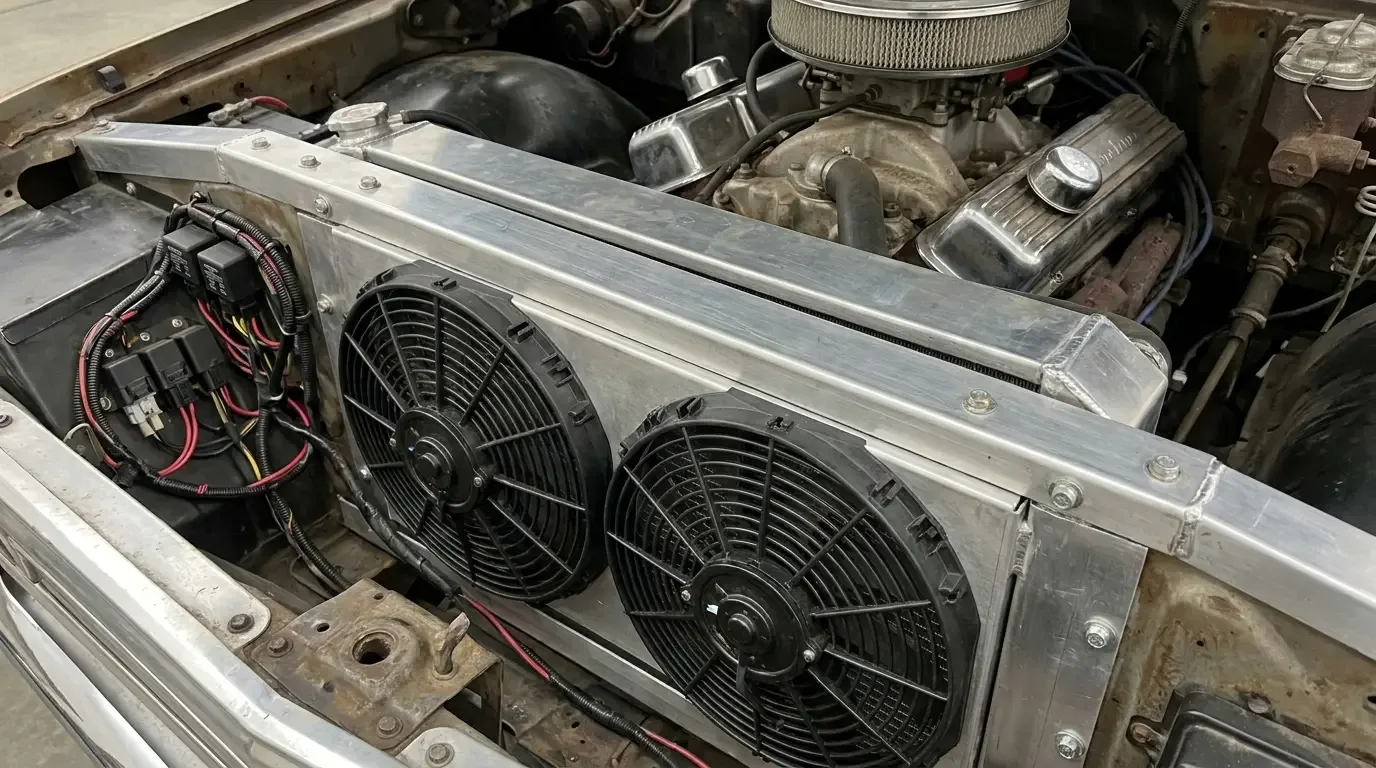
The core support on a C10 was built for one mechanical fan and a shroud shaped around it, not two electric fans side by side. Most dual-fan kits come with a shroud sized for the specific radiator they're sold with, and that shroud is not optional equipment. An unshrouded fan pulls air from wherever it's easiest, which is often around the fan rather than through the radiator core, and that defeats a big chunk of the CFM rating you paid for. Mount the fans as close to the radiator core as clearance allows, and seal any gap between the shroud and the radiator edges with foam tape so air is pulled through the fins instead of around them.
What actually goes wrong after install
Most complaints after a dual fan install trace back to one of three things: fans mounted too far from the core losing shroud effect, a fan-on temperature set so high the engine's already hot before the fans kick in, or a ground connection that's marginal enough to work most of the time and fail exactly when the load is highest. None of these are the fan's fault. They're install details that get rushed at the end of a long swap when everybody just wants the truck running.
"CFM is the only number that matters here. A pretty fan that moves less air than the clutch fan it replaced is a downgrade with better looks, and I've seen it happen more than once."
Dan Reeves
Buy the CFM you need for the radiator core you have, wire it through a relay sized for the real load, and seal the shroud so the fans are actually pulling through the core instead of around it. Do those three things and the overheating problem that started this whole project goes away for good.
Sources and notes
- Flex-a-lite: How to Choose an Electric Fan
- Flex-a-lite: Dual 11-inch electric fan system spec (2,029 CFM)
- Flex-a-lite: Dual 12-1/8-inch S-Blade electric fan spec (2,500-3,000 CFM)
- Old Air Products: SPAL 16-inch electric fan CFM specs
- etrailer: Electric fan CFM sizing for V8 engines
- Speedway Motors: How to Choose the Best Electric Radiator Fan
Related Reading
Have a
Chevrolet C10
for Sale?
Reach thousands of serious classic car collectors across the US.
Sell It Here →
Are You a Classic Car Dealer?
List your full inventory and connect with targeted classic car buyers.
Join as a Dealer →

About the author
Dan Reeves
Performance engine builder from North Carolina's motorsports corridor, focused on swaps, forced induction and making real, repeatable power.
Related Listings - Chevrolet C10
More in Restoration & Tech

Comments
Be the first to comment on this article.