
Classic Buick Riviera Buyer's Guide
Definitive buyer's guide for classic Buick Riviera 1963-1999. Generation breakdown, GS and Gran Sport authentication, body inspection, current pricing for survivors and concours.

The Buick Riviera launched for 1963 as Bill Mitchell's personal-luxury masterpiece — General Motors' response to the success of the four-place Thunderbird. Mitchell designed the Riviera as a clean, European-influenced two-door coupe with crisp lines and refined proportions, and the original 1963-1965 cars are now widely considered the most beautiful Buicks ever produced. From a concours judging perspective, documented Riviera examples consistently outperform the broader Buick market — the Riviera was always positioned as the marque's halo flagship. Across thirty-six years of production (1963-1999) and eight platform generations, the Riviera defined American personal-luxury motoring through multiple distinct eras: the original 1963-1965 cars, the dramatic 1971-1973 Boattails, the front-wheel-drive 1979-1985 cars sharing platform with the Eldorado and Toronado, and the final 1995-1999 cars that closed the Riviera nameplate.
Overview
The Riviera ran for thirty-six years across eight distinct platform generations. The 1963-1965 first-generation cars are the personal-luxury icons. The 1966-1970 second generation introduced new platform sharing with the FWD Toronado and Eldorado. The 1971-1973 third generation produced the dramatic Boattail. The 1974-1976 cars represent the bargain segment of pre-FWD ownership. The 1977-1978 cars closed the rear-wheel-drive Riviera era. The 1979-1985 cars moved to FWD personal-luxury. The 1986-1993 and 1995-1999 final-generation cars closed the nameplate.
Generations Worth Knowing
First Generation (1963-1965)
The original. Bill Mitchell's personal-luxury masterpiece. Clean, European-influenced design with refined proportions. Engine options included the 401 Wildcat V8 (1963-1964) and the 425 Wildcat V8 (1965). The 1965 Riviera Gran Sport (GS) is the most desirable performance variant — distinctive trim, performance suspension, and the dual-quad 425 V8. Driver-quality 1963-1965 Rivieras run $32,000-$55,000.
Second Generation (1966-1970)
The 1966 redesign brought slightly larger proportions and shared platform with the new front-wheel-drive Eldorado and Toronado (although the 1966-1970 Riviera remained rear-wheel-drive). Engine options included the 425 V8 (1966) and 430 V8 (1967-1969), with the 455 V8 introduced for 1970. Driver-quality cars run $22,000-$42,000.
Third Generation: Boattail (1971-1973)
The 1971 redesign brought the dramatic Boattail styling — teardrop-shaped rear with pronounced tail. Designed by Bill Mitchell as a deliberate styling statement, the Boattail polarized contemporary critics but is now actively collected for its unique aesthetic. The 455 V8 was standard. Driver-quality 1971-1973 Boattails run $22,000-$45,000.
Fourth Generation (1974-1976)
The 1974 redesign moved away from the Boattail styling toward more conventional proportions. Federal 5-mph bumpers and emissions equipment took the steam out of factory performance. Driver-quality cars run $14,000-$28,000.
Fifth Generation (1977-1978)
The 1977 redesign downsized the Riviera dramatically as part of GM's broader response to CAFE regulations. The 1977-1978 cars were the final rear-wheel-drive Rivieras. Driver-quality cars run $12,000-$22,000.
Sixth Generation: FWD (1979-1985)
The 1979 redesign moved the Riviera to a front-wheel-drive platform shared with the Cadillac Eldorado and Oldsmobile Toronado. The 1982-1985 Riviera convertible (revived after years of hardtop-only production) is the most desirable variant. Driver-quality cars run $14,000-$28,000.
What to Look For (in person)
Body Style and Trim Verification
Verify the body style code on the firewall dataplate. The Riviera was a personal-luxury two-door across most generations. For Gran Sport (GS) claims, verify the GS option codes via PHS Documentation Report (PHS covers Buick A-body and personal-luxury production records).
Frame and Body Inspection
For 1963-1976 body-on-frame Rivieras, probe the perimeter frame at the body mount points. For 1977-1985 cars (and later FWD cars), inspect the unibody at the rocker panels, floor pans, and cowl seam.
Pricing Tiers
| Tier | Description | Price Range (2024) |
|---|---|---|
| Driver | 1974-1985 Riviera (downsized or FWD), decent paint, runs and drives, light cosmetic wear | $12,000-$28,000 |
| Survivor | 1971-1973 Boattail or 1966-1970 second-generation with original drivetrain, original paint | $25,000-$48,000 |
| Concours | Documented 1963-1965 first-generation or 1965 Gran Sport, frame-off restoration, Buick Club judged | $50,000-$95,000+ |
Common Pitfalls
The biggest pitfall in Riviera buying is paying premium money for a car with hidden body damage on dramatic styling features. The 1971-1973 Boattail in particular had unique tail panel sheet metal that's difficult to repair — verify the tail panel is original and undamaged.
The second pitfall is failed FWD drivetrain on 1979-1985 cars. The chain-drive transfer case requires specific specialist knowledge to inspect properly. Failed chains require $4,000-$8,000 in repair.
"Among the marque registries, the 1963-1965 Buick Riviera is consistently rated the most beautiful Buick ever produced. The market premium for a documented original-paint Riviera with the Gran Sport package and Buick Heritage verification is real — $15,000-$25,000 over equivalent restorations — and it pays to spend the time on proper authentication. The Buick archives don't lie, and the unforgiving truth of body integrity will be revealed eventually."
— Sarah Whitfield
Final Verdict
The Riviera market rewards documentation, body integrity, and patience. 1963-1965 first-generation cars are blue-chip investments at the apex of post-war American personal-luxury design. 1971-1973 Boattails are increasingly collected for their unique aesthetic. Driver-quality 1974-1985 Rivieras remain the smart-money entry into Riviera ownership.
For new buyers, start with a 1974-1976 fourth-generation Riviera with the 455 V8. They're affordable, parts support is reasonable through specialist suppliers, and the cars represent honest collector entry into Buick personal-luxury motoring. From there, the upgrade path is clear: 1971-1973 Boattail, then 1966-1970 second-generation, then 1963-1965 first-generation, then 1965 Gran Sport.
Browse Buick Riviera listings
 Dealer
 United States
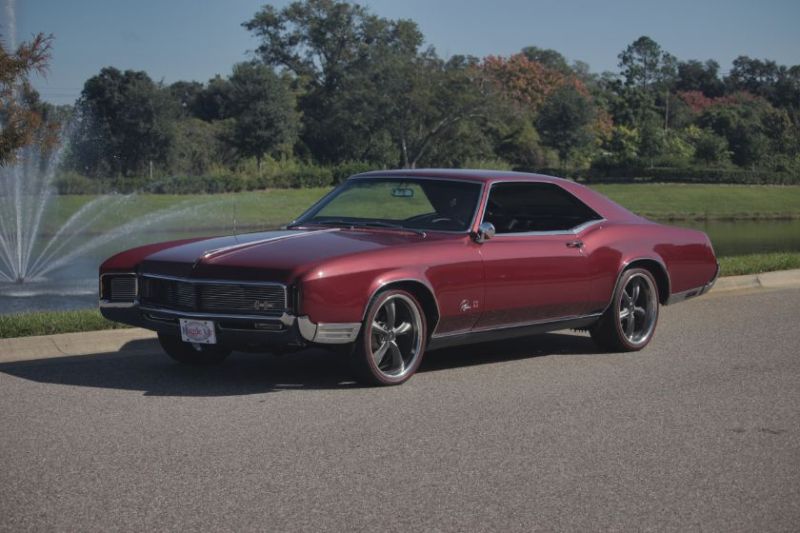
1966 Buick Riviera
 Dealer
United States
Dealer
United States
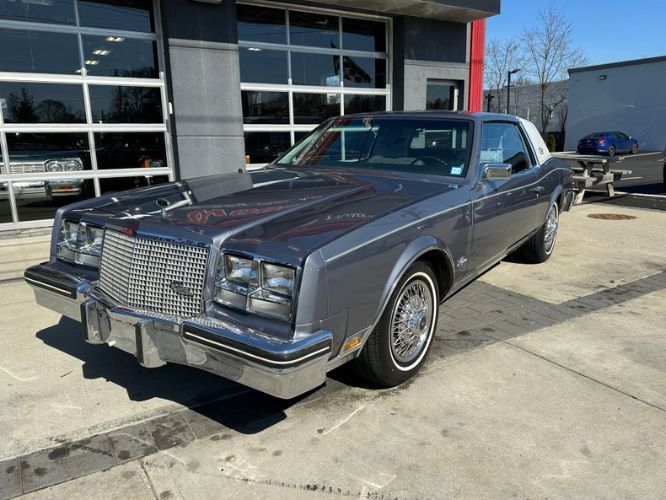
1982 Buick Riviera
What to Look For
Cross-reference against Buick Heritage records for any Riviera priced over $30,000. Buick maintains original production records and can verify chassis number, engine number, original paint code, options, and delivery destination.For 1963-1965 first-generation Rivieras, the Bill Mitchell-designed body panels are unique to the Riviera platform — verify panel originality and quality. Original-paint, low-mileage cars command 25-40% premium over equivalent restorations.
For 1965 Gran Sport (GS) claims, verify the GS RPO codes via PHS Documentation Report ($50-$80). The GS package included the dual-quad 425 V8, performance suspension, and unique trim. Without PHS documentation, treat all GS claims as base Riviera with cosmetic GS trim added.
For 1971-1973 Boattail claims, verify the dramatic teardrop tail panel is original and undamaged. Tail panel damage from minor accidents is common — repair requires specialist coachbuilding work due to the unique sheet metal stamping.
For 1979-1985 FWD Rivieras, inspect the chain-drive transfer case. Test for chain noise on light acceleration. Failed chains require $4,000-$8,000 in repair.
Body inspection is the second non-negotiable. For body-on-frame cars (1963-1976), probe the perimeter frame at body mount points and front kick-up. For unibody cars (1977-1985), inspect the rocker panels, floor pans, and cowl seam.
For convertible Rivieras (1982-1985 only), the hydraulic and electric top systems are complex. Test the top operation through full open and close cycle. Failed top systems require $1,500-$3,500 in specialist repair.
Document the car. Photograph every panel, every chassis number stamping, every interior detail, every engine bay component, and every identifying tag. The unrestored survivor in original livery is consistently preferable to the freshly-restored car of unknown provenance.
Pre-Purchase Checklist
-
Verify body style code on firewall dataplate
Riviera was a personal-luxury two-door across most generations. Verify original equipment. -
Cross-reference VIN engine code with block casting
Buick V8 engines (401, 425, 430, 455) and 350 each have specific casting numbers. -
For Gran Sport (GS) claims, verify RPO codes
GS package included performance equipment. Documentation mandatory for premium pricing. -
Inspect frame at body mount points
Body mount cushions collapse over 50+ years. Frame rust = $2,500-$5,500 minimum repair. -
Magnet test rear quarters and lower fenders
Body filler is non-magnetic. -
For 1971-1973 Boattail claims, verify dramatic styling intact
Tail panel damage common — original undamaged sheet metal adds 10-15% value. -
Check FWD drivetrain (1979-1985 cars)
1979+ Rivieras shared FWD platform with Eldorado and Toronado. Test for chain noise. -
Examine convertible top mechanism (1982-1985)
Convertible Riviera (rare) requires inspection of hydraulic top system. -
Test all power options
Power windows, seats, climate, AM/FM. Heavily-optioned Rivieras require expensive specialist repair. -
Compression test all eight cylinders
Should read 145-180 PSI uniformly. Big-blocks (430, 455) run slightly higher.
Common Issues
Riviera rust patterns vary dramatically by generation. The 1963-1976 body-on-frame cars rust at the lower rear quarters, rocker panels, floor pans, trunk pan, lower fenders, and cowl seam. The 1977-1985 cars (downsized and FWD) use unibody construction and rust at the rocker panels, floor pans, front strut towers, and rear quarter panels. The 1971-1973 Boattail has unique tail panel sheet metal that's expensive to repair when damaged.Mechanically, Buick V8 engines are exceptionally durable when maintained. The 401 Nailhead V8 (1963-1964), 425 Wildcat V8 (1965-1966), 430 V8 (1967-1969), 455 V8 (1970-1976), and 350 V8 (1977-1980) are all robust. Common issues include leaky valve covers and oil pan gaskets, worn timing chains on tired engines, and tired Quadrajet carburetors.
The 1979-1985 FWD Rivieras use the Turbo Hydra-Matic 425 transmission with chain-drive transfer to the front differential — same drivetrain as Cadillac Eldorado and Oldsmobile Toronado of the same era. The chain wears and stretches over time. Worn chain symptoms include noise on light acceleration and harsh shifting.
Electrical issues are extensive on heavily-optioned Rivieras. Power windows, power seats, climate control, and AM/FM stereo were standard equipment. Failed systems on heavily-optioned cars require expensive specialist repair — budget $2,000-$5,000 for proper electrical refresh on any neglected Riviera. Vacuum-actuated headlight covers (some 1965-1973 cars) commonly fail when vacuum lines crack.
For convertible Rivieras (1982-1985 only), the hydraulic and electric top systems are complex and commonly fail. Test the top operation through full open and close cycle.
More Riviera for sale
 Dealer
United States
Dealer
United States
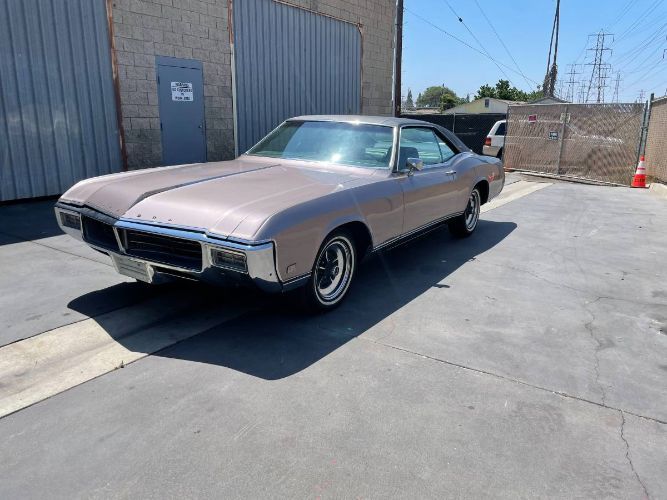
1969 Buick Riviera
 Dealer
United States
Dealer
United States
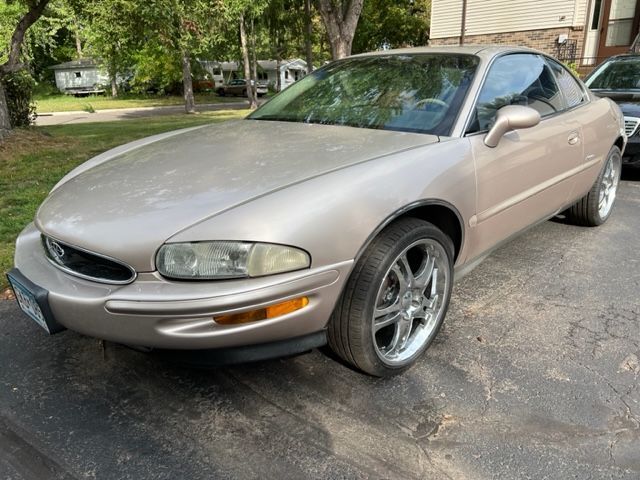
1995 Buick Riviera
Pricing Guide
1963-1965 first-generation Rivieras: driver-quality cars run $32,000-$55,000. The 1963 launch year is most desirable. Documented original-paint, low-mileage cars: $50,000-$85,000+. The 1965 Gran Sport (GS) commands $35,000-$60,000 driver-quality, $60,000-$95,000 documented original.1966-1970 second-generation Rivieras: driver-quality cars run $22,000-$42,000. The 1966 launch year and 1970 final year (with 455 V8) are most desirable. Documented original cars: $35,000-$55,000.
1971-1973 third-generation Boattail Rivieras: driver-quality cars run $22,000-$45,000. The 1972 model year is most desirable. Documented original-paint Boattails: $35,000-$60,000+.
1974-1976 fourth-generation Rivieras: driver-quality cars run $14,000-$28,000. Bargain entry into pre-FWD Riviera ownership.
1977-1978 fifth-generation Rivieras: driver-quality cars run $12,000-$22,000.
1979-1985 sixth-generation FWD Rivieras: driver-quality cars run $14,000-$28,000. The 1982-1985 Riviera convertible (rare): $20,000-$38,000 driver-quality, $30,000-$50,000+ documented.
1986-1993 seventh-generation Rivieras: driver-quality cars run $8,000-$18,000.
1995-1999 final-generation supercharged Riviera: driver-quality cars run $7,000-$16,000. The 1995 launch year is most desirable.
Documented original-paint, low-mileage cars across all generations command 25-40% premium over equivalent restorations.
Project Rivieras start around $5,000-$15,000 across most generations. Stripped roller candidates: $2,500-$8,000.
Fun Facts
The 1963 Buick Riviera was originally designed by Bill Mitchell as a Cadillac LaSalle revival concept. General Motors' product planners decided to assign the new personal-luxury platform to Buick rather than Cadillac, primarily because the Cadillac Eldorado was already established in the personal-luxury segment. Mitchell adapted the design for the Buick Division, but the resulting Riviera retained the European-influenced design language he had originally intended for Cadillac. The 1963-1965 Riviera is consistently rated among the most acclaimed American automotive designs of the post-war era.The 1971-1973 Riviera Boattail was Bill Mitchell's deliberate response to the increasing federalization of American automotive design. Mitchell viewed the early-1970s federalization as an existential threat to American styling — federal 5-mph bumper requirements were being widely cited as the cause of bland, blunt-nosed designs across the industry. Mitchell's Boattail was a dramatic statement of design ambition: the teardrop rear styling deliberately rejected federal styling pressures and demonstrated that American designers could still produce dramatic, sculptural automotive forms. The Boattail polarized contemporary critics but is now actively collected for its unique aesthetic.
The 1995-1999 final-generation Riviera featured a 3.8L supercharged V6 producing 240 horsepower — at the time, the most powerful American supercharged V6 production engine. The supercharged 3800 became one of the most respected engines of the late 1990s, used in numerous GM applications. The 1999 final-year Riviera closed the nameplate after thirty-six years of continuous production. Buick has occasionally floated revival concepts but no modern Riviera has reached production.
Frequently Asked Questions
Ready to find your Riviera?
Browse 6+ active Buick Riviera listings on Classic Cars Arena.
View Listings →