
Make an offer
1968 Dodge Charger · asking $79,995. Your offer goes straight to the seller, who answers you by email.
1968 Dodge Charger
$79,995
Vehicle Details
Dodge
Charger
1968
73,908 miles
XP29G8B379130
Coupe
Automatic
Gasoline
440 V8
Description
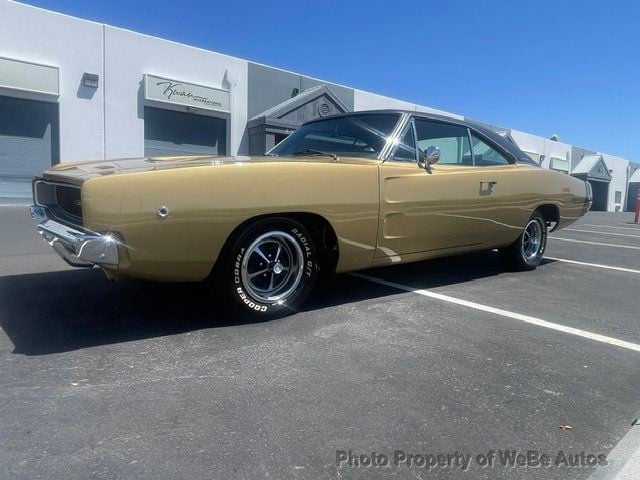
1968 Dodge Charger For Sale
Rotisserie Restored * 440 V8 * Edelbrock Heads * Holley Carburetor * Restoration Documentation
Offered for sale is this beautiful 1968 Dodge Charger, an iconic American muscle car that has undergone an extensive rotisserie restoration and now features a powerful 440 cubic- inch V8 engine. With its unmistakable fastback styling, aggressive front end, and legendary Mopar heritage, the 1968 Charger remains one of the most recognizable and desirable muscle cars of its era. This example underwent a rotisserie restoration between 1998 and 2000, with attention given to the body, engine compartment, trunk, and undercarriage.
A restoration book containing photographs and receipts accompanies the vehicle, providing valuable documentation of the work performed. Originally equipped with a 383 cubic-inch V8, this Charger has been upgraded to a larger 440 V8 with Edelbrock cylinder heads and a Holley carburetor. The car is reported to run exceptionally well, with a smooth idle and strong overall performance.
440 Cubic-Inch V8 - Classic Mopar Performance
Under the hood is a 440 cubic-inch Chrysler V8, replacing the original 383 engine specified by the factory VIN.
The engine features several desirable performance upgrades, including:
440 cubic-inch V8 engine
Edelbrock aluminum cylinder heads
New Holley carburetor
Factory-style 83/4-inch rear axle
Rebuilt stock suspension
The 440 is one of Chrysler's most celebrated big-block engines, known for its impressive torque and unmistakable muscle car character. The combination of the 440 V8, Edelbrock heads, and Holley carburetor gives this Charger a strong performance foundation while maintaining the traditional appearance and character of a classic Mopar. The owner reports that the engine starts easily, runs fantastic, and idles smoothly, making this a Charger that is ready to be driven and enjoyed.
Extensive Rotisserie Restoration
One of the most appealing aspects of this Charger is its documented rotisserie restoration, completed between 1998 and 2000. During the restoration, the vehicle received a comprehensive repaint extending well beyond the exterior body panels. Restoration work included:
Complete exterior repaint
Refinished engine compartment
Repainted trunk compartment
Refinished undercarriage
Rebuilt factory-style suspension
Mechanical improvements and engine upgrades
Detailed restoration documentation
The attention given to the underside, trunk, and engine bay reflects the extensive scope of the restoration.
A dedicated restoration book with photographs and receipts is included, allowing the next owner to review the work completed and better appreciate the history of the vehicle. Iconic 1968 Charger Styling
The 1968 model year introduced the Charger's legendary second-generation body design, featuring its long hood, sweeping roofline, broad rear quarters, and distinctive recessed grille. These dramatic proportions helped establish the Charger as one of the defining American muscle cars of the late 1960s.
This example retains the unmistakable appearance of the original design while benefiting from its extensive restoration. The car has also been fitted with new wheels and tires, enhancing its overall presentation and road readiness. Rebuilt Suspension & Classic Driving Experience
The Charger retains its traditional Mopar suspension configuration, which was rebuilt as part of the restoration work.
Additional mechanical features include:
Chrysler 83/4-inch rear axle
Rebuilt stock-style suspension
Drum brakes
Manual braking system
New wheels and tires
The car maintains the straightforward mechanical character of a classic 1960s muscle car, with the added appeal of its larger 440 V8. Functional Electrical Equipment
The owner reports that the Charger's electrical equipment is functioning properly, including:
Exterior and interior lighting
Horn
Dashboard gauges
Having these essential systems operating as intended adds to the car's usability and makes it an appealing choice for someone looking for a classic Charger to drive and enjoy. Factory VIN & Original Configuration
The vehicle's VIN is XP29G8B379130, identifying it as a genuine 1968 Dodge Charger originally equipped with a 383 cubic-inch V8.
The VIN breaks down as follows:
X: Dodge Charger model line
P: Premium price class
29: Two-door sports hardtop body style
G: Originally equipped with a 383 cubic-inch V8
8: 1968 model year
B: Hamtramck, Michigan assembly plant
379130: Production sequence number
Although the original 383 has been replaced with a 440, the VIN confirms this vehicle's authentic Charger identity and original big-block configuration. A Documented 1968 Dodge Charger Ready to Enjoy
Few American muscle cars have the presence and recognition of a 1968 Dodge Charger. Its dramatic styling, big-block heritage, and unmistakable Mopar personality have made it a favorite among collectors and enthusiasts for decades.
This particular example offers a compelling combination of authentic 1968 Charger heritage, a documented rotisserie restoration, upgraded 440 V8 power, Edelbrock cylinder heads, a new Holley carburetor, rebuilt suspension, and new wheels and tires. The restoration book with photographs and receipts provides additional value, documenting the extensive work performed between 1998 and 2000. Most importantly, the owner reports that the car runs and drives exceptionally well, with a smooth idle and enjoyable performance.
A genuine 1968 Dodge Charger with classic second-generation styling, upgraded 440 big- block power, extensive restoration documentation, and the unmistakable character of one of America's most legendary muscle cars. For Sale By Owner Located In Las Vegas, NV 89115
Take A L@@K At The Video On YouTube:
Trim: For Sale
Options: Premium Sound System, Vinyl Interior Surface
Dodge Charger Buyer's Guide
Dodge Charger Market Overview
Based on 42 Dodge Charger listings currently on ClassicCarsArena.com
Selling a classic? Here's how
Fees, audience and photo limits compared: the best sites to sell a classic car .
Dodge Charger Buyer's Guide
Mike Sullivan here, and the Dodge Charger needs no introduction. When people picture American muscle, they picture a Charger. The fastback roofline, the hidden headlights, the long hood, it's a design that photographers have been chasing since the day it rolled out of the Hamtramck assembly plant. Add a 440 or a 426 HEMI and you have a car that still makes professional racers nervous at stoplights.
The Charger's story runs from 1966 through 1978, but the definitive generation is the B-body era of 1968–1970. These are the cars that Bullitt and The Dukes of Hazzard made iconic, and they remain among the most sought-after, and most carefully scrutinized, classic cars in the market.
What to Check Before Buying
Common Issues
What to Look For
Price Guide
Did You Know?
Also Consider
Similar classic cars shoppers also browse:
How Does It Compare?
Head-to-head matchups for the Dodge Charger:
1968 Dodge Charger
Contact Seller

Car alert
Get an email when a 1963-1973 Dodge Charger is listed
At most one email a day. Stop anytime with one click.
Nationwide consignment dealer
WeBe Autos lists vehicles from sellers across multiple states. The vehicle may not be at the dealer's address shown. Contact the dealer to confirm the vehicle's actual location before traveling.
Buying safely?
Read our scam-avoidance tips before paying →
Listing Actions
Browse by Era
1960s Classics for SaleAll 1968 Classics
Browse all 1968 Cars for SaleGet classic car alerts
Latest arrivals, newest deals, and discount coupons, straight to your inbox.
Selling your classic car?
Reach millions of classic car enthusiasts on the largest US classics marketplace.
Sell Your Car →More from WeBe Autos

 United States
1966 Chevrolet Corvette
 United States
1962 Chevrolet Impala
 United States
1954 Mercury Monterey
 United States
1992 Cadillac Fleetwood
Similar Listings


 United States
1972 Dodge Charger
Contact Seller
Call this seller?
You're about to call WeBe Autos about the 1968 Dodge Charger.
+1 (631) 339-0399
Car alert
Get an email when a 1963-1973 Dodge Charger is listed
At most one email a day. Stop anytime with one click.
Report this Ad
Help us keep the marketplace clean. Our moderation team reviews every report within 24 hours.