
Factory records from the mid-1920s show something that gets overlooked when people talk about that decade's cars: the single change that did the most for everyday ride comfort wasn't an engine or a body style. It was air pressure. Balloon tires dropped inflation pressure by more than half compared to the high-pressure tires they replaced, and that single spec change did more for how a car felt on a rough road than most of the mechanical work happening under the hood.
Car Features
6 min read
Balloon Tires: The 1920s Ride Revolution
A drop in tire pressure from around 70 psi to under 35 psi did more for 1920s ride comfort than almost any engine or chassis change of the decade.
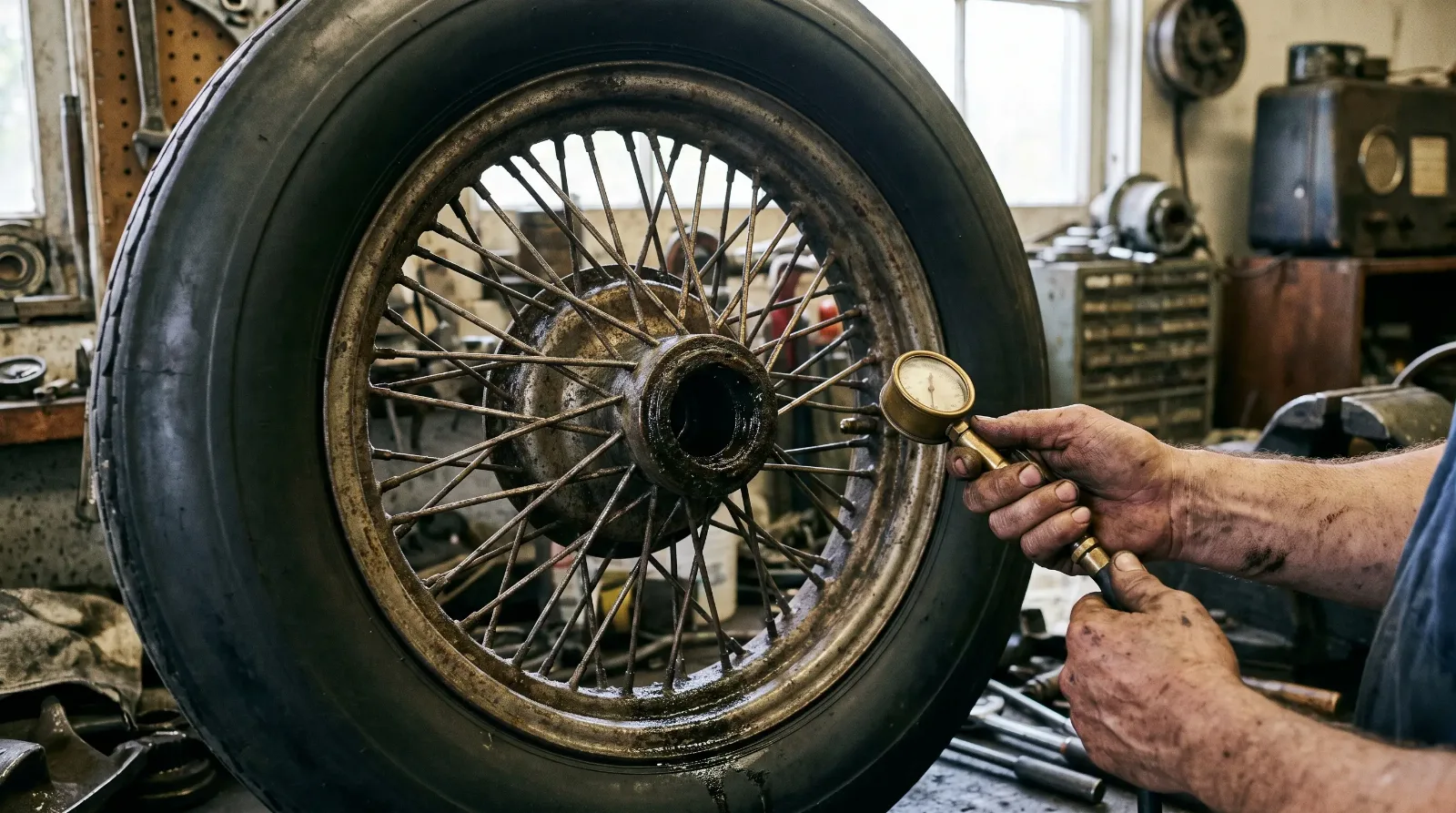
What made a tire a "balloon" tire
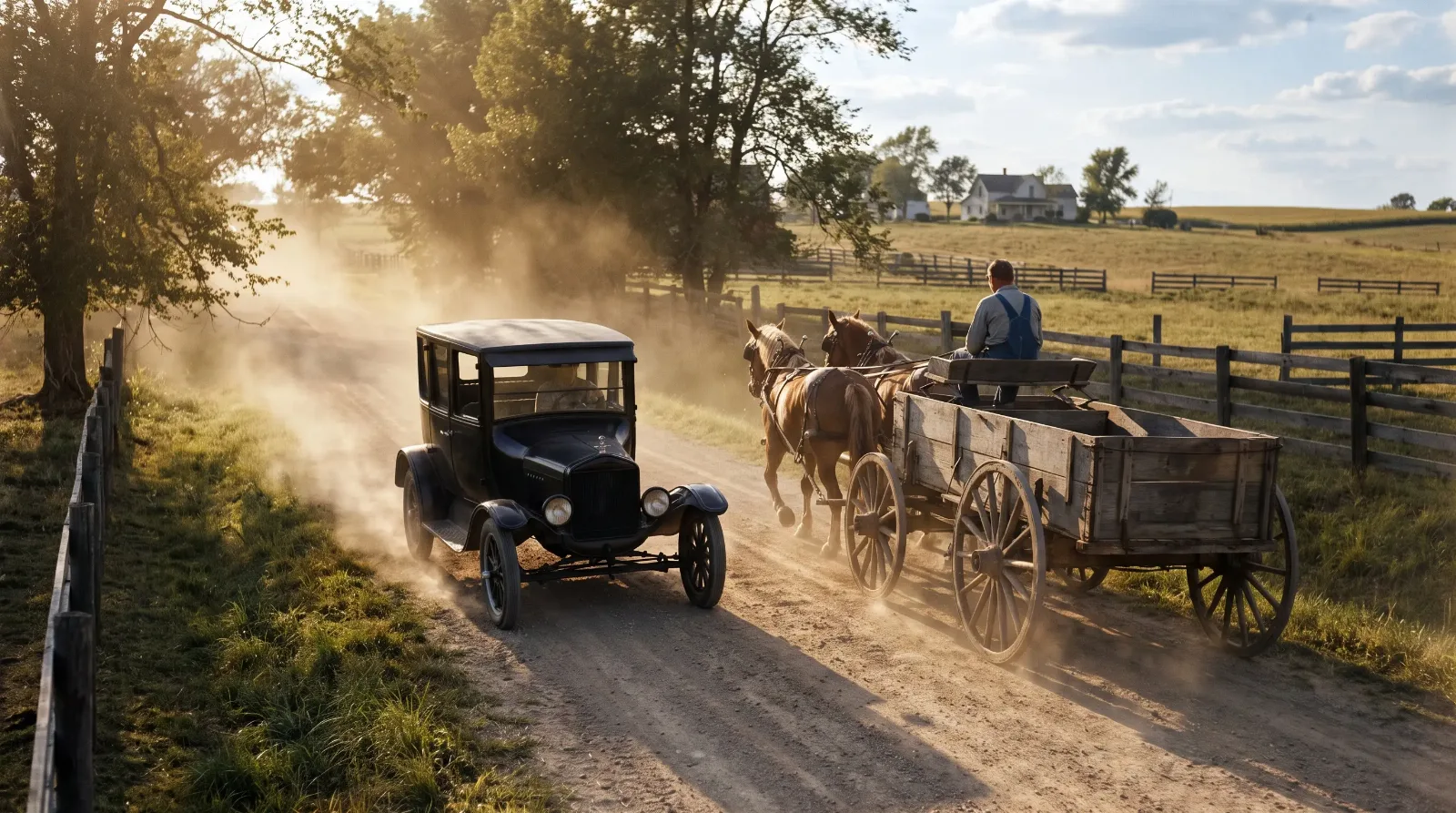
Through the early 1920s, most American cars rode on high-pressure clincher tires, narrow, tall, and inflated to somewhere around 55-70 psi. That pressure was necessary to support the car's weight on a relatively small contact patch, but it transmitted every rut and pothole straight into the chassis. Balloon tires, which Firestone began producing in 1923, were wider, lower-pressure, and shaped with a rounder cross-section, running closer to 27-32 psi. The larger air volume did the cushioning work that stiff sidewalls and high pressure used to fight against.
The name came straight from the shape. Next to a skinny high-pressure tire, a balloon tire looked exactly like what it sounds like, a rounded, inflated cushion mounted on a wheel rather than a thin hoop of rubber stretched tight.
Factory adoption came in waves
The changeover wasn't instant across the industry, and the timeline matters for anyone dating a period car by its tire type. Higher-end manufacturers and aftermarket suppliers offered balloon tires as an option starting in 1923, but full factory adoption across mainstream production, Ford, Chevrolet, Dodge, and the rest, took until roughly 1925 to become close to universal. That means a documented 1923 or early 1924 car on original-spec high-pressure tires isn't wrong, it's simply from before the changeover reached that particular model line.
The engineering ripple effect went beyond ride comfort. Wider, lower-pressure tires meant chassis and suspension components absorbed less road shock, which in turn meant manufacturers could build lighter frames without sacrificing durability. Braking behavior changed too, since a larger, softer contact patch behaves differently under hard stops than a narrow, hard tire does, which is part of why the brake engineering conversation of the same years runs in parallel with the tire story. There's more on that connection in the next story, since four-wheel brakes and balloon tires arrived close enough together that they're often discussed as a matched pair of safety improvements.
"Firestone's own literature from the period is pretty direct about it. They weren't selling comfort as a luxury add-on, they were selling it as the reason ordinary families would finally take the car on longer trips instead of leaving it parked for anything past the next town over."
Tom Ramirez
Reading the factory paper trail
Original production records and dealer bulletins from Ford, GM, and the independents show the balloon tire transition documented almost model year by model year, which makes it one of the more reliably datable changes of the decade for anyone doing restoration research. Option codes and running-change bulletins reference the tire and wheel switch specifically, since dealers needed to know which cars on the lot required the wider rims and which didn't. That kind of primary-source documentation is worth tracking down directly rather than relying on secondhand summaries, because the exact changeover date varied by manufacturer and sometimes by body style within the same model year.
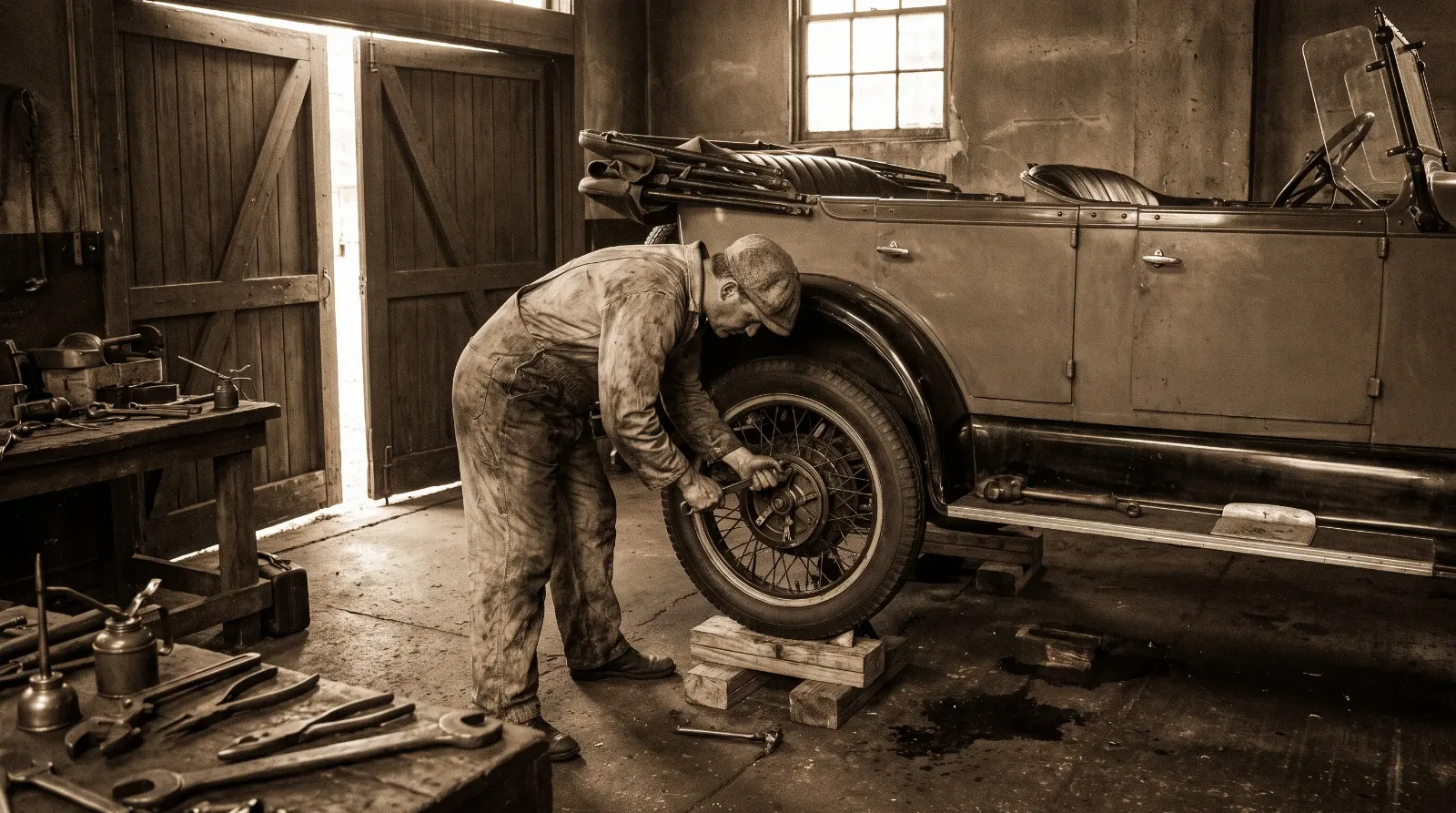
For collectors chasing originality, matching the correct tire profile and rim width to a car's actual build date is a detail that's easy to get wrong and easy to spot when it's wrong. A 1922 car wearing period-incorrect balloon tires, or a late-1925 car still on skinny high-pressure rubber and claiming full originality, is worth a second look at the paperwork.
Why the switch stuck
Balloon tires won because the case for them was simple and immediate. Every driver who tried one on a rutted road felt the difference within the first mile, and that's a hard sales pitch to argue against. By the end of the decade, high-pressure tires had essentially disappeared from new car production, and the balloon tire's basic proportions, wide, round, low-pressure, set the template that automotive tires have followed ever since, right through to the radials on cars today. For a wider view of how this fits into the decade's broader mechanical story, the 1920s balloon tires story covers how tire, brake, and engine developments moved together through the same handful of years.
How balloon tires changed everyday driving
Beyond the obvious comfort gains, the switch to balloon tires had ripple effects that owners noticed even if they couldn't have explained the engineering behind them. Tire life often improved, since the larger air volume and lower pressure spread load more evenly across the tread and reduced the harsh, concentrated wear that plagued narrow high-pressure tires on rough roads. Traction on loose or unpaved surfaces, still common outside major cities through the 1920s, improved as well, since the wider contact patch gave the tire more rubber against the road in exactly the conditions where high-pressure tires struggled most.
There were trade-offs too, and period reviewers were honest about them. Balloon tires added a small amount of steering vagueness compared to the more direct feel of a narrow high-pressure tire, and some enthusiast drivers who valued precise handling over comfort grumbled about the change even as they recognized the safety and comfort benefits it brought to everyday driving. That tension between comfort and precision is one automotive engineers have never fully resolved, and echoes of the same argument show up in tire debates a century later.
What to check on a period car today
For anyone maintaining or restoring a car from this transitional era, matching the correct wheel width and tire profile to the car's actual production date matters more than it might seem. A mismatched combination can throw off the car's stance and handling characteristics in ways that are subtle to the eye but noticeable the moment the car is actually driven. Reproduction balloon tires in period-correct sizes are available today from specialist suppliers, making it possible to keep an original car riding the way it did when it left the factory, provided the wheels underneath are the correct width to begin with.
Sources and notes
Related Reading
Have a
Classic Car
for Sale?
Reach thousands of serious classic car collectors across the US.
Sell It Here →
Are You a Classic Car Dealer?
List your full inventory and connect with targeted classic car buyers.
Join as a Dealer →

About the author
Tom Ramirez
Corvette researcher and historian based in Bowling Green, Kentucky. Two decades documenting Corvette production history from original factory records.

Comments
Be the first to comment on this article.