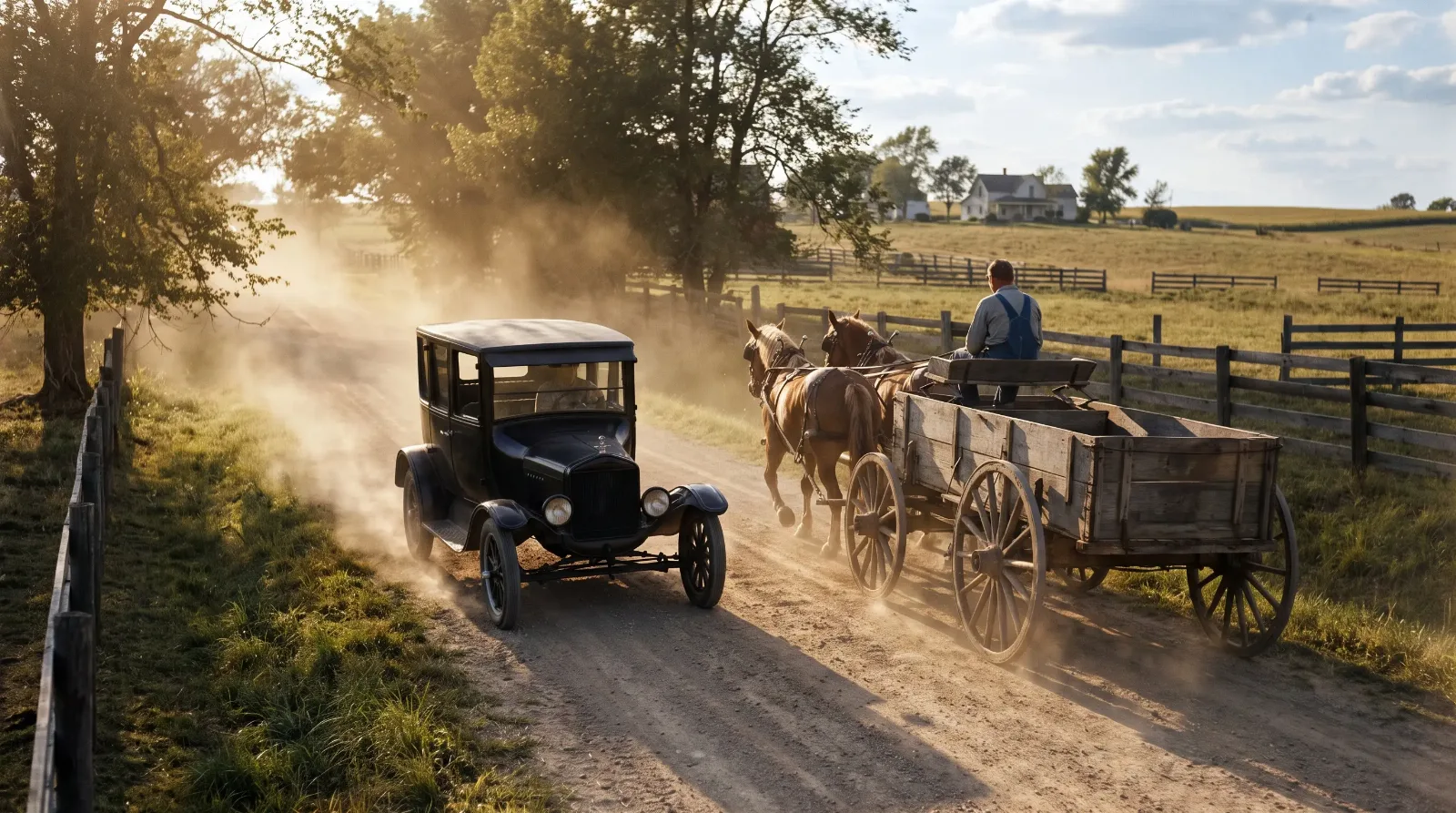
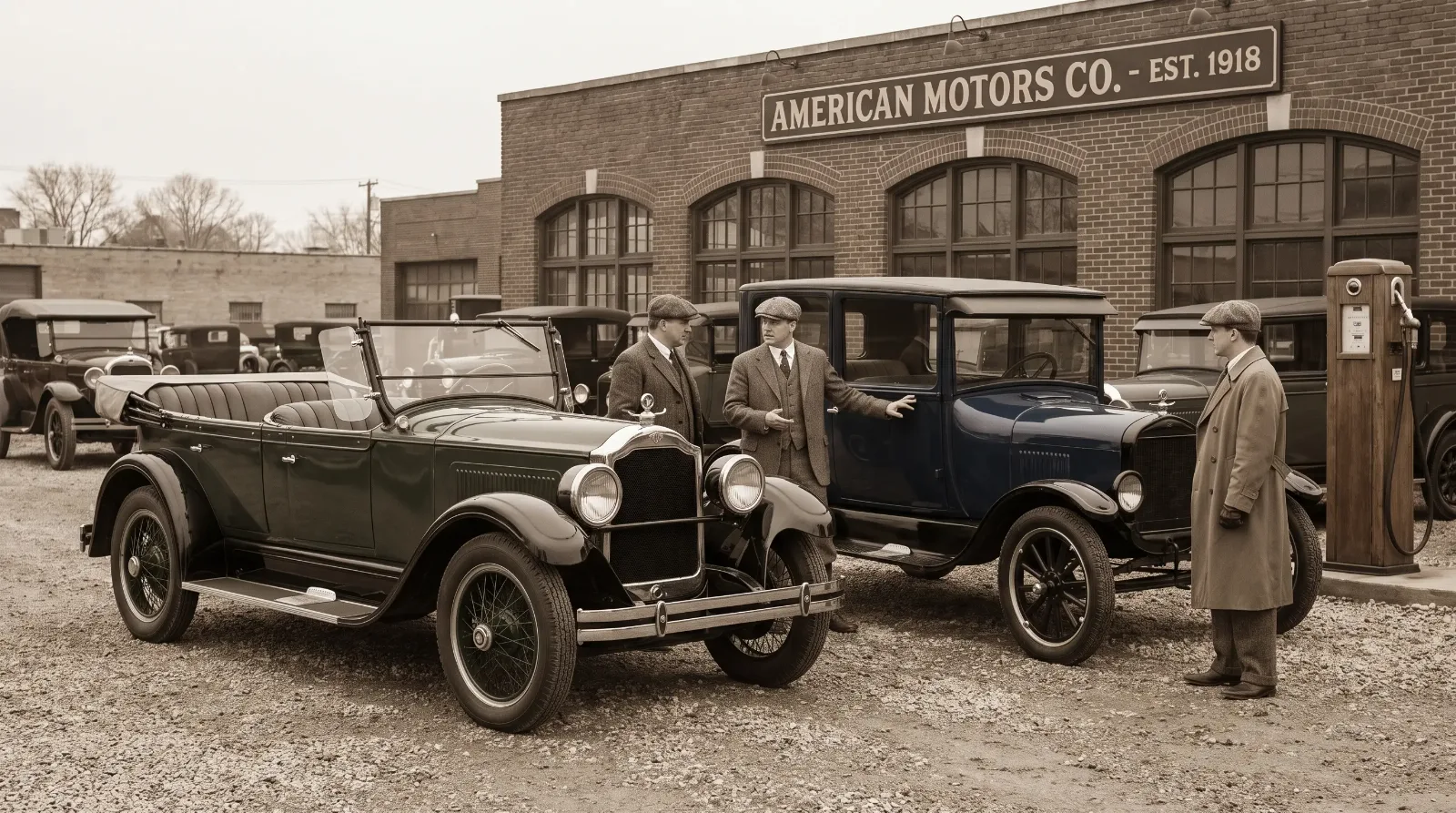
Walk into a car show today and count the open cars. You will find a handful of touring cars and roadsters parked next to rows of sedans, and that ratio is almost the reverse of what a dealer's lot looked like in 1919. Ten years later it had flipped completely, and the shift happened faster than most people realize. This is the 1920s closed sedans story, and the factory records tell it plainly enough if you know where to look.
The open car's long reign
Through the brass era and into the early 1920s, an open car was simply what a car was. Touring cars, roadsters, and phaetons dominated production ledgers at Ford, Buick, and Dodge alike. A folding top and side curtains were the closest thing to weather protection most buyers had, and that was accepted as the cost of motoring. Closed cars existed, but they were built in small numbers, priced well above the open models, and aimed at buyers who wanted a chauffeur-driven town car rather than a machine they drove themselves.
The price gap was the whole story. A closed body took more wood framing, more steel panel work, more glass, and more labor hours than an open body built on the same chassis. Through most of the decade's early years that difference could run several hundred dollars, which was real money against a base price under a thousand.
What changed the equation
Two things closed that gap. The first was Dodge and then Fisher Body pushing composite steel-over-wood construction that could be built faster and cheaper than the old coach-built methods. The second was straightforward: buyers wanted it. Once women were driving their own cars in real numbers and families were using the automobile for daily errands rather than Sunday outings, an open tourer with side curtains flapping in a rainstorm stopped being charming and started being a nuisance.
Ford held out longest with the open Model T touring car as its volume leader, but even Ford could read a production sheet. By the middle of the decade the closed sedan and coupe were outselling open bodies across most of the industry, and by 1927 the open car was heading toward niche status rather than the mainstream choice it had been at the start of the decade.
| Year | Approximate share, closed bodies |
|---|---|
| 1919 | Roughly 10 percent of industry output |
| 1924 | Roughly 43 percent |
| 1927 | Roughly 82 percent |
| 1929 | Roughly 90 percent |
What buyers gave up, and what they gained
A closed sedan was heavier than an open car on the same chassis, which meant a manufacturer either accepted slower performance or had to bump the engine output to compensate. Early closed cars also rode a little harder, since the extra weight sat above the frame rather than in it. What buyers got in return was a car that worked in February as well as June, glass windows that rolled up instead of side curtains that leaked, and an interior that felt like a room rather than a porch.
That last point mattered more than engineers gave it credit for at the time. A closed car let a family dress for an evening out without arriving windblown, and it let a salesman keep his samples dry on a rainy route. The car stopped being a fair-weather machine and became something you could rely on every day of the year, and that reliability is what actually built the mass car culture of the later decade, more than any single mechanical advance.
"People assume the closed car won because it was more comfortable, and that's true, but comfort alone rarely moves a production line. What moved it was Fisher Body figuring out how to stamp and frame a closed body for close to open-car money. Once the price premium shrank, the buyer's choice was never really in doubt."
— Tom Ramirez
Reading a survivor today
If you are looking at a car from this transition period, the body style tells you something about when in the decade it left the factory even before you check the data plate. An open touring car with a low serial number range points toward the early 1920s. A closed coach or sedan on the same chassis code, especially one built with the lighter Fisher-style composite body, points toward the back half of the decade when that construction had become the default rather than the premium option.
Originality matters here in a specific way. Because closed bodies were newer and less standardized early on, panel fit, wood framing, and glass trim varied more from year to year than they did on the simpler open cars. A restorer chasing correctness on an early closed sedan should expect to document body number as carefully as engine number, since substitutions between very similar-looking years are common enough to trip up an unwary buyer. For a wider look at what collectors are paying for cars from this exact window, a related read lays out where the real money in the decade actually went.
What the factory records actually show
Pull the production ledgers from Dodge, Buick, or Willys-Overland across the decade and the transition shows up almost year by year rather than as a single dramatic shift. A given model line often carried both an open and a closed variant on the same order sheet through the middle years, with the closed body slowly claiming a larger share of each production run. Dodge in particular leaned into this early, since its all-steel body construction gave it a cost advantage on closed cars that some of its wood-framed rivals could not immediately match. By the time a plant retooled for a new model year, the closed body had usually already become the default order rather than the option.
Body engineers of the period wrote about this shift with a kind of quiet satisfaction, since solving the closed-body cost problem was treated internally as a genuine engineering achievement rather than a simple styling update. Getting a steel roof panel to stamp cleanly, seal against weather, and not add so much weight that it hurt performance took real development work, and the companies that solved it first captured buyers who had been waiting for exactly that car.
The open car never fully disappeared. It survived as the sporting choice, the weekend car, the machine built for people who wanted wind in their face rather than a windshield between them and the road. But as a daily driver, the argument was settled by the middle of the decade, and it stayed settled. Every closed car on the road today, no matter how ordinary it looks, is standing on a choice that Detroit made in a few short years and never walked back.