Most Depression-era cars were slow. That is not an insult, it is just physics and economics. Cast-iron flatheads sipping cheap gas were not built to move two tons of steel and coachwork in a hurry. But a handful of builders in the 1930s decided speed did not have to wait for bigger displacement. They bolted a supercharger to the intake and forced more air and fuel into the cylinders than the engine could pull in on its own. The result was more power without a bigger block, and a small, expensive club of cars that could genuinely run.
I like the supercharged 1930s because it is where horsepower stopped being purely about size and started being about engineering. It is also where you find some of the best-looking cars ever built, because half the appeal of a blower was showing it off.
What a supercharger actually does
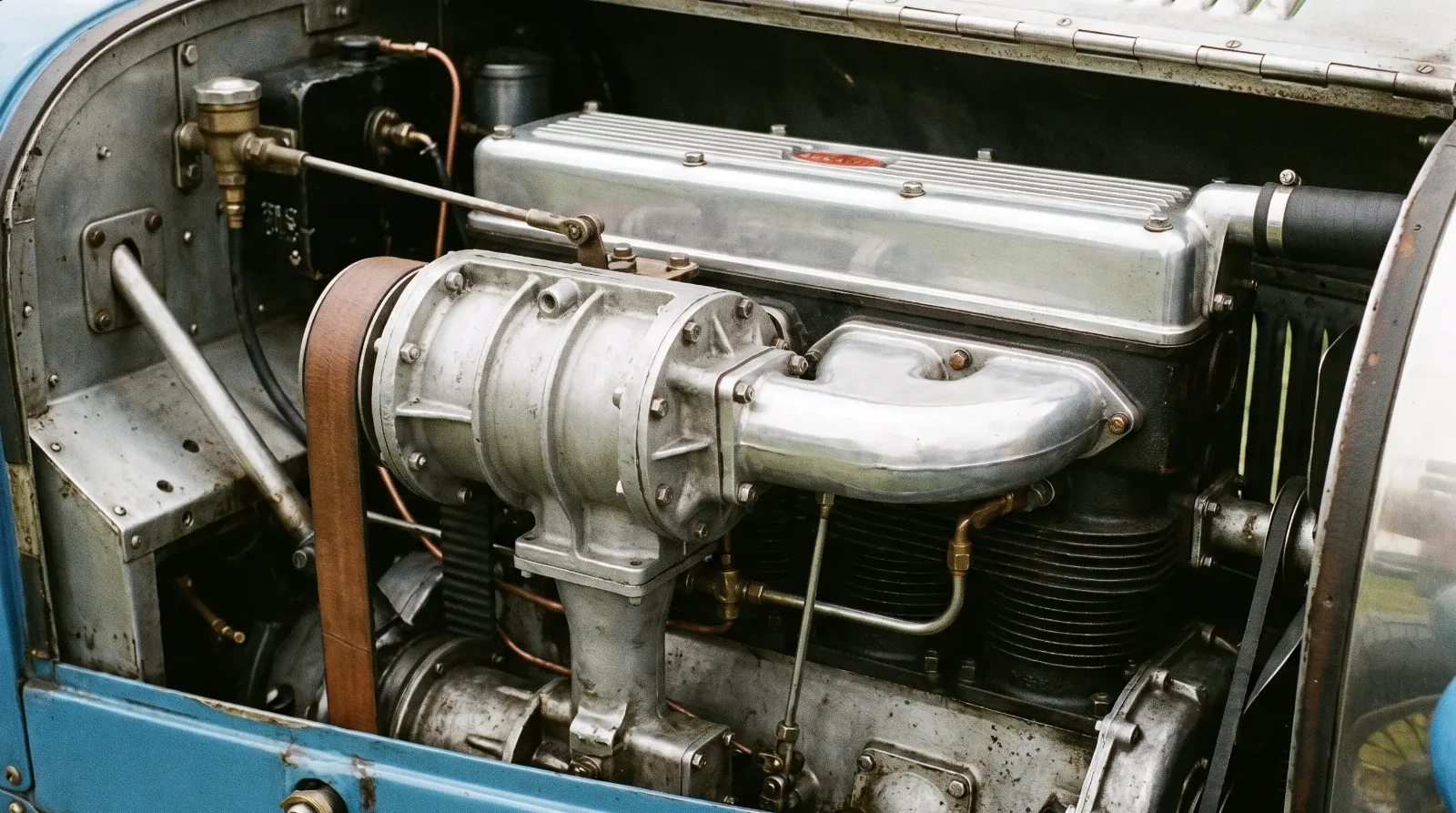
A supercharger is a pump. It is driven off the engine, usually by a belt or a gear train tied to the crankshaft, and it forces air, or an air-fuel mix depending on the setup, into the cylinders under pressure instead of letting the engine suck it in on its own. More air and fuel packed into the same cylinder means a bigger bang on each stroke, which means more power from the same displacement.
The trade is that a supercharger takes power to spin. It is stealing horsepower from the crank to make more horsepower at the wheels, and the math only works if the boost gain beats the drive loss. In the 1930s, with era-appropriate materials and machining, that was not a given. It took real engineering to get the trade right, and the companies that pulled it off earned the bragging rights.
This is a different animal from a turbocharger, which uses exhaust gas instead of a mechanical drive. Turbos were not practical for road cars yet in this period. Everything you see with a blower sticking out of the hood in the 1930s is a mechanically driven supercharger, full stop.
The cars that wore the blower proudly
Duesenberg is the name everybody reaches for first, and rightly so. The supercharged Duesenberg SJ, introduced in the early 1930s, ran a straight-eight with a centrifugal supercharger and made 320 horsepower at 4,750 rpm, an absurd figure for the era. The external exhaust pipes that snake out of the hood side on an SJ are not decoration. They are routing for a car built to actually use that power.
Mercedes-Benz took a different mechanical approach with its supercharged models of the period, cars like the 500K and 540K, where the driver could engage the blower under full throttle for a burst of power, announced by a distinctive howl that owners still talk about. Cord ran a supercharged version of its front-wheel-drive 812, which paired the blower with one of the more radical drivetrain layouts of the decade. Auburn offered a supercharged straight-eight too, and marketed it hard as the fast, affordable option next to its costlier stablemates.
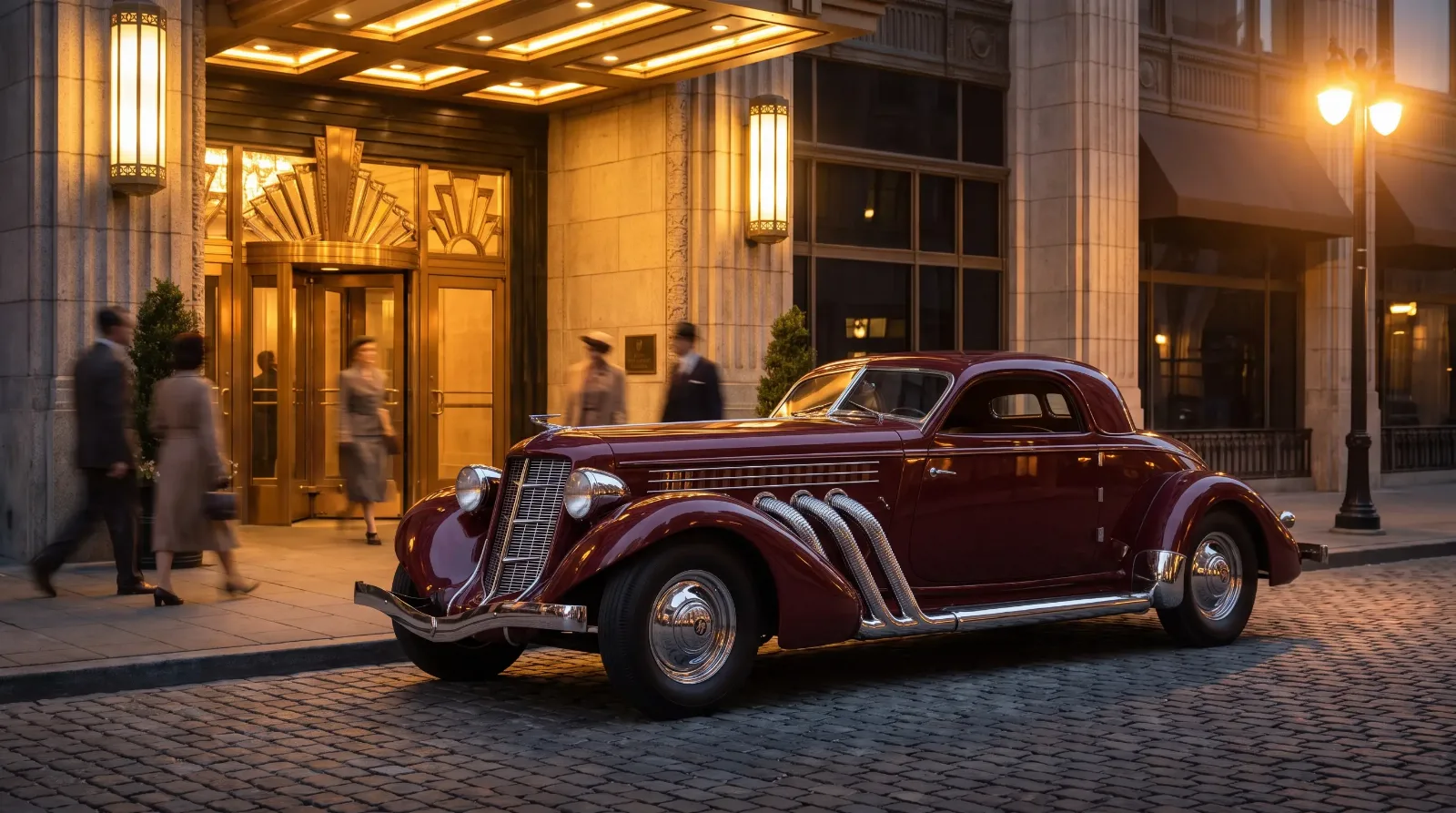
What these cars share is that the supercharger was never hidden. It sat right there in the styling, chrome pipes or a visible blower housing, because the builders wanted you to know this was not just another sedan.
Why so few cars had them
A supercharger added real cost and real complexity in an era when most buyers were counting every dollar. The Depression gutted the market for expensive machinery, and a supercharged car was, almost without exception, an expensive car. You needed stronger internals to survive the extra cylinder pressure, better lubrication, and a drivetrain built to handle the power, none of which came cheap to engineer or to build.
There was also a reliability question. Forced induction stresses an engine in ways a naturally aspirated motor never sees, and 1930s metallurgy and machining tolerances were not what they would become. A supercharged car of this era needed careful tuning and a mechanic who understood it, which meant it was never going to be a car for the average garage.
So the blower stayed where it made sense: on the flagship models from builders chasing prestige as much as speed, sold to buyers who could afford both the sticker price and the upkeep.
| Make/model | Supercharger type | Notable trait |
|---|---|---|
| Duesenberg SJ | Centrifugal, engine-driven | External exhaust pipes |
| Mercedes-Benz 540K | Roots-type, driver-engaged | Audible "howl" under boost |
| Cord 812 | Centrifugal | Paired with front-wheel drive |
| Auburn Supercharged Eight | Centrifugal | Marketed as the affordable performance option |
Living with one today
Owning a supercharged 1930s car now is a specialist's game. Parts for the blower systems are rare, and a rebuild often means a machinist who has worked on that specific unit before, not a generic shop. Values track that scarcity. A supercharged SJ or a 540K sits well above its naturally aspirated siblings, sometimes by a wide margin, because the performance and the rarity both add up.
If you are shopping this end of the market, originality of the supercharger and its linkage matters as much as the rest of the car. A blower that has been swapped, modified, or removed changes the story the car tells, and buyers who know this segment will ask about it before they ask about anything else.
"A supercharged car from this era is not a restoration project, it is a commitment. You are buying into a small parts world where the guy who understands your blower might be one guy, period. Pay for documentation and pay for a car that has been kept right, because there is no shortcut version of this hobby."
— Dan Reeves
For the full picture of what made this decade move, the 1930s supercharged cars guide covers the broader design story these cars were part of.
The number that matters
Strip away the styling and the mystique and it comes down to this: a supercharged 1930s car made real power when almost nothing else on the road did. That gap, forty, fifty, sometimes close to a hundred extra horsepower over a comparable naturally aspirated car, is why these machines still command attention. It was not a marketing claim. It was a number you could feel from the driver's seat, and it is why collectors still chase these cars hard today.
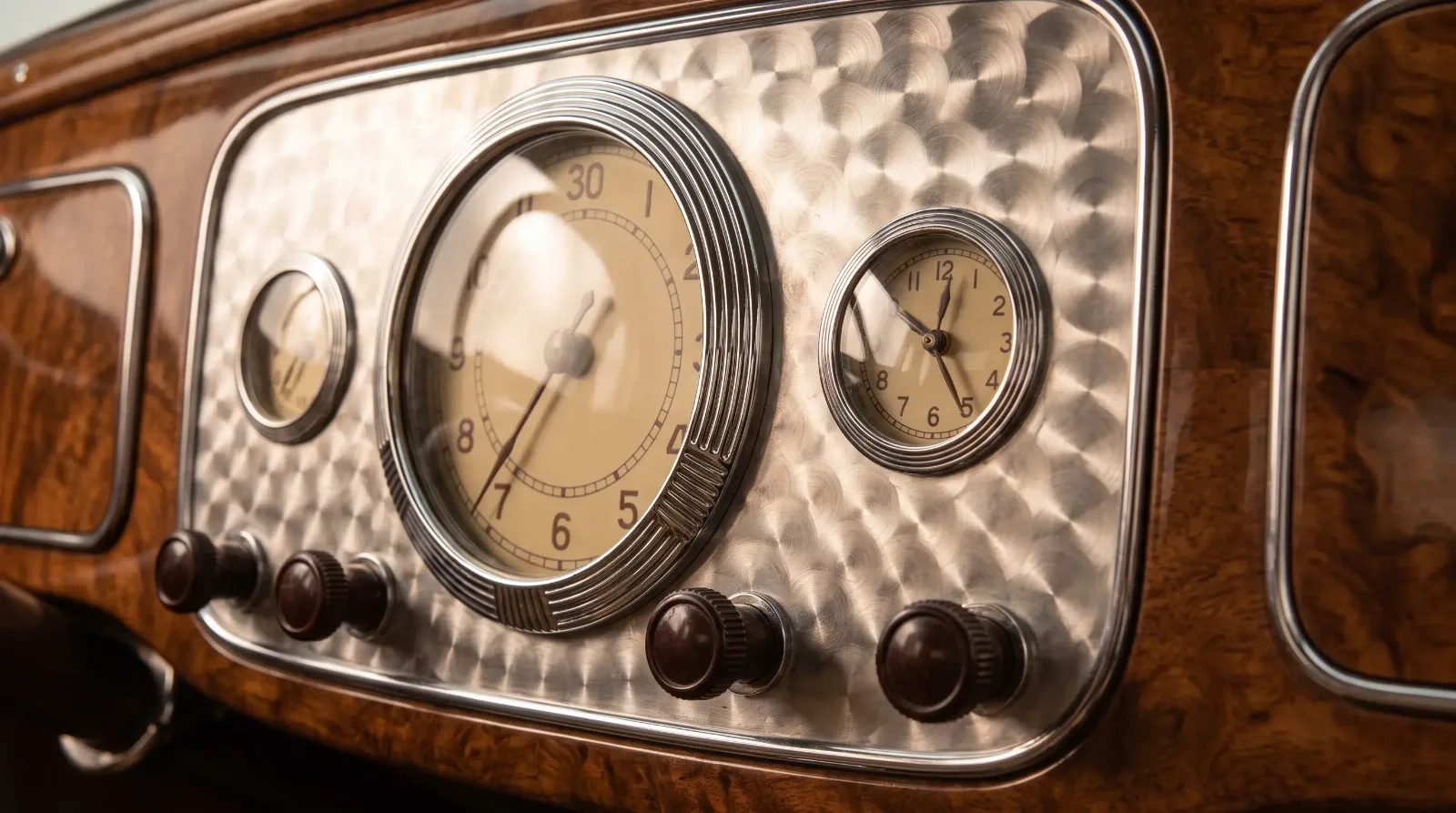
The design story does not stop at the engine bay either. Inside, these cars were pushing the same forward-looking ideas as the mechanicals, and you can read on for how that played out on the dash.