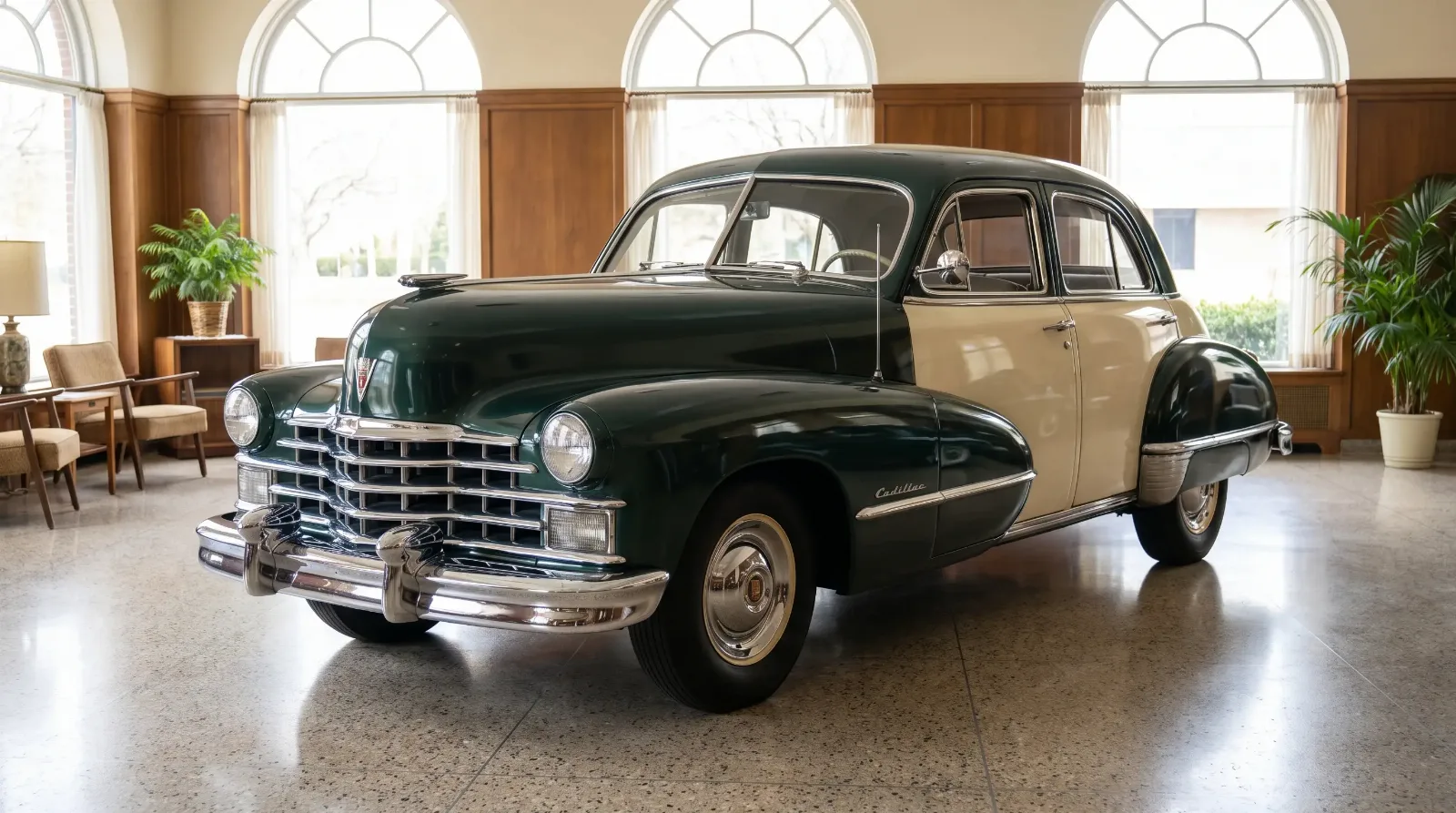
Here's the result before the explanation: Cadillac and Oldsmobile both put overhead valve V8s into production for 1949, and within a handful of years the flathead V8, which had powered Ford and countless hot rods since 1932, was effectively finished as the industry's performance standard. That is how fast a real engineering advantage moves once buyers can feel the difference on the road. The number that mattered was compression ratio, and the flathead simply could not keep climbing it the way the new overhead valve designs could.
Why the flathead had a ceiling
Ford's flathead V8, for all its charm and its two-decade run of popularity, had a fundamental geometric limitation. With the valves located in the block rather than the cylinder head, the intake and exhaust ports had to snake through a convoluted path, which restricted airflow and capped how high you could realistically push compression without running into detonation problems. Hot rodders spent years working around those limits with clever porting and multiple carburetors, and they got real results, but they were fighting the architecture the whole time.
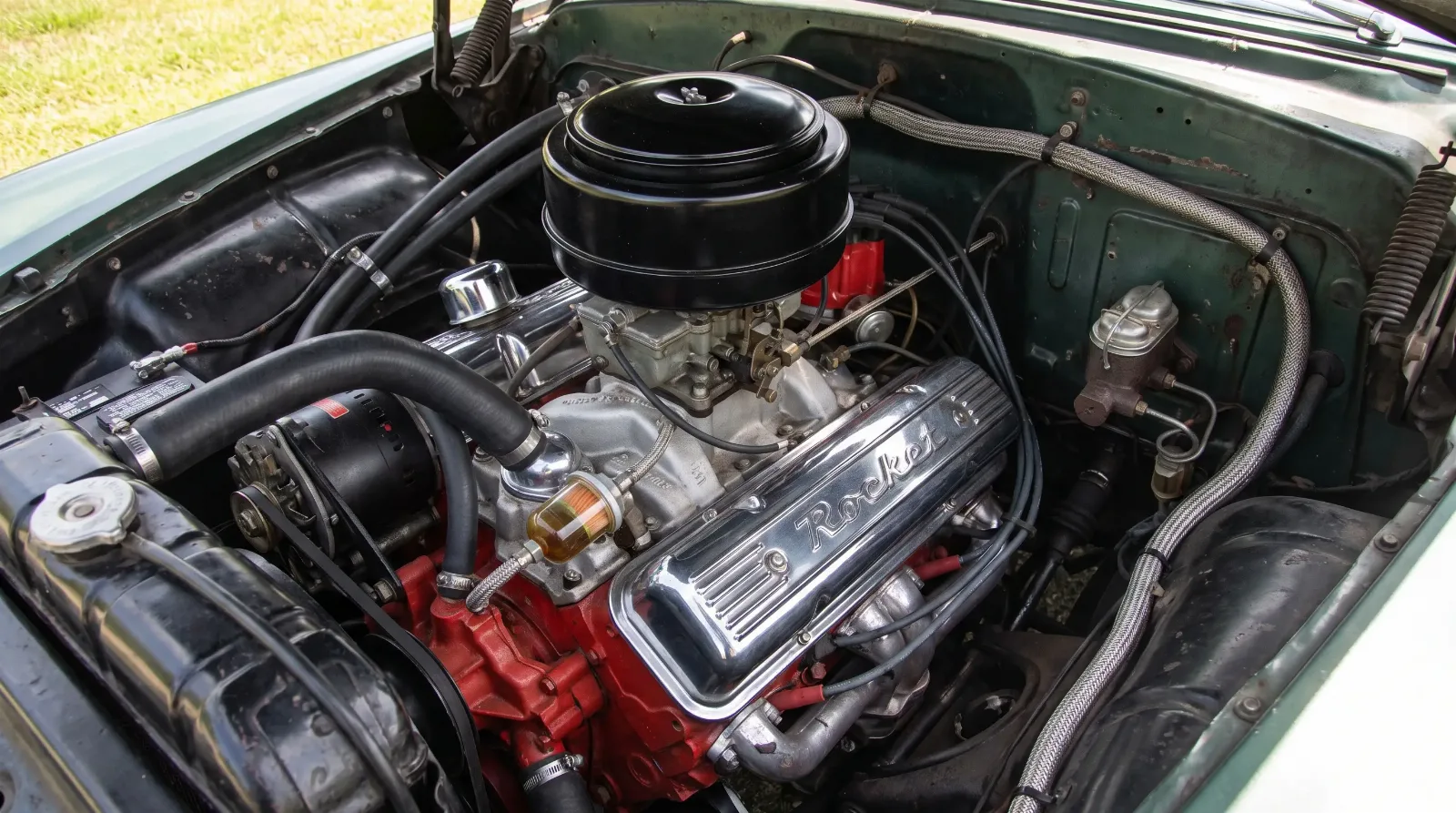
Overhead valve design put the valves in the cylinder head instead, directly over the combustion chamber, which allowed straighter, larger ports and a compact combustion chamber shape that supported meaningfully higher compression ratios without the detonation problems that plagued flathead designs pushed too hard. That is not a subtle difference. It is the difference between an engine with room to grow and one that had already hit its practical ceiling.
Fuel quality was part of the equation too. Higher-octane gasoline was becoming more widely available in the postwar years, a byproduct partly of wartime refining advances made for aviation fuel, and that improved fuel supply is what let engineers actually cash in the compression ratio gains the overhead valve layout made possible. An engine design with room to run higher compression is only useful if the fuel at the pump can support it without knocking, and by 1949 the two developments, better engine architecture and better fuel, arrived close enough together to compound each other's benefits.
| Engine | Manufacturer | Year introduced | Valve layout |
|---|---|---|---|
| Flathead V8 | Ford | 1932 | Side-valve (flathead) |
| Cadillac V8 | Cadillac | 1949 | Overhead valve |
| Rocket V8 | Oldsmobile | 1949 | Overhead valve |
Cadillac and Oldsmobile, same year, different pitch
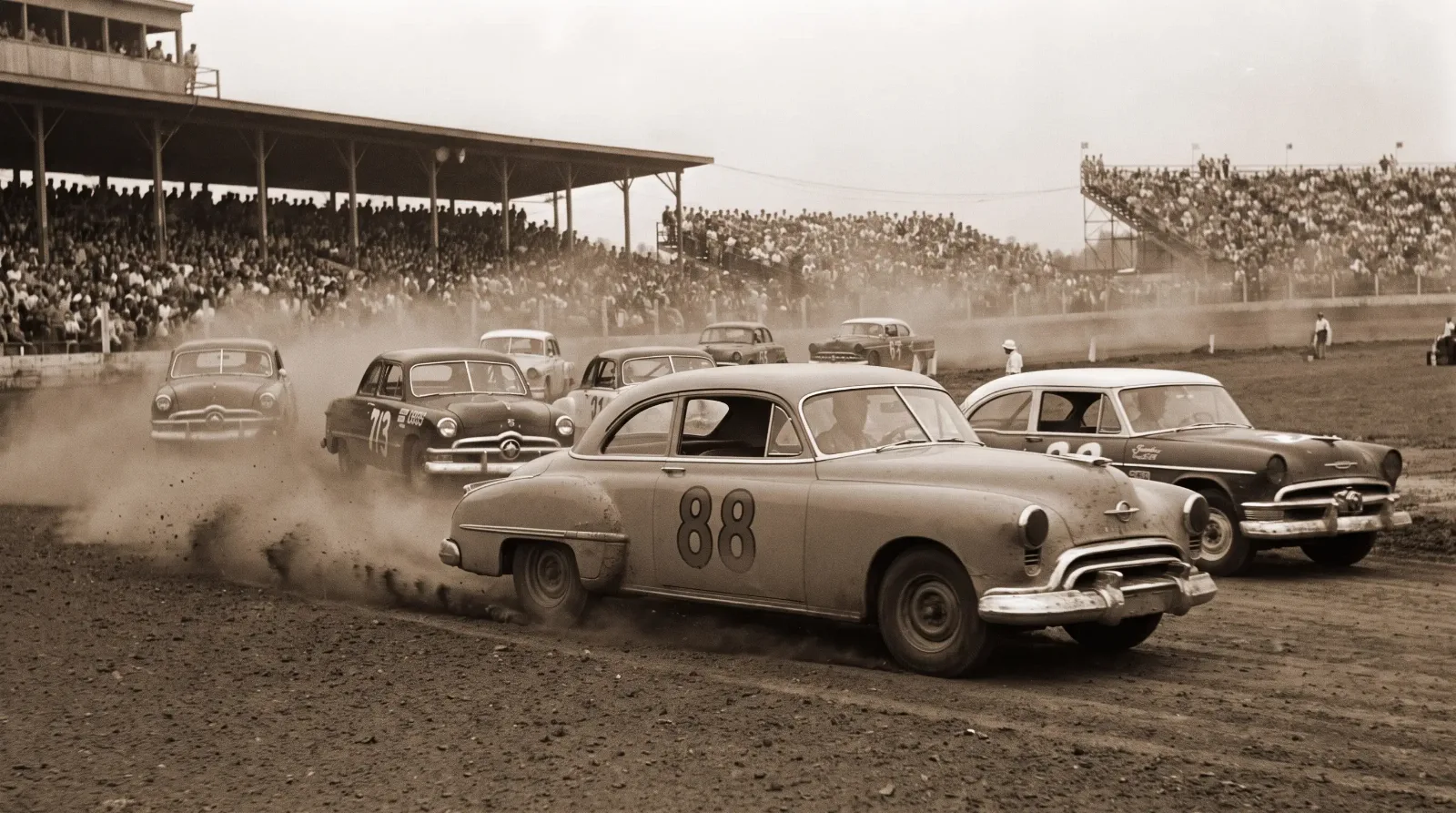
Cadillac's 1949 overhead valve V8 was pitched at the luxury buyer, more power delivered with the same refinement Cadillac customers already expected, a quieter, smoother way to get real performance gains. Oldsmobile's Rocket V8, launched the same year in the lighter Olds 88 body, was a different play entirely: drop a genuinely powerful new engine into a mid-size car and let the power-to-weight ratio do the talking. The Rocket 88 combination is often cited as an early landmark in what later became known as the muscle car formula, real power in a car light enough to actually use it.
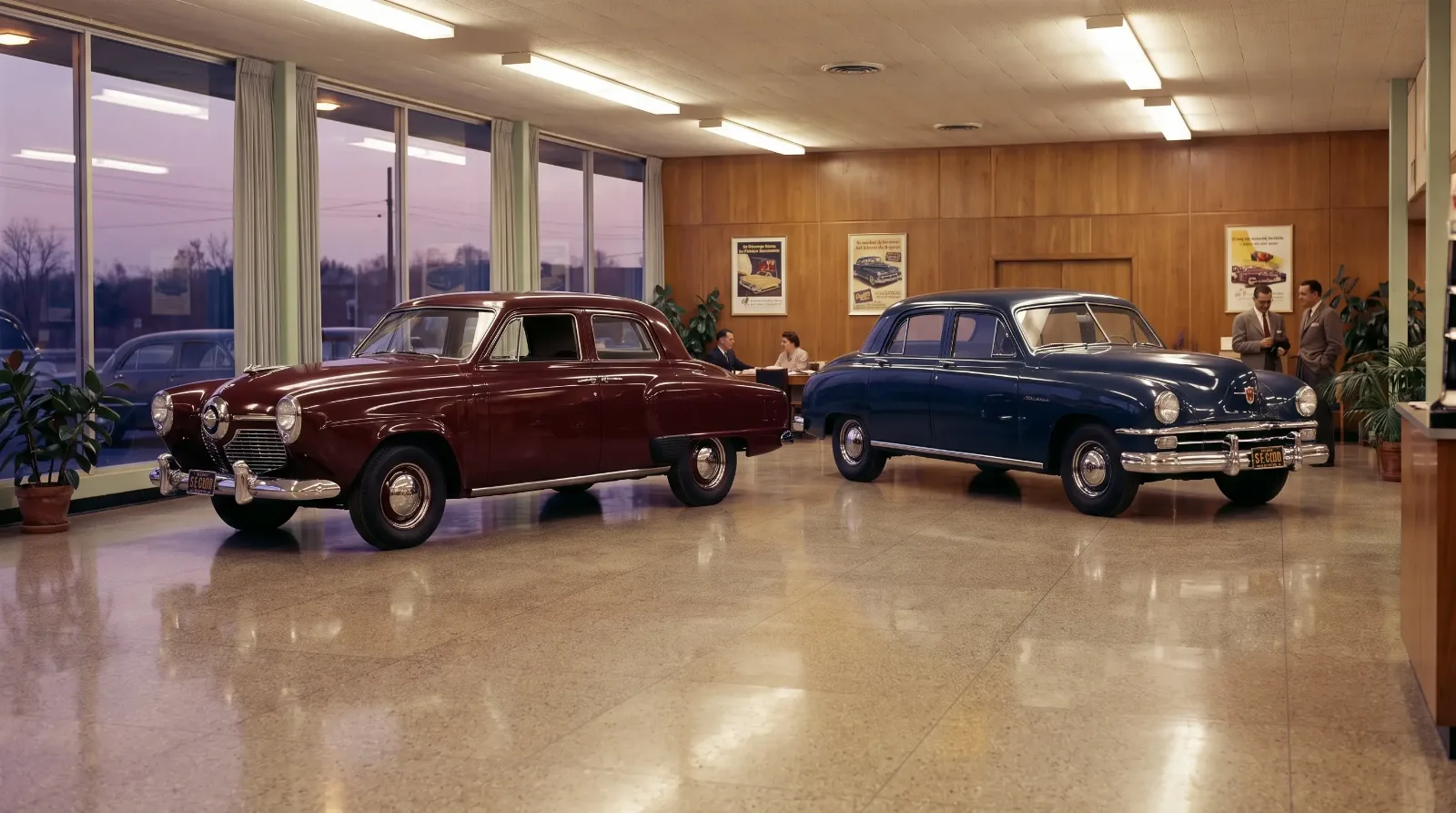
Both engines shared the same core advantage over the flathead: higher compression, better breathing, and real room to grow through the following decade as compression ratios kept climbing with improvements in fuel quality. The numbers back this up. Buyers who cross-shopped a flathead-powered car against one of these new overhead valve V8s in 1949 or 1950 were not comparing similar products with different badges. They were comparing an engine near the end of its development curve against one just getting started.
How fast the rest of the industry followed
Once Cadillac and Oldsmobile proved the concept worked and sold, the rest of the industry could not ignore it. Chrysler answered with its own overhead valve hemi V8 in the early 1950s, a design with its own real advantages in combustion chamber efficiency. Ford held onto flathead production longer than some competitors, in part because of the engine's sheer manufacturing volume and cost advantages, but even Ford eventually replaced it with an overhead valve V8 later in the decade.
The independents, smaller manufacturers without Ford or GM's engineering resources, had a harder time keeping pace. Developing a competitive overhead valve V8 required real capital and engineering time that the independents often struggled to match, and that gap became one of the pressures that squeezed smaller automakers through the 1950s, a story worth following in the next story.
Some independents responded by buying engines from larger manufacturers rather than developing their own, a strategy that kept them competitive on paper but did little to build the long-term engineering capability their bigger rivals were accumulating. Others tried to compete on styling and value instead of raw performance, a reasonable short-term strategy that nonetheless left them more exposed once the horsepower race became a central part of how buyers judged a new car.
What the numbers tell you about buying one today
For collectors comparing cars from this transition, the practical takeaway is straightforward: an overhead valve V8 from 1949 or later generally has more room for period-correct performance upgrades and a stronger factory foundation to build from than an equivalent flathead-powered car of the same vintage. That does not make the flathead cars less collectible, they have their own following and their own history, but it does explain why the market treats early overhead valve cars as a meaningful step forward rather than just an incremental one.
"People love the flathead's sound and its history, and that's fine. But if you put a stock 1949 Rocket 88 against a stock flathead Ford on the same stretch of road, there is no argument about which one gets there faster. The numbers settled that argument seventy years ago."
— Dan Reeves
The overhead valve V8 revolution is a good example of how a real technical advantage, not styling, not marketing, ends up reshaping an entire industry within a few model years. It is also a useful reminder that the story of American cars did not end with the pre-war era covered in our pre-war era guide. It kept moving, fast, right into the engines that defined the decade that followed, a broader picture available in more on 1949 overhead valve v8.