Here is the number that matters: by the late 1940s, Hydramatic had already sold hundreds of thousands of units since its 1940 debut, and it kept climbing through the decade as more manufacturers signed on to use it. That is not a footnote. That is a transmission that changed how ordinary people drove, and it did it faster than most of the flashier engineering stories from this era get credit for.
Everyone wants to talk about horsepower and overhead valves when they talk about late-1940s cars. Fair enough, that stuff matters. But the automatic transmission is the quieter revolution, and it is the one that actually reshaped who could drive comfortably and how. Clutch pedals were a real barrier for a lot of drivers. Hydramatic removed it, and the number of cars that adopted it or something like it in the years that followed tells you exactly how much that mattered to buyers.
What Hydramatic actually was
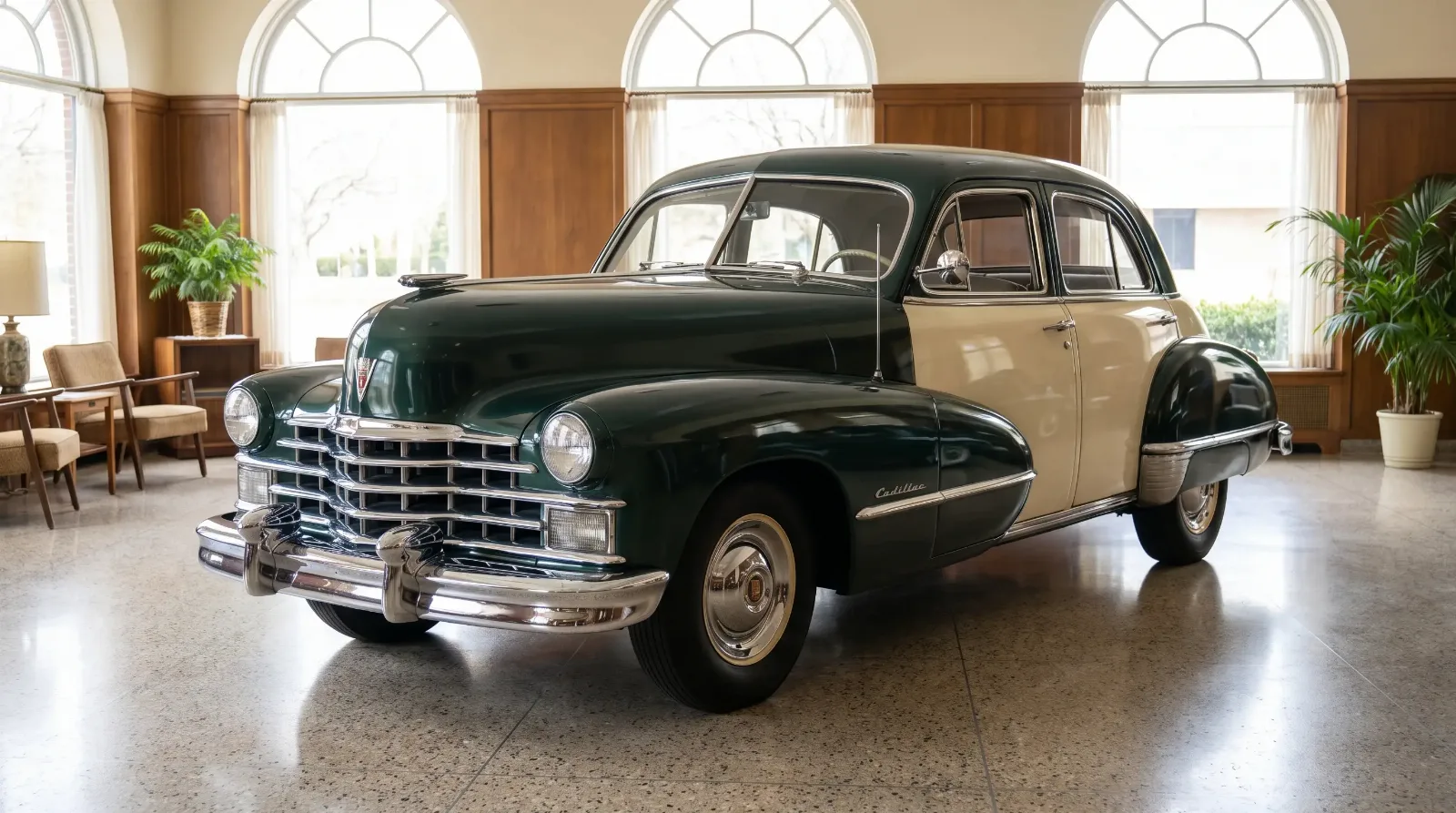
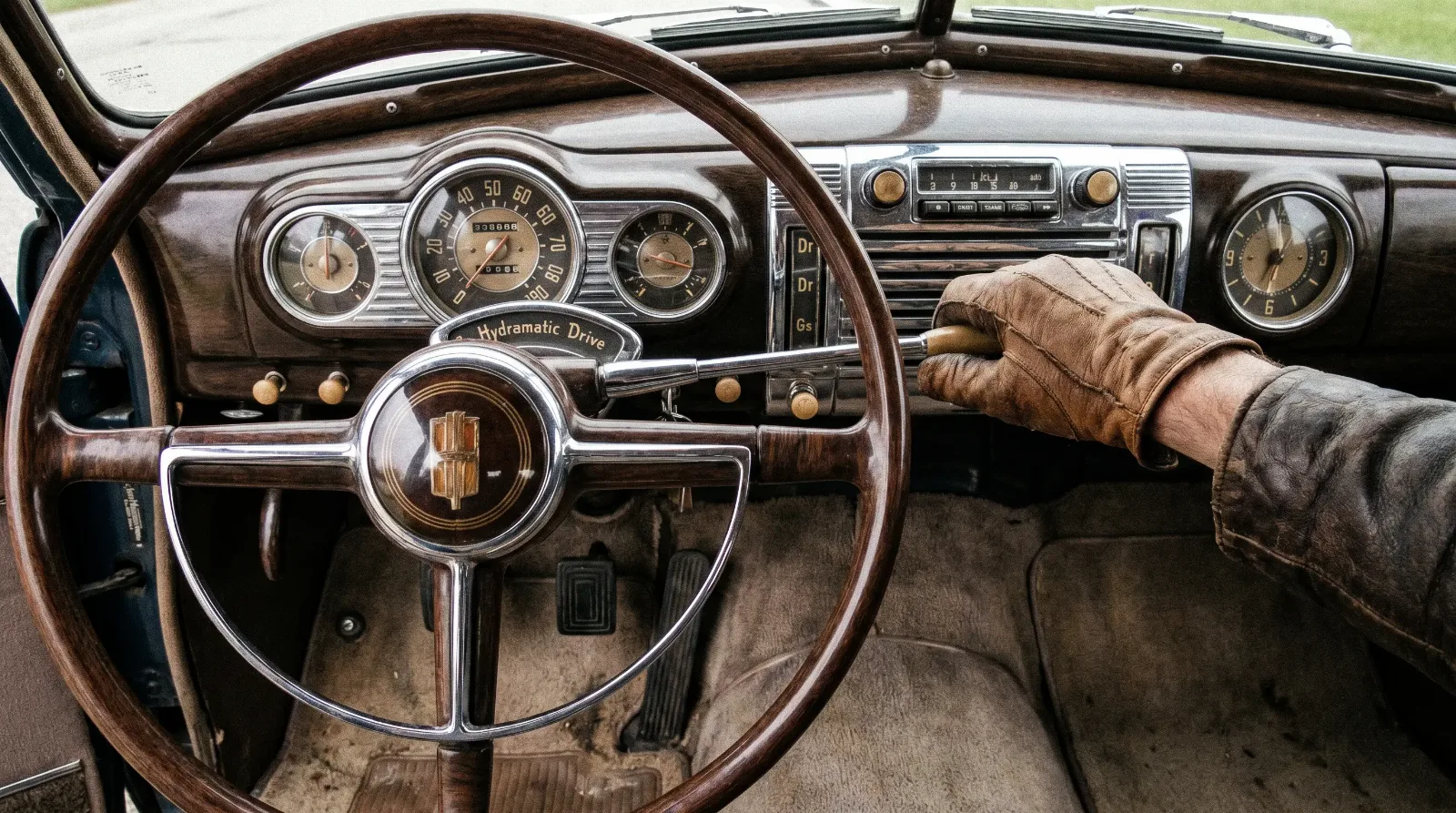
General Motors introduced Hydramatic on the 1940 Oldsmobile, a fully automatic transmission using a fluid coupling and a set of hydraulically controlled planetary gearsets, four forward speeds shifted without a clutch pedal. That is a real engineering achievement for 1940, not a marketing gimmick dressed up as one. Cadillac adopted it in 1941. Pontiac followed later in the decade. By the late 1940s it was standard or optional across a meaningful share of GM's lineup, and other manufacturers without their own automatic were buying Hydramatic units from GM to put in their own cars.
The mechanism was genuinely clever for the period: no clutch pedal, automatic shifts at speeds and loads set by hydraulic governors rather than a driver's foot and hand. Compared to the manual transmissions that still dominated the market, Hydramatic gave up a bit of outright performance, shift smoothness and reliability were the trade for that, and reliability is exactly what most daily drivers actually wanted.
The service side of the business tells its own story about how quickly Hydramatic became mainstream. Dealerships had to train technicians on hydraulic systems that bore almost no resemblance to a manual gearbox, and GM built out a dedicated parts and training pipeline to support the transmission at the scale it was selling. That investment paid off in a self-reinforcing way: the more common Hydramatic became on the road, the more sense it made for a shop to invest in the tooling and training to service it, which in turn made owning one less risky for the next buyer.
The competitors, and why they lagged
Other manufacturers were not standing still, but none matched Hydramatic's early lead. Buick's Dynaflow, which arrived in 1948, used a fully automatic torque converter design that traded some efficiency for exceptional smoothness, a real engineering choice with real trade-offs rather than a compromise nobody intended. Packard, Ford, and Chrysler all had automatic transmission programs in various stages through the late 1940s, but most were still working out reliability problems that Hydramatic had already solved years earlier.
The gap mattered commercially. A manufacturer without a competitive automatic transmission by the late 1940s was increasingly at a disadvantage in a market where buyers, especially women drivers and anyone new to driving, were actively shopping for the ease an automatic provided. That demand pressure is what pushed Chrysler and Ford to accelerate their own automatic programs into the early 1950s.
Independent manufacturers without the engineering budget to develop their own automatic often bought Hydramatic units directly from GM rather than build a competing design, a practical decision that let a smaller company offer buyers the feature they wanted without years of development. That arrangement is a good illustration of how much of an advantage Hydramatic's early lead actually represented; even rival manufacturers found it cheaper to buy GM's solution outright than to catch up on their own.
| Transmission | Manufacturer | Introduced | Forward speeds |
|---|---|---|---|
| Hydramatic | General Motors (Oldsmobile) | 1940 | 4 |
| Dynaflow | Buick | 1948 | Effectively 1 (torque converter) |
| Ultramatic | Packard | 1949 | 2 (driver-selected high and low range) |
What buyers actually got for the money
Cost was real. An automatic transmission added a noticeable premium to a car's price in the late 1940s, and buyers weighed that cost against a manual transmission that most drivers already knew how to use competently. The fact that Hydramatic sales kept climbing anyway tells you the value proposition worked for a large enough slice of the market to matter.
Performance-minded buyers sometimes stuck with manual transmissions through this period, since early automatics gave up some efficiency and outright acceleration compared to a well-driven manual. That trade-off shows up clearly once you look at the horsepower and performance figures from the cars that adopted these transmissions, a comparison that connects directly to the bigger engine story unfolding at the same time in the next installment, where real power finally started catching up to the ease automatics had already delivered.
Why this transmission is a bigger deal than it gets credit for
Ranked against the other engineering stories of the decade, overhead valve V8s, unified body construction, Hydramatic and the automatics that followed it probably changed more daily driving experiences than any of them. The number of drivers who benefited from not operating a clutch every single trip dwarfs the number who cared about an extra few horsepower on paper.
"People get excited about horsepower figures and forget that most drivers in 1948 just wanted a car that didn't stall at every stop sign. Hydramatic solved a real problem for a huge number of people, and the sales numbers back that up better than any spec sheet."
— Dan Reeves
If you are researching cars from this window, checking whether a given model offered Hydramatic, and confirming the actual year it became available on that specific make, is worth doing before you get distracted by the horsepower race that dominates the rest of the decade's story, a fuller picture of which sits in our deep dive on 1940s automatic transmission.
Sources and notes
- Wikipedia: Hydramatic
- Mac's Motor City Garage - First in its class: the 1949-56 Packard Ultramatic transmission
- Mac's Motor City Garage - The disaster that shook the Motor City: the 1953 Hydra-Matic fire
- Ate Up With Motor - Hydra-Matic history: GM's first automatic transmission
- Wikipedia: Ultramatic