
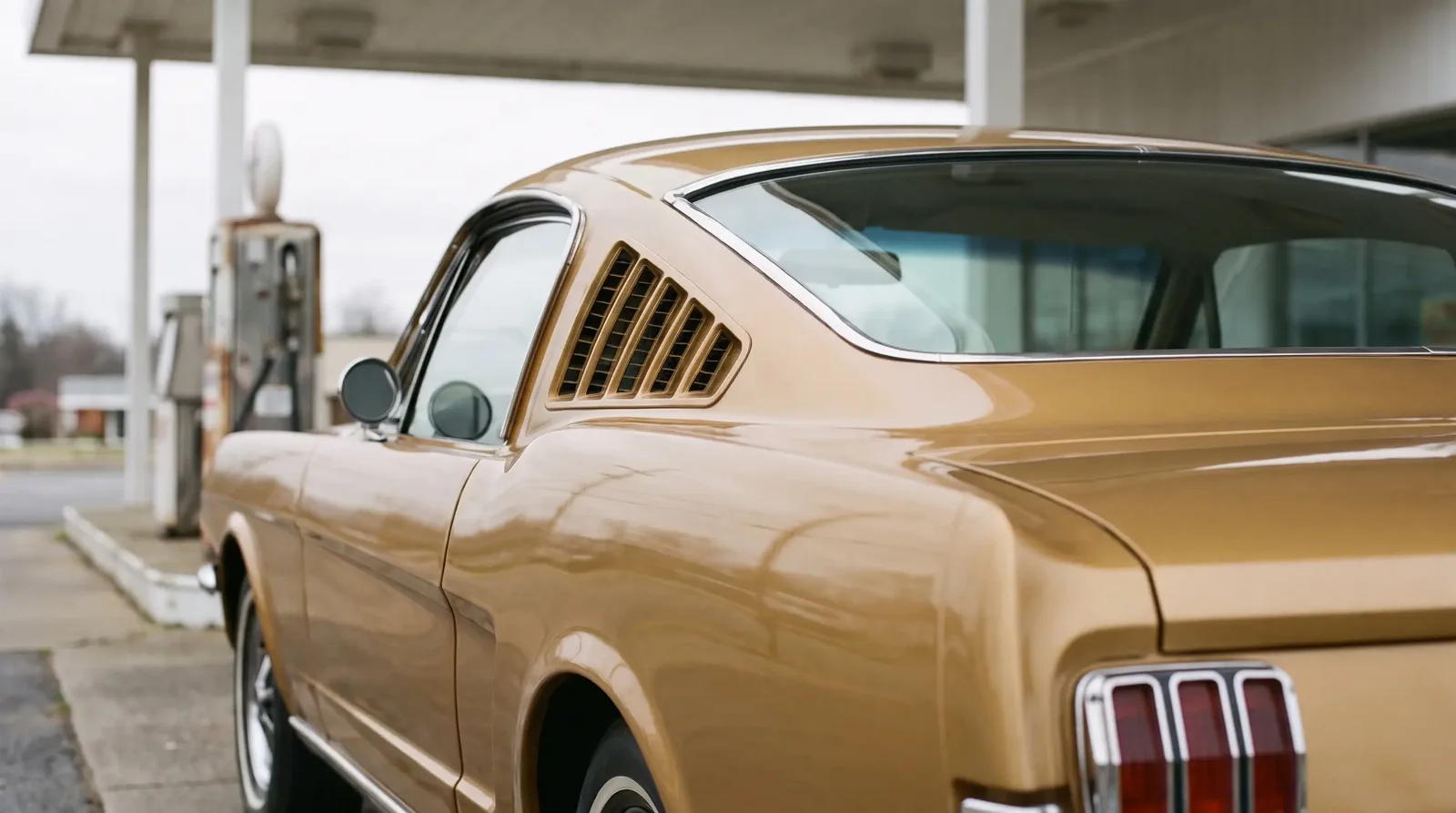
Ask a room full of owners where 1965 Mustang history begins and most will say April 17, 1964, at the New York World's Fair. That is where the car began. The 1965 model year is a narrower thing, and the factory paperwork treats it that way. It is the run Ford built after the early production that collectors call the 1964½, and its 559,451 cars set the numbers every later Mustang year has been measured against.
Car Features
8 min read
The 1965 Mustang: The Model Year That Made the Legend
559,451 cars, three bodies, three plants: what Ford actually built as a 1965 Mustang, and what changed on the line after the 1964½ cars.
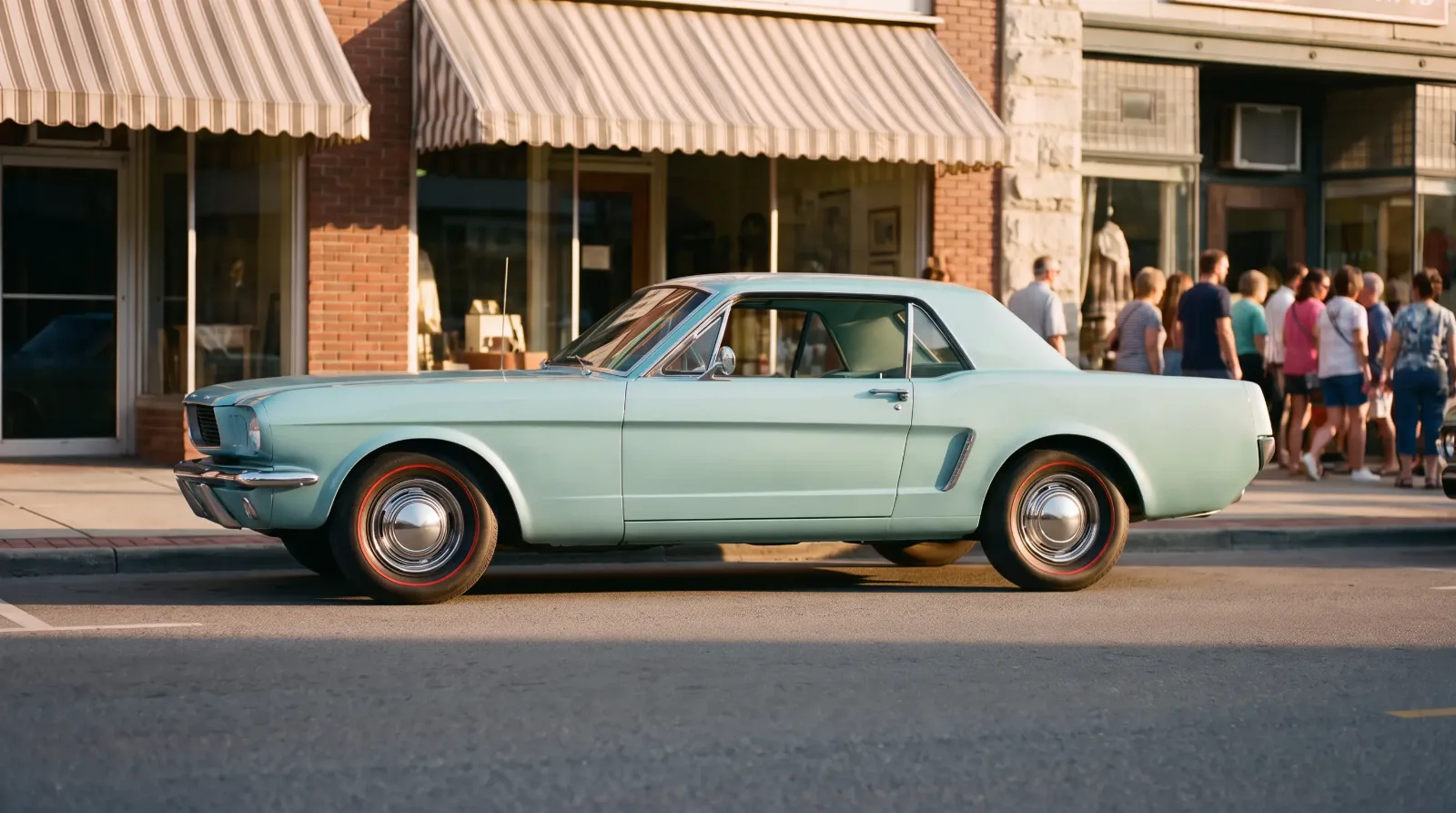
I want to keep this to the model year itself. The launch weekend, the studio competition and the committee that planned the car are part of the classic Ford Mustang story. The question here is smaller and, to my mind, more useful: what Ford actually built as a 1965, in what proportions, and what changed on the line while those cars were being assembled.
Where 1964½ ends and the 1965 model year begins
Officially there is no 1964 Mustang. Every early car was titled as a 1965, and every VIN from the first day carries the year digit 5. The split collectors use is a production split. Cars built before the summer 1964 changeover are the 1964½ cars. Most sources put the cutoff at July 31, 1964, and one puts it as late as August 17, so I treat early to mid August as a grey zone rather than a line on a calendar. Nobody has shown me a Ford document that settles it.
How many early cars were there? The Henry Ford puts the first model year, 1964½ included, at almost 681,000. Take away the 559,451 built as true 1965s and you are left with roughly 121,500, which lines up with the 121,538 that MustangSpecs gives for the 1964½ run. I have not seen that number on a Ford document, so I read it as the best count available rather than a factory figure.
The changeover itself was mostly mechanical. The generator gave way to an alternator, which is why the dash warning light reads GEN on early cars and ALT on later ones. The engine list changed more than the sheet metal did, and the detailed spotting list for the two halves belongs to a different article. For this one, the point is simple: the 1965 car is the settled version of the launch car, with the parts Ford had time to get right.
The engines Ford settled on
Three of the 1964½ engine codes disappeared at the changeover. The U-code 170 cubic inch six, the F-code 260 V8 and the D-code 210 hp 289 four-barrel were all early-production engines only. What replaced them is the lineup most people picture when they think of a 1965 Mustang.
The base engine became the T-code 200 cubic inch six, rated at 120 hp at 4,400 rpm and 190 lb-ft. Above it sat the C-code 289 two-barrel at 200 hp and 282 lb-ft, then the A-code 289 four-barrel at 225 hp at 4,800 rpm and 305 lb-ft. At the top was the K-code 289 High Performance, which had already appeared in 1964½ production: 271 hp at 6,000 rpm and 312 lb-ft at 3,400. All of those are SAE gross ratings, which read higher than the net figures used from the 1970s on, so compare them only with other gross numbers.
The K-code stayed rare. Sports Car Market counts 7,273 of them for the 1965 model year with the 1964½ cars folded in, out of the roughly 681,000 Mustangs in that span. That is about one car in a hundred. When a 1965 is described as a K-code, the fifth character of the VIN is the first thing to read, and it is only the first.
1965 Mustang history, told in production numbers
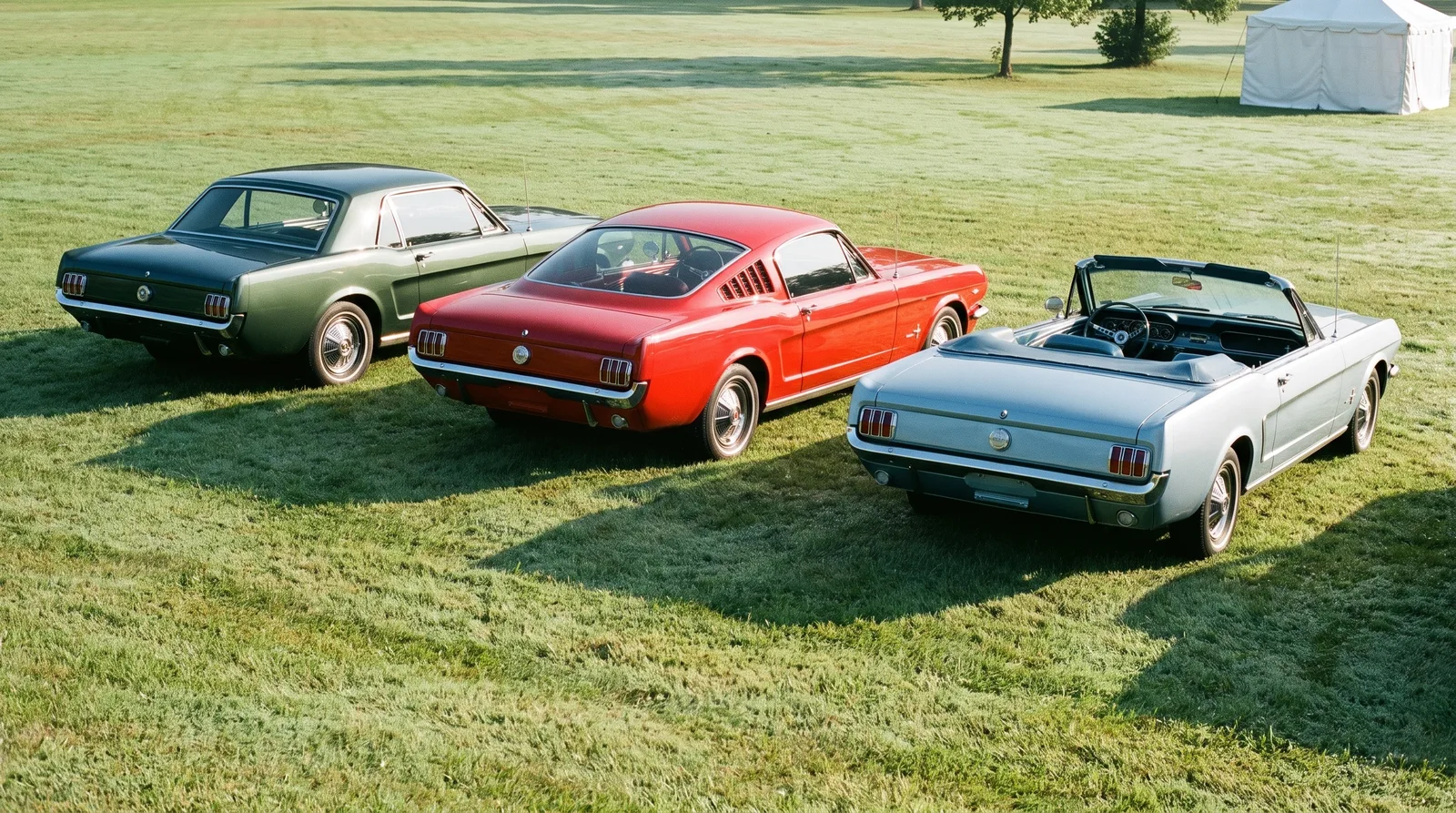
The production table is where the model year stops being a story and starts being arithmetic. Ford built three bodies, and each could be ordered with a standard interior or the luxury interior. The hardtop and convertible were also available with a front bench seat, a combination most people forget existed.
| Body style | Standard | Bench seat | Luxury interior | Total | Base price |
|---|---|---|---|---|---|
| Hardtop (coupe) | 372,123 | 14,905 | 22,232 | 409,260 | $2,372 |
| Fastback 2+2 | 71,303 | none | 5,776 | 77,079 | $2,589 |
| Convertible | 65,663 | 2,111 | 5,338 | 73,112 | $2,614 |
| Model year total | 559,451 |
Run the percentages and the picture is plain. The hardtop was about 73 percent of all 1965 production. The convertible, the car in most of the period photographs, was the smallest slice at about 13 percent. The fastback, which did not exist at launch, edged past it with 77,079 cars. Ford added the 2+2 fastback in August 1964, and it was the first Mustang body built only as a 1965 model, with no 1964½ version at all.
One caution on the hardtop figure. You will find 410,260 in at least one specialist table. Only 409,260 makes the three body styles add up to 559,451, so that is the number I use. The same rule applies to the convertible, where a stray 73,149 appears in one source while three others agree on 73,112.
Those cars came from three plants, and the second character of the VIN tells you which: F for Dearborn, Michigan, R for San Jose, California, and T for Metuchen, New Jersey. The decoder tables list starting serial numbers for only Dearborn and San Jose on the 1964½ cars, then add Metuchen's T at 100001 for the 1965 run, alongside Dearborn starting at 250001 and San Jose at 125001.
Options that arrived during the year
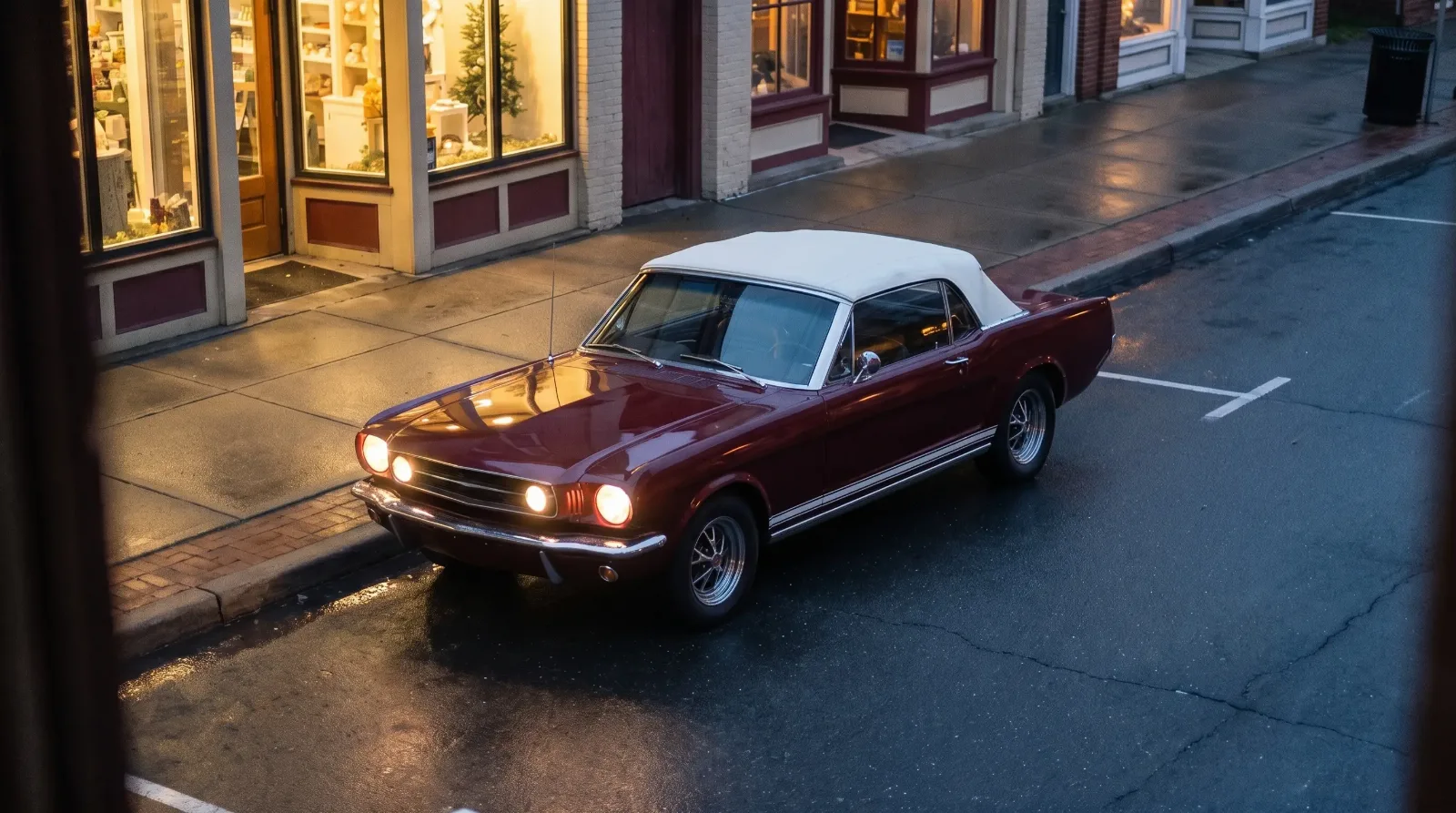
Two things a lot of people assume were there from the start were not. The first is the GT Equipment Group. Its public launch is usually given as April 17, 1965, a year to the day after the car's debut, though one account says April 15 and another simply says April 1965. Cars carrying the package were being built from mid-February 1965, so build date and announcement date are different questions with different answers.
The GT group was V8 only, built around the 225 hp A-code or the 271 hp K-code. It brought front disc brakes, a special handling package and quick-ratio steering, plus dual exhaust with trumpet tips exiting through the rear valance. Outside there were rocker stripes, fog lamps in the grille and GT badges. Inside, the five-dial gauge cluster replaced the Falcon-style instruments. Ford built 15,079 GTs for 1965.
The second is the luxury interior that owners call the Pony interior. Its factory name was the Interior Decor Group, and it shows up on the data plate as the B body codes: 65B for the hardtop, 76B for the convertible, 63B for the fastback. Embossed running horses on the seatbacks, wood-grain trim and integral armrests are the giveaways. I have not seen a document I trust for the month it was introduced or what it cost, and I would rather say that than repeat a date that has only ever appeared in forum posts.
"The 1965 that made the Mustang famous was not a convertible and it was not a GT. It was a hardtop, three out of every four built, with a standard interior. The legend got written later by the rare cars. The production records were written by the ordinary ones, and those are the records I trust."
Tom Ramirez
What the first model year added up to
Measured from launch day, Ford sold 418,812 Mustangs between April 17, 1964, and April 16, 1965, a twelve-month sales record. The 1965 model year, built on the same 108 inch wheelbase and 181.6 inch length as the launch car, carried most of that load. The year also produced a second car on the same bones: Shelby American's 1965 GT350, 562 of them, all Wimbledon White, built from 2+2 fastbacks. The first 110 of those bodies left the San Jose plant for Shelby in the last week of 1964.
The year after did even better, with 607,568 Mustangs for 1966, but it did so with a car that was a refinement of the 1965 rather than a departure from it. That is why the 1965 matters to anyone following the 1964½ to 1973 cars from start to finish. It is the reference point. Body codes, engine codes, trim levels and the GT package all took the form here that 1966 would carry over, and every later first-generation car is described by how it differs from this one.
For anyone checking a particular car against the records, the order of work is the same as it was in 1965: VIN first, then the data plate codes, then the parts that should match both. That applies as much to the 1965 Mustangs for sale today as it does to the survivors in museums. The paperwork tells you what the factory built. Everything else tells you what happened to it afterward.
Sources and notes
- Wikipedia: Ford Mustang (first generation), 1965 production by body and trim
- The Henry Ford: Mustang, the birth of an American icon (first-year sales and the almost 681,000 total)
- MustangSpecs: background of the 1964½ Mustangs (121,538 cars, August 17 changeover)
- Classic Industries: 1964½ Mustang data plate and VIN decoder
- RM Sotheby's: 1965 Ford Mustang GT, the GT Equipment Group
- Sports Car Market: K-code Hi-Po production by year
Related Reading
#1964 mustang
#1965 mustang
#Ford Mustang
#first generation Mustang
#mustang production numbers
#mustang gt
#classic Mustang history

About the author
Tom Ramirez
Corvette researcher and historian based in Bowling Green, Kentucky. Two decades documenting Corvette production history from original factory records.
Related Listings - Ford Mustang




Comments
Be the first to comment on this article.