
By 1966 the Chevrolet El Camino and the Ford Ranchero had both settled into the mid-size class, and the el camino vs ranchero 1966 mid size clash is really the story of two companies figuring out what a car-truck should be once the novelty had worn off. The El Camino had returned in 1964 on the new Chevelle platform after Chevrolet let the nameplate lapse for three model years. The Ranchero, by contrast, had never left showrooms, but it had jumped from the full-size Ford body it wore in 1957 down to the compact Falcon in 1960 and then up again to the intermediate Fairlane for 1966. Neither truck was chasing farmers anymore. Both were chasing buyers who wanted a load bed with a car's ride, and 1966 is the year the rivalry stopped being a curiosity and became a real product fight.
1966: Two Mid-Size Cartrucks Go Head to Head
In 1966 the El Camino and Ranchero both went mid-size, and the fight between them became less about farm work and more about which automaker could sell a car-truck with genuine performance credibility.
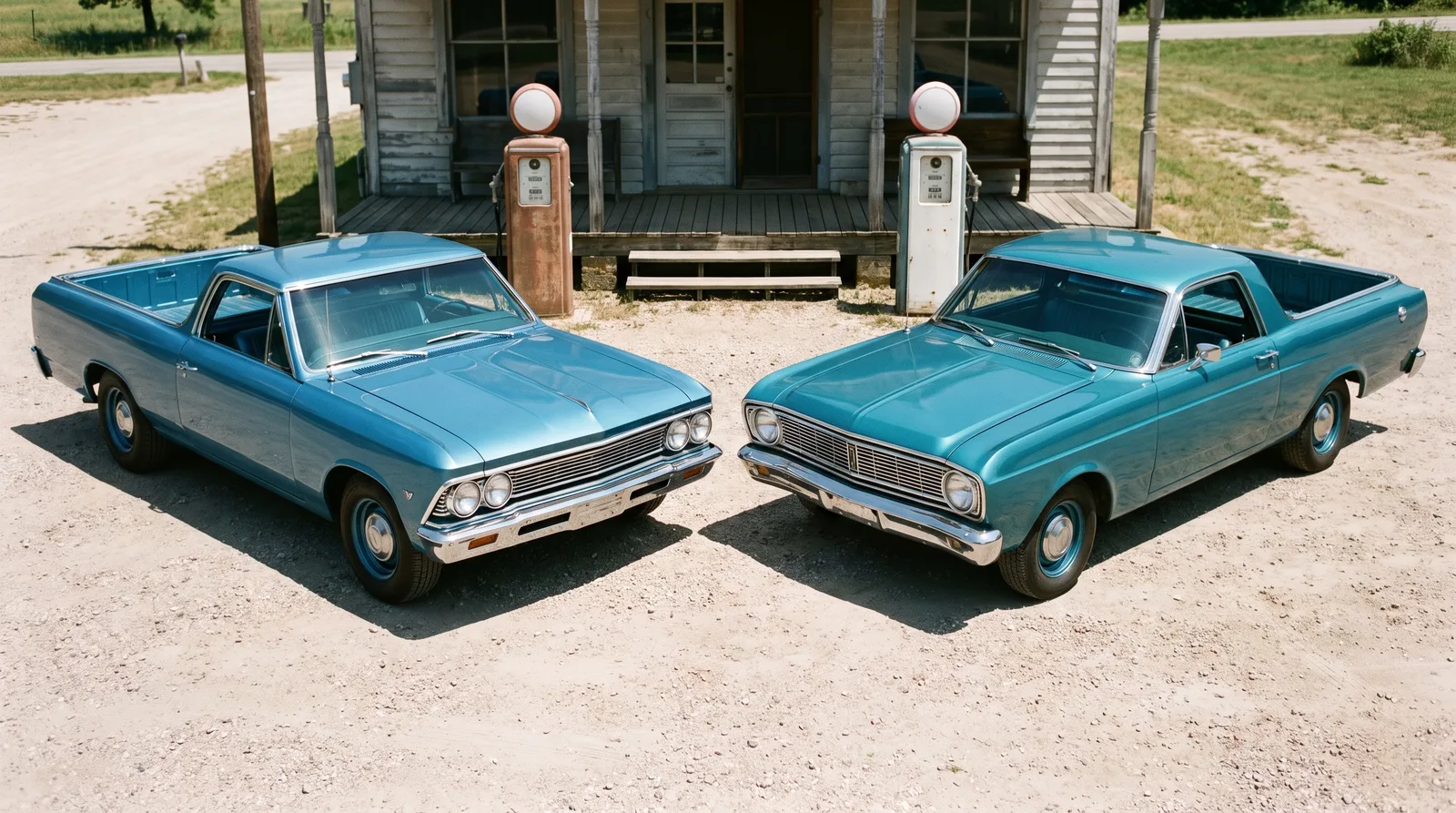
Two platforms reach the same size class
The Chevelle-based El Camino carried over its 1965 sheet metal with mild trim revisions for 1966, and the option sheet is where the interesting decisions live. A buyer could walk in wanting a plain six-cylinder work vehicle and walk out with a 396 cubic inch V8 under the hood, the same engine family Chevrolet was putting in the Chevelle SS. That single fact tells you what Chevrolet had figured out: the El Camino did not need its own performance identity, it just needed to borrow the Chevelle's. The Ranchero took a different route. Ford built it off the Fairlane for the first time in 1966, and that gave it access to the 390 cubic inch GT engine, plus a genuine GT trim package with striping and bucket seats that dressed the truck up like the sporty coupes Ford was selling in the same showroom.
The jump to the Fairlane platform was the biggest structural change the Ranchero had made since it left the full-size Ford body a decade earlier. It gained wheelbase, width, and cargo capacity almost overnight, closing a gap with the El Camino that had existed since the compact Falcon years. For the first time since both nameplates had coexisted, a buyer standing between the two trucks in a showroom parking lot was comparing genuinely similar vehicles rather than a mid-size Chevrolet against a compact Ford.
Engine choices and what they signaled
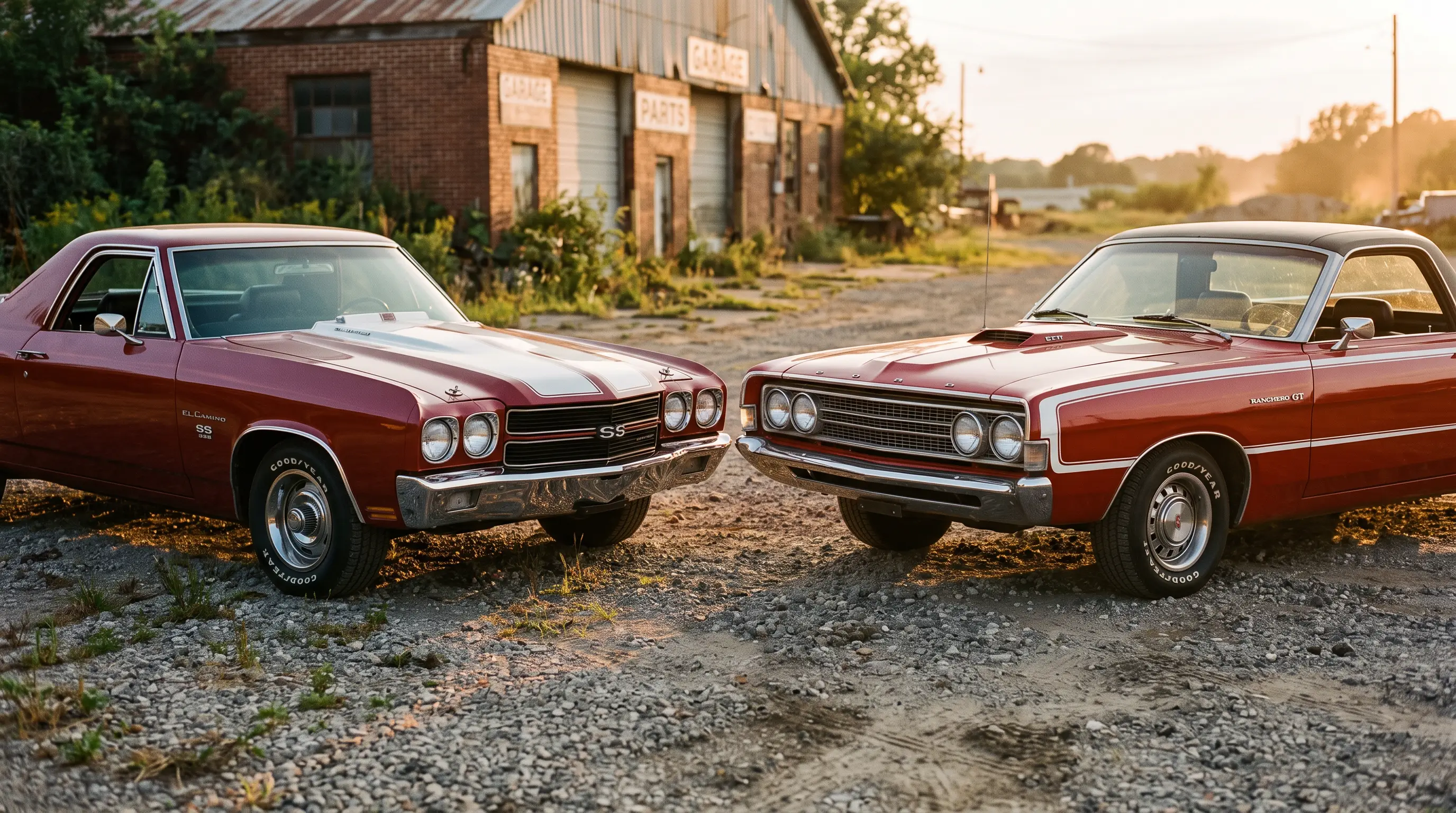
On paper, 1966 gave both companies something to brag about. Chevrolet's 396 big-block, offered in the El Camino in the L35 (325 horsepower) and L34 (360 horsepower) configurations, plus a genuinely rare mid-year L78 option rated at 375 horsepower that Chevrolet did not add to the order sheet until a sales bulletin in spring 1966, put the car-truck in genuine muscle car company. Only about 3,099 L78 396s were built across the entire Chevelle and El Camino line that year, so a documented L78 El Camino from this specific model year is a serious find. Ford's 390 GT engine in the Ranchero, rated at 335 horsepower, was a credible performance option as well, though it typically arrived paired with an automatic and a more comfort-oriented tune than Chevrolet's hottest big-block combinations.
The gap that mattered more to actual buyers was payload and bed length. The Ranchero's Fairlane-based bed was still slightly shorter and narrower than the Chevelle-based El Camino's, a difference that traces back to each company's decision about how much car to keep versus how much truck to add. Chevrolet leaned toward truck utility even in a performance-optioned El Camino; Ford, in 1966 at least, still leaned toward car-like proportions first.
Marketing posture told a different story than the spec sheet
What separates the two trucks in period documentation is not raw output, it is intent. Chevrolet treated the El Camino as a Chevelle with a bed grafted on, right down to sharing some brochure language with the passenger car. Ford treated the Ranchero as its own line item with a distinct name and its own advertising copy, even though the mechanical bones came straight from the Fairlane. That difference in marketing posture shaped who bought each truck. El Camino buyers tended to already be Chevelle-minded, cross-shopping the wagon and the coupe. Ranchero buyers were often coming from the previous compact-based trucks and wanted assurance this was still, unmistakably, a Ranchero.
Production figures from this era are thin in the public record, and any collector who states an exact build number without a factory-level document behind it is guessing. What is not in dispute is that both trucks were niche products relative to their donor cars. A Chevelle sold in far greater numbers than an El Camino, and a Fairlane outsold its Ranchero cousin by a wide margin. That scarcity is part of what makes surviving 1966 examples of either truck worth finding today, especially with factory big-block documentation intact, since paperwork is often the only way to separate a genuine performance-optioned truck from a six-cylinder example dressed up after the fact.
"People assume the El Camino and Ranchero were built to out-muscle each other. In 1966 they were mostly built to out-brochure each other. The engines came later in the story, the marketing came first."
- Sarah Whitfield
Styling, cabin treatment, and why 1966 still matters
Styling in 1966 tells a quieter part of the story. The Ranchero's Fairlane-derived nose had a crisper, more upright grille than the smoother 1965 car, while the El Camino's Chevelle face picked up stacked details that hinted at the coke-bottle profile Chevrolet would fully embrace by 1968. Neither truck was radical. Both were evolutionary updates of cars that were themselves only a year or two old, and that restraint is why 1966 examples of each read as clean, uncluttered designs today rather than transitional oddities.
Interior treatment quietly revealed the same priorities. The El Camino's cabin borrowed directly from the Chevelle Malibu parts bin, right down to the dash-mounted gauges and door panel trim, so a buyer stepping from a Malibu sedan into an El Camino felt almost no discontinuity. The Ranchero took slightly more liberty with its cabin presentation, offering upholstery combinations tied specifically to the GT package that were not always mirrored in the standard Fairlane sedan. Collectors researching this specific model year should treat 1966 as the calm before the storm, the last season before both companies leaned hard into performance identity for their car-based trucks in the years that followed.
For anyone assembling a real history of the rivalry rather than just this single model year, the full story traces how the fight evolved from these Fairlane and Chevelle underpinnings all the way through the muscle era and into the personal-luxury detour both trucks eventually took. And if 1966's mix of Chevelle-based practicality and understated big-block muscle appeals to you directly, it is worth taking the time to browse classic El Camino listings and see what factory-documented examples from this window still turn up at auction.
Sources and notes
Related Reading

Third-generation classic car collector specializing in pre-war American and European coachbuilt automobiles. Researcher and concours enthusiast.
Related Listings - Chevrolet El Camino




Comments (1)
Wife calls El Caminos Chevelles that lost their trunks. My '66 300 Deluxe took that wicked personal.
Bill, your wife stands in a long tradition; the Australians have called the thing a ute since 1934, when, as the story goes, a farmer's wife in Victoria wrote to Ford asking for a vehicle that could go to church on Sunday and carry the pigs to market on Monday. In 1978 I rented a Falcon ute in Melbourne during a sabbatical and drove it rather badly on the wrong side of the road; it was, mutatis mutandis, a 1966 Ranchero with an accent. The Fairlane-based truck was simply the American branch of the family catching up with its cousins.