
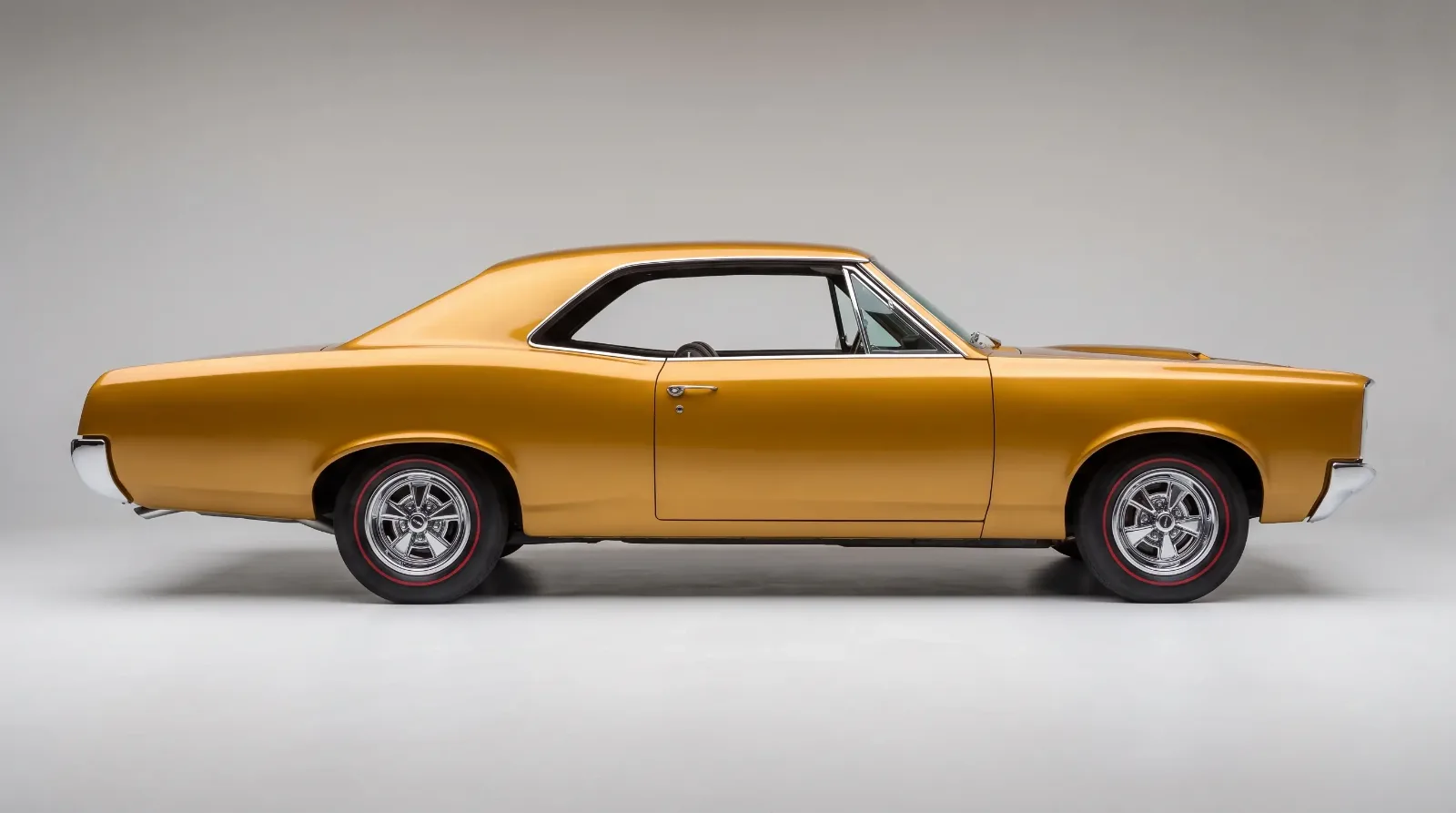
Park a 1966 and a 1967 GTO next to each other and most people walk right past without noticing they're different model years. The body is the same basic Coke-bottle shell both years. But dig into the build sheets, the option codes, and the small trim details, and the two cars diverge more than their shared silhouette suggests. As someone who spends a lot of time with factory documentation, these are the details that actually separate them.
Car Features
6 min read
Hidden Differences Between the 1966 and 1967 GTO
Same Coke-bottle body, different car underneath: here's how to tell a 1966 GTO from a 1967, and why it matters to your wallet.
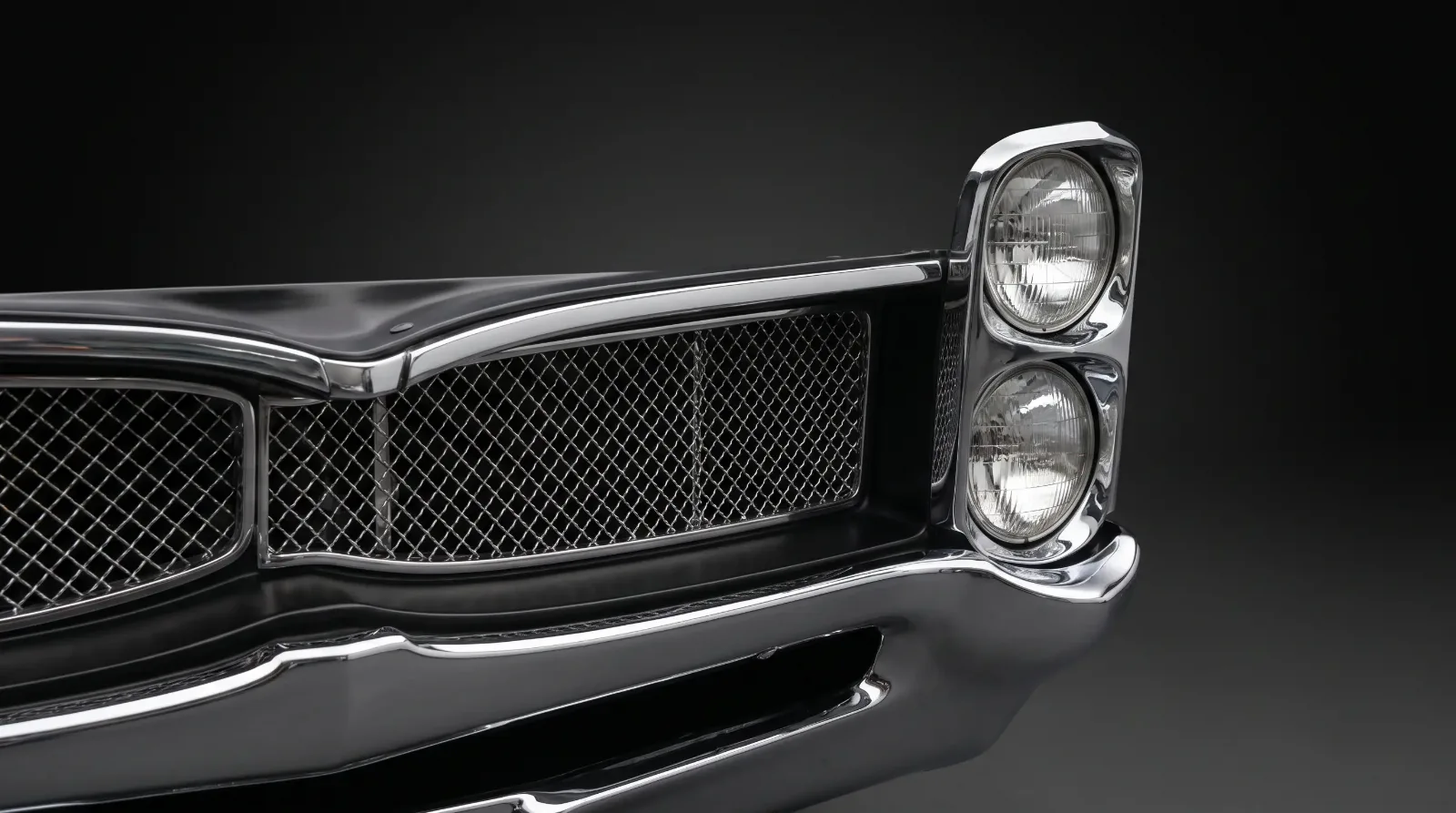
The grille and taillight tells
The fastest way to identify a 1966 from a 1967 GTO at a glance is the grille. The 1966 car uses a horizontally split grille with a more delicate, finer mesh pattern, while the 1967 grille was reworked with a bolder, simpler split and a slightly different chrome surround. Around back, the 1966 taillight treatment differs from 1967 in trim detailing, and the fuel filler location and cap design also changed between the two years, a small detail that trips up people trying to date a car from period photographs.
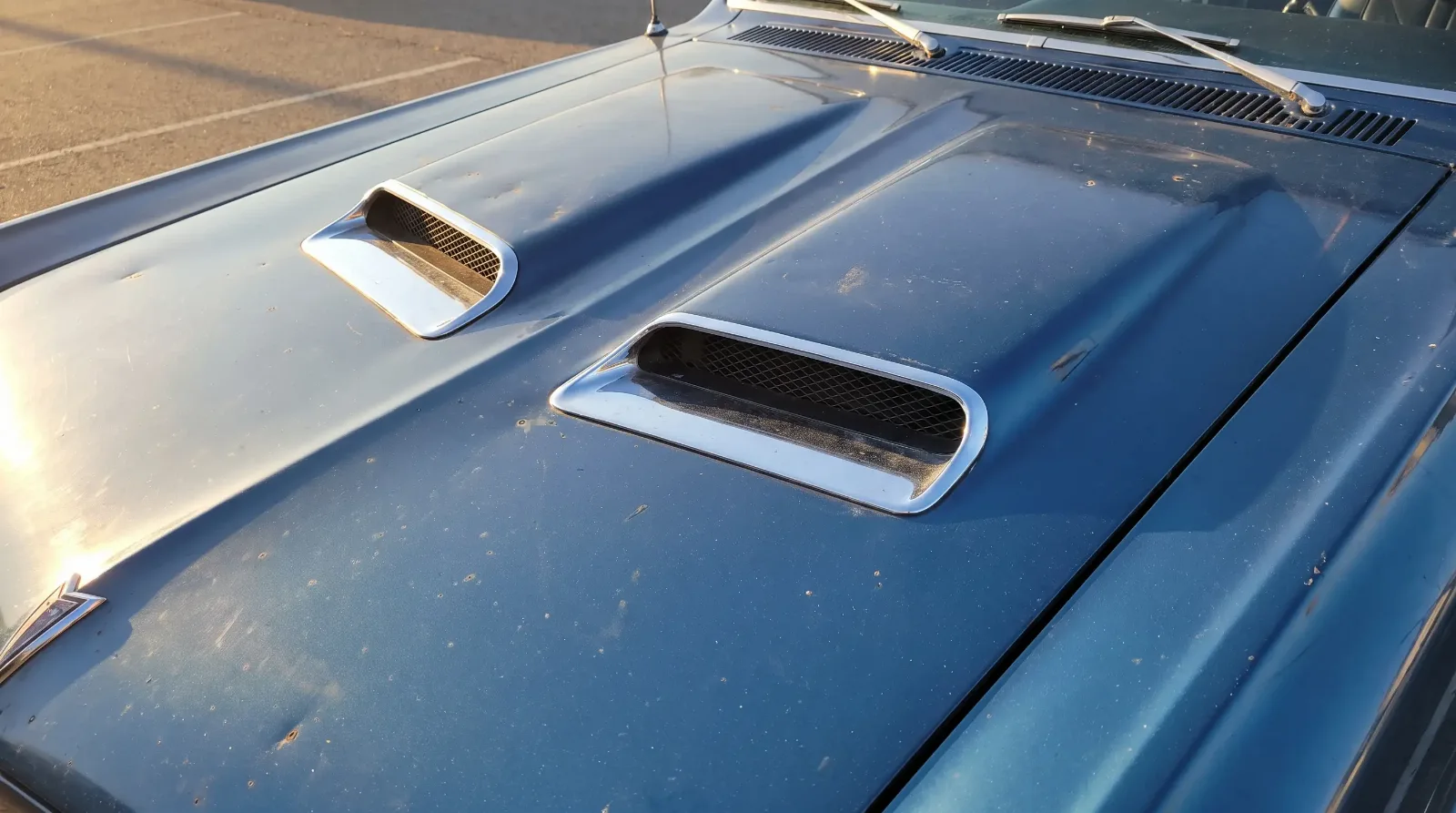
Hood scoops are another giveaway. Both years offered functional-looking twin scoops, but the specific shape and the way they meet the hood line differ enough that a trained eye, or a good reference photo, will sort a 1966 from a 1967 in seconds.
Emblem placement is a smaller tell that's easy to overlook in a quick walk-around. The GTO script badging moved slightly between the two years on both the front fenders and the rear, and the exact typeface and mounting hardware documented in Pontiac's parts books differ enough that a restorer chasing period-correct emblems needs to confirm the model year before ordering, not after.
The engine bay tells the bigger story
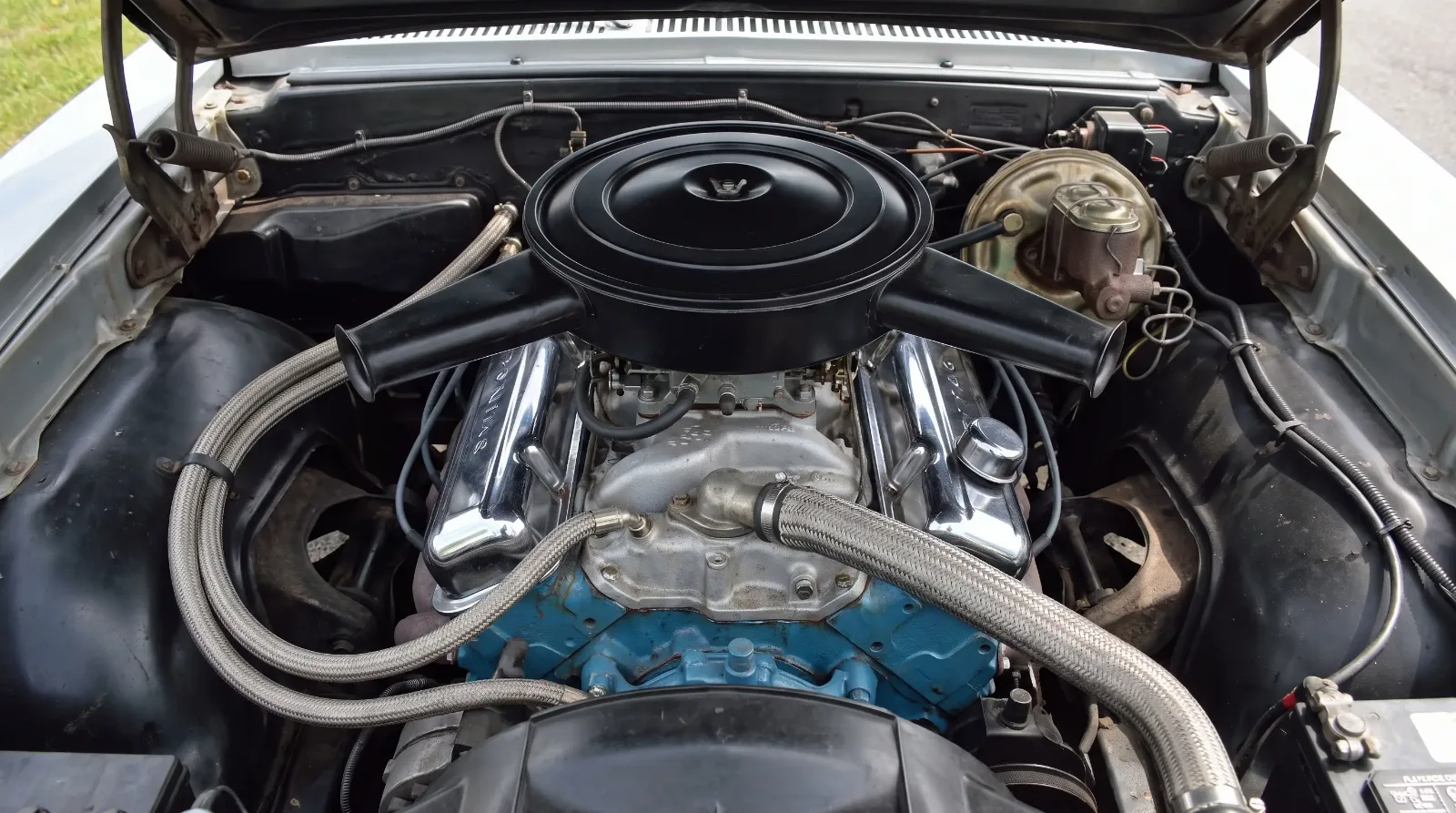
The mechanical differences matter more than the trim. The 1966 GTO carried over the 389 cubic inch V8 with the option of Tri-Power triple carburetion. For 1967, Pontiac bored the engine out to 400 cubic inches and dropped Tri-Power from the regular order sheet entirely, replacing it with a single four-barrel across the board, including a higher-output HO version. That single change reshapes almost every conversation about which model year is "more correct" for a given kind of buyer: Tri-Power fans gravitate to 1966, while buyers who care about real-world torque and simpler maintenance often prefer the 1967 400.
Transmission options also shifted. The 1966 car offered a two-speed automatic as its slush-box option. For 1967, Pontiac introduced the three-speed Turbo Hydra-Matic, a genuinely superior transmission that makes a real difference in how the car drives day to day. Rear disc brakes became available for the first time in 1967 as well, an option 1966 buyers simply couldn't check no matter how the car was ordered.
Engine casting numbers are where documentation earns its keep. A 1966 block should carry casting and date codes consistent with 389 production for that model year, and a 1967 block should read as 400-series casting, not a later 400 or a swapped 389 dressed up with period-looking valve covers. Pontiac's factory parts and service literature lists these codes plainly enough that cross-referencing them against a specific car takes minutes once you know what you're looking at.
| Spec | 1966 GTO | 1967 GTO |
|---|---|---|
| Base engine | 389 cid V8 | 400 cid V8 |
| Top carburetion option | Tri-Power (3x2-bbl) | Single 4-barrel (HO) |
| Automatic transmission | 2-speed | 3-speed Turbo Hydra-Matic |
| Rear disc brakes | Not offered | Optional |
| Grille pattern | Finer split mesh | Bolder simplified split |
Interior and dashboard changes
Inside the cabin, both years use a similar round-gauge instrument cluster inherited from the 1965 update, but detail trim, upholstery pattern options, and some switchgear changed between the two model years in ways documented in factory parts books rather than obvious at a glance. Steering wheel design is one of the more reliable interior tells, along with small changes to the console shape on cars ordered with the floor shifter.
Seat pattern stitching and door panel trim also shifted subtly between the two years, the kind of detail that shows up clearly once you have a correct reference photo next to the car but is nearly impossible to call from memory alone. Buyers restoring an interior to factory-correct condition need to confirm the model year before ordering reproduction upholstery, since a 1966 pattern installed in a 1967 car, or the reverse, is a mistake that's expensive to unwind after the fact.
"I've seen restorers spend real money chasing a 1966-specific part for a car that's actually a 1967, because the two years look so close in photographs. Pull the data plate first. It will save you a lot of grief and a lot of money."
Tom Ramirez
Wheels, tires, and the small stuff that adds up
Rally wheel offerings shifted between the two model years as well, with detail differences in the trim ring and center cap that reproduction parts suppliers now catalog separately by year. It's a minor thing on its own, but stacked next to the grille, taillights, emblem placement, and engine differences, it's another data point that a car claiming to be all-original for a given year either supports or contradicts. None of these details individually proves or disproves a car's authenticity, but taken together they build a picture that either holds up under scrutiny or starts falling apart. A seller who can't answer specific questions about grille pattern, transmission type, or emblem placement for the model year they're claiming usually hasn't done the homework the car deserves, and that's worth noting before money changes hands.
Suspension tuning also received minor revisions between 1966 and 1967 as Pontiac's engineers refined the GTO's handling based on feedback from the first year of Coke-bottle-body production. The changes weren't dramatic enough to show up in most period road tests as a headline, but they're documented in factory service specifications for anyone restoring a car to correct as-built condition rather than a generic "GTO spec" that blends details from both years.
Why the distinction matters to buyers
None of this is trivia for its own sake. If you're shopping the mid-60s GTO market, knowing exactly what separates a 1966 from a 1967 protects you from paying a Tri-Power premium on a car that never had it, or dismissing a genuinely correct 400 HO car because you assumed it should have three carburetors. Documentation, in the form of a build sheet, PHS certification, or a clean data plate, remains the only way to know for certain which options a specific car left the factory with.
There's a rarer variant from this exact window worth knowing about too, a factory Ram Air package built in small numbers for 1967 that most GTO buyers have never heard of. Read on for the story of what it was and why it matters to collectors today.
Sources and notes
Related Reading
Have a
Pontiac GTO
for Sale?
Reach thousands of serious classic car collectors across the US.
Sell It Here →
Are You a Classic Car Dealer?
List your full inventory and connect with targeted classic car buyers.
Join as a Dealer →
#gto tri-power
#classic muscle car
#1966 gto vs 1967 gto
#gto identification
#pontiac gto trim differences
#gto data plate

About the author
Tom Ramirez
Corvette researcher and historian based in Bowling Green, Kentucky. Two decades documenting Corvette production history from original factory records.
Related Listings - Pontiac GTO




Comments (1)
D
Dave Scarpelli
1 month ago
Best advice in any article like this: if the seller gets defensive about an independent inspection, walk away.