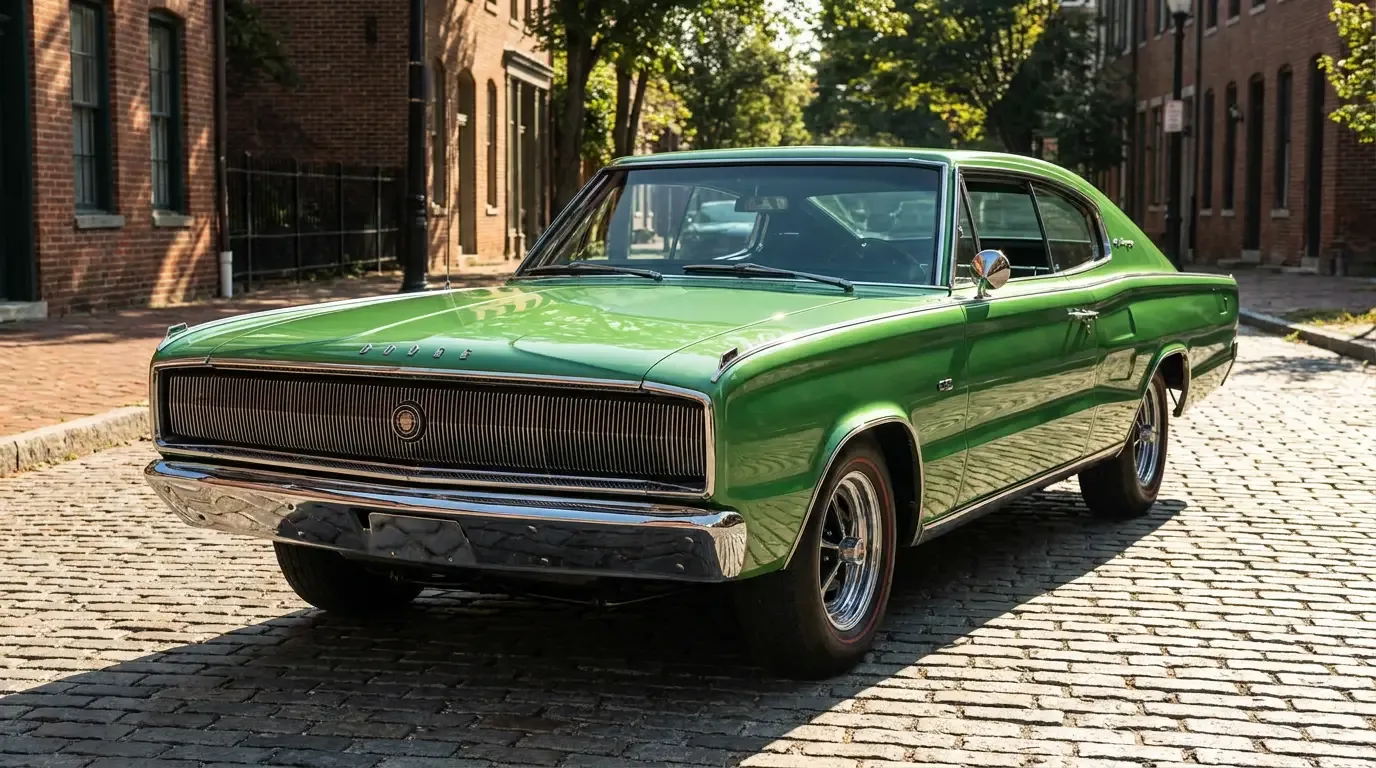
The 1967 Charger rarely gets discussed on its own terms. It sits in the shadow of the 1966 original, which introduced the fastback body everyone remembers, and it sits in the shadow of the 1968 redesign, which reinvented the car entirely on a new Coke-bottle body. That leaves the 1967 model looking, on the surface, like a placeholder year. The record does not support that read.
What actually changed for 1967
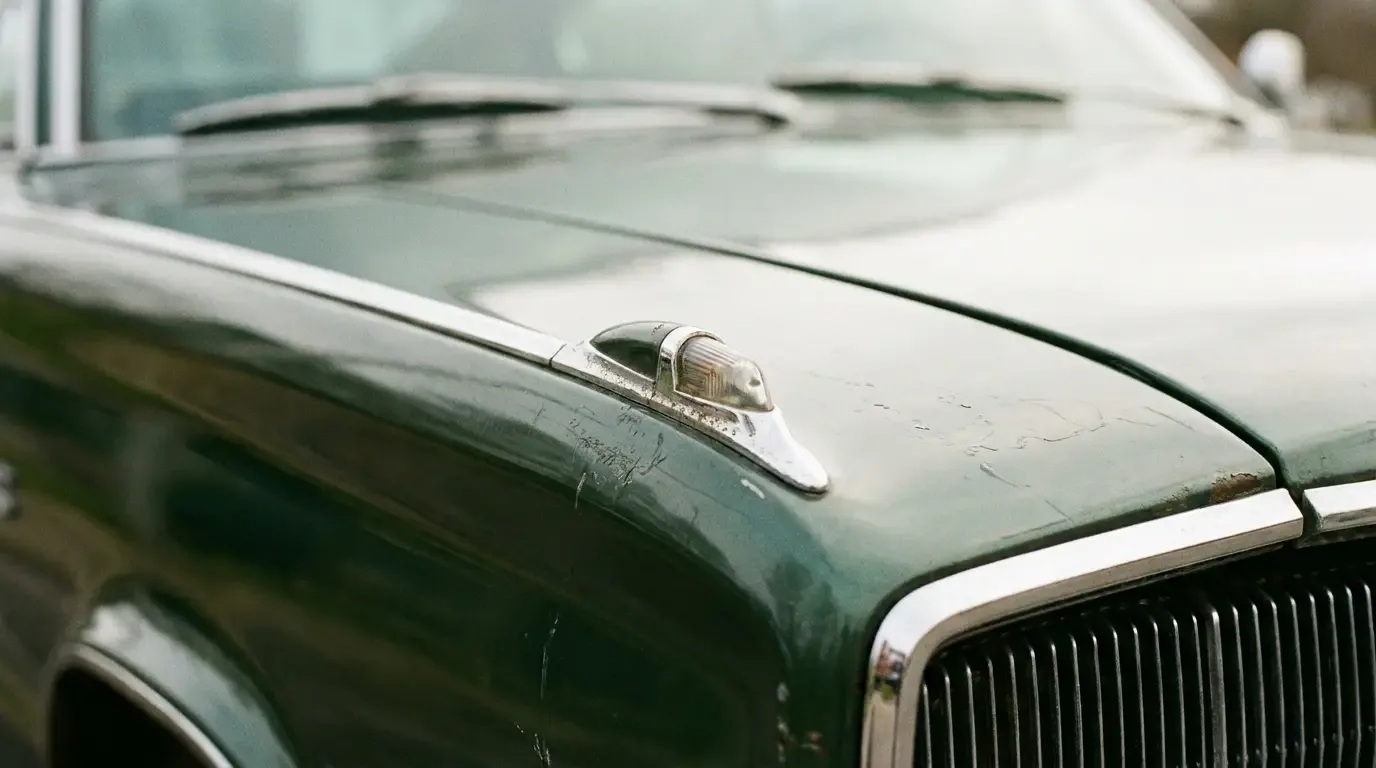
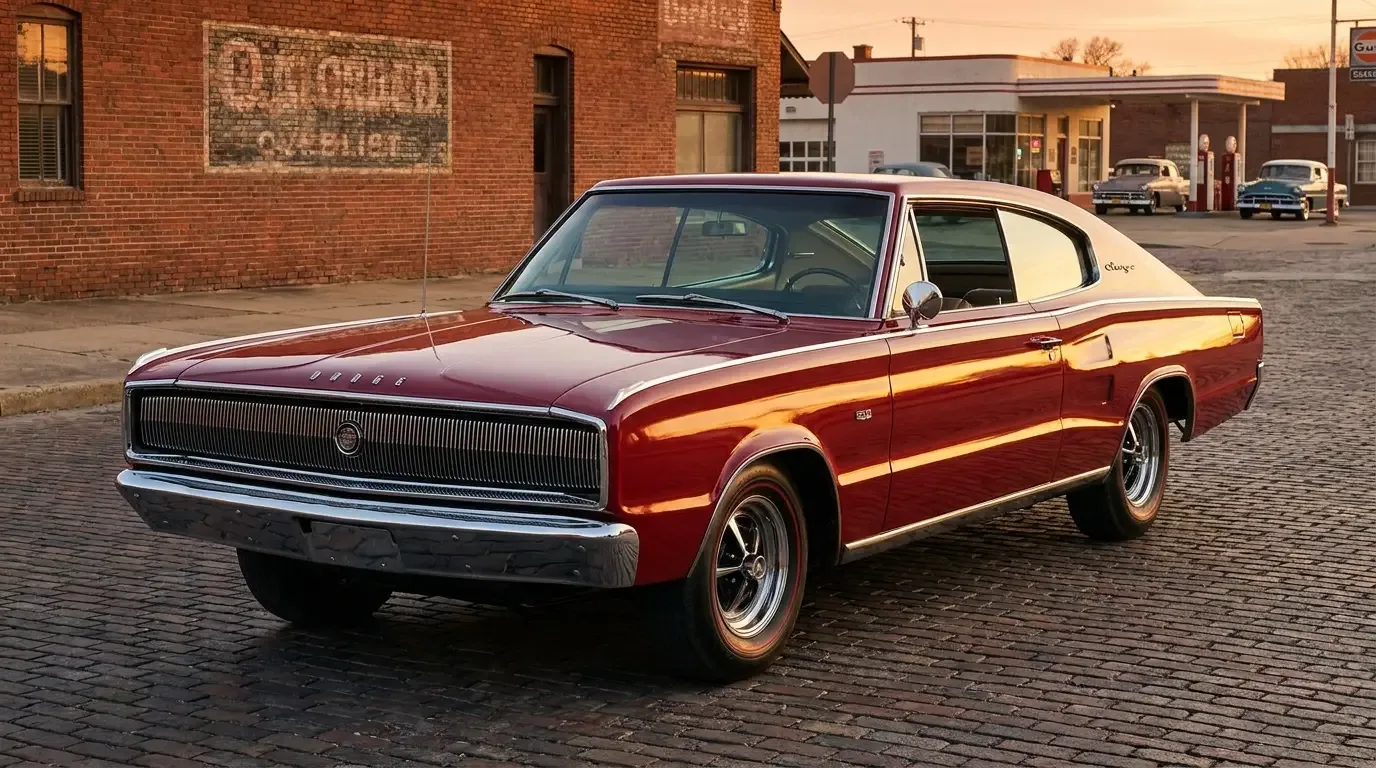
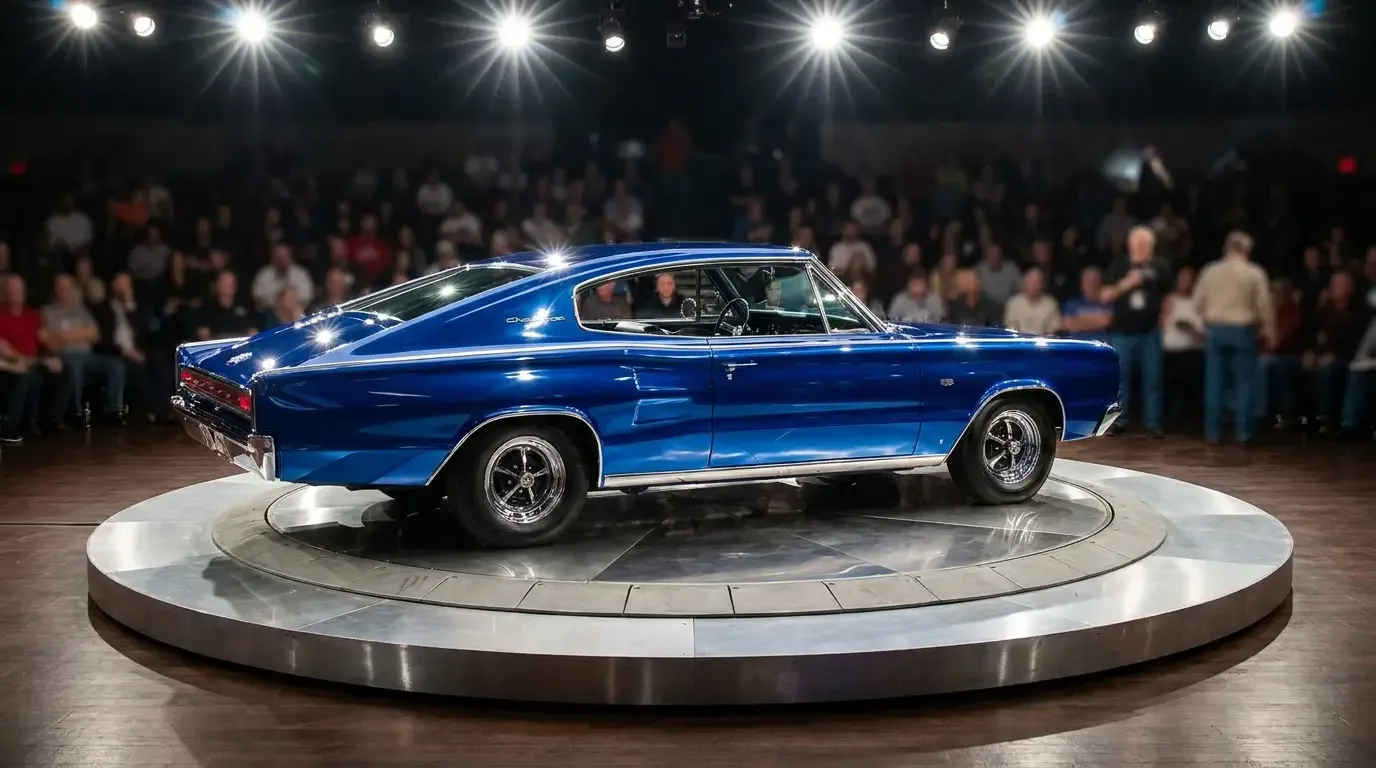
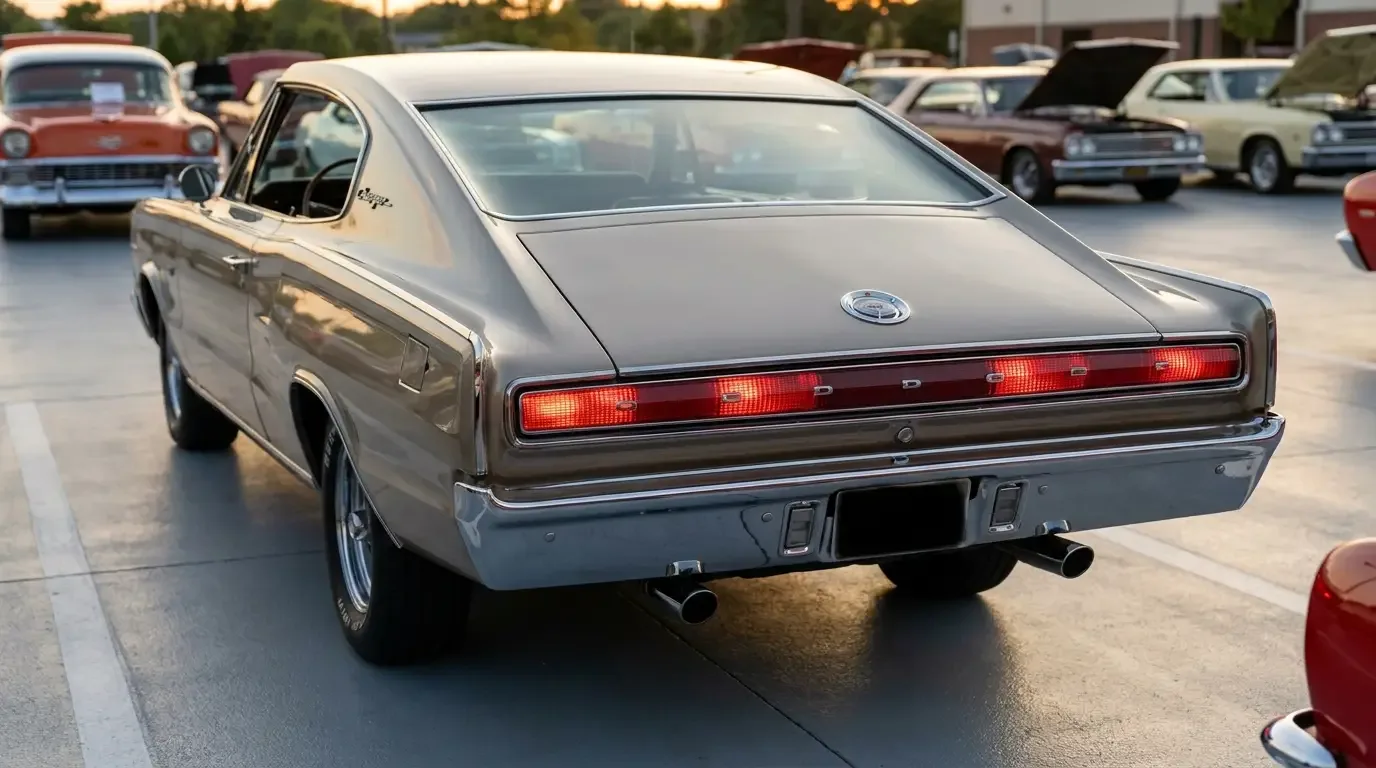
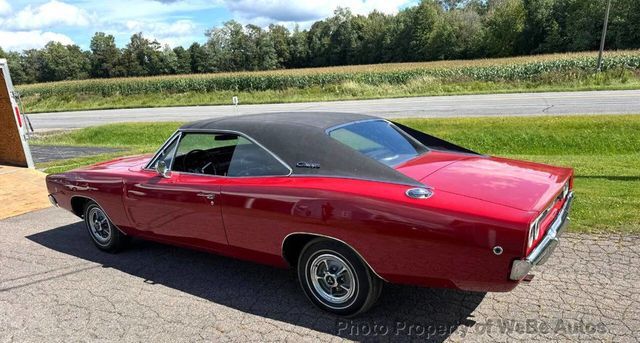
Dodge kept the fastback body essentially intact for the Charger's second year, which was the correct engineering decision given how expensive the original tooling had been and how well the shape had been received critically. The changes that did arrive were concentrated in trim and small details, with the same hidden headlights underneath. The clearest visual tell is a pair of new top-of-fender turn signal indicators added for 1967, along with minor grille and badging revisions and a newly available vinyl roof, all small enough that a casual observer at a car show today can easily mistake a 1967 for a 1966 unless they know exactly where to look.
The more consequential changes were mechanical and inside the cabin. For 1967 Dodge added the 440 Magnum big-block, rated at 375 hp, as a new engine option below the Hemi, while dropping the previous 361 V8 from the lineup; the 383 continued in 270 hp two-barrel and 325 hp four-barrel form. Inside, the full-length console that ran the whole cabin in 1966 was dropped in favor of a conventional shorter unit, a direct response to customer complaints that the long console made climbing into the rear buckets awkward. None of this was dramatic, but all of it mattered to the car's second-year positioning.
Option packaging shifted slightly too, with Dodge adjusting which trim and convenience items came bundled together based on what dealers reported customers actually ordering in 1966. That kind of quiet, data-driven adjustment rarely shows up in enthusiast retrospectives, but it's exactly the sort of change a factory historian looks for when trying to understand how a model was actually selling, as opposed to how the brochure said it should sell.
Why Dodge held the line on the design
Given the sales drop from 1966 to 1967, discussed at length in read on, it would have been reasonable for Dodge to consider a more aggressive mid-cycle refresh. They didn't, and the record suggests the reasoning was straightforward. The full redesign for 1968 was already well into development, and Chrysler's engineering resources were committed there rather than to a second overhaul of a body that had only been in production one year. Refreshing the 1967 model modestly and waiting for the planned 1968 redesign to address the car's broader market position made more sense than spending twice on tooling changes in consecutive years.
Why the 1967 is genuinely rarer, and quietly undervalued
The production numbers tell the real story here. First-year 1966 production came in at 37,344 units, while 1967 fell to 15,788, meaning a smaller pool of cars survives from the second model year despite the two cars sharing the vast majority of their sheet metal and mechanical layout. That scarcity has not translated into a proportional collector premium, largely because the 1967 model lacks the "first year" marketing hook that drives so much of the classic car market's pricing logic. Buyers chasing a first-generation Charger often default straight to the 1966 without seriously weighing how much rarer the following year's production actually was.
Part of that pattern is simple habit within the hobby. Collector culture tends to reward firsts, first year of a model, first year of an option, first year of a body style, almost regardless of how the actual production numbers shake out in later years. The 1967 Charger is a clean example of how that instinct can miss the more interesting story. It's not the debut, but it's the scarcer of the two cars, and a market that prices strictly on "first year" logic is leaving that fact on the table.
"The build record on a 1967 tells the same clear story a 1966's does, just with fewer surviving cars to compare it against. I'd rather have a well-documented 1967 than a questionable 1966 any day."
— Tom Ramirez
What separates a 1966 from a 1967 at a glance
| Detail | 1966 | 1967 |
|---|---|---|
| Quickest visual tell | No fender-top turn signals | Fender-top turn signal indicators added |
| Production | 37,344 units | 15,788 units |
| Engine lineup | 318, 361, 383, 426 Hemi | 361 dropped; 440 Magnum (375 hp) added |
| Console | Full-length front-to-rear console | Shorter conventional console |
| Body and roofline | Fastback | Same fastback body carried over |
For a buyer weighing the two years against each other, the case for a 1967 rests almost entirely on this rarity, paired with mechanical parity to the more celebrated 1966. If you're comparing actual cars for sale rather than just reading about the differences, it's worth taking a look at 1967 Dodge Chargers for sale to see how that scarcity shows up in current listings.
The broader lesson from the 1967 Charger is one that applies across a lot of the collector market. A quiet second model year, sitting between a celebrated debut and a landmark redesign, tends to get overlooked exactly because nothing about it makes headlines. Read the production numbers instead of the marketing narrative, and the 1967 looks like one of the better-kept secrets in the whole first-generation Charger story, a point worth remembering the next time the 1966 Charger Taillights story or any other detail-focused piece on this generation comes up in conversation.
For what it's worth, the factory record on the 1967 car is every bit as complete as the 1966 record, broadcast sheets, fender tags, and build documentation all follow the same conventions across both years. A well-documented 1967 tells you exactly as much about its own history as a well-documented 1966 does. The only real difference is how many people bother to ask the question in the first place.
Sources and notes
- Muscle Car Facts - 1967 Charger - confirmed the fender-top turn signals, the 440 Magnum added, the 361 dropped and the full-length console being replaced.
- Wikipedia - Dodge Charger - confirmed 1967 production of 15,788 units against 37,344 for 1966.
- Wikipedia - Dodge Charger (1966) - first-year figures and the carried-over fastback body.
- Automobile-Catalog - first-gen Charger production data - corroborated the two-year production totals.
- Hagerty - 1967 Dodge Charger valuation - context on how the 1967's scarcity is priced relative to the 1966.