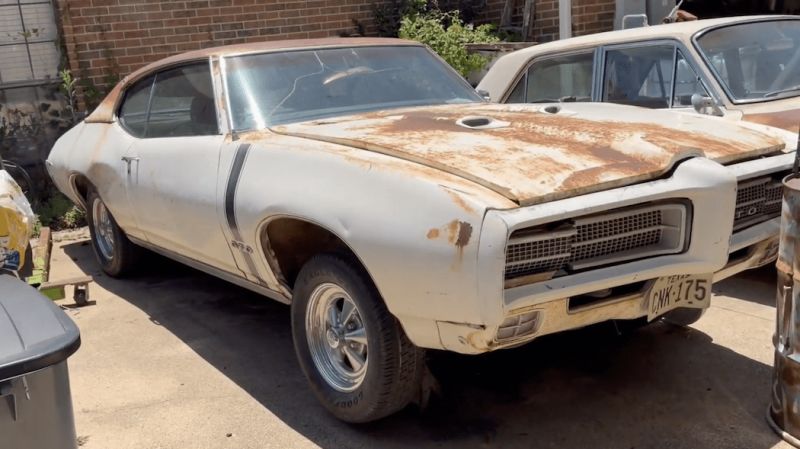
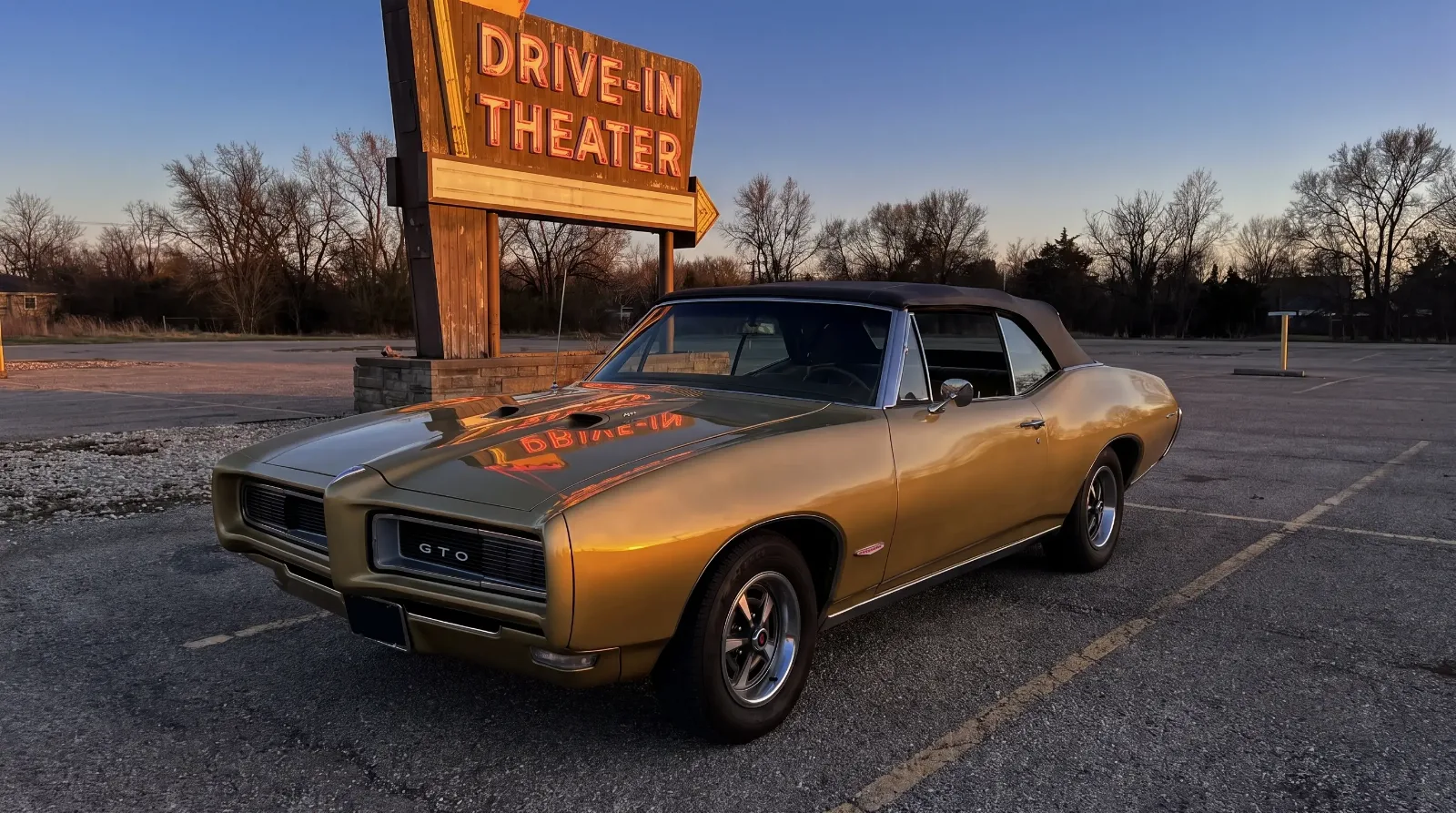
There's a photograph that circulates among GTO people of a 1968 convertible parked outside a drive-in, top down, the Endura nose catching the last light of a summer evening. Nobody knows who took it or who owned the car, but everyone who's spent time around this hobby has a version of that image in their head, because the 1968 GTO convertible is what the whole muscle car era looked like when it was at its most unguarded. Not a car built for a spec sheet argument. A car built for a Friday night with nowhere in particular to be.
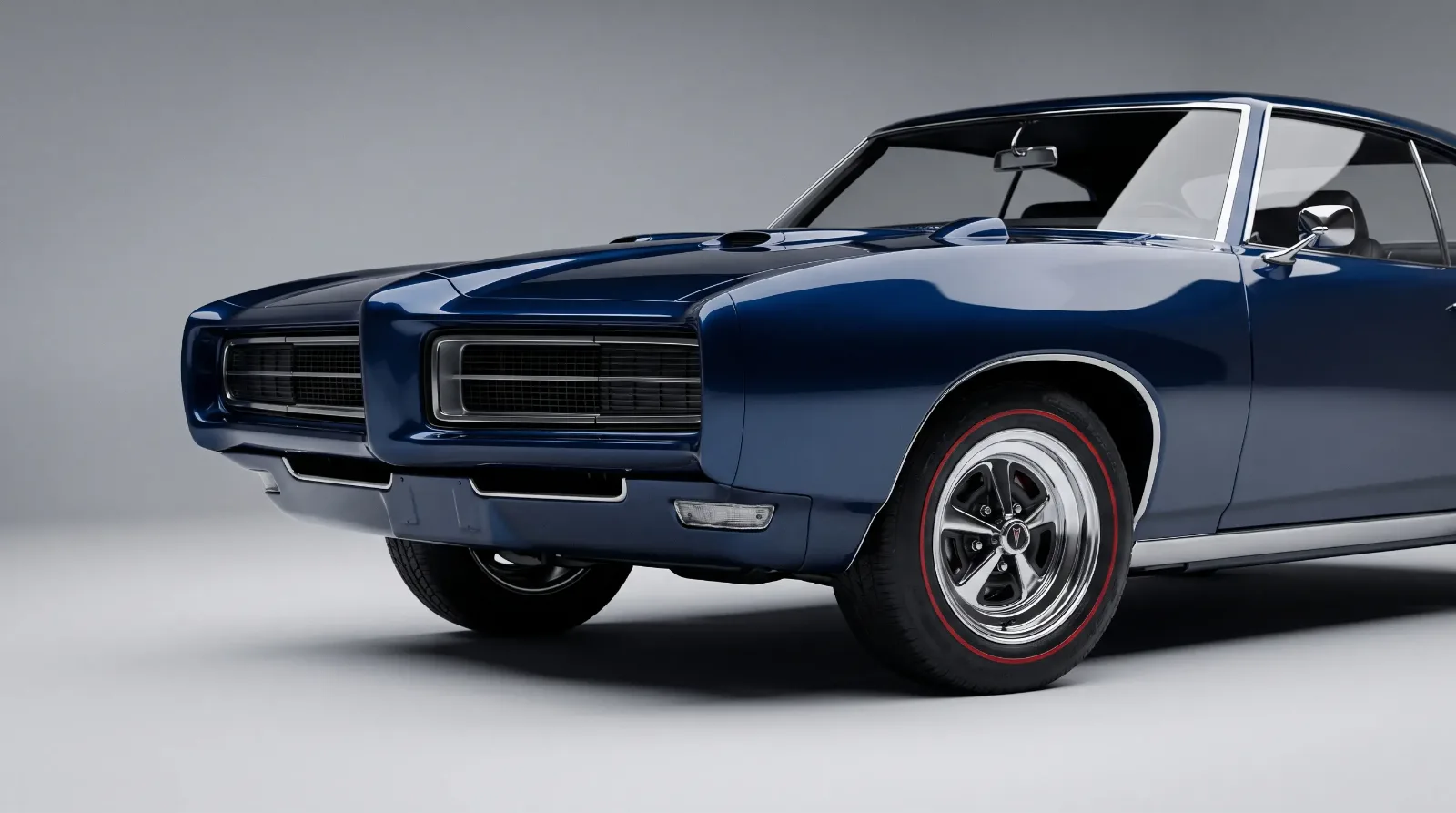
It arrived as part of the redesign that gave the hidden-headlight GTOs their new shape, and the convertible variant carried all of it, the Endura front end, the shortened wheelbase, the same engine choices as the hardtop, but with a roof that folded away and a structure reinforced to handle the loss of that roof's rigidity.
What it cost the car to lose its roof
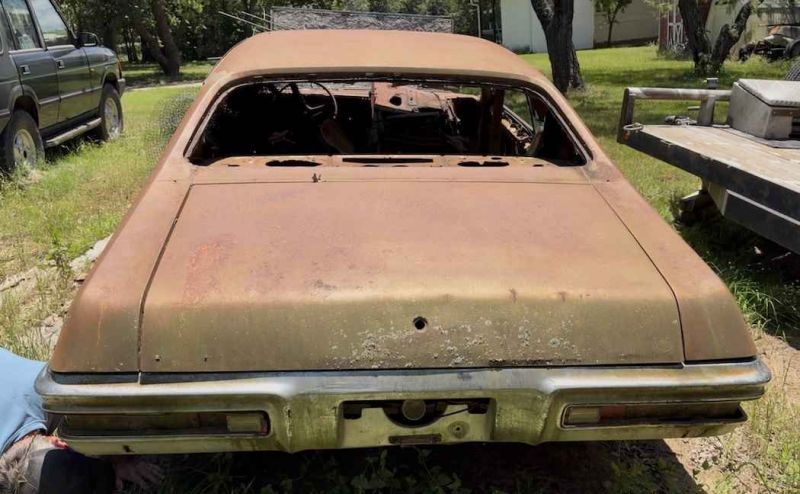
Convertibles never come free. Pontiac's engineers had to stiffen the body structure to compensate for the missing steel roof panel, adding weight and requiring reinforcement in the floor pan and rocker areas that the hardtop simply didn't need. That's part of why convertible GTOs from this era, when you find one that's spent decades in a humid climate, tend to show rust in different places than their hardtop siblings. The floors and rockers were carrying more of the structural load, and rust there isn't cosmetic. It's the difference between a car that's solid and a car that flexes when you drive it hard.
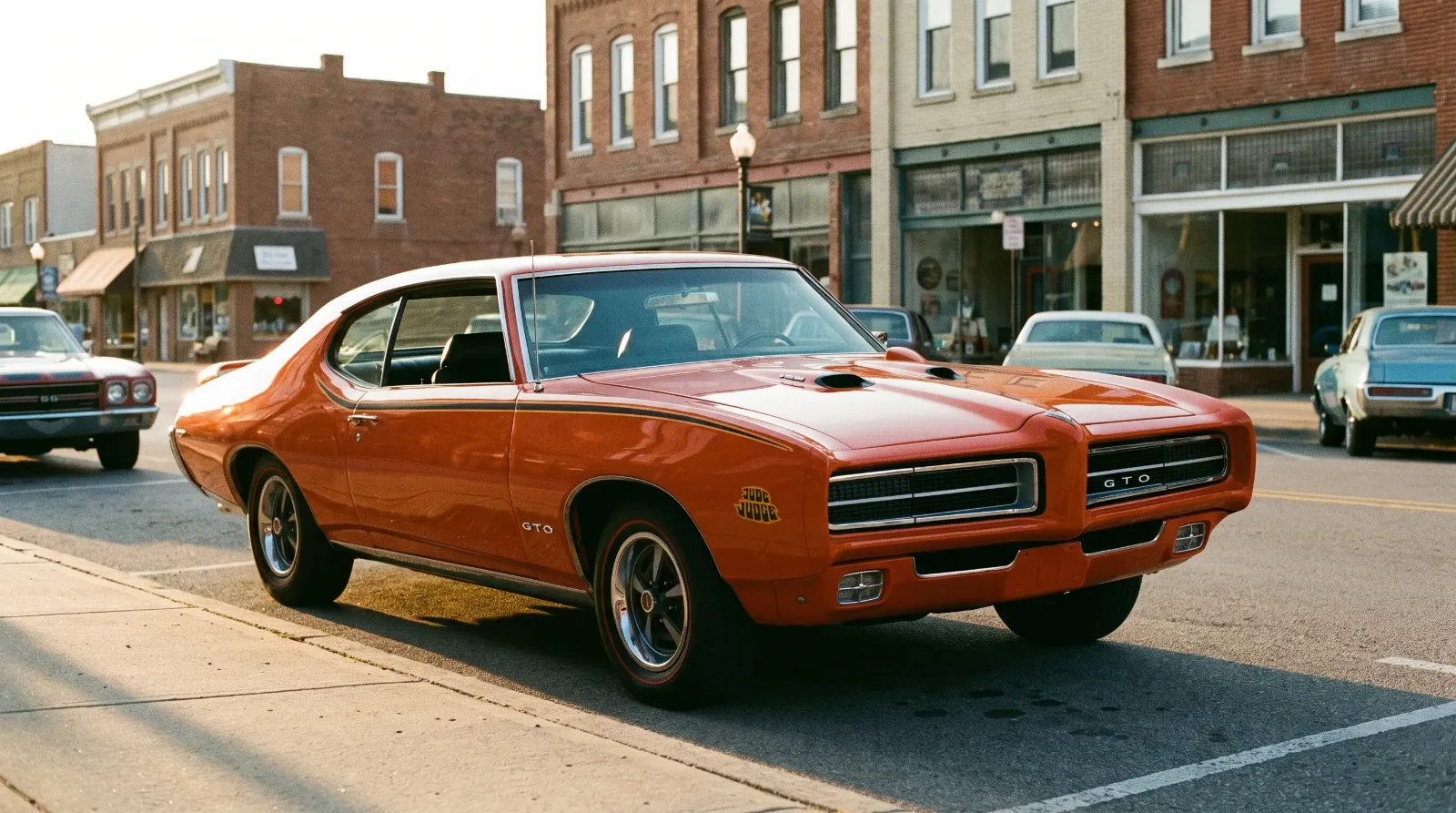
None of that stopped people from buying them. A convertible GTO in 1968 was a statement in a way the hardtop wasn't, a car that said the owner wanted to be seen as much as they wanted to go fast. Pontiac built 9,980 GTO convertibles for 1968 against 77,704 hardtops, out of 87,684 total GTOs that year, and that lopsided split is part of why the open cars have held a certain premium in the collector market ever since.
💡 Did You Know?
Convertible GTOs from this era used a different top mechanism and boot arrangement than many of their intermediate competitors, designed to keep the folded top from disrupting the clean lines Pontiac's stylists had worked so hard to build into the Endura-nosed body.
The weight of a top going up and down
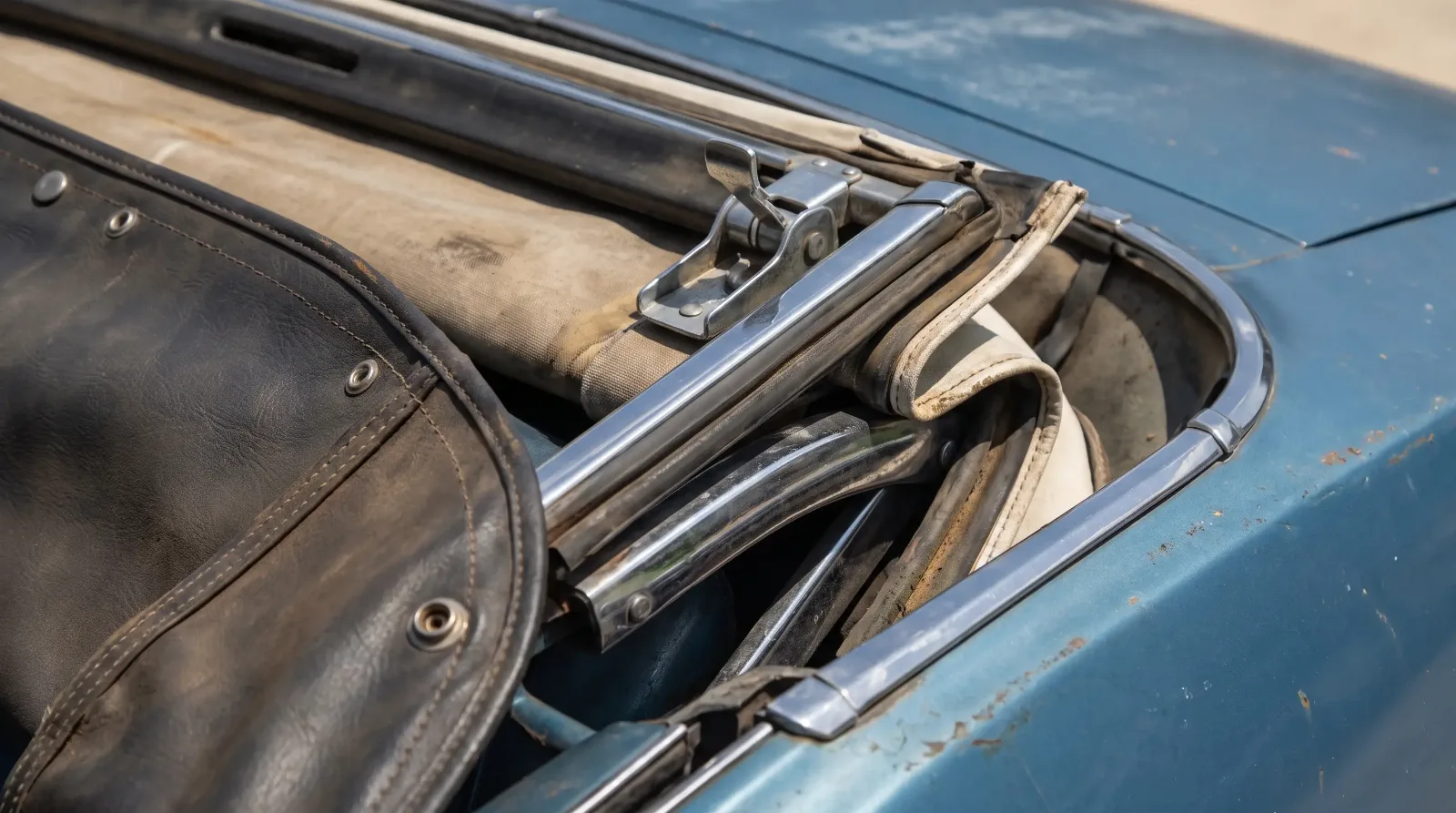
There's a small ritual to a car like this that people who never owned one tend to overlook. Lowering the top on a 1968 GTO wasn't instant the way it is on a modern car with a button and a motor doing all the work in seconds. It took a minute, sometimes closer to two if the mechanism was stiff or a little out of adjustment, unlatching the header at the windshield, working the folding frame back into the boot, snapping the boot cover into place over it. That minute mattered. It was a small, physical pause between wherever you'd been and wherever the drive was about to take you, and people who owned these cars new still remember that pause specifically, the way you remember a doorway more than the room on either side of it.
What owning one actually felt like
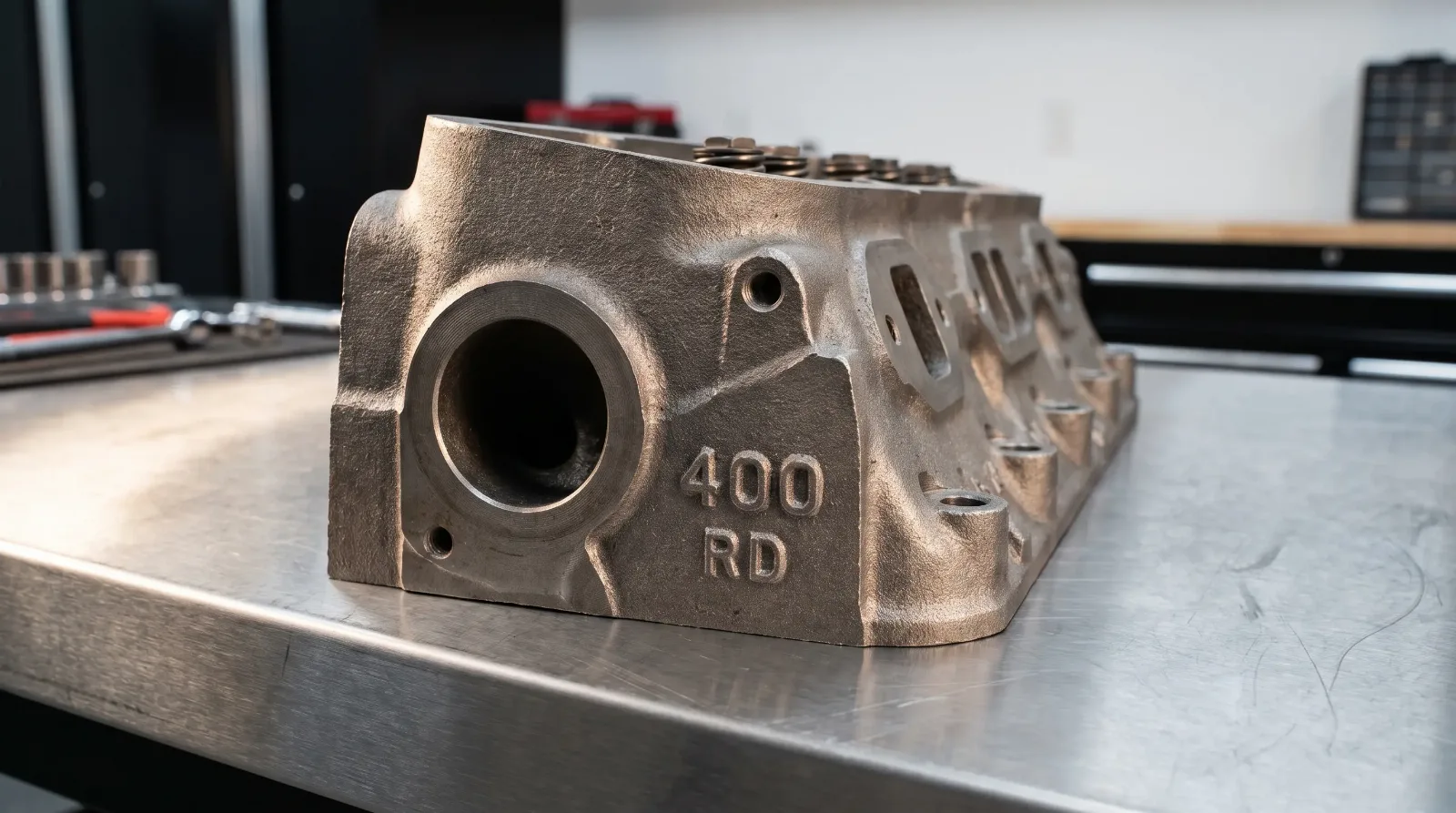
People who grew up around these cars talk less about the horsepower and more about the sound changing character with the top down, the way a 400 cubic inch V8 at wide open throttle feels entirely different when there's no roof between the exhaust note and your ears. There's a specific kind of memory that comes up again and again in conversations with longtime owners: driving one of these on a summer night with the windows down isn't really about speed. It's about the whole sensory experience arriving at once, the heat off the pavement, the exhaust note bouncing off nothing because there's nothing above you to bounce it back.
A woman who wrote in about her father's 1968 convertible remembered something quieter than any of that. She remembered riding in the back seat as a child on the way to her grandmother's house, the wind pulling her hair loose from its ribbon somewhere around the second stoplight, and her father not saying anything about it, just watching her in the rearview mirror and smiling. She said she didn't understand until she was much older that the car itself had very little to do with why that memory stayed with her. It was just the vehicle, in the most literal sense, that carried an ordinary Sunday into something she still thinks about decades later.
"A man who bought his 1968 convertible new told me the thing he remembered most wasn't the quarter mile time. It was driving it home from the dealership the first night with the top down, and how every person on the street turned to look. He said that feeling never fully went away, even forty years later."
— Nora Beckett
Why they matter to the story now
The convertible represents something the hardtop, for all its performance credentials, doesn't quite capture: the emotional register the GTO occupied in American culture at that moment. It wasn't only a fast car. It was a car people wanted to be photographed in, to arrive somewhere in, to remember a specific summer through. That's a harder thing to put a number on than horsepower or quarter mile times, but it's just as real a part of why these cars still matter to people who weren't even alive when they were built.
Owning one now carries a slightly different weight than owning the hardtop does, too. A convertible asks more of its owner, more careful storage, more attention to the top itself, more thought about where and when to drive it. That extra care seems to deepen the attachment rather than discourage it. People who own these convertibles tend to talk about them less like machines and more like something closer to a family member that occasionally needs looking after, which says something about how thoroughly this particular car earned its place in the people who kept it.
What to look for if you're chasing one now
Anyone shopping a 1968 convertible today should start with the floors and rockers before anything else, since that's where the structural cost of losing the roof shows up first when a car has spent time in a wet climate. A soft spot under the carpet or a rocker panel that sounds different when you tap it than the one on the opposite side of the car is worth taking seriously, even if the paint and top look excellent. The mechanism itself is worth cycling by hand if the seller allows it, checking that the boot latches align cleanly and that the frame doesn't bind partway through the fold. None of that is dramatic to inspect. It's just patient, and patience with a car like this tends to pay for itself.
If you want to see where that emotional pull peaks in the model's own history, read on for why so many longtime owners point to the following model year as the sweet spot. And if a convertible from this era has you thinking about ownership rather than just nostalgia, you can browse GTO listings to see what's currently available.