
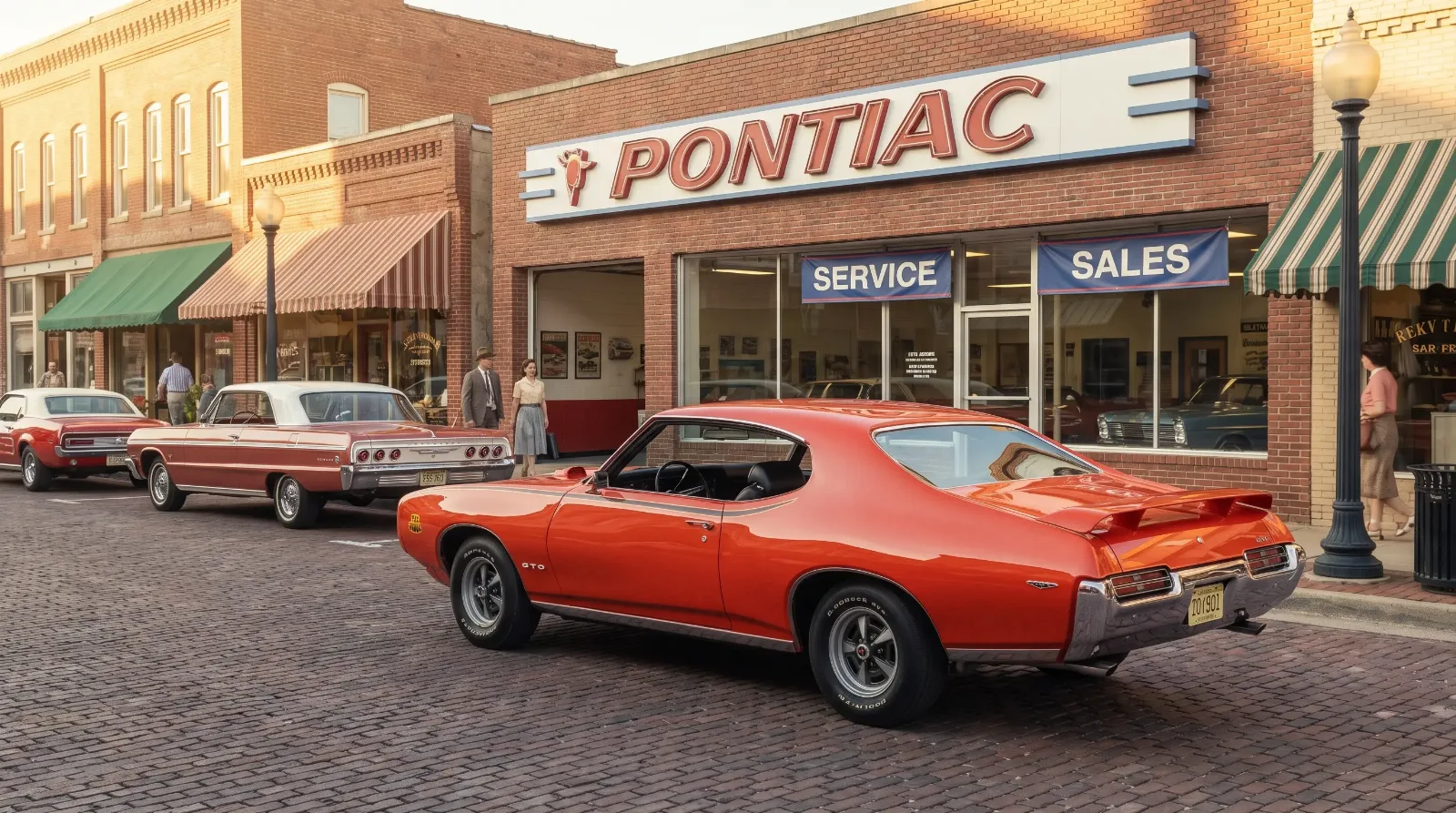
A convoy of Carousel Red Pontiacs rolling into a small town square in 1969 was not something anyone in that town had planned for, and that was exactly the point. As dealer and club histories remember it, Pontiac and its dealer network pushed Judges out to regional promotions and public events that summer, hitting towns that rarely saw this kind of spectacle roll through Main Street, and the reaction it generated said as much about small-town America in 1969 as it did about the car itself.
Car Features
7 min read
The 1969 Judge Caravan That Shocked Small-Town America
A convoy of Carousel Red Judges rolling into a small town square in 1969 was not something anyone there had planned for.
A marketing idea born out of necessity
The Judge launched as a mid-year option in the spring of 1969, introduced to the press at Riverside alongside the new Trans Am, which meant it had already missed the big annual auto show circuit where most new performance packages got their introduction. Jim Wangers and the rest of Pontiac's promotional team leaned on dealer-level events and regional appearances instead, letting the car sell itself to crowds who might never make it to a major auto show. It was a grassroots answer to a timing problem, and it worked partly because the car itself was strange enough to generate word of mouth wherever it stopped.
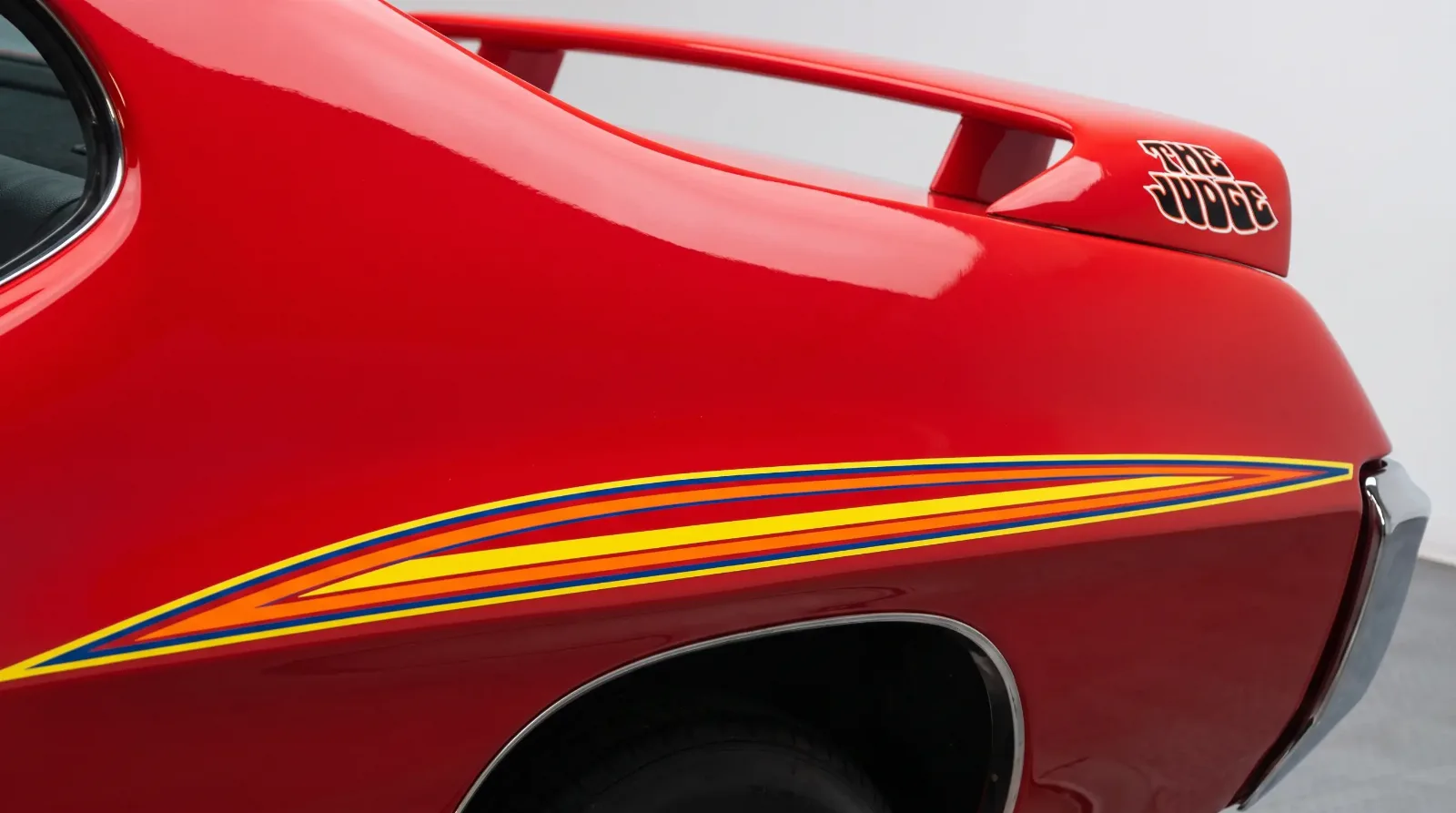
The tour hit dealerships in towns across the Midwest and beyond, often coordinated with local radio stations that ran contests and giveaways tied to the car's arrival. Local newspapers covered the stops the way they'd cover a minor celebrity appearance, printing photos of the multicolor stripe package and the spoiler under headlines that leaned hard into the "Here Comes the Judge" branding lifted straight from the GTO Judge story Pontiac had already been telling in national advertising.
What small-town crowds actually saw
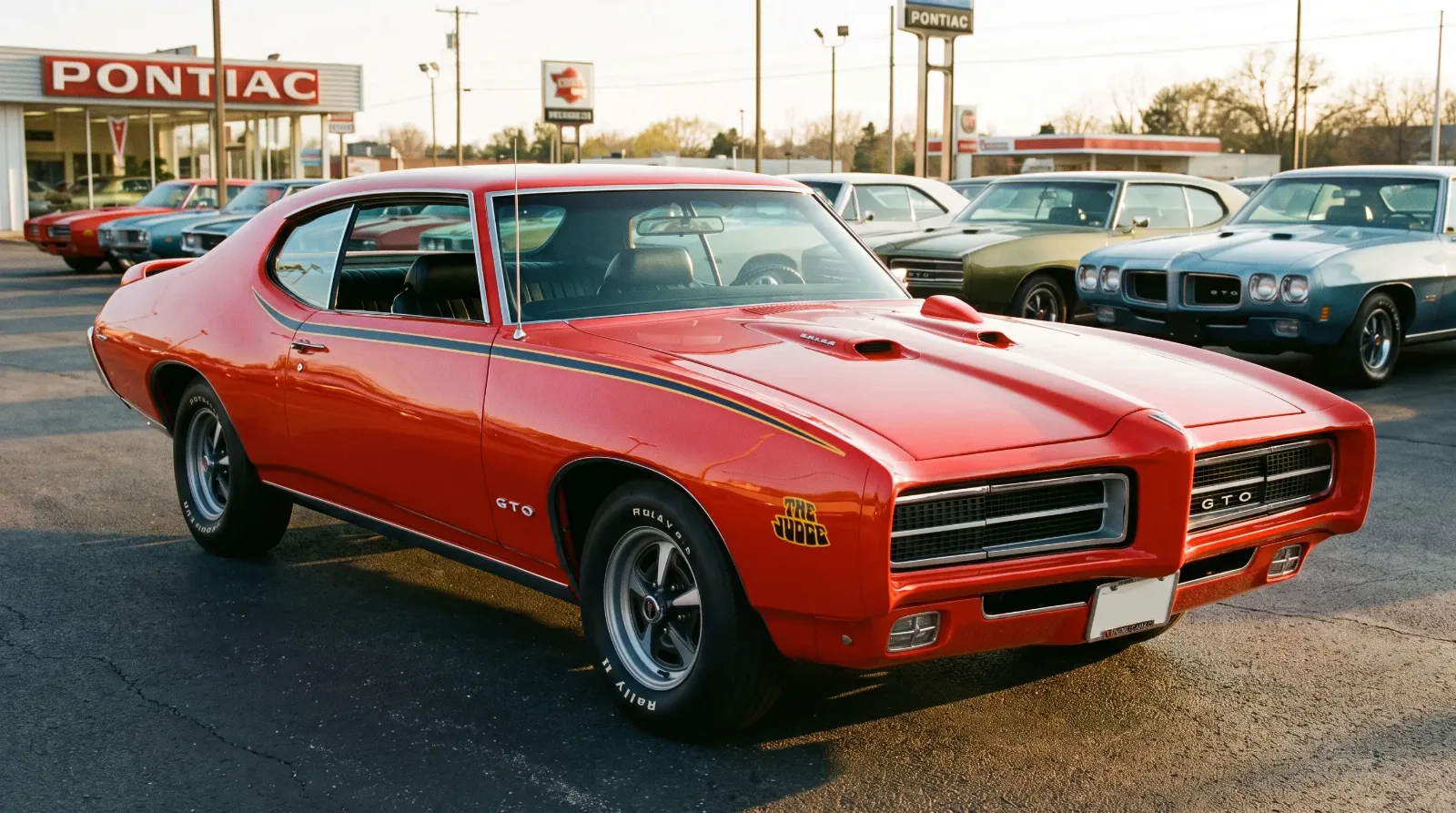
For a lot of these towns, this was the closest thing to a factory unveiling most residents would ever witness in person. The cars themselves were loud in a way that had nothing to do with the exhaust note, the decal package alone made them look like nothing else that had ever parked on a courthouse square. Kids climbed on hoods for photos, local dealers used the crowd draw to move inventory on regular GTOs sitting on the lot, and for one afternoon a small dealership in a town with a population under ten thousand got the kind of foot traffic normally reserved for a county fair.
What made the reaction genuine rather than manufactured was that the Judge really did look different from anything most attendees had seen up close. Magazine photos and television ads only carried so much impact. Standing next to the car, seeing the Carousel Red paint and the spoiler in person, hearing the Ram Air III idle, that was a different kind of impression, and Pontiac understood that direct contact would do more for word-of-mouth sales in these markets than another print ad ever could.
The people behind the wheel
Driving one of these cars across multiple states for a summer wasn't glamorous work despite how it looked from the sidewalk. The drivers, often young Pontiac employees or contracted promotional staff, spent long days on two-lane highways between stops, dealing with the same overheating and maintenance headaches any owner of a high-strung 1969 muscle car dealt with, just with a tighter schedule and a company reputation riding on every stop going smoothly. A blown radiator hose in the middle of a promotional route wasn't just an inconvenience, it was a missed appearance and a disappointed dealer who'd spent a week promoting the event locally.
Some of those drivers later became the kind of source material historians rely on for details that never made it into official Pontiac literature, the actual mileage covered, which towns generated the biggest crowds, which stops nearly got cancelled over mechanical trouble. Their accounts, collected decades later by enthusiast clubs and GTO historians, fill in gaps that corporate records from the era simply didn't bother documenting. Pontiac was focused on the sales results, not on preserving the day-to-day texture of the tour for future researchers.
"You could feel the difference in a town that had never seen a car like this up close. It wasn't just a sale, it was an event, and the dealer knew it the second the caravan pulled in."
Patrick Walsh
Why the caravan mattered beyond a single summer
The direct sales impact of the tour is hard to measure precisely this far removed from it, dealership records from small-town Pontiac franchises in 1969 aren't exactly a well-preserved archive. But the cultural impact is easier to trace through the stories that survived. Communities that hosted a caravan stop often had at least one local buyer who ordered a Judge specifically because of that afternoon, and those cars sometimes stayed in the same family or the same small town for decades, treated less as a vehicle and more as a piece of local history tied to a specific memorable day.
That kind of grassroots marketing, meeting people where they actually lived rather than relying entirely on national advertising, feels almost quaint against how car companies market performance vehicles today. There's something honest about a strategy built on simply showing up and letting a genuinely striking car do the persuading in person. Pontiac didn't need a celebrity endorsement or a slick television spot for these particular sales. It needed a Carousel Red Judge parked in front of the hardware store for an afternoon.
What survives in memory today
Club newsletters and regional GTO gatherings still trade stories about the caravan decades later, usually secondhand by now, passed from a father who remembered the day to a son who's since become the family's designated keeper of the car. A few towns have tried to recreate the moment for anniversary events, gathering local Judges and staging a modern version of the original stop, though the novelty of the original event is impossible to fully recapture once everyone already knows what a Judge looks like. In 1969, nobody in these towns had context for what they were seeing. That first-contact surprise is not something a reenactment can manufacture no matter how many correctly restored cars show up.
What the caravan really demonstrated, in hindsight, was how much cultural distance existed between Detroit and the rest of the country at that moment, and how a single well-executed promotional idea could bridge it for an afternoon. Pontiac wasn't trying to convince these towns that muscle cars existed. Everyone already knew that. It was trying to convince them that Pontiac specifically, and this specific car, was worth their attention over the GTOs and Chevelles and Mustangs already sitting on competing lots. Judging by the sales bumps dealers reported and the stories that outlived the tour itself, that bet paid off.
What came next
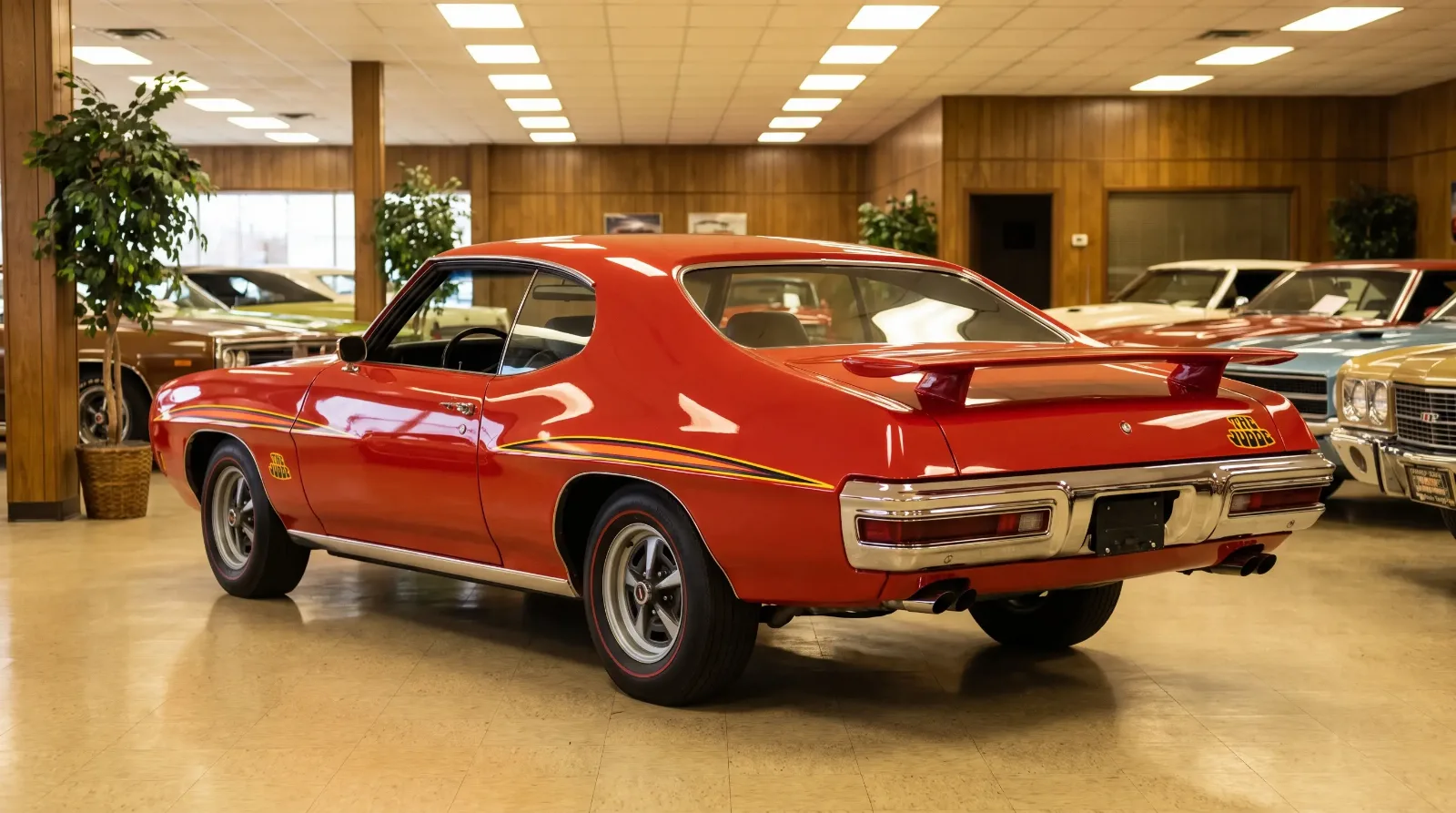
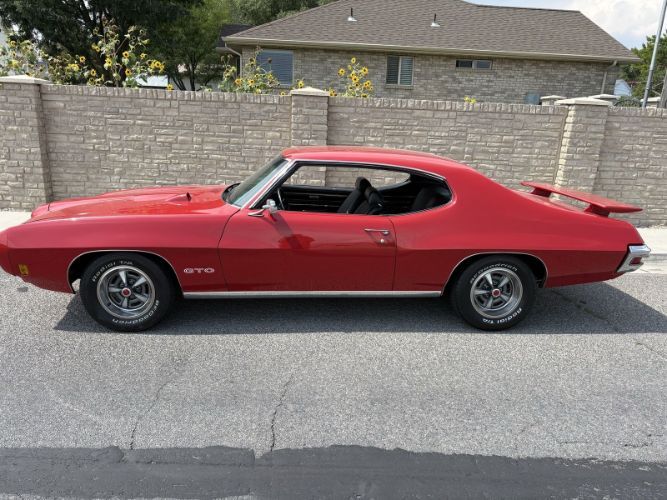
By the time the caravan wrapped up its run, Pontiac was already deep into planning the following model year's version of the Judge, which would bring a bigger rear wing and an even bolder approach to the color palette. The 1970 car built directly on the momentum the caravan tour and the broader 1969 launch had generated, refining the formula rather than reinventing it. For the details on how that second year of the Judge evolved, including the styling changes that made the 1970 version instantly recognizable next to its predecessor, read on.
Sources and notes
Related Reading
Have a
Pontiac GTO
for Sale?
Reach thousands of serious classic car collectors across the US.
Sell It Here →
Are You a Classic Car Dealer?
List your full inventory and connect with targeted classic car buyers.
Join as a Dealer →

About the author
Patrick Walsh
Automotive journalist covering classic car shows, events, and the enthusiast community across North America.
Related Listings - Pontiac GTO
Comments
Be the first to comment on this article.