
Pontiac built the original Judge for one reason: to sell a cheaper GTO to buyers who wanted the image without the full sticker price. The plan worked, but the production sheet that resulted from it is more layered than the marketing slogans let on. Reading the actual specs of the 1969 Judge tells a different story than the "Here Comes the Judge" ad copy, and it is worth separating the two.
Car Features
7 min read
1969 GTO Judge Specs and the Colors That Made It Loud
The 1969 Judge was a budget option that Pontiac's marketing turned into a legend. Here is what the build sheet actually says.
The base package and what it actually changed
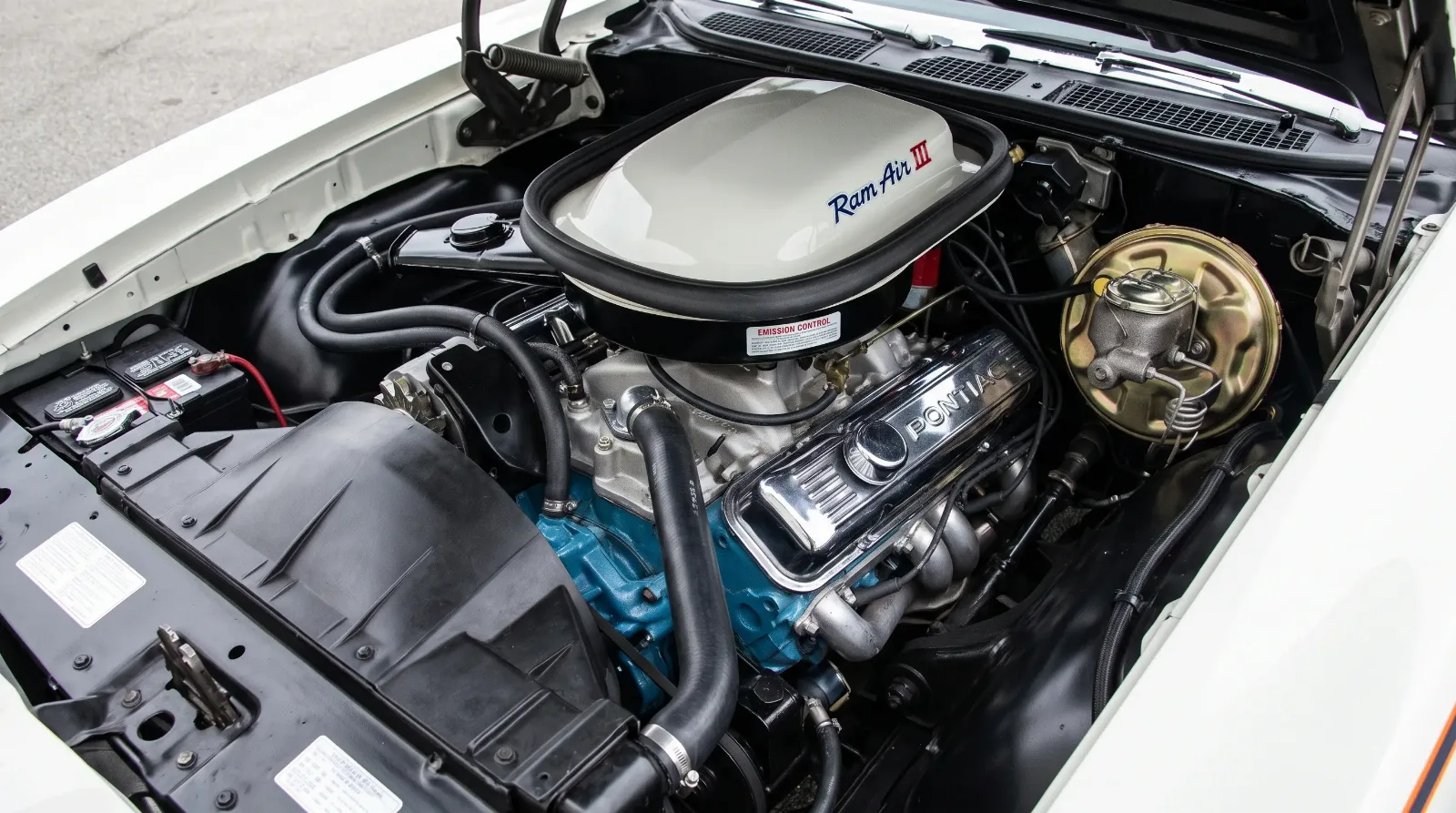
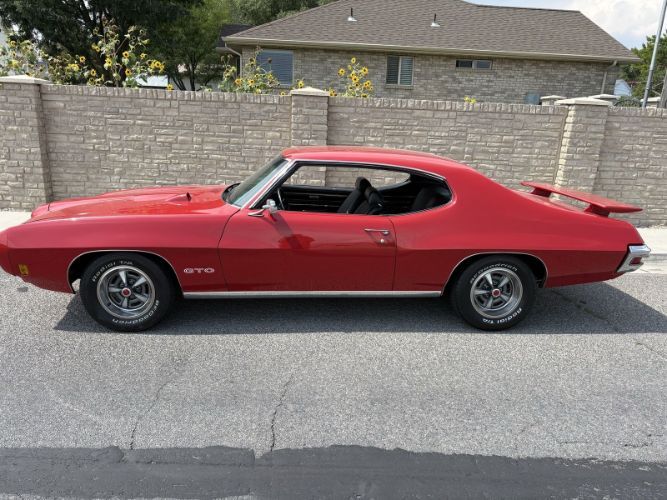
The Judge arrived in early 1969 as a mid-year option, RPO WT1, stacked on top of an existing GTO. It was not a new model. Buyers ordered a GTO hardtop or convertible, then added the Judge package, which brought the Ram Air III 400 cubic inch V8 as standard equipment, a blacked-out grille, a rear spoiler, Rally II wheels without trim rings, and the multicolor decal treatment that made the car impossible to miss in a parking lot. Pontiac's own literature listed the Ram Air III at 366 horsepower and 445 lb-ft of torque, numbers that were already generous by 1969 standards and that most owners believed understated the real output.
The optional Ram Air IV pushed further, with a taller-rise aluminum intake, round-port heads, and a factory rating of 370 horsepower, a figure that dyno-tested cars have long argued was conservative (some enthusiasts and period testers put the real number closer to 450). Judges built with Ram Air IV were a small minority of the run, and that scarcity is a big part of why the option commands such a premium today.
Transmission and rear axle choices
Three transmissions were available: a Muncie four-speed manual, a two-speed automatic, and later in the run the three-speed Turbo Hydra-Matic 400. Rear axle ratios ranged from a fairly tame 3.23 for highway cruising up to a 4.33 Safe-T-Track for buyers who cared more about the stoplight than the interstate. The 3.55 and 3.90 ratios sat in between and were the most commonly ordered combinations on cars that saw regular street use. A close look at a build sheet will usually tell you more about how a particular Judge was actually driven than any anecdote from a seller.
| Spec | 1969 GTO Judge |
|---|---|
| Base engine | Ram Air III 400 V8, 366 hp gross |
| Optional engine | Ram Air IV 400 V8, 370 hp gross |
| Transmissions | 4-speed Muncie manual, 2-speed and 3-speed automatic |
| Rear axle range | 3.23 to 4.33 |
| Wheels | Rally II, no trim rings |
| Standard color | Carousel Red, with other GTO colors optional |
The colors that made the Judge loud
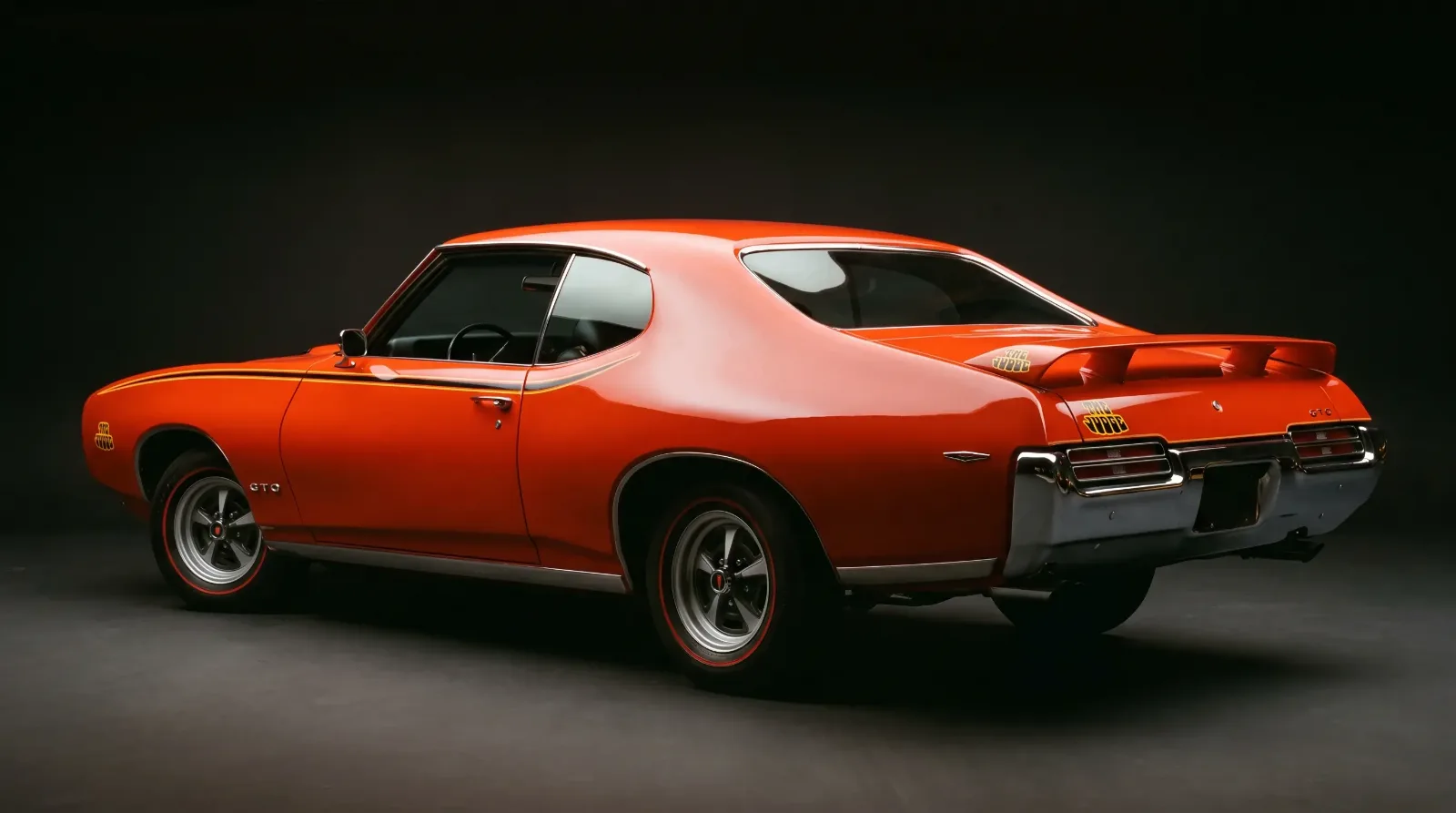
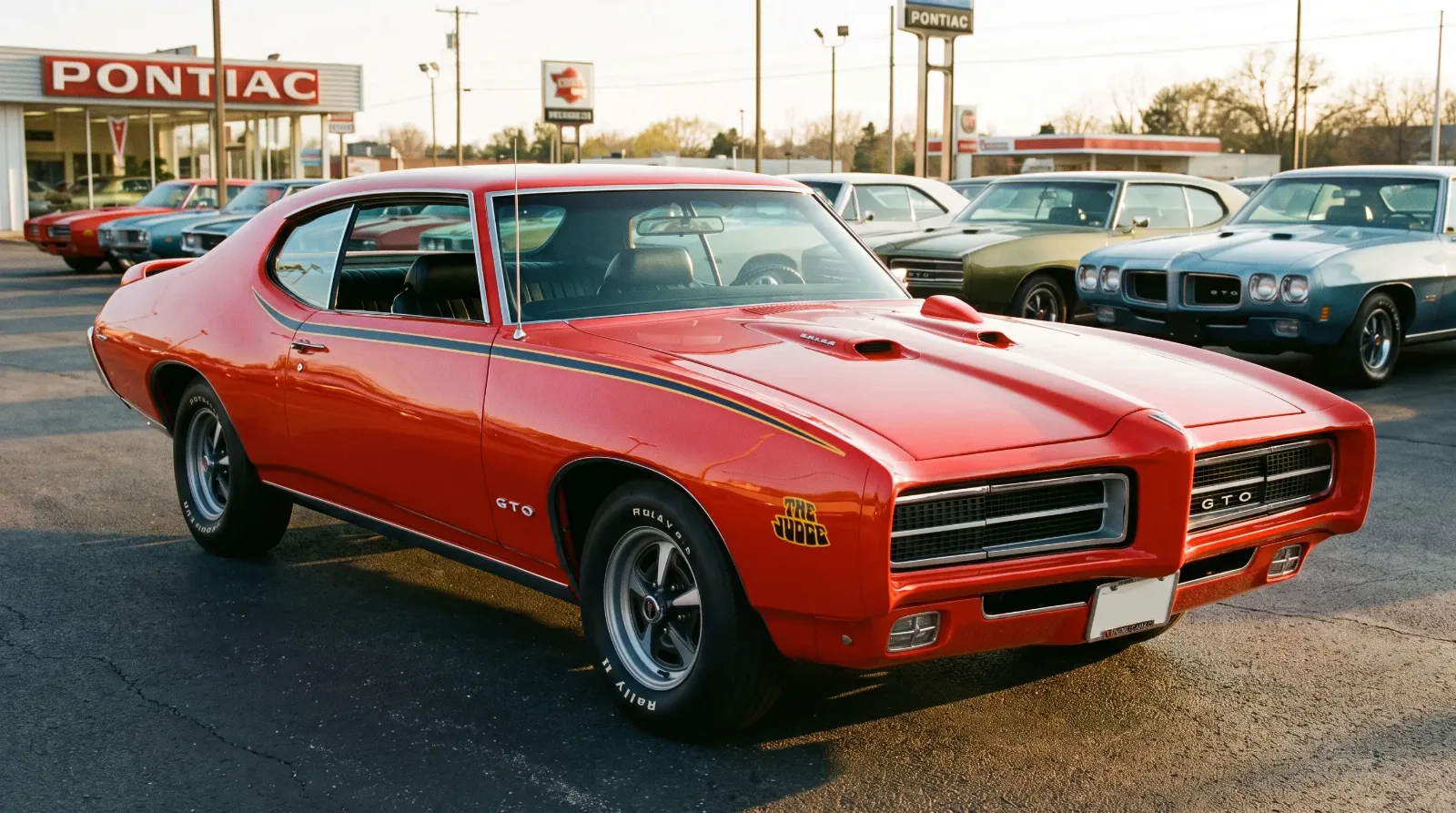
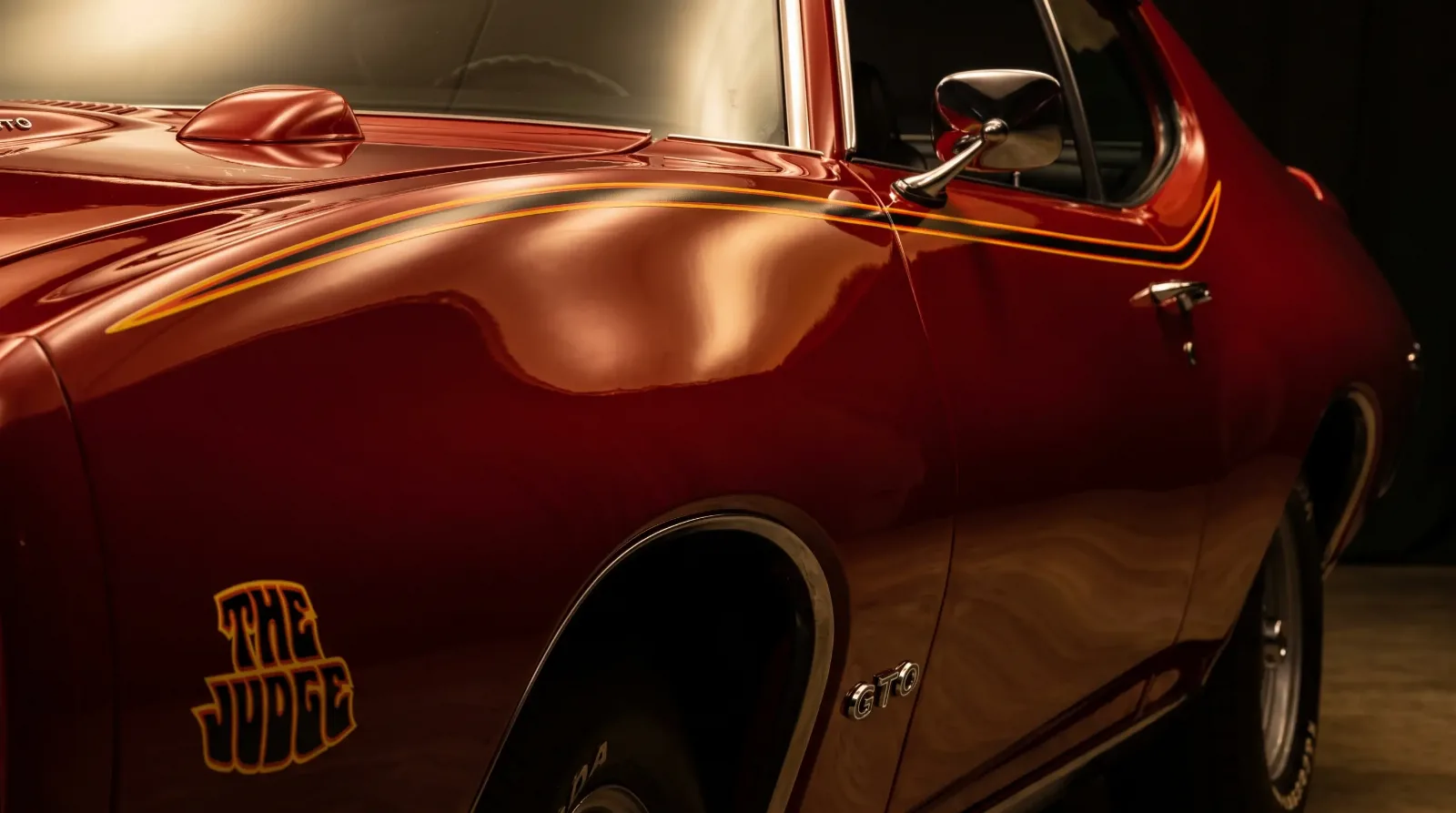
Carousel Red is the color everyone remembers, and Pontiac used it in nearly every piece of Judge advertising that year, but it was never the only choice. Buyers could order a Judge in any color offered on the standard GTO, including Verdoro Green, Palladium Silver, and Warwick Blue. What made even a black or white Judge stand out was the decal package: a multicolor stripe running along the lower body, "The Judge" script on the rear spoiler, and a matching decal on the trunk lid. That graphics package did as much visual work as the paint color itself. If you want the deeper story of why Carousel Red became the signature shade, read on.
Interior and options that get overlooked
Inside, a 1969 Judge could be ordered with the same range of comfort options as any GTO: bucket seats or a bench, a console, the Rally gauge cluster with tachometer, and factory air conditioning, though air conditioning was rare on a car marketed as a budget performance package. Power steering and power front disc brakes were both available and worth checking for on any car you are evaluating, since a Judge without power assist is a genuinely different driving experience than one equipped with it. The hood-mounted tachometer, a factory option most buyers skipped, is one of the more distinctive pieces buyers look for when confirming a car's build sheet against what is sitting in front of them.
"The build sheet tells you the truth a repaint never will. Match the paint code, the engine code, and the axle ratio before you fall in love with the decals."
Tom Ramirez
Why the specs matter more than the legend
The Judge earned its reputation through marketing as much as performance, and that is fine, it was a legitimately quick car for the money. But the specs are what separate a documented, correctly built example from a car wearing decals and a name it never earned from the factory. Anyone researching a Judge should start with the cowl tag, the engine code stamped on the block, and the trim tag before trusting a seller's description. For the full arc of how the option package came to exist and what came before it, the Pontiac GTO story lays out the years leading up to 1969 in more detail than a single spec sheet ever could.
The Judge was never meant to be a halo car in the way the Ram Air IV convertibles are treated today. It was a value play that Pontiac's marketing department turned into a cultural moment, and the surviving cars now carry both identities at once. If you are shopping rather than researching, you can browse GTO listings to see how current examples compare on documentation and originality. For the fuller narrative behind the option package itself, the GTO Judge story covers how a mid-year budget option became one of the most recognized names in muscle car history.
Production numbers and what they mean today
Pontiac built 6,833 Judges for the 1969 model year, a small fraction of total GTO production but a large enough run that unrestored survivors do still turn up at estate sales and in long-term storage. Convertibles were far rarer than hardtops, with just 108 built, and a documented Ram Air IV convertible is one of the genuine unicorns of the muscle car era. The gap between total Judge production and the number of cars with fully matching numbers today is wide, partly from attrition and partly because the option was inexpensive enough to add later with reproduction parts. That gap is exactly why documentation carries so much weight in this market.
Pricing at the time undercuts the myth a little. The Judge option itself added a modest amount to the price of a GTO, and Pontiac's intent was to build volume among younger buyers who wanted the fastest car they could finance. Dealers reported that the package sold best in regions with strong drag racing culture, where the Ram Air III's standard status meant no negotiating over engine choice. A buyer walked in, ordered the decals and the spoiler, and drove out with a genuinely quick car without having to check a long list of performance boxes individually. That simplicity, order one option and get the whole package, was part of what made the Judge easy to market and easy to sell.
What to verify before you buy
Confirm three things independently: the engine code on the block matches what the trim tag calls for, the Judge decals correspond to an actual RPO WT1 order rather than an aftermarket addition, and the color code on the tag matches the paint on the car, or at least matches a documented repaint. None of these checks take more than twenty minutes, and all three have saved buyers from paying Judge money for a dressed-up base GTO more times than anyone in this hobby likes to admit.
Sources and notes
Related Reading
Have a
Pontiac GTO
for Sale?
Reach thousands of serious classic car collectors across the US.
Sell It Here →
Are You a Classic Car Dealer?
List your full inventory and connect with targeted classic car buyers.
Join as a Dealer →

About the author
Tom Ramirez
Corvette researcher and historian based in Bowling Green, Kentucky. Two decades documenting Corvette production history from original factory records.
Related Listings - Pontiac GTO


Comments
Be the first to comment on this article.