
A woman in Flint used to tell people she bought her Judge because of the color before she ever asked about the engine. She was twenty-two, it was 1969, and the car sitting under the showroom lights looked less like transportation and more like something that had wandered in from a carnival midway. She signed the papers before she'd driven it around the block. That is the kind of reaction Carousel Red was built to produce.
Car Features
7 min read
Carousel Red: The Story Behind the Judge's Signature Color
Carousel Red was never meant to be tasteful. It was meant to be unforgettable, and it still stops people on the sidewalk decades later.
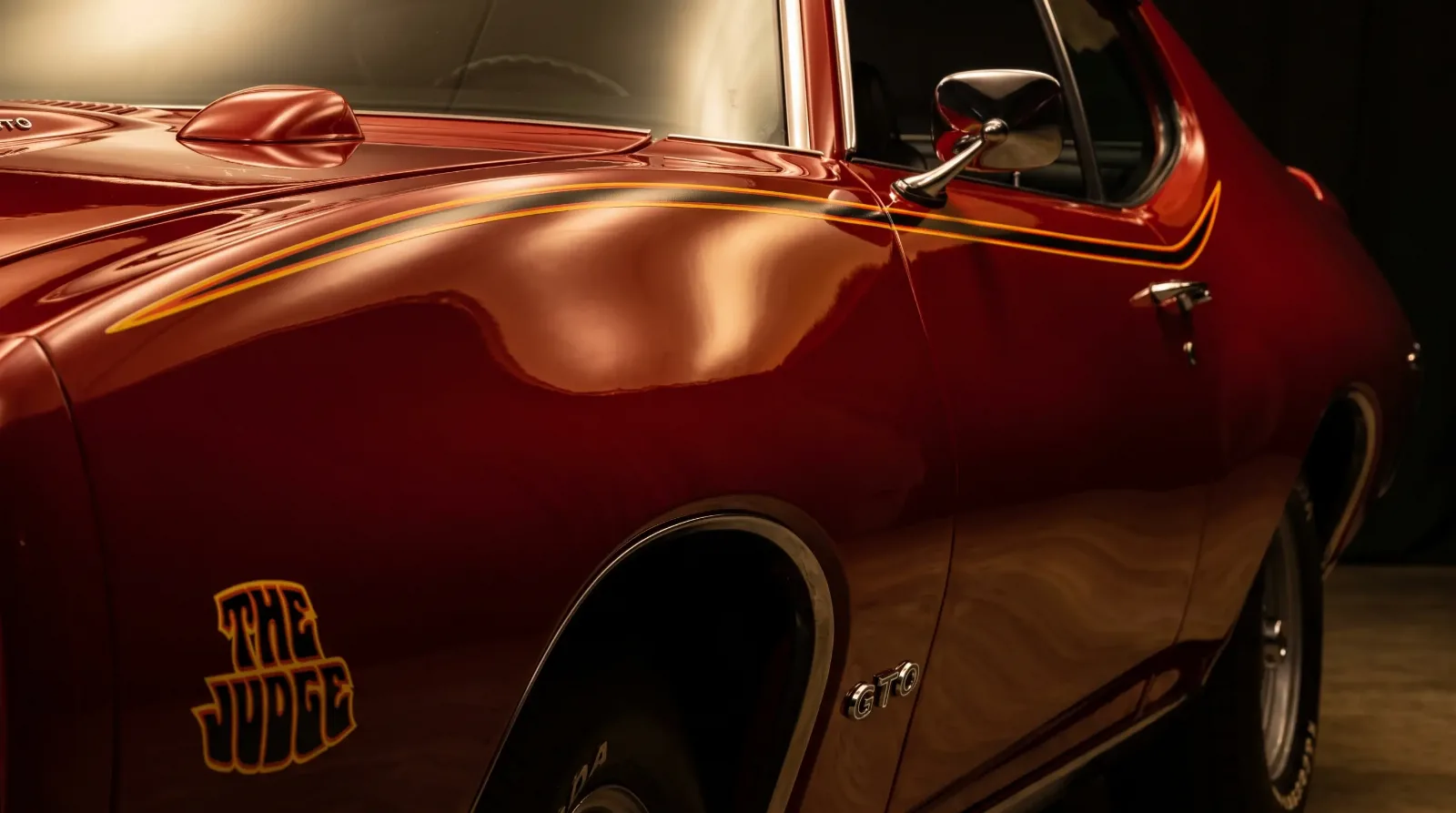
A color that refused to be subtle
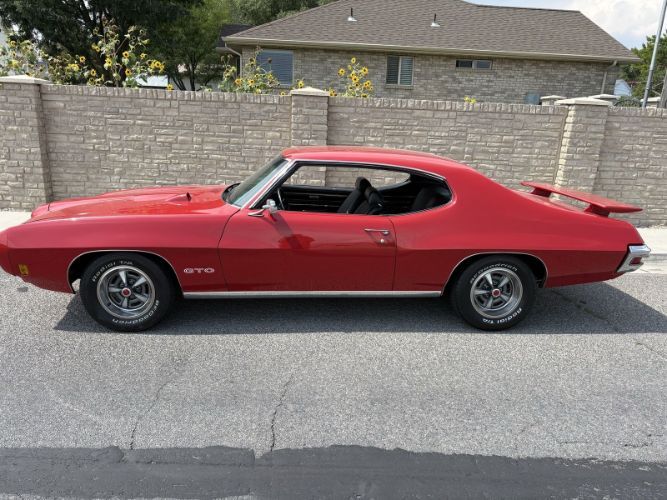
Pontiac's designers had a problem in the late 1960s. Every manufacturer had a fast car by then, and speed alone no longer sold anything. So when the Judge package came together in late 1968, someone in Pontiac's styling studio pushed for a shade that could not be mistaken for anything else on the road. Carousel Red landed somewhere between orange and red, closer to a traffic cone than a fire engine, and it caught the eye in a way the era's more conservative reds never could. It became the signature color of the Judge, printed across nearly every advertisement Pontiac ran for the option in 1969.
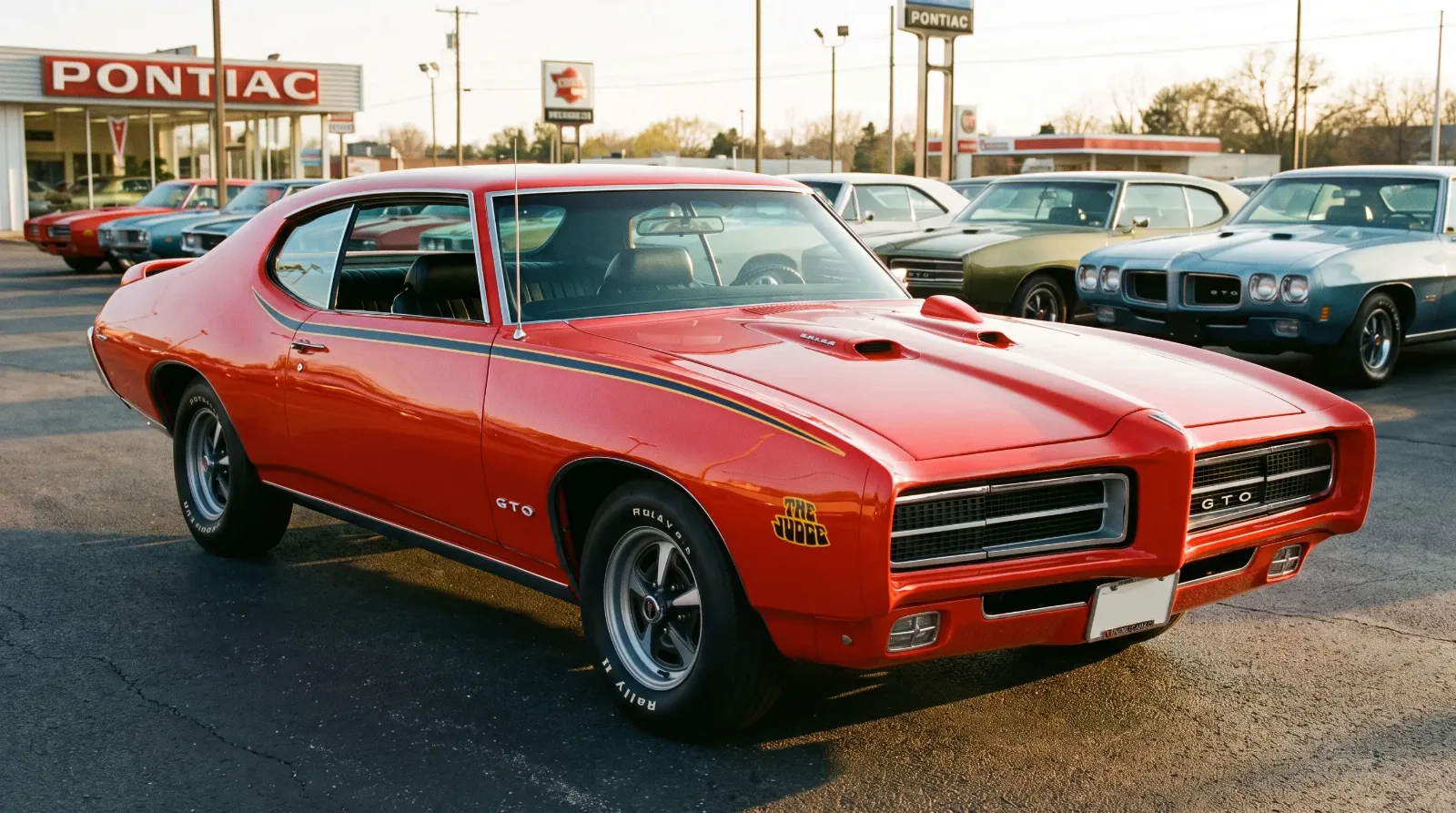
The shade itself came over from the Firebird line, and Pontiac made it the exclusive launch color for the Judge, roughly the first 2,000 cars built, before opening the package to any GTO color partway through the model year. Even then, Carousel Red remained available as a special-order color on other Pontiac models, not just the Judge. But the pairing with the Judge's decal package, the blacked-out grille, and the rear spoiler turned it into something closer to a uniform than a paint choice. Order a Judge in any other color and people still recognized the car. Order one in Carousel Red and people stopped what they were doing.
How the color found its name
Pontiac's naming department leaned into whimsy that year in a way it rarely had before. Carousel Red sat alongside names like Warwick Blue and Verdoro Green on the order sheet, but none of them carried quite the same mental image. A carousel is loud, spinning, a little chaotic, built for a crowd. That was exactly the audience Pontiac wanted for the Judge: young buyers who wanted to be seen, not buyers looking for something that blended into a parking lot. The name did marketing work the paint alone could not.
There's a story, repeated often enough in club circles that it has taken on the texture of fact even though nobody can point to a single memo confirming it, that a Pontiac executive first saw the shade on a state fairground carousel and pushed for it to become the signature color of the whole Judge launch. True or not, the story fits. Carousel Red never tried to be tasteful. It tried to be unforgettable, and on that count it succeeded.
What the color looked like against everything else on the road
Picture a suburban street in the summer of 1969. Most of the cars parked along the curb were finished in the muted palette that had defined the decade before it, sedate blues, browns, the occasional white. Then a Judge rolls past in Carousel Red with the multicolor stripe running low along its flanks, and every other car on the block suddenly looks like it's dressed for a funeral. That contrast was the entire point. Pontiac wasn't selling a car to people who wanted to fit in.
The color aged into something else over the following decades. What once signaled rebellion against a beige decade now reads as a kind of time capsule, instantly placing a car in exactly one cultural moment. Walk through any large car show today and a Carousel Red Judge will draw a crowd of people who were not alive in 1969 and still recognize the shade on sight. That kind of visual memory does not happen by accident.
"Some cars you remember by the sound of the engine. This one you remember by the color first, and the sound only after it's already gone past you."
Nora Beckett
The woman in Flint, years later
She kept the car for eleven years, sold it to a neighbor's son when she moved for a job, and spent the next four decades occasionally wondering where it ended up. She never found it again. What she remembers now, when people ask about the Judge she owned at twenty-two, is not the quarter-mile times or the sound of the exhaust. It's standing in the showroom under fluorescent light, looking at a color that seemed to argue with the rest of the room, and knowing immediately that she wanted it more than she'd wanted anything in a long time.
That's what a color can do when a company commits to it fully instead of hedging toward something safer. Carousel Red never asked permission. It's part of why the Judge still gets recognized decades later by people who couldn't tell a 400 from a 350 if their life depended on it, but who know that shade of red the instant it passes them on a highway.
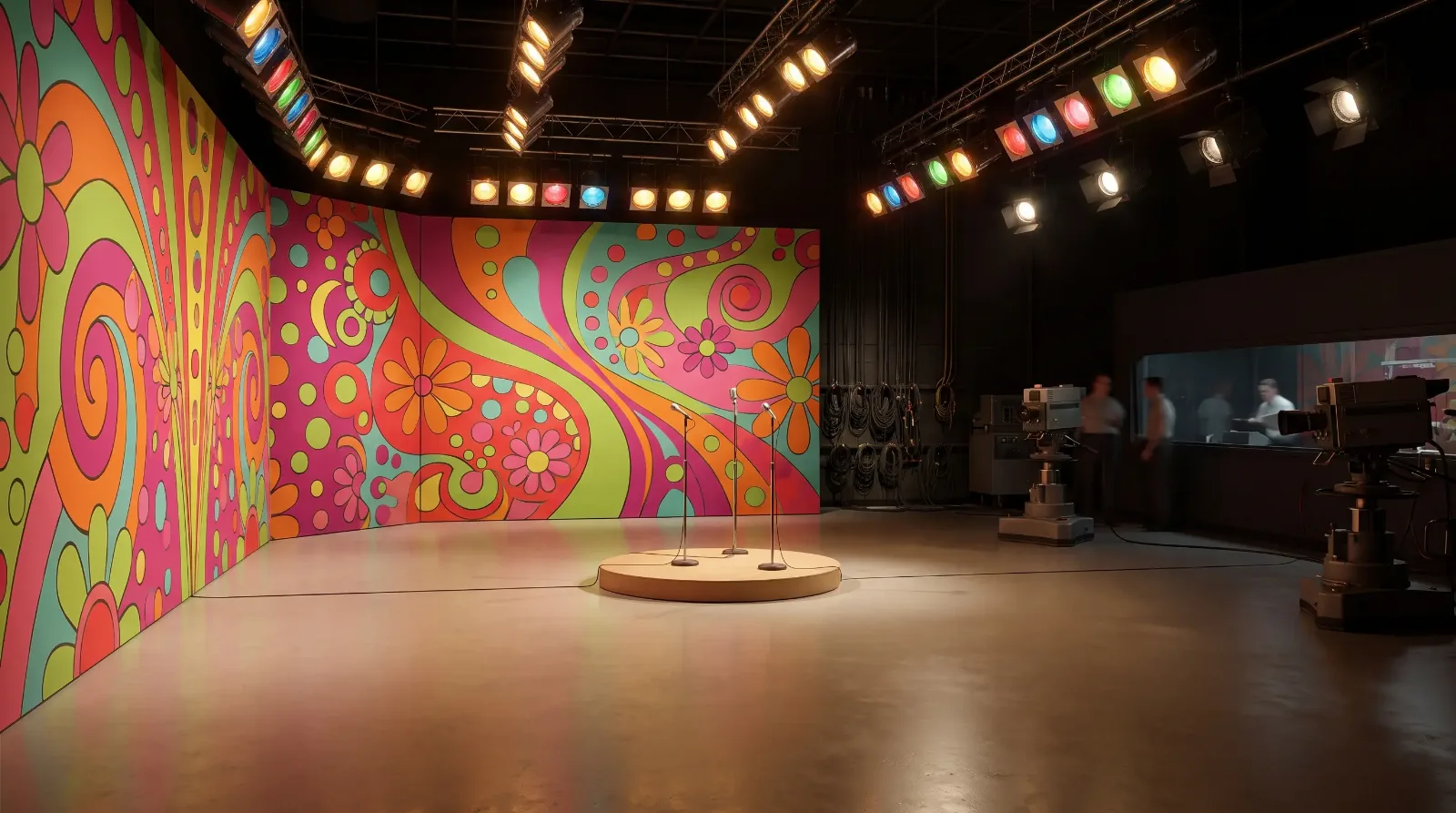
The name behind the option itself has its own strange origin story, tangled up with a television show that had nothing to do with cars. If you want to know how a courtroom catchphrase ended up stamped on a Pontiac fender, read on.
Finding the right shade fifty years later
Modern paint codes make matching Carousel Red harder than most people expect. The original lacquer formula has been reformulated more than once as automotive paint regulations changed, and shops that specialize in muscle car restorations keep their own reference chips because factory paint codes alone don't always translate cleanly into today's basecoat and clearcoat systems. A slightly-off Carousel Red is one of the fastest ways to devalue an otherwise correct restoration, and judges at concours events know the shade well enough to spot a mismatch from ten feet away.
Owners who've gone through a full repaint describe the process as more art than science. You bring in original paint chips if you can find them, usually from somewhere shielded from decades of sun exposure, a trunk hinge or a door jamb, and match against those rather than trusting a printed code alone. The sun fades Carousel Red faster than it fades most factory colors, which is part of why so many surviving cars from the era look more orange than red today. That fade is its own kind of history, even if restorers spend real money trying to erase it.
A color that still does its job
Restorers today chase Carousel Red with the same seriousness collectors reserve for matching-numbers engines, because a Judge repainted in the wrong shade of red loses something that goes beyond accuracy. It loses the specific jolt the color was built to deliver. Get the shade wrong by even a little and the car reads as a generic muscle car instead of a Judge. Get it right and it still stops people on a sidewalk more than fifty years after it rolled off a Pontiac assembly line, which is more than most colors from that era can claim.
Sources and notes
Related Reading
Have a
Pontiac GTO
for Sale?
Reach thousands of serious classic car collectors across the US.
Sell It Here →
Are You a Classic Car Dealer?
List your full inventory and connect with targeted classic car buyers.
Join as a Dealer →

About the author
Nora Beckett
Automotive features writer and photographer who tells the human stories behind the cars, from show fields to cross-country road trips.
Related Listings - Pontiac GTO




Comments
Be the first to comment on this article.