
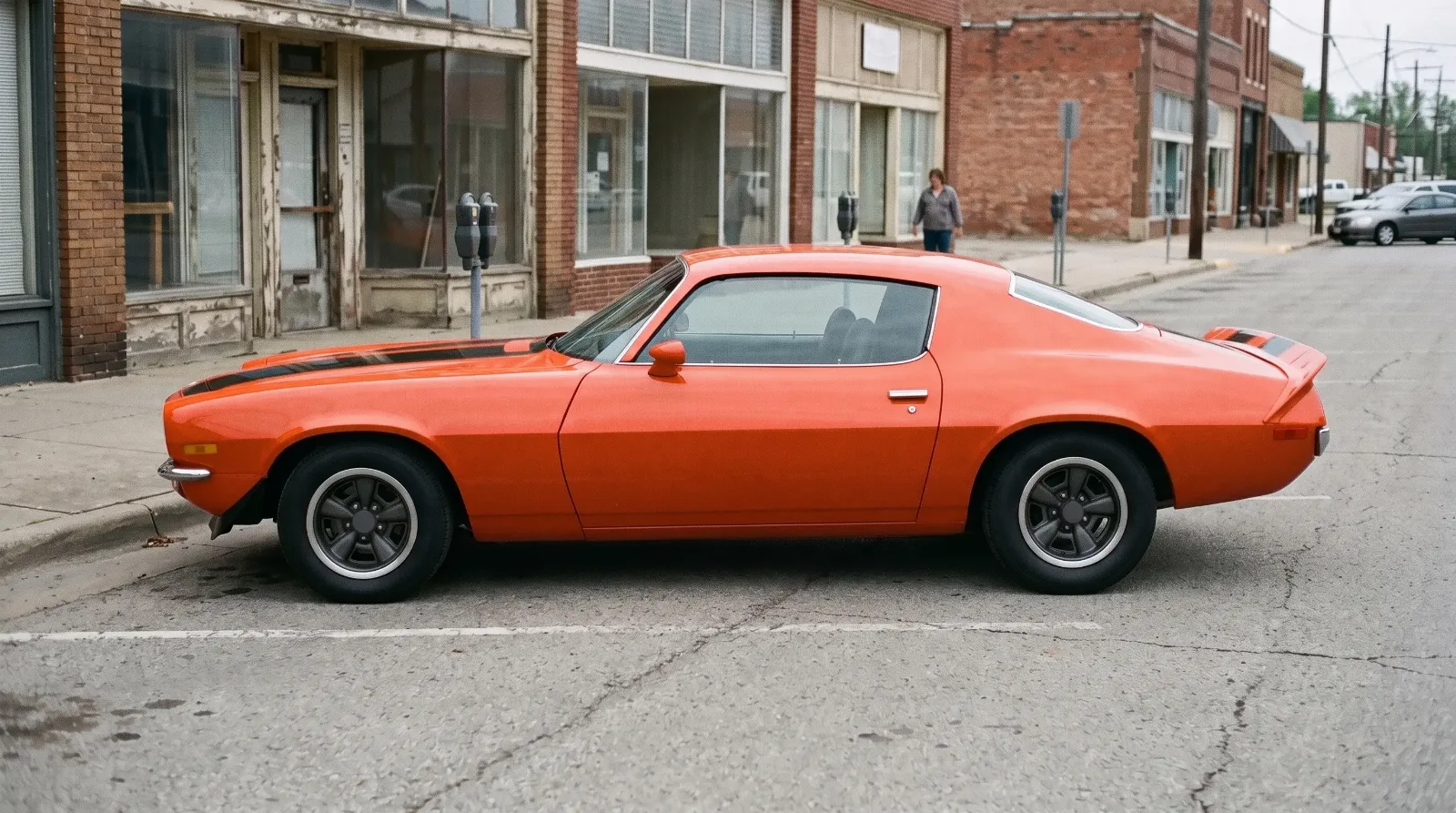
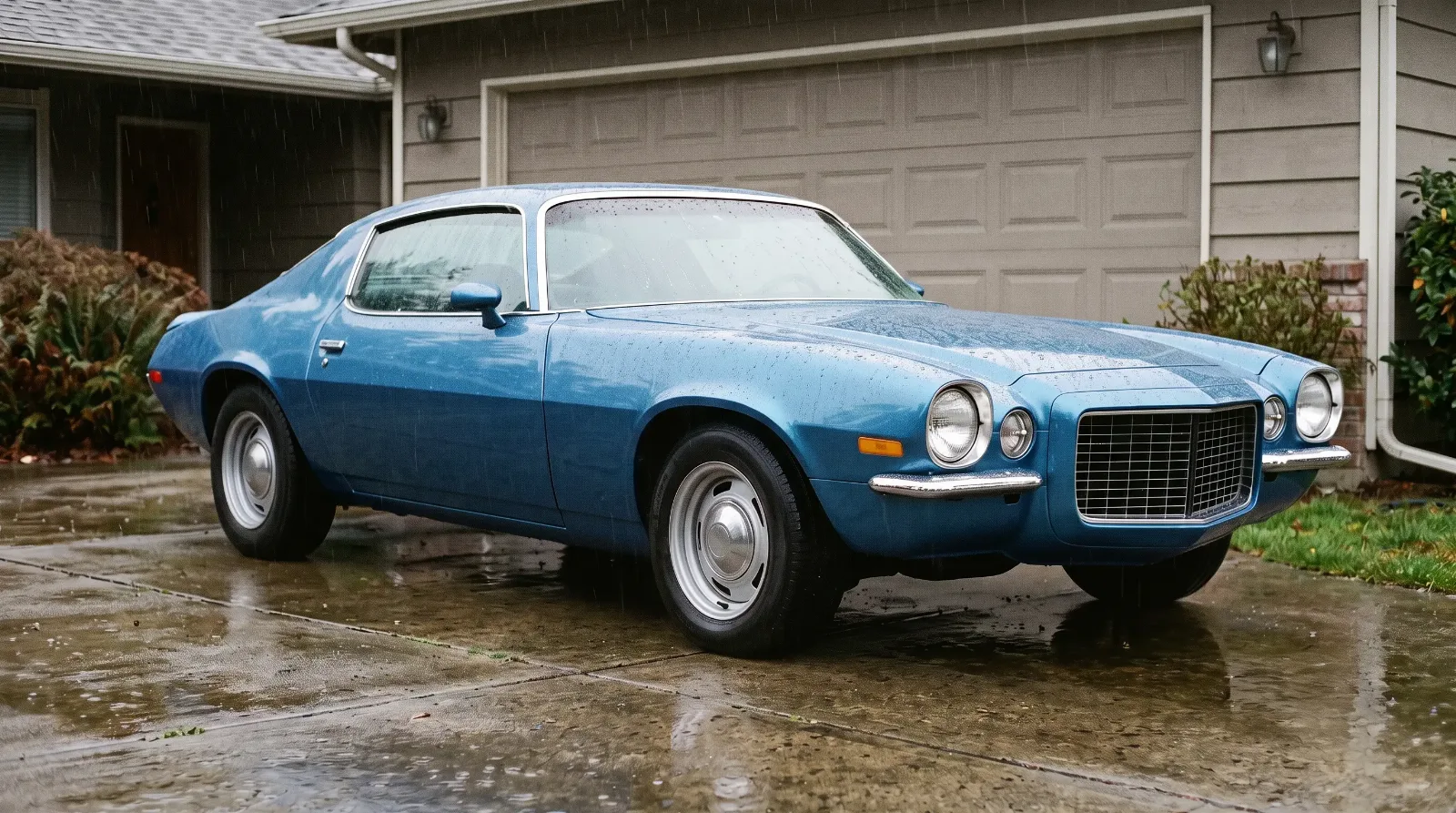
Crouch at the rear wheel of a 1970 Camaro and sight forward along the body, and the 1970 Camaro design stops reading like a Detroit pony car. The cowl sits low. The hood runs long. The roof drops into the deck with no quarter window to break the line. None of that happened by accident. The car was drawn by people who had been studying Ferraris and a new Jaguar, and it was protected by a styling boss willing to overrule his own engineers to keep the proportions.
Car Features
6 min read
How the 1970½ Camaro Got Its European Look
Ferrari proportions, a Jaguar XJ6 face and a low cowl Bill Mitchell refused to give up: how the 1970 Camaro design came together in the studio.
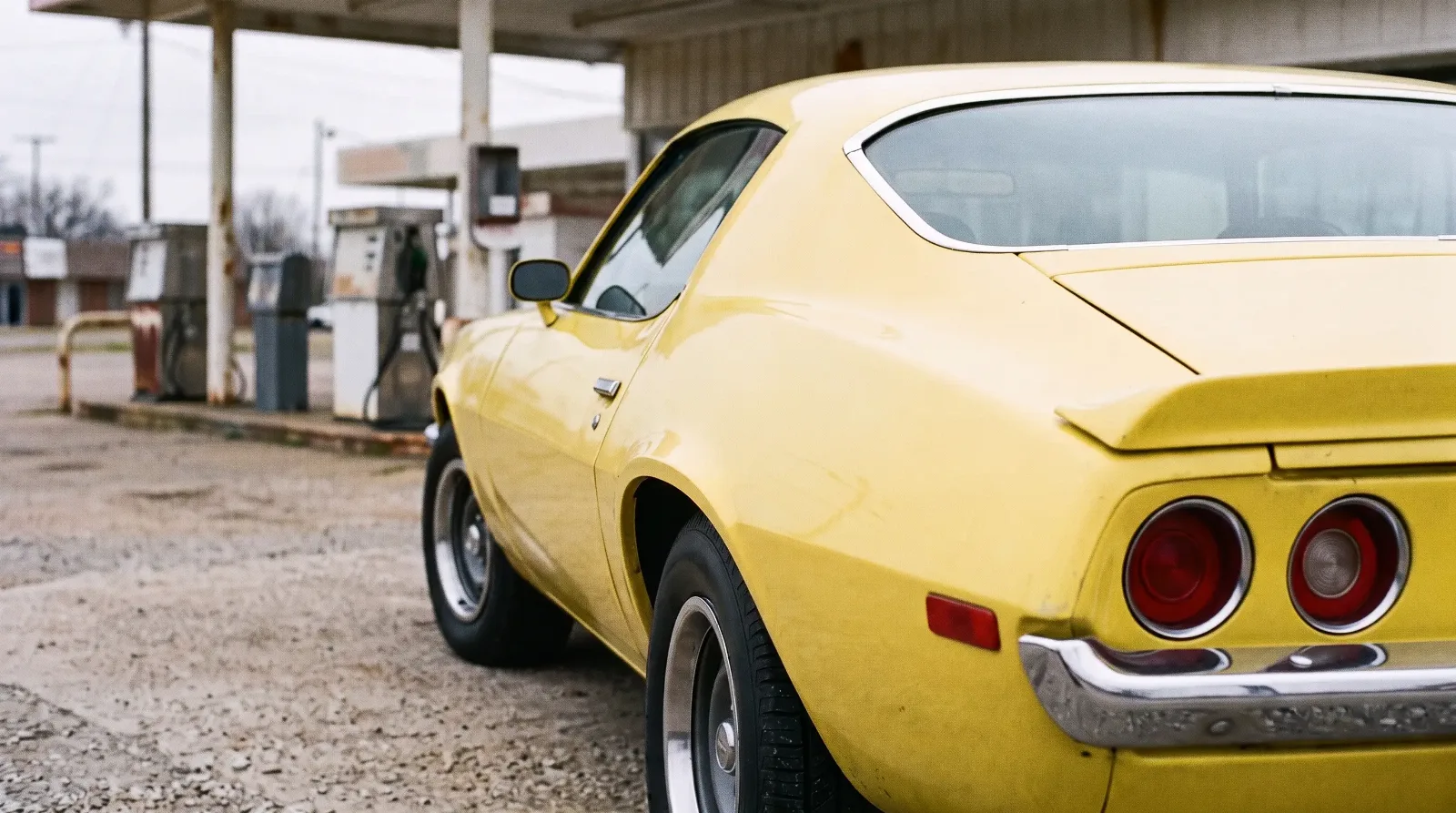
This is a look at how that shape came together from the inside: who drew it, what they borrowed, what they fought over and what they gave up. If you want the whole model run first, the 2nd gen Camaro overview covers 1970 to 1981. Here we stay in the studio.
Who drew the 1970 Camaro design
Sketching started in 1966, right after the first-generation design work wrapped. The Chevrolet lead was Henry (Hank) Haga, who ran a Chevrolet studio; his Pontiac counterpart on the Firebird was Bill Porter. Sources disagree on Haga's studio number, so we will leave it at Haga's Chevrolet studio.
There is also an argument over which studio produced the basic body. Most accounts give it to Haga's group, with Pontiac working in parallel under GM styling vice president Bill Mitchell. One opinion column credits the Pontiac studio, and one enthusiast history has Pontiac general manager John DeLorean, who owned a Maserati Ghibli, lobbying hard for Pontiac to lead and asking for the Firebird to be "a $3,000 Ghibli." If that line is accurate, it tells you where everyone's head was. The reference points were Italian, not Dearborn.
Ferrari proportions and a Jaguar face
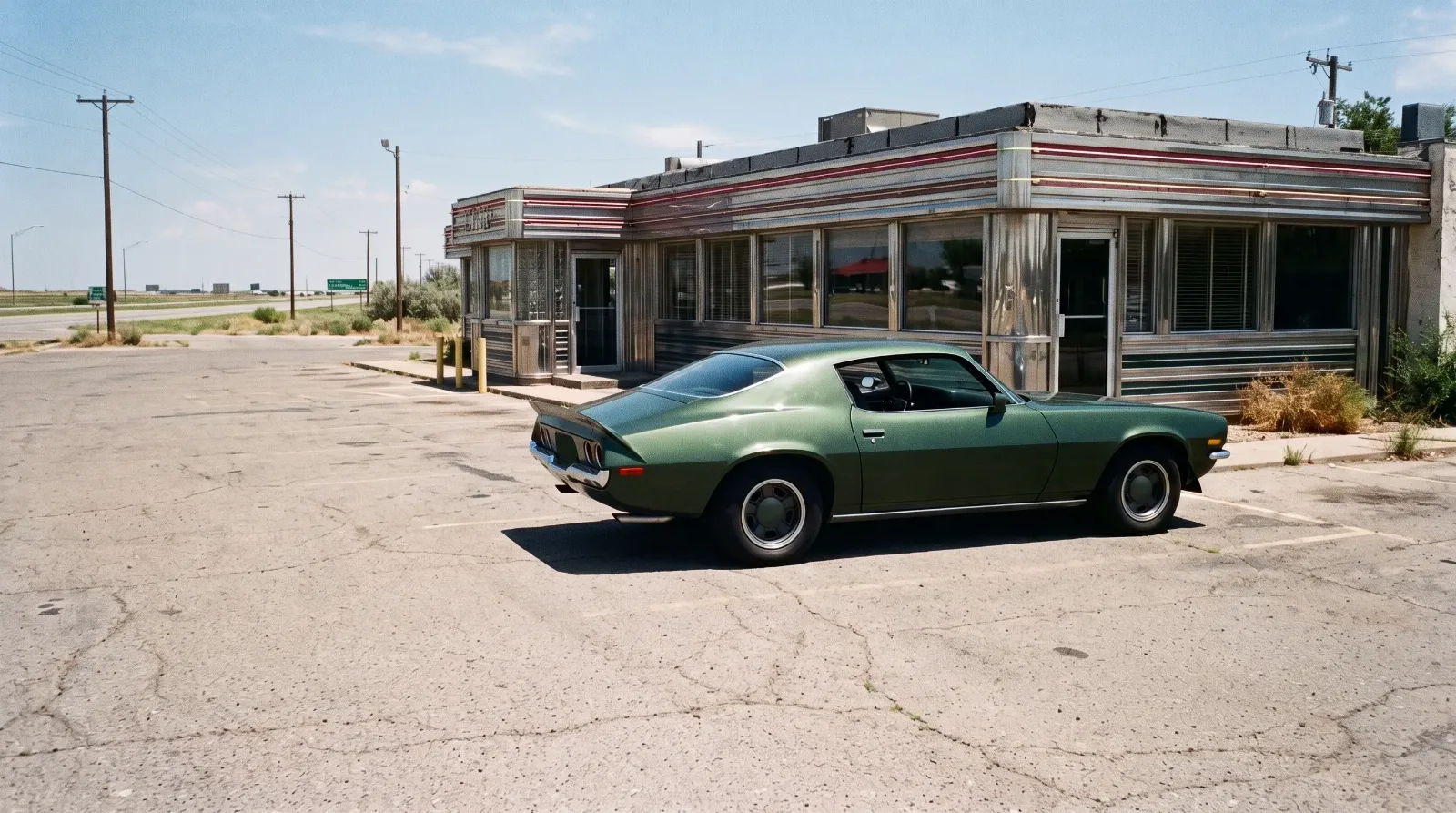
The studios studied Pininfarina Ferraris, and it shows. The shape and stance of the coupe echo the early-1960s Ferrari 250 GT SWB Berlinetta and the 250 GT Berlinetta Lusso: long nose, cab pushed back, a short tail that falls away instead of squaring off. If you have ever stood next to a Lusso, you know the trick is not any single panel. It is where the wheels sit relative to the windshield and how little body hangs past them.
The face came from somewhere else. The front end was inspired by the 1968 Jaguar XJ6, with its rectangular grille and lamps faired into the body instead of stuck on top. On the Camaro that became an egg-crate grille with the headlamps tucked into the fenders, and on the Rally Sport the grille stood alone with the bumper split around it. That version is the cleanest statement of the idea, and it is the reason the split-bumper Rally Sport is the front end most builders want.
The tail is where Chevrolet management drew a line. Four round taillights gave the Camaro the link to the Corvette that the brass wanted. Everything forward of the deck lid is European in spirit. The back is a Chevrolet, on purpose.
| Design cue | Where it came from | What to look at on a car |
|---|---|---|
| Long hood, cab set back, short tail | Ferrari 250 GT SWB Berlinetta and 250 GT Lusso | Stance and tire fitment; the proportions break first |
| Rectangular grille, faired-in lamps | 1968 Jaguar XJ6 | Grille surround fit, headlamp bezels flush with the fender |
| Low cowl | Bill Mitchell overruling engineering | Hood-to-cowl gap and windshield base |
| No vent or quarter window | A cost and cleanliness decision | Door glass fit and seals |
| Four round taillights | Chevrolet's Corvette link | Lens and bezel condition |
The cowl fight: Mitchell against engineering
Proportions like that do not survive a production program on their own. According to Chevrolet historian Michael Lamm, Mitchell overruled engineering and kept the low cowl, which is why the car has been called the "designer's Camaro." That cowl height is the whole game. Raise it a couple of inches for packaging and the hood looks short, the windshield looks tall and the Ferrari is gone.
The people involved said as much later. In mid-1980s interviews at the Benson Ford Research Center, Irv Rybicki said the second generation got a new underbody and seat placement "with no interference." Mitchell credited the "right dash to axle, the right cowl height." Dash to axle is a designer's term for the distance from the base of the windshield to the front wheel centerline, and it is the dimension that makes a car look expensive or cheap before you notice anything else.
The numbers on the finished coupe back it up: a 108-inch wheelbase, 188 inches long, 74.4 inches wide and only 50.1 inches tall, at a curb weight of 3,310 pounds. Long and low is not a slogan on this car. It is measurable.
What the studio gave up to get it
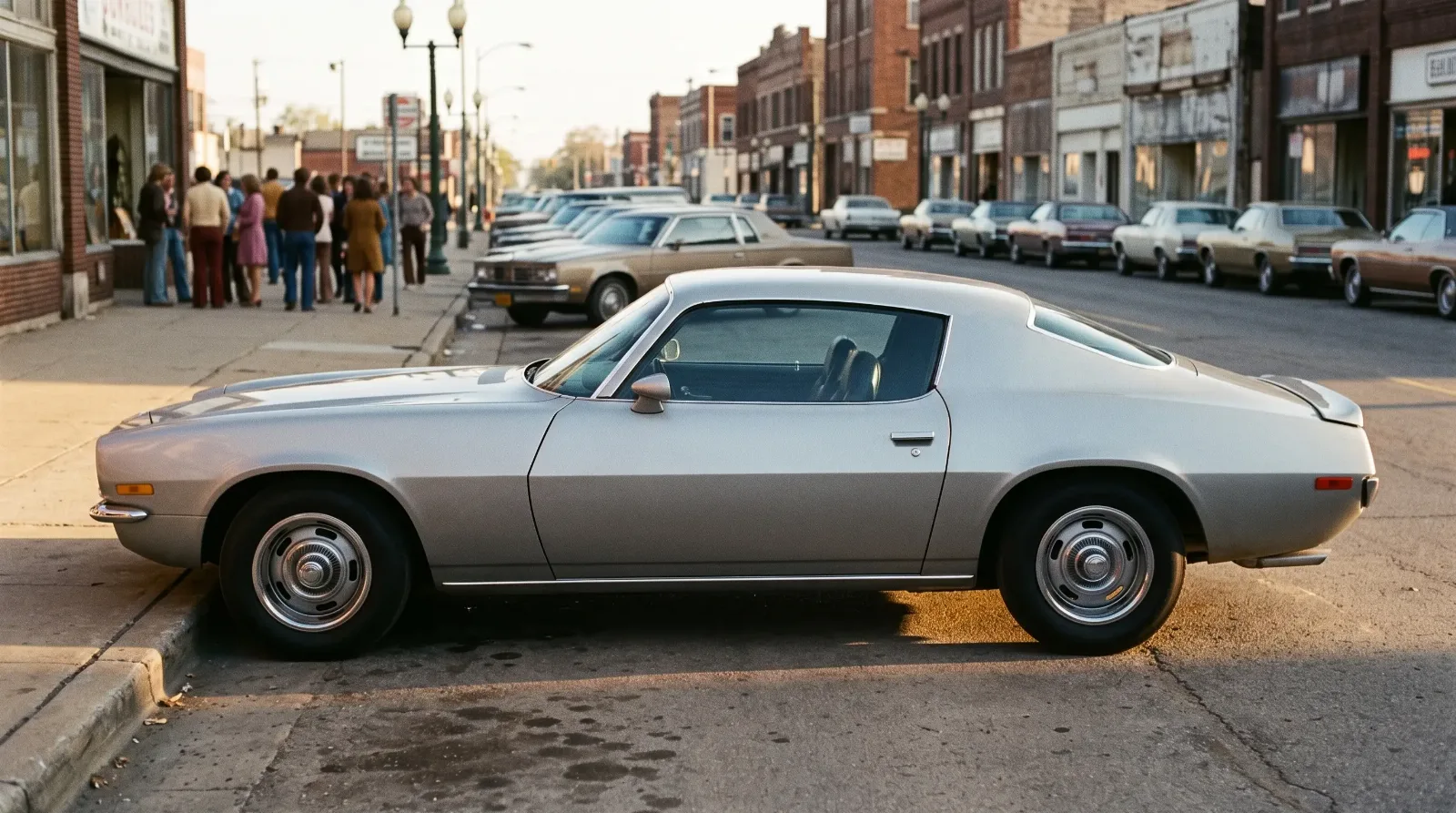
Clean sides also saved money, and the studio spent it instead of banking it. Dropping the vent and quarter windows took glass, frames and seals off the car, and the savings went into making it quieter.
Other ideas did not make it. Bob Ackerman, working in Haga's studio, proposed a Kammback, essentially a two-door wagon on the Camaro body. Mitchell ordered a full-size clay of it, and it still died on budget, because the program was allowed only one shared door and quarter panel. A wagon needs its own quarters. That rule kept the line clean and killed the most interesting variant in the same stroke.
The press noticed what the studio had done. Car and Driver likened the 1970 Z/28 test car to an American Ferrari challenger, which is about the best review a stylist working from a 250 Lusso could have asked for.
Keeping the 1970 look honest on a build today
Here is where I get opinionated. Most second-generation builds that look wrong look wrong for one reason: someone changed the proportions without meaning to. A ride height that rakes the nose up, a tire package that fills the arches unevenly front to rear, a cowl-induction hood that sits proud of the cowl line. Each one fights the thing Mitchell protected. You can run modern suspension and wheels on these cars and keep the look, but you have to set the stance on purpose, with the body level and the wheels centered in the openings.
"The 1970 Camaro is a proportion car. Bolt on whatever you like, but if the cowl, the stance and the wheel position are wrong, you have built a poseur with a Ferrari story attached."
Jim Vasquez
Small details matter on a 1970 in particular. It is the only year with the "Camaro by Chevrolet" decklid emblem, so a car presented as a correct 1970 should have one. Collectors describe the early 1970 to 1973 cars, with their long hood, egg-crate grille, Frenched headlights and chrome bumperettes, as the ones that "arguably symbolize the purest of the breed." That is the shape the studio set out to draw, and it is still the one worth protecting.
Sources and notes
- Hagerty: the second-gen Camaro, the one that had class
- Hagerty: the lasting design influence of the second-gen Camaro
- Hagerty: 1970 to 1981 Chevrolet Camaro buyer's guide
- Dean's Garage: Bob Ackerman on the Camaro Kammback
- Car Guy Chronicles: the 1970 Camaro, coming late to the party
- The Truth About Cars: Curbside Classic 1970 Camaro RS
Related Reading
Have a
Chevrolet Camaro
for Sale?
Reach thousands of serious classic car collectors across the US.
Sell It Here →
Are You a Classic Car Dealer?
List your full inventory and connect with targeted classic car buyers.
Join as a Dealer →
#Bill Mitchell
#second generation Camaro
#1970 Camaro design
#Hank Haga
#Ferrari 250 GT Lusso
#Jaguar XJ6
#Camaro styling

About the author
Jim Vasquez
Southern California hot rod and custom car builder with roots in the traditional kustom kulture scene.
Related Listings - Chevrolet Camaro
Comments
Be the first to comment on this article.