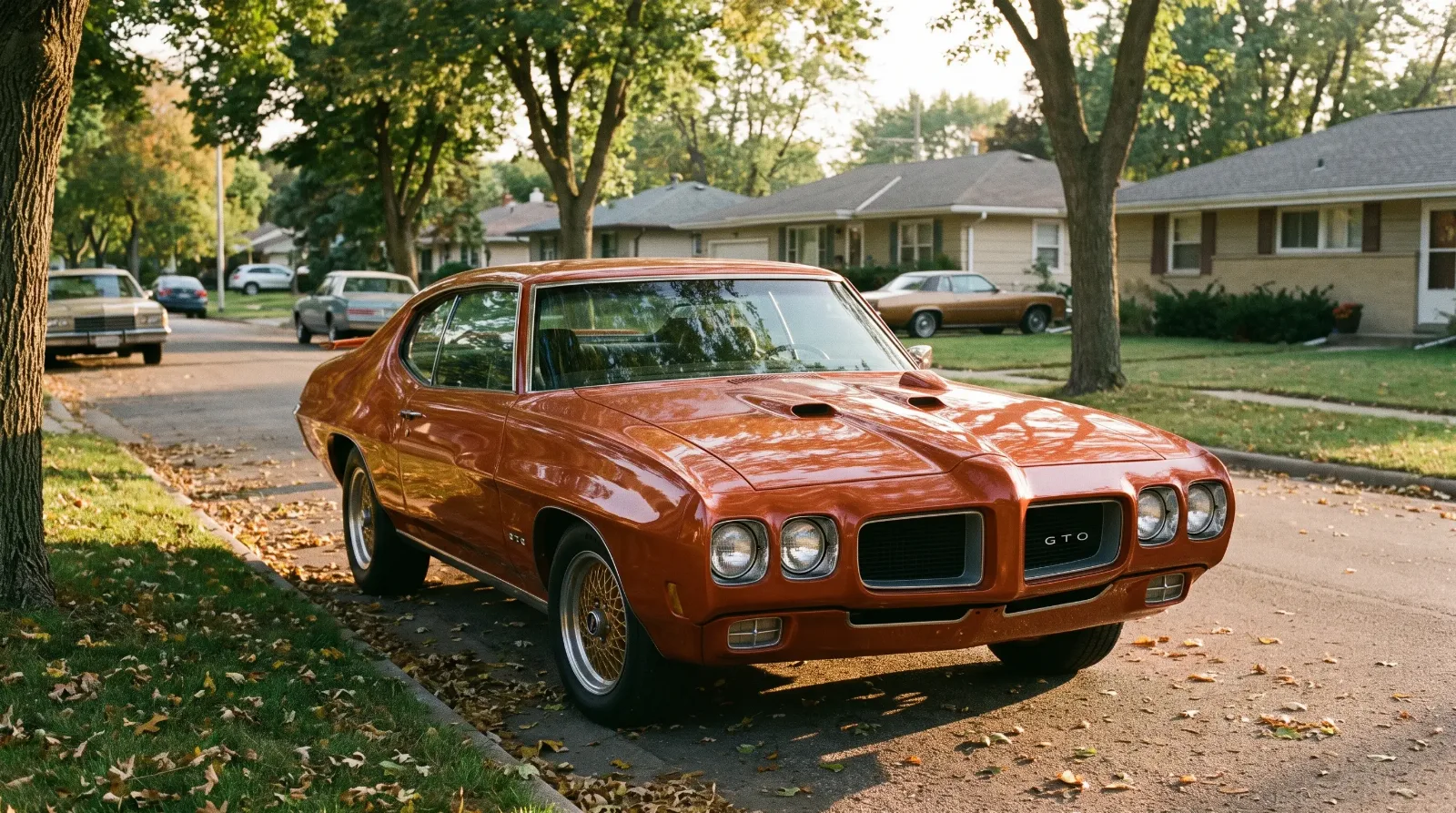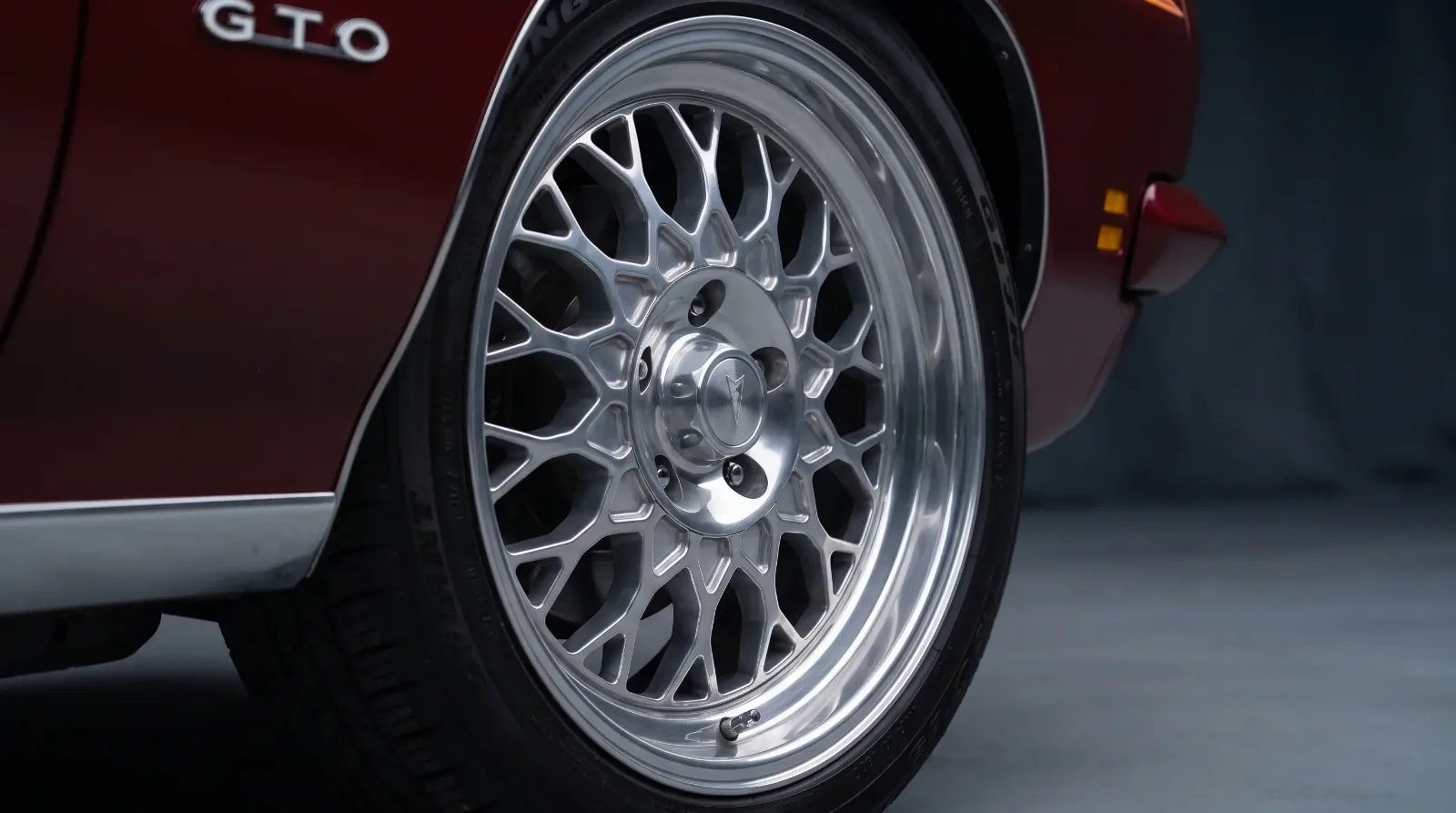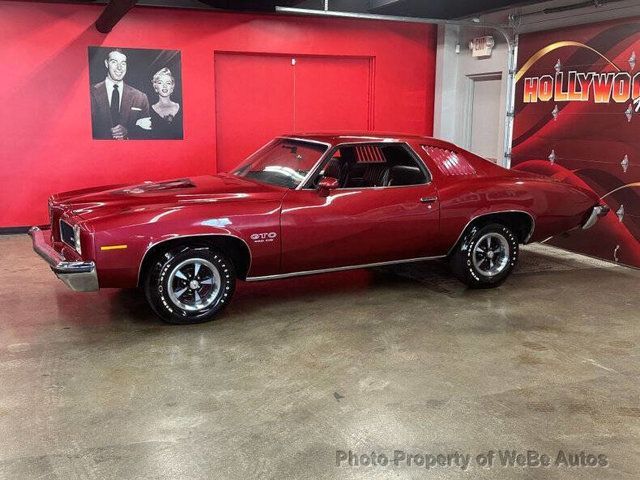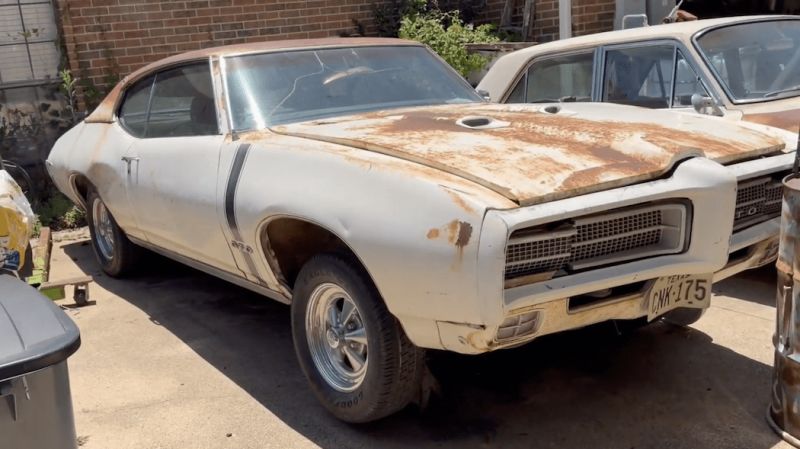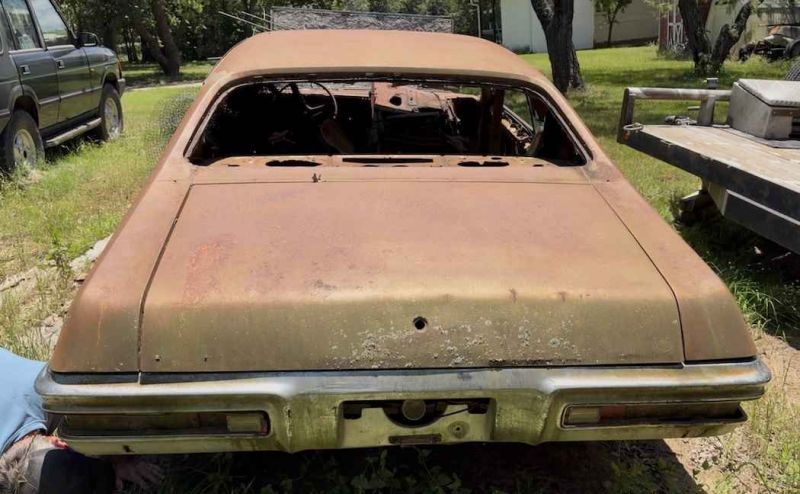
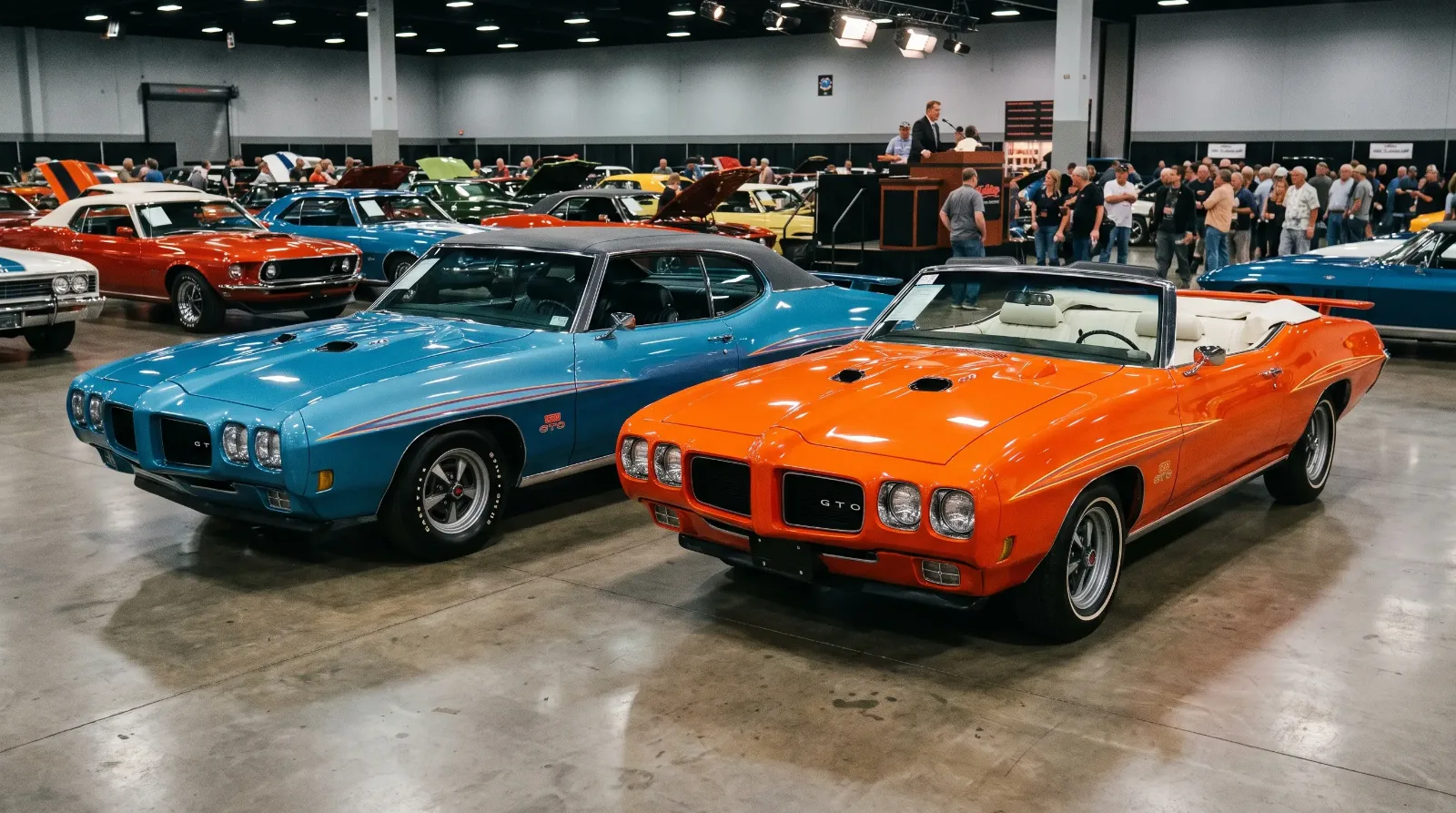
Every appraisal starts with the same question, and it isn't "how fast." It's "how many." A car can carry every option in the catalog and still be worth less than a plainer example if the production numbers don't back up the story being told about it. The 1970 GTO is a good test case for that discipline, because the raw figures tell a more interesting story than most sellers want to admit.
Total 1970 GTO production landed at 40,149 units across the model year, down sharply from the 72,287 built in 1969 and further still from the 96,946 that made 1966 the high-water mark for the second-generation GTO. That decline matters to a buyer today for a simple reason: fewer cars built generally means a tighter surviving population, but it also means the market for this specific year has had decades to sort real cars from cars wearing borrowed identities.
Body styles and the split that actually moves price
The 1970 GTO came as a two-door hardtop and a convertible, and the split between those two body styles is where a lot of the value conversation lives. Hardtops made up the overwhelming majority of production, which is exactly why a documented, numbers-matching convertible commands a real premium over an equivalent hardtop at auction. Rarity alone doesn't set price. Rarity plus documented demand does, and convertible GTOs have both.
The Judge package, introduced partway through 1969 and continued into 1970, represents a smaller slice of total production, and this is where I'd tell a client to slow down before writing a check. The Judge name gets attached to cars that were never optioned that way from the factory more often than any other detail in this hobby, because the visual package, stripes, spoiler, decals, is not hard to replicate on a plain GTO. A real Judge has paperwork behind it. A car wearing Judge graphics without that paperwork is a nice GTO with an expensive costume, and it should be priced like one.
What documentation actually does to a number
I've watched two GTOs with near-identical specifications sell for meaningfully different prices at the same auction weekend, and the difference wasn't condition. It was paper. A Pontiac Historical Services document, a broadcast sheet, original window sticker, or a clean chain of title back toward the original owner does more for a car's final number than another coat of paint ever will. Buyers in this segment aren't just purchasing a driving experience. They're purchasing certainty, and certainty has always carried a premium in any collectible market.
That's the uncomfortable truth for sellers who inherited a GTO with a thin paper trail. The car might be entirely genuine. It might have the correct engine, the correct trim, everything matching what a PHS document would confirm if one existed. But without that confirmation, the market prices in the risk, not the hope, and the gap between "probably correct" and "documented correct" on a 1970 GTO can run into five figures depending on the specific configuration.
| Detail | What it typically does to value |
|---|---|
| Convertible body style | Meaningful premium over hardtop, larger for documented cars |
| Verified Judge package | Significant premium; unverifiable Judge trim priced as standard GTO plus modest upside |
| PHS documentation on file | Reduces buyer risk, typically firms up final price at or above comp average |
| Numbers-matching drivetrain | Baseline expectation at the top of the market; undocumented swaps discount sharply |
Engine and option splits fragment the numbers further
Total production is only the top-level figure, and it hides how thin things get once you start filtering by engine and transmission. The 1970 GTO offered a standard 400 cubic inch V8 alongside the Ram Air III and the range-topping Ram Air IV, and the further up that ladder a buyer looks, the smaller the surviving pool becomes. A base 400 automatic hardtop and a Ram Air IV four-speed hardtop share a body shell and not much else in terms of market value, even though both wear the same GTO badge.
This is where a lot of first-time buyers get themselves into trouble. They anchor on the total production figure for the model year and assume any GTO from 1970 shares roughly the same rarity, when in practice the Ram Air IV cars represent well under 800 units out of that 40,149 total, split between hardtops and a much smaller run of convertibles, and command a correspondingly different price tier. An appraiser's job in this situation is to pull the buyer back from the headline number and toward the specific build sheet, because that's where the real scarcity, and the real risk of a misrepresented engine, actually lives.
Transmission choice matters almost as much. Four-speed manual cars generally draw stronger collector interest than automatics of the same engine and trim, not because they're mechanically superior for a street car, but because the manual gearbox reads as the more committed, more driver-focused choice to the buyers who set prices at the top of this market. None of these splits show up in a simple total production count, which is exactly why that number should be treated as a starting point for research, not a conclusion.
The liquidity question nobody asks up front
Production volume also determines how easily a car can be resold later, and this is where a 1970 GTO sits in a comfortable middle ground. It isn't so rare that a seller has to wait years for the right buyer to surface, the way some ultra-limited variants do, but it isn't so common that the market gets flooded and prices stall. A well-documented, correctly optioned example, hardtop or convertible, tends to move within a reasonable window at a fair auction or through a specialist dealer, which is exactly the kind of liquidity a buyer should want in a car at this price point.
The downside case is worth stating plainly. A GTO with an undocumented drivetrain swap, replacement sheet metal from accident repair, or cosmetic Judge trim added after the fact isn't worthless, but it's a different asset entirely, priced closer to a good driver-quality muscle car than a collectible with upside. Buyers who confuse the two categories are the ones who overpay and then struggle to sell later at the number they expected.
"The car doesn't lie about how many were built. The seller sometimes does, and that's the gap documentation is supposed to close."
— Marcus Feld
What this means for a buyer today
If I'm advising a client on a 1970 GTO purchase, the production numbers are step one, not the whole conversation. They set the ceiling on rarity, but condition and paperwork decide where inside that ceiling the actual transaction lands. A rough, undocumented Judge and a clean, well-papered base GTO can trade places in value depending on how much risk a buyer is willing to absorb, and that's the calculation worth making before the emotional pull of a famous name package takes over the decision.
What killed a lot of that production momentum going forward wasn't a lack of buyer interest. It was a cost buyers hadn't budgeted for, and it hit right as the GTO's best sales years were ending. To understand why the market shifted so fast after 1970, read on.