
Pop the hood on a 1970 GTO equipped with Ram Air and the first thing you notice isn't the engine, it's the ductwork. Two scoops sitting on top of the hood, hooked into a sealed air cleaner assembly below, built to do one specific job that most cars of this era never bothered with: pull cold, dense outside air straight into the carburetor instead of sucking hot air off the top of the engine bay. It's a simple idea. Getting it to actually work right, and keeping it working right fifty years later, is where things get interesting for anybody wrenching on one of these cars.
Car Features
7 min read
The 1970 GTO's Ram Air and the Hood-Scoop Story
The 1970 GTO's hood scoops fed a real, functional cold-air system, and knowing what breaks on it separates a genuine Ram Air car from a costume.
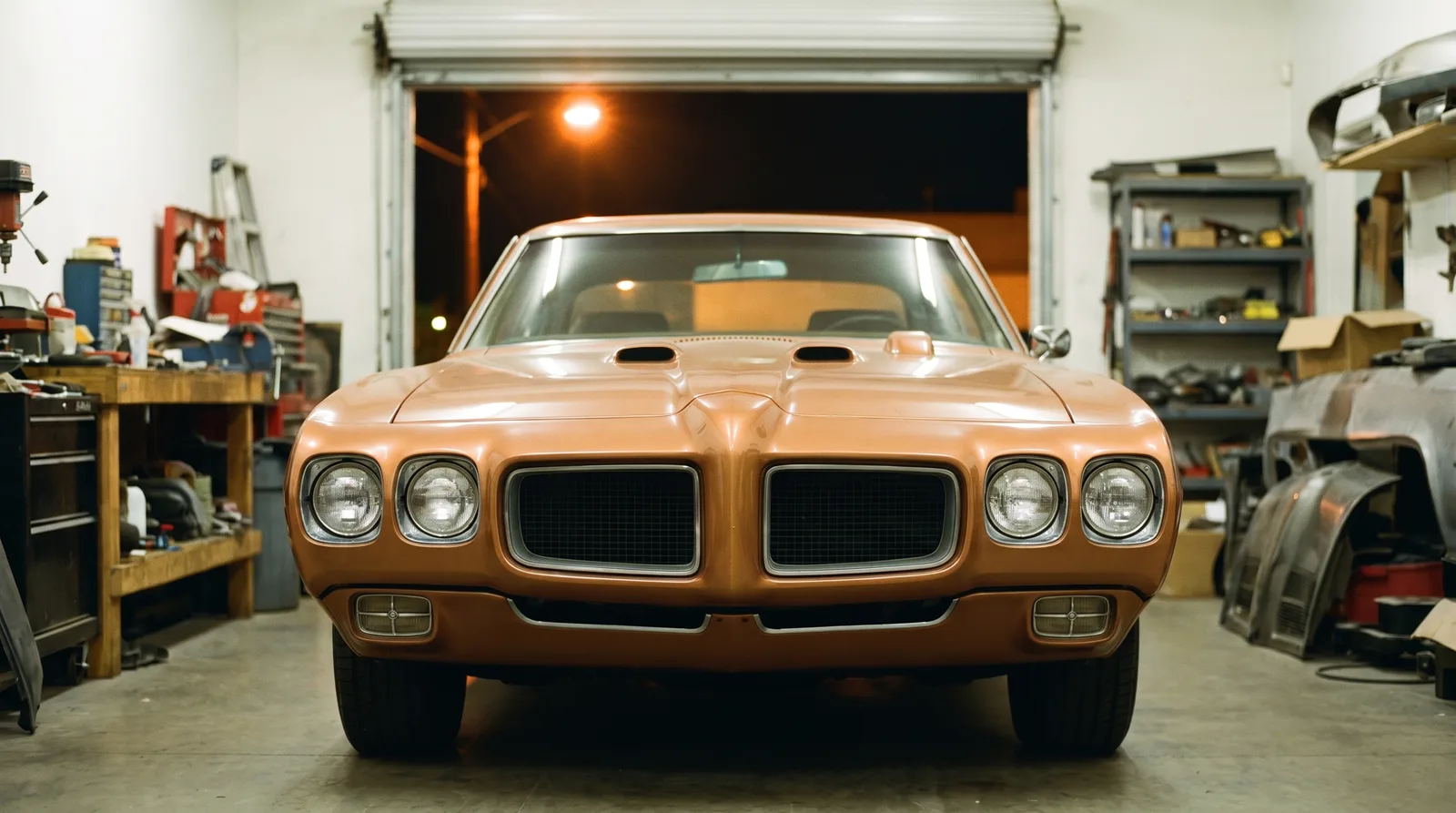
I've had more than a few of the 1970-72 GTO cars up on a lift over the years, and the Ram Air setup is one of those systems that separates a car that's just wearing the right badges from a car that's actually been maintained by somebody who understood what they were looking at.
How the system was actually built to work
The hood scoops themselves weren't just decorative bulges stamped into sheet metal. On a functional Ram Air car, they fed down through a sealed duct to the air cleaner, and a vacuum-operated flap inside that duct controlled whether the engine was pulling air from the hot underhood environment or straight from those scoops up top. At low vacuum, under hard acceleration, the flap would open and let cold outside air flood in. At idle and light cruising, the system defaulted back to underhood air, which kept things quieter and avoided pulling in road grime and water at low speed.
The engine offerings that carried this hardware were the Ram Air III and the range-topping Ram Air IV, and the difference between them wasn't just the induction setup, it extended to cam profile, cylinder head porting, and compression, all tuned to make the most of that cooler, denser incoming air. A Ram Air IV in good tune pulls noticeably harder up top than a standard 400, and that's not marketing talk, it's a function of the whole system working together, heads, cam, and induction, not any single part doing the work alone.
What actually goes wrong on these systems today
The vacuum-operated flap is almost always the first thing to fail on a car that's sat for years, because the diaphragm and hoses controlling it dry out and crack just like every other vacuum component under a hood from this era. When that happens, the flap either sticks open, which isn't the end of the world, or sticks closed, which defeats the entire point of the option a previous owner paid extra for. I always check this first on any Ram Air car that comes into the shop, because it's cheap and fast to fix and it tells you a lot about how attentive the car's history has been.
The foam or rubber gasket sealing the hood scoop ducting to the air cleaner housing is the other usual failure point. That seal has to be airtight or the whole Ram Air concept falls apart, the engine will just pull unsealed underhood air around the gasket instead of the cold air the scoops are feeding in, and you'll never know it unless you pull the air cleaner lid and actually inspect the seal by hand. Dried, cracked, or missing gaskets are common enough on unrestored cars that I treat it as a default assumption rather than a surprise.
🔧 Inspection Priorities
- Vacuum flap operation. Check that the flap moves freely and seals in both positions; a stuck flap means the system isn't doing its job, and a new diaphragm is a cheap fix if caught early.
- Duct and gasket integrity. Cracked or missing foam seals between the hood scoops and air cleaner let unsealed air in and quietly defeat the whole setup.
- Hood alignment to the ductwork. A hood that's been off the car for bodywork needs to seat correctly against the scoop seals or the system leaks at the mating surface.
- Correct scoop and hood match to engine code. Reproduction hoods and scoops exist, and matching them to a claimed Ram Air III or IV build is worth confirming against documentation before paying a premium for the option.
Living with it on the street
A properly sealed and functioning Ram Air system does make a real difference once you're into the throttle, not a subtle placebo effect but an actual gain in how the engine pulls through the upper rev range on a cool day. It also makes a sound most owners never get tired of, that induction rush right behind your head once the flap opens up under load. It's one of those details that photographs well and drives even better, which is a rare combination in this hobby.
"Anybody can bolt hood scoops onto a GTO. Whether the flap underneath them actually opens when it's supposed to is the difference between an option and a costume."
Mike Sullivan
The turn signal that doubled as a warning light
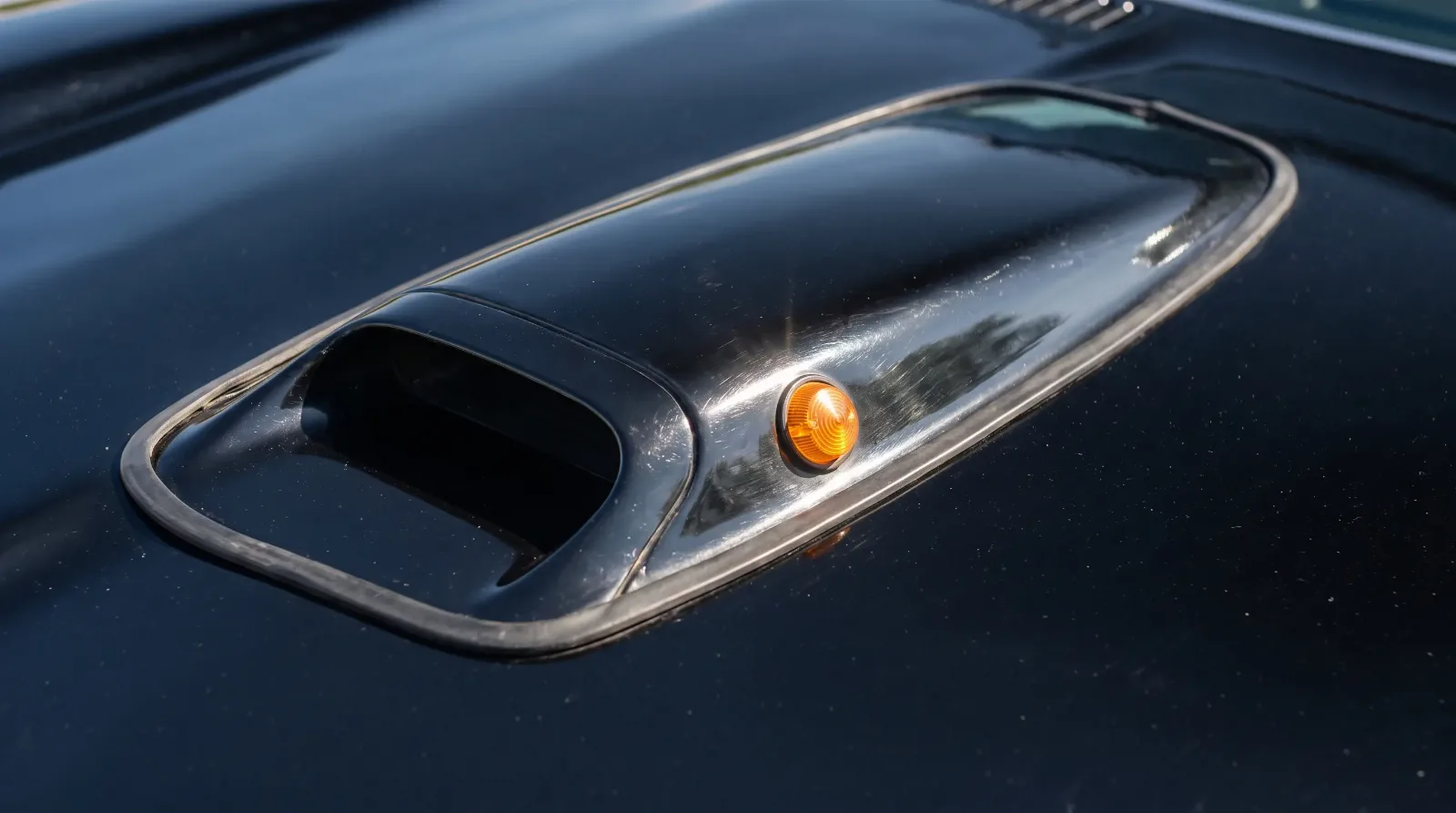
One detail that trips up a lot of new owners is the hood-mounted turn signal indicators built into some of these Ram Air hoods, small amber lenses set into the scoop housing that flash with the turn signals so a driver can see them reflected without glancing down at the dash. It's a small piece of hardware, easy to overlook, and easy to break if a hood gets handled carelessly during bodywork or a repaint. Replacement lenses and housings are available through the usual restoration suppliers, but matching the correct style to a specific model year matters if a car is being built or judged to original specification.
Wiring for these indicators routes back through the factory harness, and on a car that's had aftermarket gauges, a stereo, or other electrical work done somewhere along the way, that circuit is a common casualty. I've traced more than one dead hood indicator back to a splice some previous owner made decades ago and never bothered to document. It's not a difficult fix once you find it, but it's exactly the kind of small item that separates a hood scoop that only looks right from one that actually functions the way the factory intended, top to bottom, lens included.
Why this hardware mattered to the car's whole reputation
The Ram Air option wasn't just about a few extra horsepower on paper, it was Pontiac putting real engineering effort into a detail most buyers would never fully understand, and that effort is part of why these engines still have the reputation they do. A car built around genuinely functional hardware ages differently than one built around a badge and a stripe kit, and once you've had your hands inside a Ram Air duct and watched that flap do its job correctly, you understand why enthusiasts still argue about which engine code belongs under which hood scoop.
Put all of that together, the induction hardware, the insurance pressure squeezing buyers, the production numbers thinning out at the top end, and you start to see why so many people call 1970 the high point of the whole era rather than just another year on the build sheet. Read on for the case for why this is the year that mattered most.
Sources and notes
Related Reading
Have a
Pontiac GTO
for Sale?
Reach thousands of serious classic car collectors across the US.
Sell It Here →
Are You a Classic Car Dealer?
List your full inventory and connect with targeted classic car buyers.
Join as a Dealer →
#Ram Air IV
#gto inspection tips
#1970 gto ram air
#gto hood scoops
#pontiac 400 engine
#gto maintenance

About the author
Mike Sullivan
Detroit-area muscle car enthusiast and restoration specialist with three decades of hands-on experience working on American iron.
Related Listings - Pontiac GTO


Comments (1)
J
Jeff L.
1 day ago
Full disclosure, my LeMans is a GTO clone with a reproduction Ram Air hood, and I know it. Question for the guys looking at real ones: short of PHS paperwork, how do you tell an original 1970 Ram Air hood from a good repro once it is painted?
On the hood itself, look underneath. A factory steel hood shows the spot welds, the seam sealer and the wear you'd expect from fifty years of opening and closing, and a lot of reproductions are fiberglass or have bracing that's a little too clean. Then check how the scoop pan seals to the air cleaner, since aftermarket pieces often need shimming. But honestly, the hood can't prove the engine. A real Ram Air hood on a regular 400 car is just a nice hood. The PHS documents and the engine code are what make it a Ram Air car.