
There's a guy I talked to at a cruise-in outside Nashville a few summers back who owned both a 1970 and a 1971 Chevelle, parked nose to nose in his driveway most weekends just so he could look at them side by side. He told me most people walk past the '71 without registering what changed. It takes a second look. Then it clicks: one car has two round headlamps stacked into the grille on each side, and the other only has one.
Car Features
7 min read
1971's Single-Headlamp Look: A Quiet Design Pivot
Why 1971 is the only second-generation Chevelle model year with a single headlamp per side, and what that quiet design pivot says about the car.
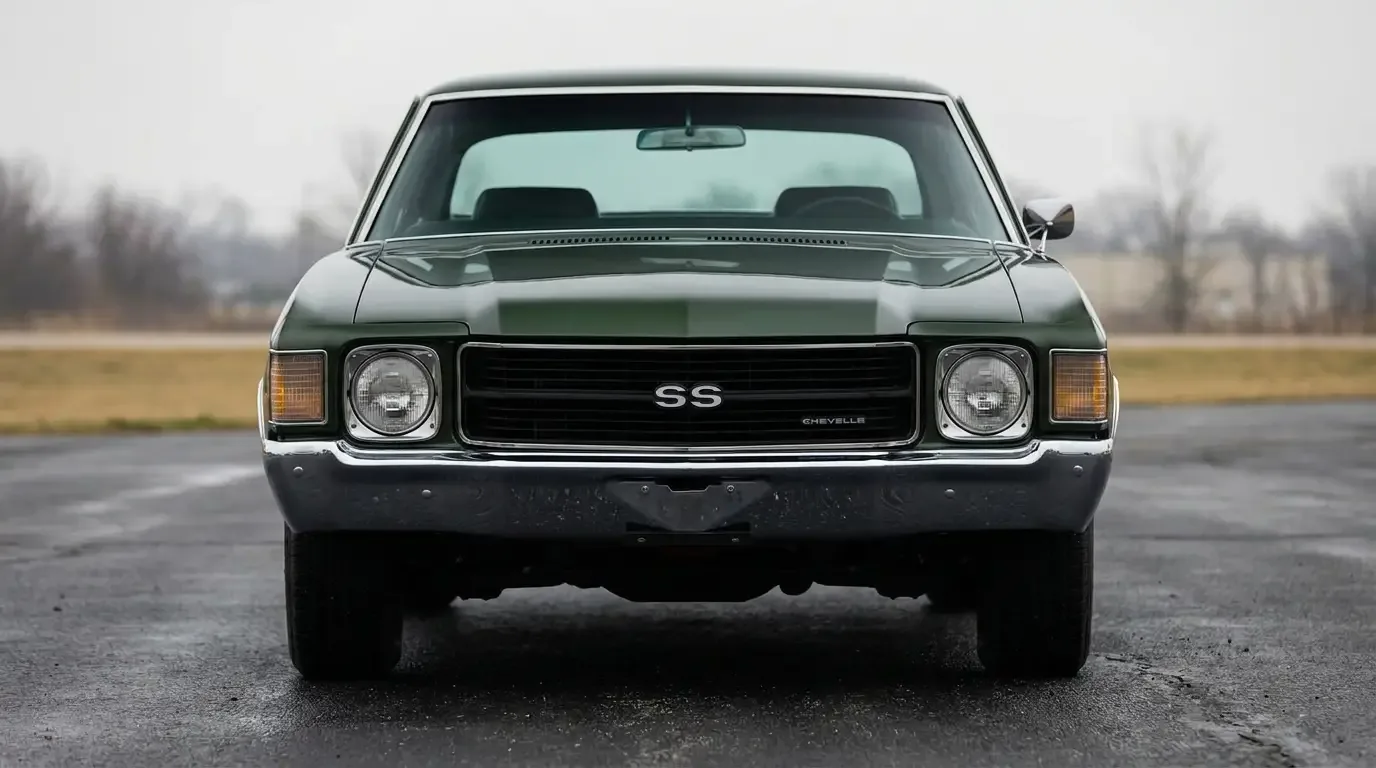
That's the whole story of 1971, in a way. It's not a redesign anybody throws a parade for. No new sheet metal below the beltline, no dramatic new hood scoop debuting that year. Just a front end that quietly stepped back from the aggressive twin-lamp face of 1970 and settled into something calmer. And once you notice it, you can't unsee it on every '71 you pass at a show from then on.
What actually changed up front
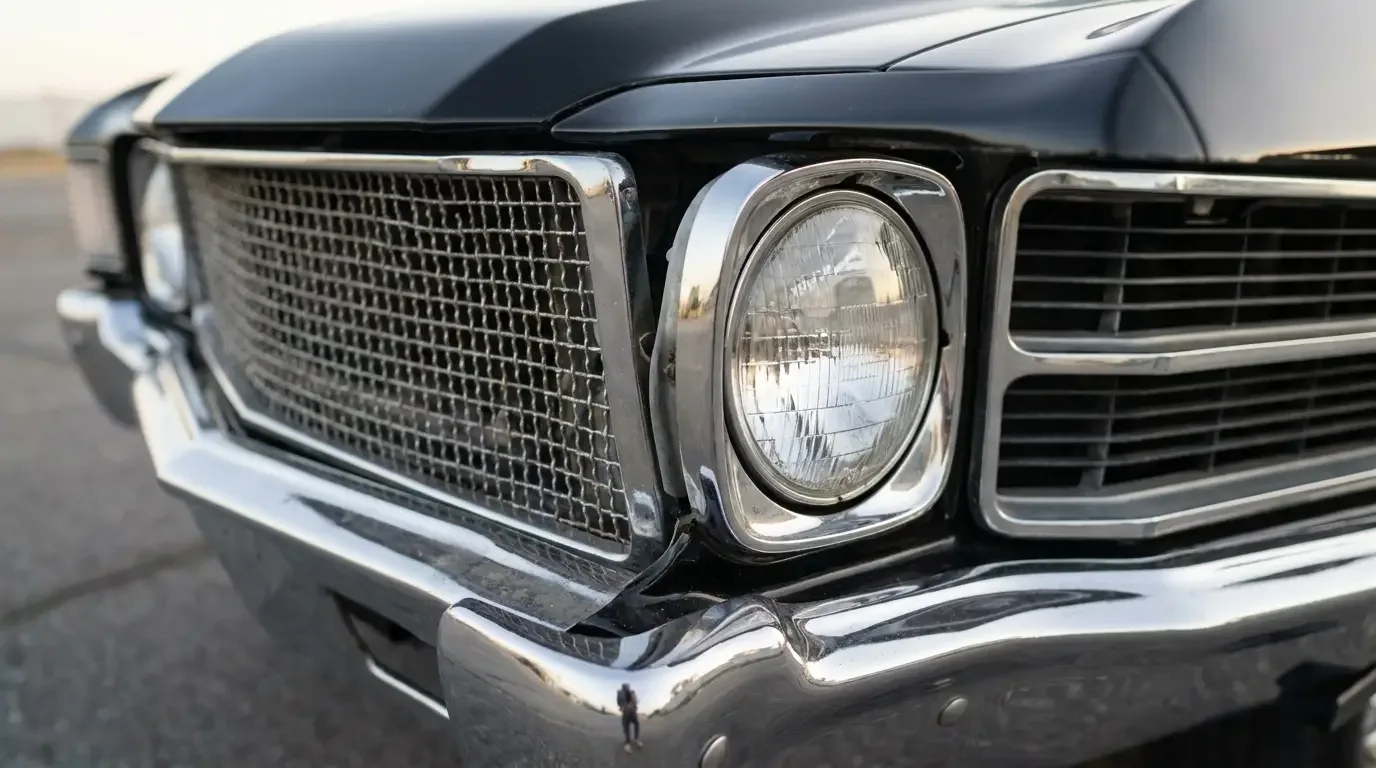
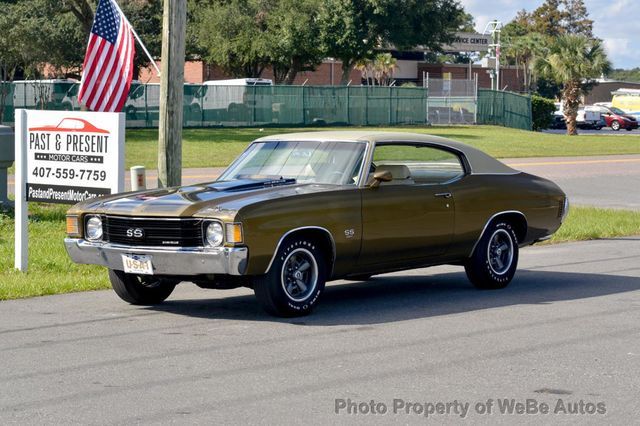
For 1971, Chevrolet dropped the dual round headlamp setup that had defined the Chevelle's face since 1968 and moved to a single round headlamp per side, set into a wider, simpler grille opening. The overall stance of the car underneath, the coke-bottle hip, the general proportions, carried over largely unchanged from 1970. This was a front-clip story, not a whole-body one.
It's a smaller move than it sounds, and also a bigger one, depending on how you look at it. Smaller, because the guys at the plant weren't retooling stamping dies for new quarter panels or a new roofline. Bigger, because a car's face is the thing everybody actually looks at first, and Chevrolet chose to make that face read differently than it had for three straight model years. If you'd only ever seen a 1968 through 1970 Chevelle in your life and someone rolled a '71 up next to you, you'd clock the difference before you clocked anything else.
Why a car company makes a change like this
I've talked to enough people in this hobby to know there isn't one clean answer for why Detroit made a call like this in any given year. Sometimes it's cost, a single-lamp assembly is simpler and cheaper to produce than a dual-lamp bucket setup. Sometimes it's about differentiating a model year in a competitive lineup where the GTO, the 442, and the GS were all fighting for the same buyer's attention on the same showroom floor. And sometimes it's just a styling department wanting a change for its own sake, the same reason a fashion house shifts a hemline a season after everybody just got used to the old one. Chevrolet never published a stated reason for the switch, so this is read from the result, not from a memo. What's documented is where the part came from: the single-lamp housing wasn't a new design drawn up just for the Chevelle, it was carried over from the Monte Carlo, which had introduced it a year earlier for 1970.
Whatever the internal reasoning was, the effect on the street was real. The 1971 Chevelle looks a little less like it's squaring up for a fight and a little more like a car that's comfortable being seen as a mid-size Chevrolet first and a performance statement second. That tracks with where the muscle car era was heading generally by 1971, insurance costs climbing, compression ratios starting to drop, the whole segment easing off the throttle a little before the harder cuts of 1972 and beyond.
🔧 Inspection Priorities
- Correct single-lamp grille and bezel set. Because this is a one-year-only face on the second-generation body, a damaged or missing bezel can be harder to source than parts shared across multiple model years. Check condition closely before you assume replacement is simple.
- Grille-to-fender fit. A wider single-lamp opening changes how the grille meets the fender edge compared to 1970. Gaps or misalignment here often trace back to a front-end collision repair, not just wear.
- Headlamp bucket originality. Some owners over the years have swapped in dual-lamp buckets from other model years chasing the more aggressive 1970 look. That's a builder's choice to know about going in, not a defect exactly, but it changes the car's originality story.
- Trim and emblem placement. The grille badge location shifted slightly with the new opening. Compare against period photos if you're evaluating a car for correctness.
A face that gets overlooked, and shouldn't
Talk to enough collectors and you'll hear the 1970 called the definitive Chevelle face more often than the 1971. I understand the appeal of that argument. But I'd push back a little on writing off 1971 as just a lesser cousin. There's something to be said for a car that steps back from maximum aggression on purpose. The single-headlamp face has a cleaner, more resolved look to it once you stop measuring it against the year before. It's the kind of design choice that reads better in person than in a photo, the way a lot of subtle changes do.
The guy in that driveway outside Nashville put it best. He said the '70 is the car you point at. The '71 is the car you live with. He wasn't wrong. There's a quiet confidence to a single round headlamp sitting alone in a wide grille opening, not trying to out-shout the model year before it.
| Detail | 1971 Chevelle |
|---|---|
| Headlamp layout | Single round headlamp per side, new for 1971 |
| Prior year layout | Dual round headlamps, used 1968 through 1970 |
| Body carryover | Coke-bottle body and general proportions carried from 1970 |
| Broader context | Muscle car segment beginning to ease off performance emphasis industry-wide |
"Everybody wants to talk about the year with the biggest engine or the loudest hood scoop. Nobody stops to talk about the year that just quietly looked different, and I think that's a mistake. The 1971 face tells you something about where the whole muscle car conversation was heading, even if the car itself doesn't shout about it."
Patrick Walsh
Spotting a 1971 at a glance
If you're new to these cars, the fastest way to pick a 1971 out of a lineup of second-generation Chevelles is exactly what that guy at the cruise-in taught me: count the headlamps. One per side and you're looking at a '71. Two per side and you're looking at any other year from 1968 through 1970. Everything else about the front clip, the grille shape, the bumper, the general proportion, takes more study to place correctly, but the headlamp count never lies.
For the fuller picture of how the Chevelle's face changed across its entire run, from the honest, squared-off first generation through the colonnade cars that closed out the '70s, the full design story lays out every year in order. And if you want to keep following the thread of what made the second-generation front clip so distinctive, read on to next: The Cowl-Induction Hood as Design Statement, which picks up one of the details that carried through several of these model years.
Sources and notes
Related Reading
Have a
Chevrolet Chevelle
for Sale?
Reach thousands of serious classic car collectors across the US.
Sell It Here →
Are You a Classic Car Dealer?
List your full inventory and connect with targeted classic car buyers.
Join as a Dealer →
#chevelle history
#Chevelle styling
#muscle car design
#1971 Chevelle
#A-body design
#single headlamp

About the author
Patrick Walsh
Automotive journalist covering classic car shows, events, and the enthusiast community across North America.
Related Listings - Chevrolet Chevelle
Comments
Be the first to comment on this article.