
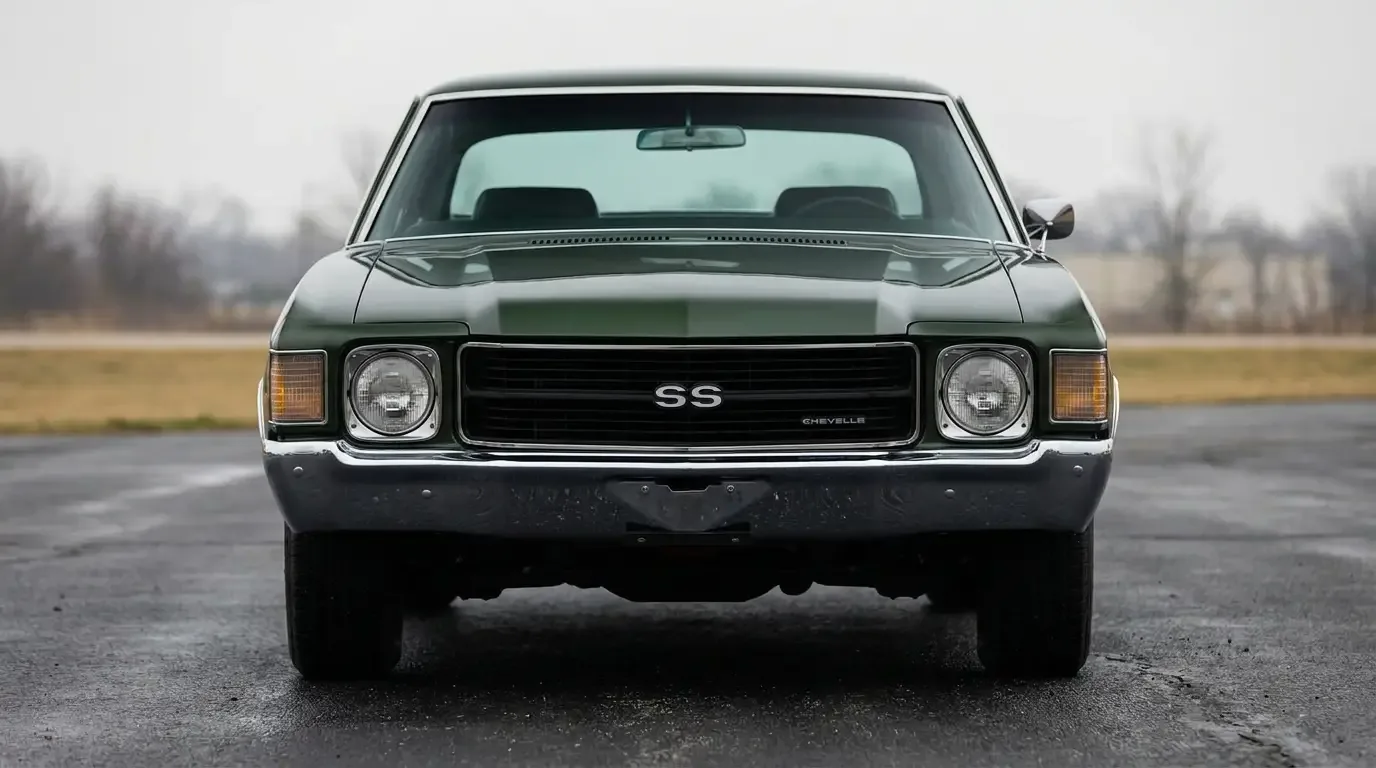
I've had a lot of Chevelles in my shop over the years, but the 1970 is the one that stops people at the door. Not because it's rare. Not because it's the fastest year, though the big-block cars make a real case for that too. It's the face. Somebody in GM's styling studio finally got every line on that front clip pointed the same direction, and the result is a car that looks like it means the badge on the fender.
Car Features
8 min read
1970: The Definitive Chevelle Face
Why the 1970 Chevelle's deeper grille, tucked headlamps, and cowl induction hood make it the model year that finally got the A-body's proportions right.
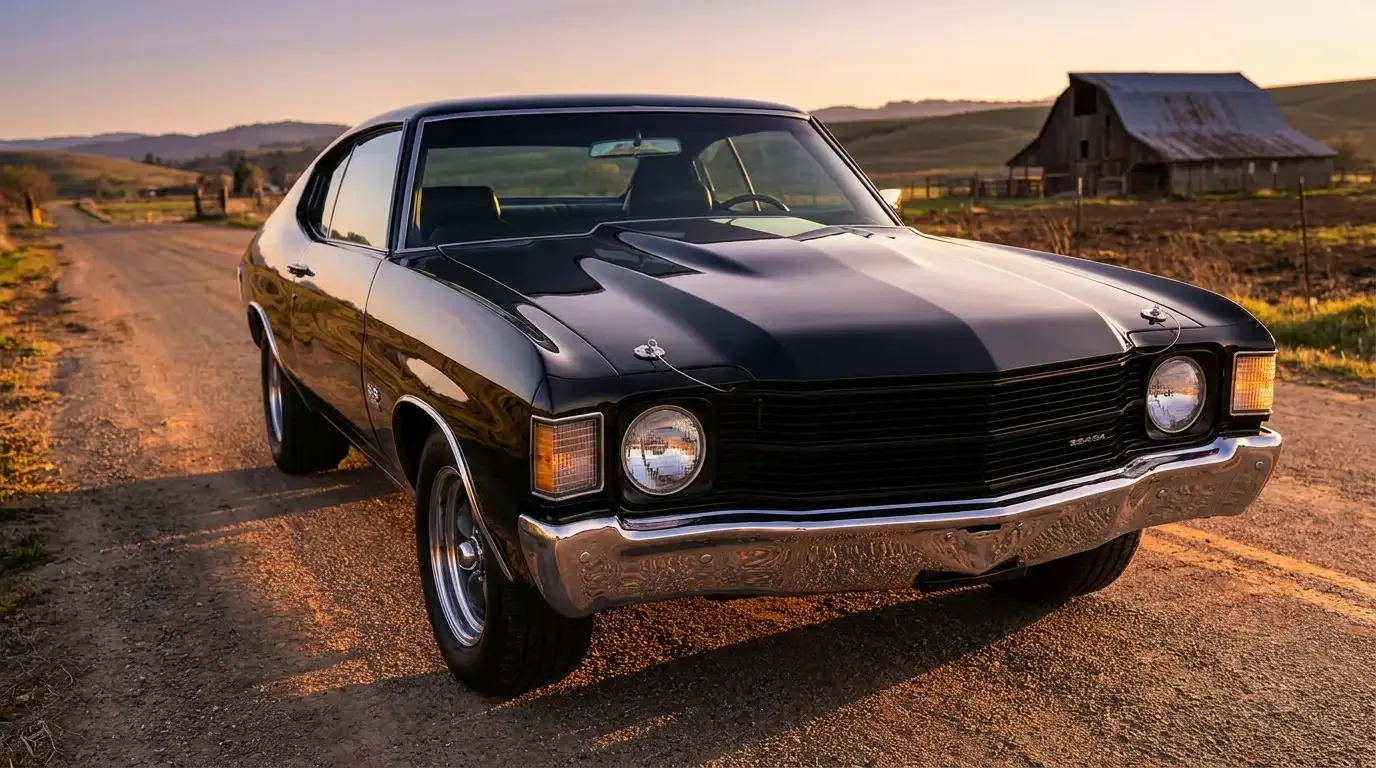
A lot of writers treat 1970 as just the year the 454 showed up under the hood. That's part of it, sure. But the sheet metal did as much work that year as the engine bay did, and if you're trying to understand why this specific model year commands the attention it does, you have to start with the nose.
A deeper, more deliberate grille
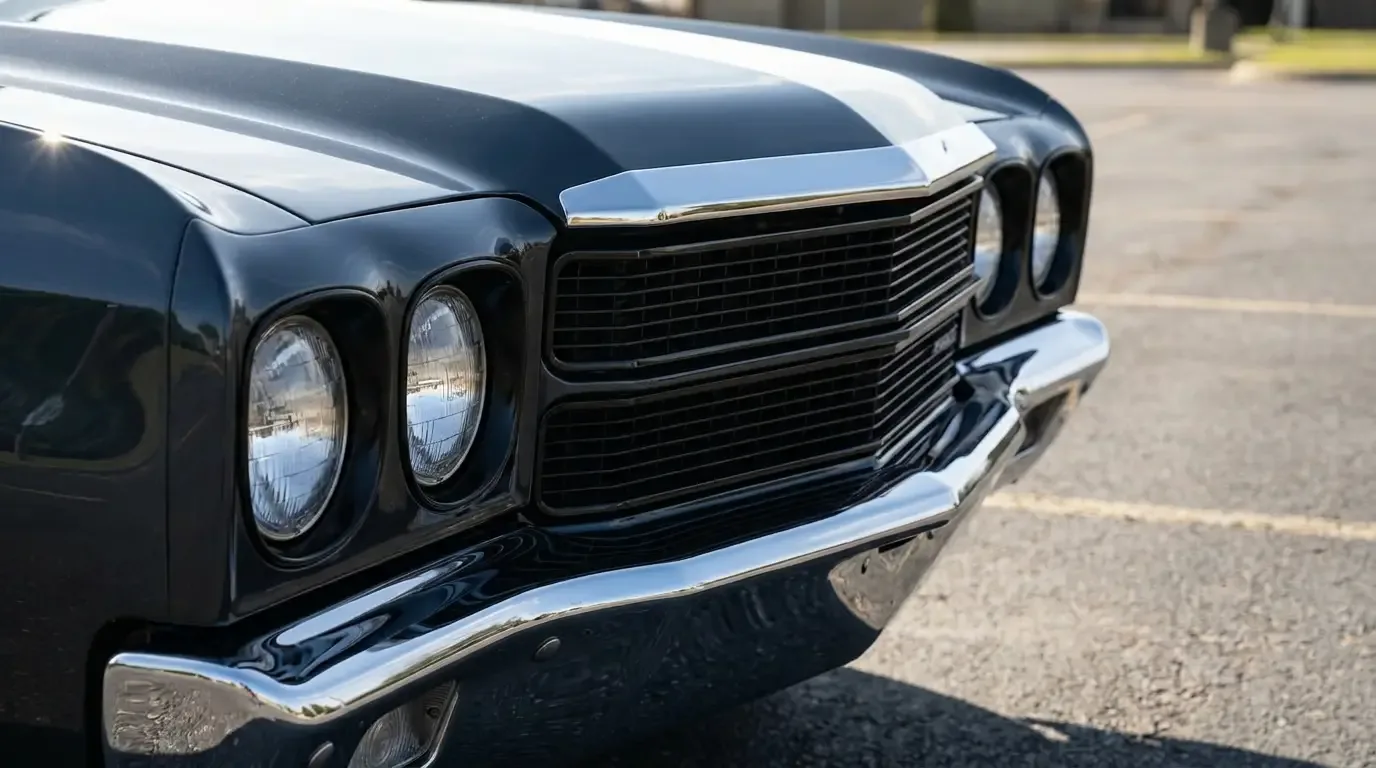
The 1969 Chevelle wore a grille that still looked, in a lot of ways, like a running change off the 1968 face. Functional, clean, but a little cautious. For 1970, the stylists cut the grille opening deeper into the front clip and gave it more shadow, more presence at ten feet. On the SS-optioned cars especially, that grille sits in a blacked-out surround that reads aggressive without needing chrome to do the talking.
The dual round headlamps carried over from the previous two years, but they sit differently in this new face, tucked closer to the grille edges rather than floating out toward the fender line. It's a subtle shift, the kind of thing you notice more with your hand than your eye when you're standing next to the car. Run your palm along the leading edge of that fender and you can feel how much more sculpted this front clip is compared to a 1969.
The hood does the heavy lifting
Here's where 1970 pulls ahead of every other model year in the second generation, in my opinion. The available cowl induction hood, the one with the vacuum-operated flap at the rear edge, doesn't sit on that coke-bottle body like an afterthought. It reads as one continuous piece of sculpture from the cowl to the leading edge, like the guys who drew the hood and the guys who drew the fenders were actually talking to each other for once. That's rarer than people think in Detroit production cars from this era, where a lot of hood options got bolted on late in the design process and it shows.
I go into the cowl induction system itself in more detail elsewhere, because it deserves its own treatment as an engineering and design story. What matters here is the visual effect: that hood is the single biggest reason a 1970 SS454 photographs the way it does. Take the hood off a well-preserved '70 and put a flat hood in its place, and the whole face of the car loses its attitude. I've seen it happen on a car that came through my shop with a mismatched replacement hood, and it was like watching somebody take the jaw off a bulldog.
🔧 Inspection Priorities
- Grille surround condition and correct blackout finish. The 1970 SS grille surround is a specific piece, not interchangeable in appearance with 1969 or 1971 trim. A faded, sun-cracked, or incorrectly finished surround is a giveaway on a car claiming to be numbers-correct.
- Cowl induction hood fit at the cowl seam. Reproduction hoods vary in how tightly they sit against the cowl panel. A gap here, or a hood that rocks when you press down near the vacuum flap, usually means a non-factory or poorly fitted piece.
- Headlamp bucket alignment. Because the 1970 face sits the headlamps differently than 1969, buckets that have been swapped from the wrong model year, or bent in a front-end repair, throw off the symmetry that makes this face work. Sight down both sides of the grille opening from directly in front of the car.
- Front bumper mounting and gap. A poorly reinstalled or incorrectly shimmed bumper changes the whole proportion of the nose. This is a cheap thing to fix and an easy thing to overlook.
Reading a 1970 versus its neighbors
If you're new to these cars and you're trying to tell a 1970 apart from a 1969 or 1971 at a glance, the grille depth and the headlamp placement are your fastest tells before you ever check trim tags or VIN plates. A 1969 grille sits flatter and rounder at the edges. A 1971, which I've written about separately, drops down to a single headlamp per side entirely, a completely different design language. The 1970 face is the middle year, and in my opinion it's the one where GM got the proportions exactly right before the emissions and safety regulations of the early '70s started constraining what stylists could do with a front clip.
That's not a small thing. Bumper standards were about to change the whole conversation for Detroit intermediates within a couple of model years. The 1970 Chevelle got to exist in a window where a styling department could still chase pure aggression without a federal bumper height mandate telling them where the sheet metal had to end. You can see that freedom in the way the grille tucks in behind the bumper instead of being built around it.
| Detail | 1970 Chevelle |
|---|---|
| Headlamp layout | Dual round, tucked closer to grille edges than 1969 |
| Grille | Deeper-set opening, blacked-out surround on SS trim |
| Signature hood option | Cowl induction, vacuum-actuated rear flap |
| Top engine option | 454 cu in big-block, RPO Z15 SS454 package: LS5 (360 hp, hydraulic lifters) or LS6 (450 hp, solid lifters) |
| Following model year change | 1971 drops to single headlamp per side |
"You can chase a lot of model years chasing the perfect proportions on an A-body, and I keep landing back on 1970. Everything on that front clip agrees with everything else. The grille, the hood, the stance, it's not fighting itself anywhere. That's the mark of a styling studio that had the confidence to commit."
Jim Vasquez
Why this face still gets attention
Collectors and casual fans both gravitate toward the 1970 Chevelle for a reason that goes beyond nostalgia or engine displacement. It's a face that reads as confident from every angle, front three-quarter, straight on, even in a side mirror. That's not something you can say about every muscle-era front clip, plenty of which were compromises between styling ambition and cost. If you want the fuller picture of how the Chevelle's shape evolved before and after this year, Chevelle styling history walks through the whole arc from the square-shouldered first generation through the colonnade cars that closed out the run.
If you're shopping for one of these right now, don't just look at the badge on the fender or the engine code on the block. Spend real time with the front clip and make sure the pieces that make 1970 what it is, the grille, the hood, the headlamp placement, are correct and undamaged. You can go find a 1970 Chevelle for sale and use everything above as your first pass before you ever get to the drivetrain conversation. And if you want to see where the styling story goes from here, read on to next: 1971's Single-Headlamp Look, which is a genuinely different face on the same basic body.
Sources and notes
Related Reading
Have a
Chevrolet Chevelle
for Sale?
Reach thousands of serious classic car collectors across the US.
Sell It Here →
Are You a Classic Car Dealer?
List your full inventory and connect with targeted classic car buyers.
Join as a Dealer →
#1970 chevelle
#Chevelle SS454
#Chevelle styling
#cowl induction hood
#A-body design
#muscle car styling

About the author
Jim Vasquez
Southern California hot rod and custom car builder with roots in the traditional kustom kulture scene.
Related Listings - Chevrolet Chevelle
Comments
Be the first to comment on this article.