
Most hood options on a muscle car are marketing dressed up as engineering. A scoop bolted on top of a flat hood, some black paint, a decal, and a sales brochure that calls it "performance styling." The cowl induction hood on the Chevelle isn't that. It's one of the rare factory options from this era where the function actually shaped the look, instead of the look pretending at a function that wasn't there.
Car Features
7 min read
The Cowl-Induction Hood as Design Statement
How the Chevelle's cowl induction hood turned a functional air intake system into one of the era's most purposeful pieces of factory design.
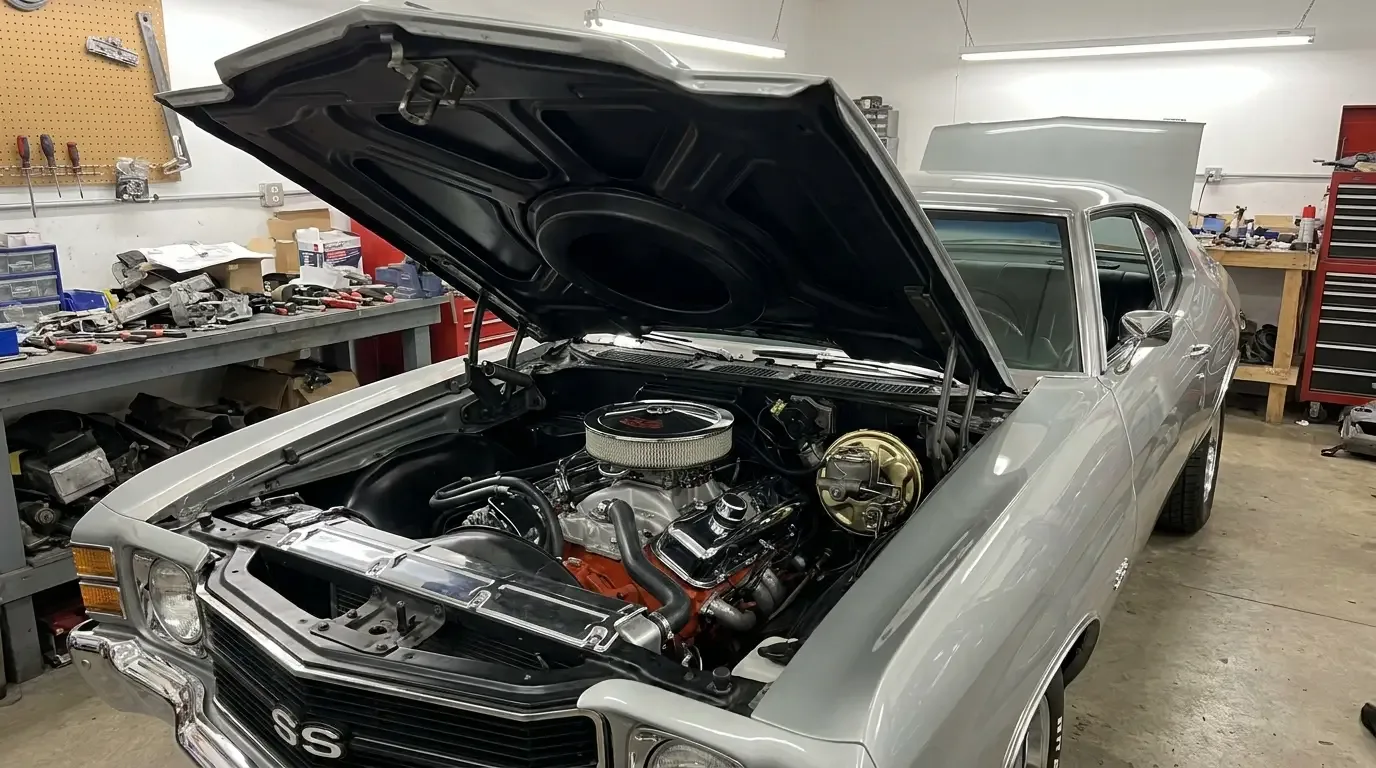
I've had my hands inside enough of these hoods, fitting them, aligning them, chasing down the vacuum lines that make the rear flap work, to have real opinions about why this particular piece of sheet metal matters as much as it does. It's not just a badge of a well-optioned car. It's a design statement that happens to also do a job.
What the flap is actually doing
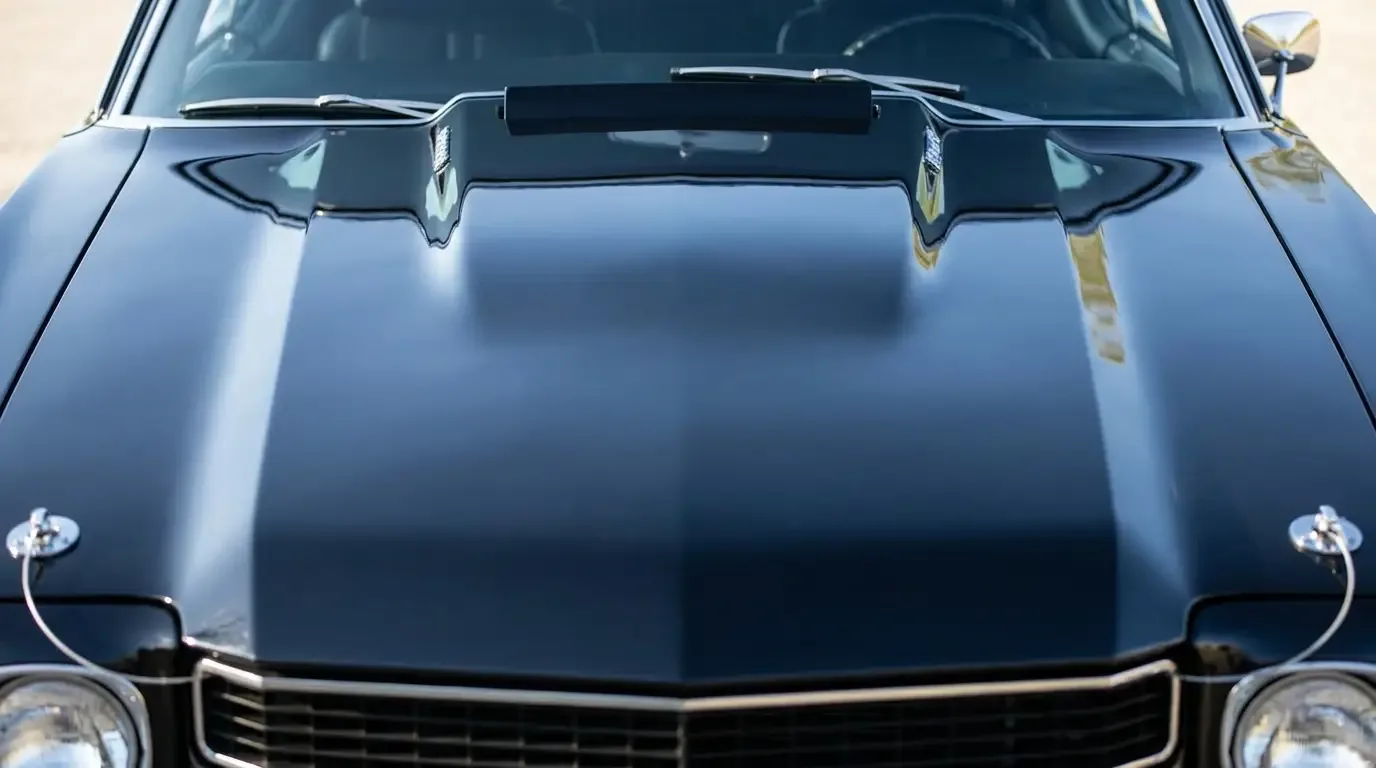
The cowl induction system draws air from the base of the windshield, the high-pressure zone that forms at the cowl when the car is moving, and routes it down into the carburetor through a vacuum-actuated flap built into the rear edge of the hood. At low throttle and idle, the flap stays closed and the engine breathes through the underhood air cleaner like any other setup. Get into the throttle hard enough and manifold vacuum drops, the flap pops open, and the engine pulls in cooler, denser outside air instead of hot air trapped under the hood.
Cooler, denser air makes more power, full stop. That's not marketing language, that's basic thermodynamics that any engine builder will back up. But here's the part that makes this hood a design story and not just a mechanical one: GM's stylists didn't just cut a hole and bolt a flap over it. They shaped the entire hood around that function, and the result looks purposeful from every angle instead of looking like an afterthought stapled onto a flat panel.
Why the shape works as sculpture
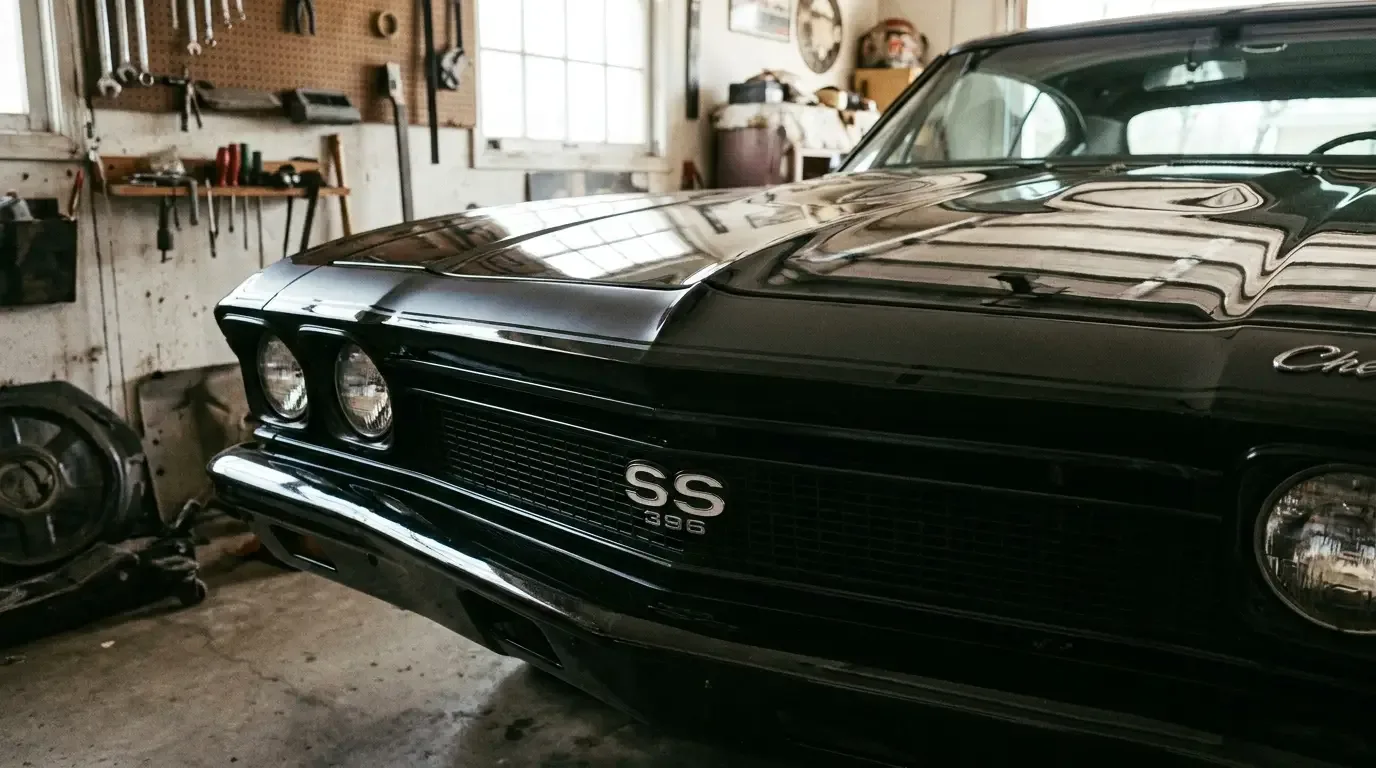
Look at a cowl induction hood off the car, on a bench, and you can see what I mean. The rise starts low near the grille and builds gradually toward the cowl, where the flap sits, so the whole panel reads as one continuous form instead of a flat hood with a box dropped in the middle. That's harder to stamp and harder to fit correctly than a simple bolt-on scoop, and it's exactly why a poorly made reproduction hood is so easy to spot once you know what correct actually looks like.
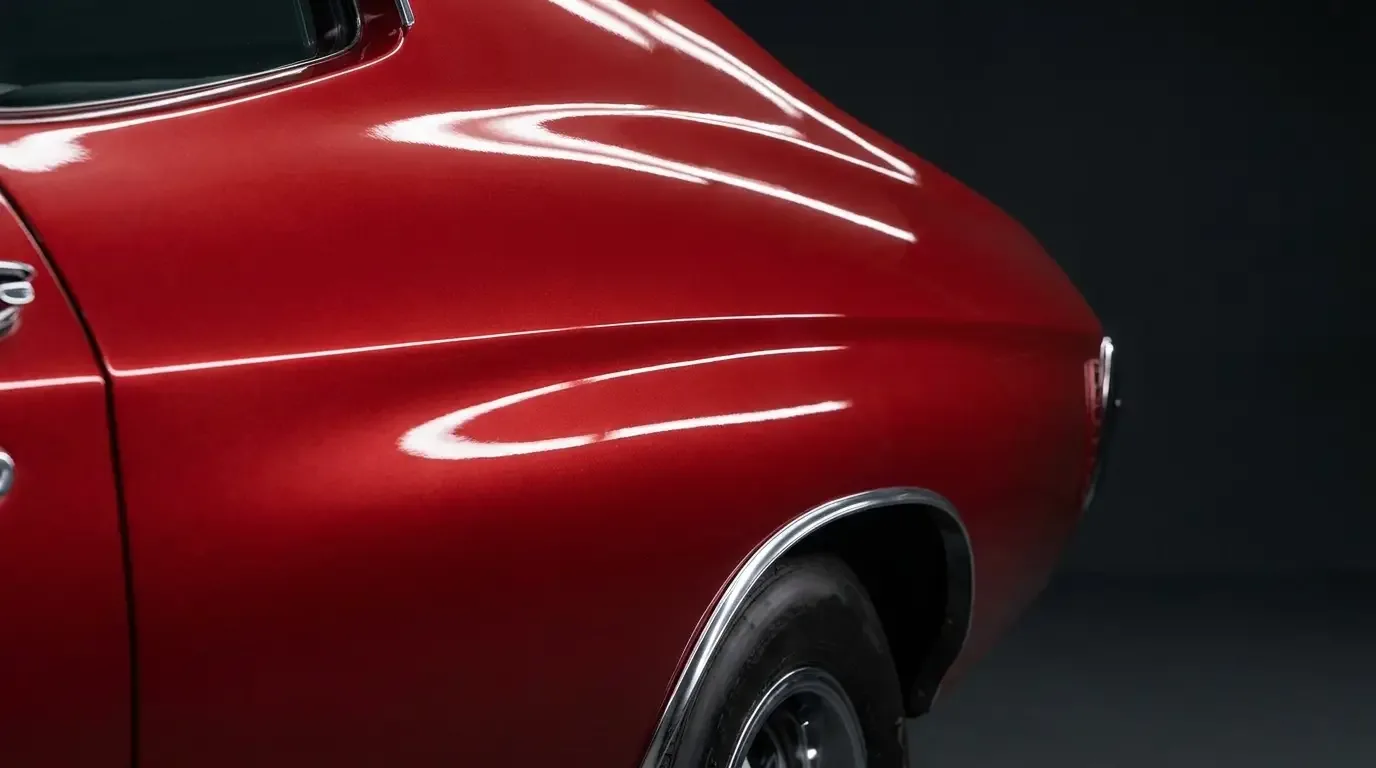
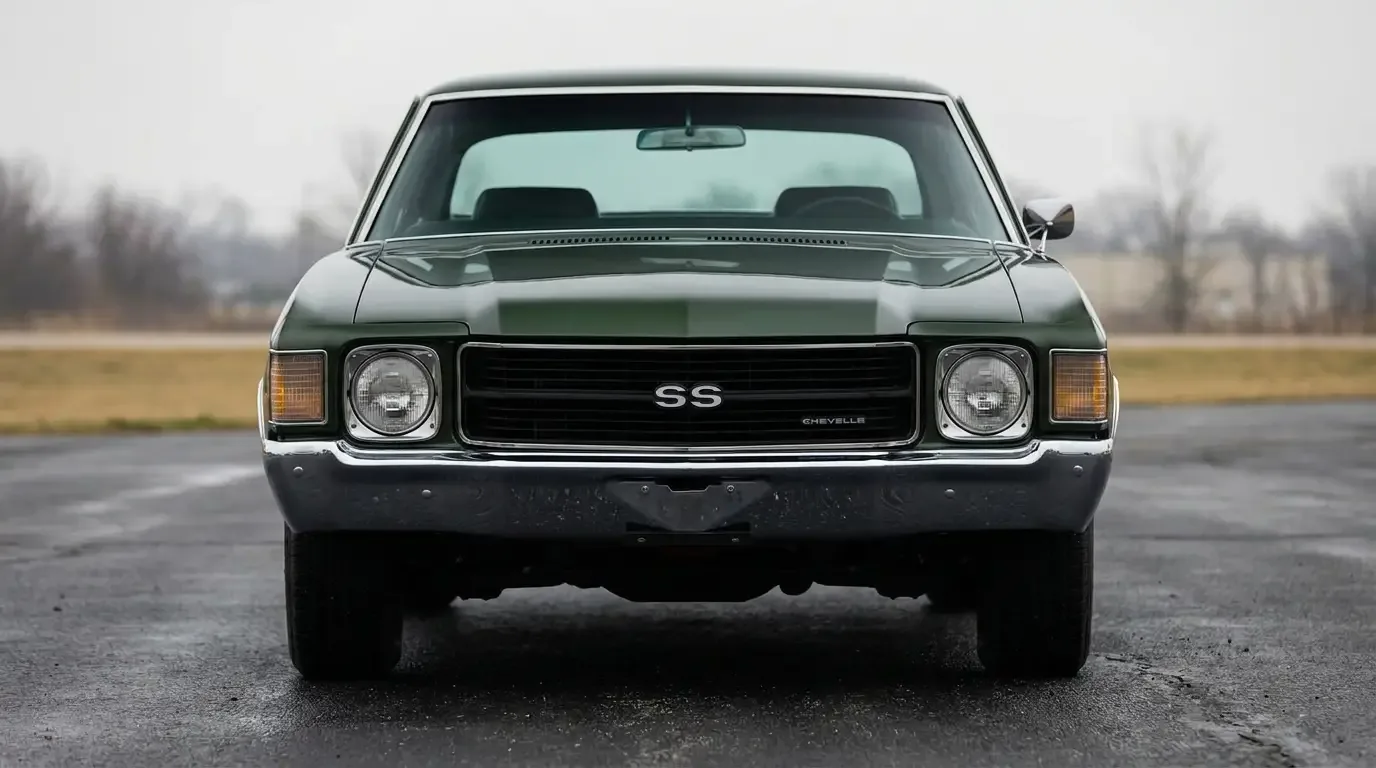
On a 1970 through 1972 Chevelle SS, that hood sits on top of the coke-bottle body in a way that makes the whole front half of the car look like it's leaning forward, ready to move, even parked in a driveway with the engine off. I've said this before about the '70 specifically, and it applies to the option across the years it was offered: the hood and the body were drawn by people who were actually talking to each other, not two separate departments working from different memos.
🔧 Inspection Priorities
- Flap operation and vacuum line routing. A cowl induction hood that doesn't open under load isn't just cosmetic, it means the system's either been disconnected, capped off, or the actuator has failed. Test it under a hard throttle pull if the seller allows, or at minimum check the vacuum line is intact and correctly routed.
- Hood-to-cowl seam fit. This is the single biggest tell on a reproduction piece. The seam where the hood meets the cowl panel needs to sit tight and even. A gap, or a hood that rocks under light pressure near the flap, tells you the panel wasn't tooled to factory contour.
- Correct hinge and latch hardware. Cowl induction hoods sometimes used different hinge geometry than a standard flat hood to clear the added structure underneath. Mismatched hardware from a parts-swap can cause alignment problems that look like body damage but aren't.
- Underside reinforcement condition. The added structure under a cowl induction hood traps moisture differently than a flat hood. Check for rust or filler along the underside ribs before assuming a clean top coat means a clean panel.
Getting it wrong on a build
I see a lot of builds, restorations and resto-mods both, where somebody drops a reproduction cowl induction hood on a car and calls it done, without checking whether the actual system underneath is functional or just for show. That bugs me. If you're going to run this option, run it correctly, flap working, vacuum line routed the way the factory did it, or don't bother pretending. A non-functional cowl induction hood sitting on a car is a costume, not the real thing, and anybody who's spent real time under one of these can tell the difference at a glance.
The flip side is a car where somebody's actually done the work. Correct hood, correct flap operation, correct underhood plumbing tying it all together. That's a build that respects what the factory was actually trying to do with this option, not just what it looked like from the sidewalk. I have more time for a slightly rough car with a correctly functioning cowl induction setup than a show-quality paint job sitting on top of a hood that's never opened a flap in its life.
| Detail | Cowl induction hood |
|---|---|
| Function | Draws cooler outside air from the windshield cowl into the carburetor under load |
| Activation | Vacuum-actuated rear flap, opens under hard throttle, closes at idle/low load |
| Years offered on Chevelle | RPO ZL2, 1970 through 1972, big-block SS396/SS454 cars only |
| Design signature | Continuous rise from grille to cowl, not a bolted-on flat panel scoop |
"A bolt-on scoop is a costume. Cowl induction is a system, and the hood shape exists because of what's happening underneath it, not the other way around. When you understand that, the whole panel reads differently. It's not decoration. It's the visible part of an engineering decision, and that's why it still looks right fifty years later."
Jim Vasquez
Why this piece still matters to buyers
A correct, functional cowl induction hood adds real value to a Chevelle, separate from whatever's happening with the engine underneath it. Buyers should treat the hood as its own inspection item, not a footnote to the drivetrain conversation, because a wrong or non-functional hood on an otherwise correct car changes the whole story you're being sold. If you want to see how this piece fits into the bigger picture of how the Chevelle's body language changed year to year, the Chevelle's design story covers the whole arc, hood included.
The hood is one piece of a bigger visual language GM built into these cars, badges, stripes, trim, all working together to signal what kind of Chevelle you're looking at before you ever read a build sheet. Read on to next: SS Stripes and Emblems for the rest of that language.
Sources and notes
Related Reading
Have a
Chevrolet Chevelle
for Sale?
Reach thousands of serious classic car collectors across the US.
Sell It Here →
Are You a Classic Car Dealer?
List your full inventory and connect with targeted classic car buyers.
Join as a Dealer →
#chevelle ss
#1970 chevelle
#Chevelle styling
#cowl induction hood
#A-body design
#muscle car hood design

About the author
Jim Vasquez
Southern California hot rod and custom car builder with roots in the traditional kustom kulture scene.
Related Listings - Chevrolet Chevelle


Comments
Be the first to comment on this article.