
On April 7, 1972, the assembly line in Norwood, Ohio, went quiet, and it stayed quiet through the spring, through the summer and into the last days of September. The men and women of UAW Local 674 walked out of the plant that had been building cars on that site since 1923, and they left behind them a line full of half-built Camaros and Firebirds. The 1972 Camaro strike lasted 174 days. It was the longest strike in General Motors history at the time, and when it ended, the Camaro itself was no longer a sure thing. Inside GM, the company had seriously considered letting the car go. This is the story of how close it came, and why it did not happen. For the wider run of the 1970 to 1981 cars, the second-generation guide has the full story.
Car Features
6 min read
The 1972 Norwood Strike and the Camaro's Near Cancellation
The 1972 Camaro strike shut Norwood for 174 days, scrapped about 1,100 cars and nearly ended the F-body. How the Camaro survived.
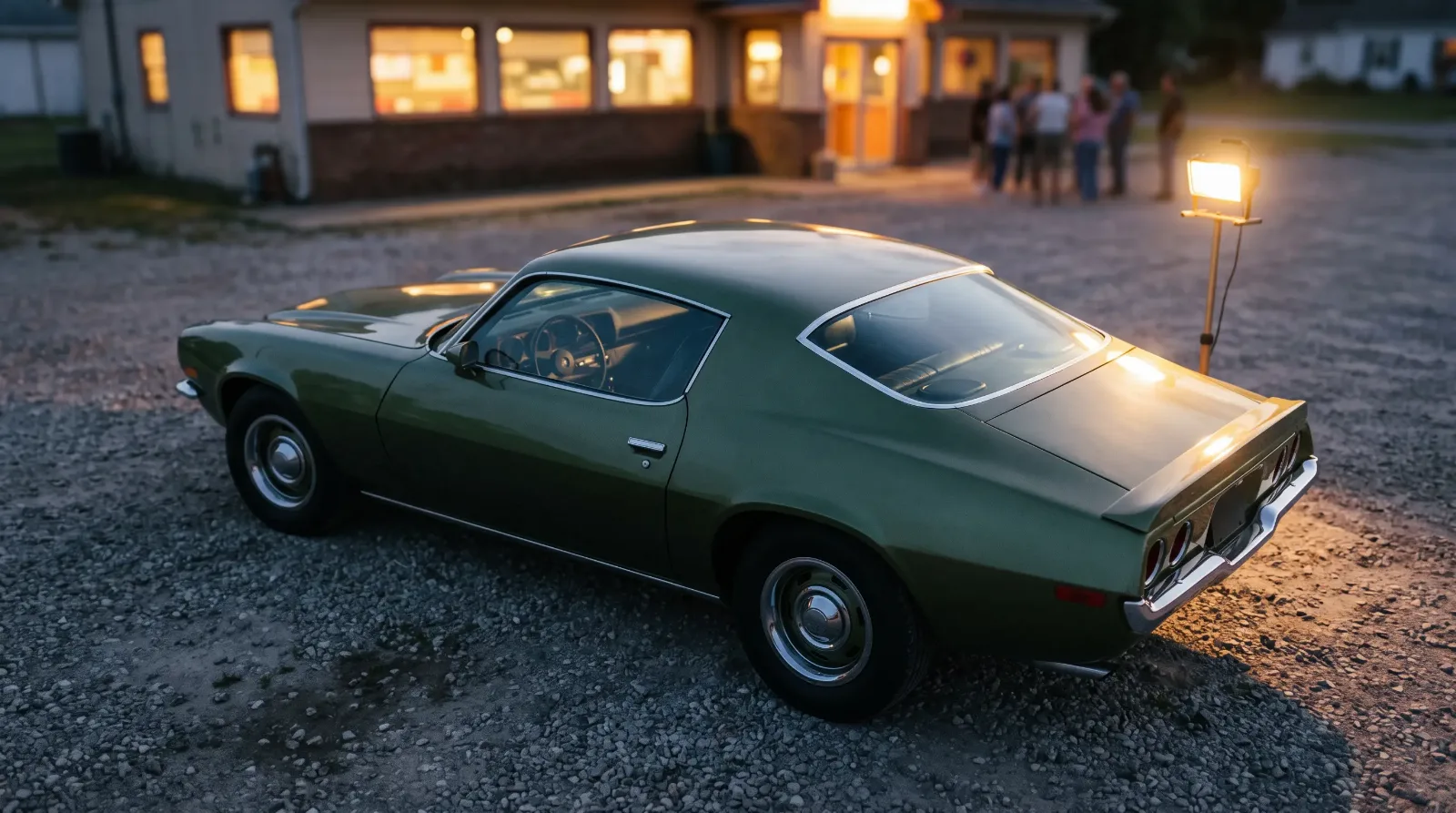
Why the 1972 Camaro strike happened
At the center of the fight at Norwood was the question of how GM wanted to run its plants. The company was consolidating its Chevrolet and Fisher Body plants under a single management, the General Motors Assembly Division, known as GMAD. The union's position was that a change like that required a new contract.
Local 674 went out. The timing could hardly have been worse for the Camaro. Norwood was the only plant building Camaros and Firebirds in 1972, so when its gates closed, the whole F-body supply closed with them. There was no second line to pick up the slack.
It was not the first labor trouble the second-generation car had lived through, either. In 1970, a 67-day corporate-wide GM strike had coincided with the late-September introduction of the 1971 models. The Camaro had already learned what a quiet factory could cost it. In 1972 it learned again, and at much greater length.
The 1,100 cars that could not be finished
The strike ended on September 27, 1972. By then the calendar had done something the union and management could not undo. The cars still sitting on the line had been built as 1972 models, and 1973 federal bumper and safety standards were now about to apply. About 1,100 partly built cars, Camaros and Firebirds, could not be brought up to those standards.
So they were scrapped. Cars that had been waiting on the line since April were hauled away rather than finished. For a plant that had been idle for six months, it was a hard way to restart.
The year GM nearly let the F-body go
Here is the part that still surprises people who know the Camaro only as a fixture. In 1972, GM seriously considered killing the F-body altogether. Production had collapsed, the plant had been dark for half a year, and the whole muscle car world was changing under tightening emissions and safety rules. Nobody had to look far for a reason to end it.
The Firebird side shows how deep the damage went. Pontiac's output fell from 53,124 cars in 1971 to 29,951 in 1972, and Pontiac came close to dropping the Firebird. If both divisions had walked away, the F-body would have ended with the 1972 model year.
The car survived, by most accounts, because it had "friends in high places" inside the corporation. Who those friends were has never been firmly established. One source credits a single Chevrolet engineer with saving it, but no other source backs that up, and a story this good deserves better than one line of evidence. What is certain is the outcome: the Camaro came back for 1973.
"People talk about the Camaro as if it was always going to be there. In the fall of 1972 it very nearly was not. Every second-gen car built after that strike exists because somebody inside GM decided the car was worth one more try."
Patrick Walsh
What survived the strike: 1972 by the numbers
The 1972 Camaros that did get built are now among the scarcer cars of the generation. Chevrolet built 68,656 in total. The Z28 run was 2,575. And 1972 was the last year of the original SS, with 6,562 built by one count, only 970 of them SS 396s. Their 396, the LS3, was rated at 240 hp net, and it was the last factory big-block in a classic Camaro.
| Model year | Camaro production | Z28 production | Note |
|---|---|---|---|
| 1970 | 124,901 | 8,733 | Late start, February 1970 |
| 1971 | 114,630 | 4,862 | 67-day GM strike at launch |
| 1972 | 68,656 | 2,575 | 174-day Norwood strike |
| 1973 | 96,751 | 11,574 | Type LT arrives |
| 1974 | 151,008 | 13,802 | Back above 150,000 |
The strike left marks on Norwood too. After it, GM moved Nova production out of the plant. The Camaro stayed, and Norwood kept building it until August 26, 1987, when a red IROC-Z became the last car to leave the line.
The comeback, and the 1972 car today
The 1973 Camaro was a reset. The SS was gone, and in its place Chevrolet introduced the Type LT, a Luxury Touring model with full-foam seats, woodgrain door trim and full instrumentation. It sold 32,327 of the 96,751 Camaros built that year. The Z28 got hydraulic lifters and, for the first time, air conditioning. By 1974 production was back over 150,000, and the car GM had nearly cancelled was well on its way to the best sales years of its life.
That arc is part of why the Camaro matters as more than a car. It survived a strike, a near cancellation and the end of the muscle era, and it kept a factory town working for another fifteen years. If you want to see how 1972 fits the whole run, follow the Camaro from 1967 on.
For buyers, the strike year carries a particular appeal. A 1972 is the last year of the original SS and of the factory big-block, built in the smallest numbers of any classic Camaro year. If that sounds like your car, the current listings of 1972 Camaros for sale are the place to start, and the story behind the year is worth knowing before you go to look at one.
Sources and notes
- Norwood Assembly, Wikipedia
- Chevrolet Camaro (second generation), Wikipedia
- Jeff Suess, Cincinnati Enquirer, on the Norwood plant and the 1972 strike
- Second-gen Camaro, 1970 to 1981: the one that had class, Hagerty
- 1972 Firebird history and production, Tran-Zam
- 1970 to 1974 Chevrolet Camaro profile, Collector Car Market
Related Reading
Have a
Chevrolet Camaro
for Sale?
Reach thousands of serious classic car collectors across the US.
Sell It Here →
Selling a classic? Here's how: the best sites to sell a classic car
Are You a Classic Car Dealer?
List your full inventory and connect with targeted classic car buyers.
Join as a Dealer →

About the author
Patrick Walsh
Automotive journalist covering classic car shows, events, and the enthusiast community across North America.
Related Listings - Chevrolet Camaro




Comments
Be the first to comment on this article.