
Search the classifieds for a 1970 Camaro convertible and you will find a few. None of them left a Chevrolet plant that way. The 1969 Z11 pace car convertibles, 3,675 of them, were among the last factory Camaro convertibles of the first generation, and the next factory-program convertible did not arrive until the 1987 model year. In between sat twelve model years of the second-generation car, 1970 to 1981, and every one of them was a coupe. This article is about why. For the wider story of those years, see the second-gen years.
Car Features
6 min read
Why There Was No Second-Generation Camaro Convertible
Chevrolet built the second-gen Camaro as a coupe only from 1970 to 1981. What the records say about tooling, the strike and the T-tops.
The record: twelve years, one body style
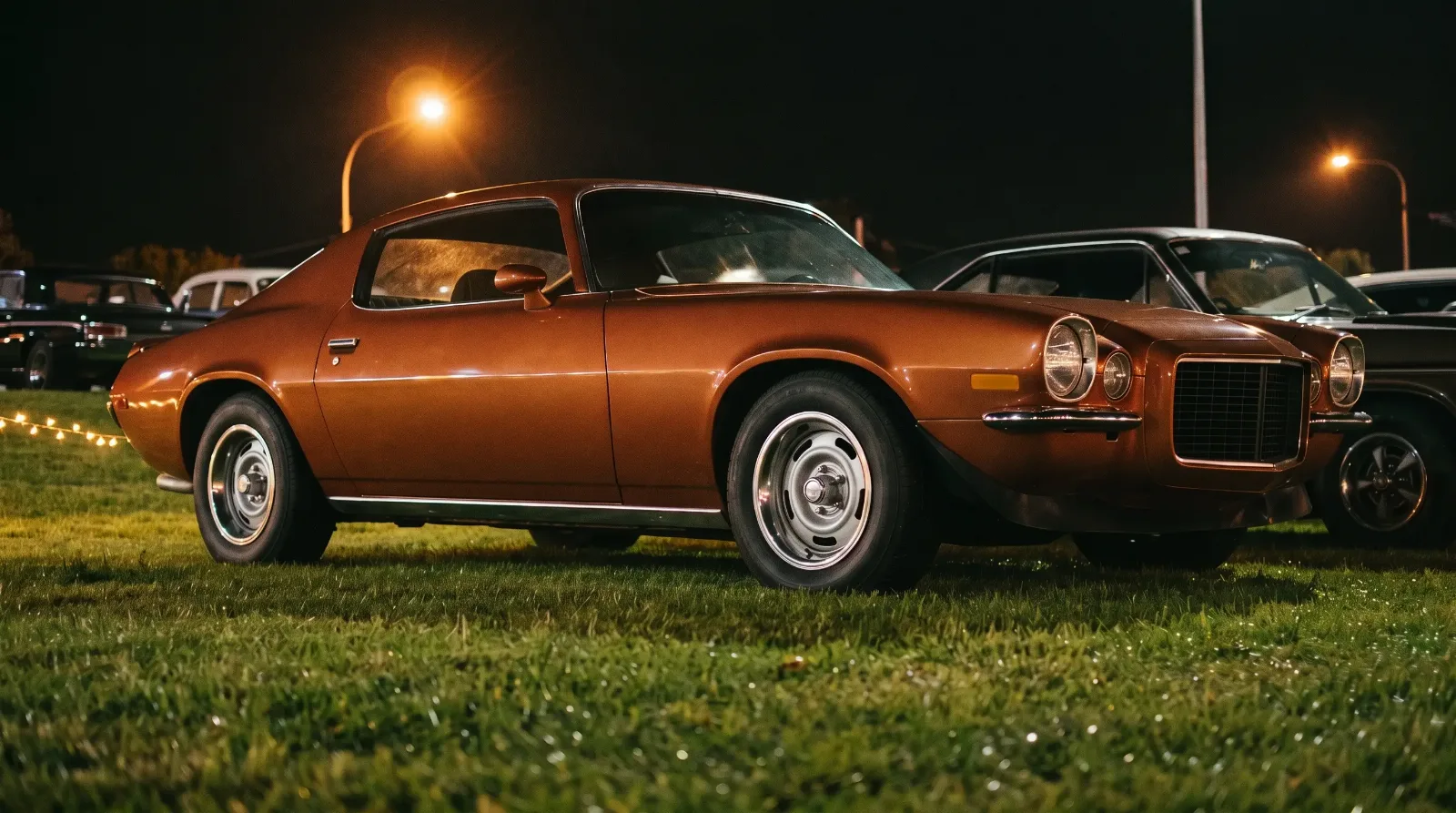
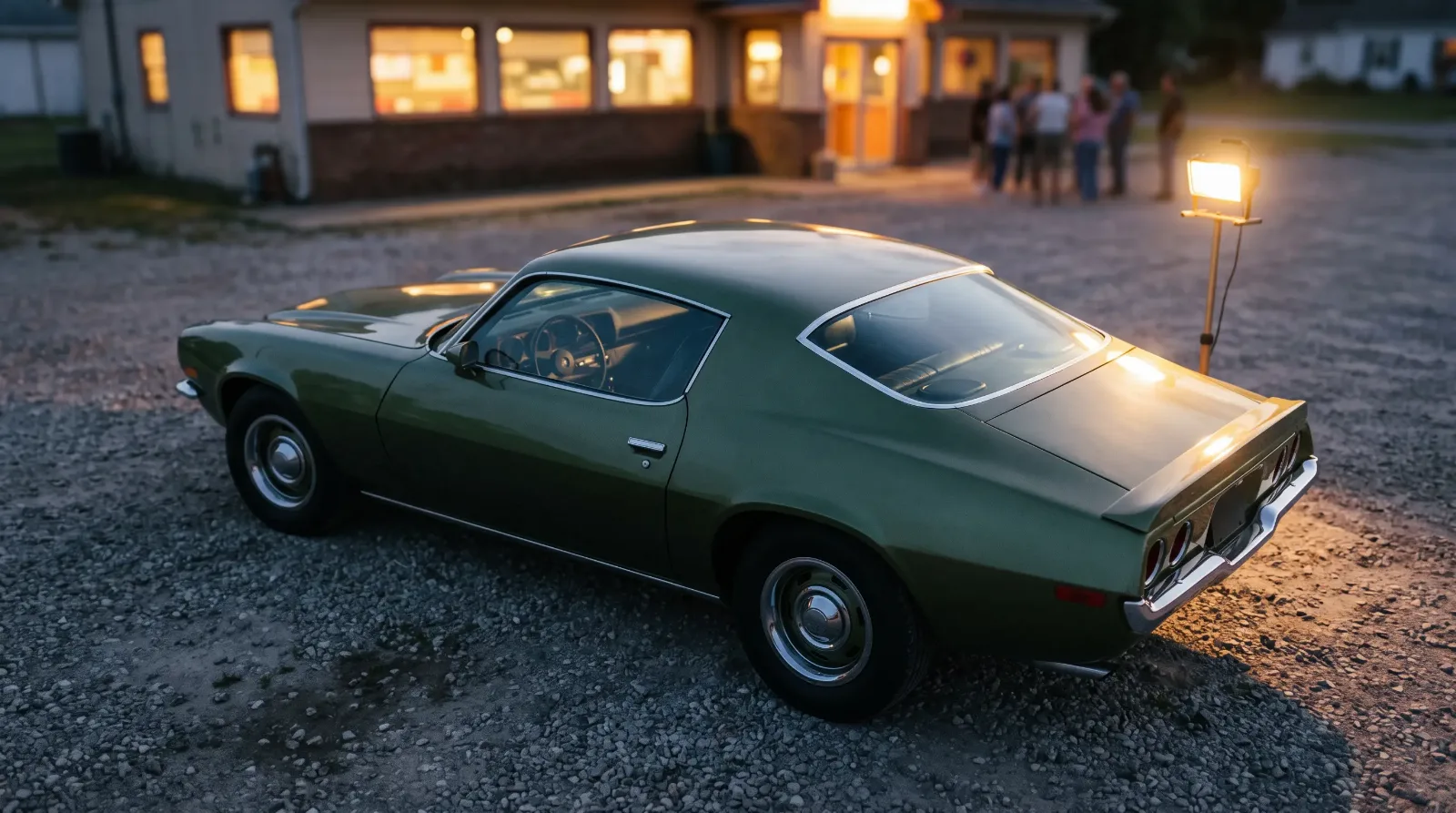
The facts are not in dispute. The second-generation Camaro was offered as a two-door coupe only, for all twelve model years, and it is the only Camaro generation that never had a convertible. That holds from the 1970½ launch through the last 1981 cars.
The vehicle identification number confirms it on every car. On a 1970 or 1971 Camaro, the 13-character VIN reads 1 for Chevrolet, 2 for Camaro, 3 or 4 for six-cylinder or V8, and then 87 for the body: coupe. From 1972 to 1980 the layout changed, but positions three and four still carry the same 87. Compare a 1967 V8 convertible, whose VIN begins 124677. The 67 is the convertible body code, and it does not appear on any second-generation Camaro.
| Generation | Model years | Factory convertible |
|---|---|---|
| First | 1967 to 1969 | Yes, all three years |
| Second | 1970 to 1981 | None |
| Third | 1982 to 1992 | From 1987, converted from T-top cars by ASC |
| Fourth | 1993 to 2002 | From 1994, built on the main line in Quebec |
Why a 1970 Camaro convertible was never built
The most likely reason is money, and specifically tooling. The second-generation F-body was a shared program, but the Firebird did not share much of its outer skin with the Camaro. Pontiac had its own sheet metal, down to different doors. Every extra body style would have needed its own tooling twice, once for each division. The record I trust describes that cost as prohibitive, both for a convertible and for a proposed two-door wagon.
That wagon is the clearest evidence of how tight the budget was. Designer Bob Ackerman drew a Kammback proposal in Hank Haga's Chevrolet studio. GM styling vice president Bill Mitchell ordered a full-size clay model of it. It still died, and the designer's own account gives the reason: the budget allowed only one shared door and quarter panel. A body style that needed different sheet metal from the doors back had no chance. A convertible, which needs its own rear structure as well as a top, faced the same arithmetic.
I would add one note of caution. This is the best-supported explanation, not a signed memo. No source on file quotes a GM executive saying, in so many words, that the convertible was cancelled for cost. What the records show is a program squeezed hard enough that even a styling chief's favored proposal could not survive it.
"The second-generation Camaro was not denied a convertible by one decision. It was denied one by a budget that had no room for a second roofline. The Kammback clay proves the point better than any rumor about safety rules."
Tom Ramirez
The safety rule story, and what the records support
You will often hear that the convertible was dropped because federal rollover rules were about to outlaw open cars. It is a tidy story. But I have not found a source that ties the Camaro decision to a specific federal rule, and the records I work from point to tooling cost instead. Until a primary document turns up, the safety explanation belongs in the category of plausible background, not established fact.
There was federal pressure on the car in this period, and it is well documented: it was about bumpers. When the 1972 strike at Norwood ended, about 1,100 partly built Camaros and Firebirds were scrapped because they could not meet the 1973 federal bumper and safety standards. That strike ran from April 7 to September 27, 1972, 174 days, and GM considered killing the F-body altogether. A car that came that close to cancellation was not going to be given a new, low-volume body style. For the full account of that year, read about the 1972 strike and what it did to the Camaro.
Open air by other means: the sunroof prototype and the T-tops
Someone did try opening the roof, and it was Hurst rather than Chevrolet. The Hurst Sunshine Special was a 1970 Z/28 prototype with a power sliding sunroof, a feature that never reached production. Enthusiast accounts say three were built and that one survives in the Rick Hendrick collection. A Camaro forum poster remembers the Hurst roof as a cloth retractable type, which does not quite square with a sliding panel. I treat all of it with care, since the sources are thin, they disagree on the roof, and they may share an origin. If you are interested in the 1970 Z/28 itself and its LT-1 350, read more here.
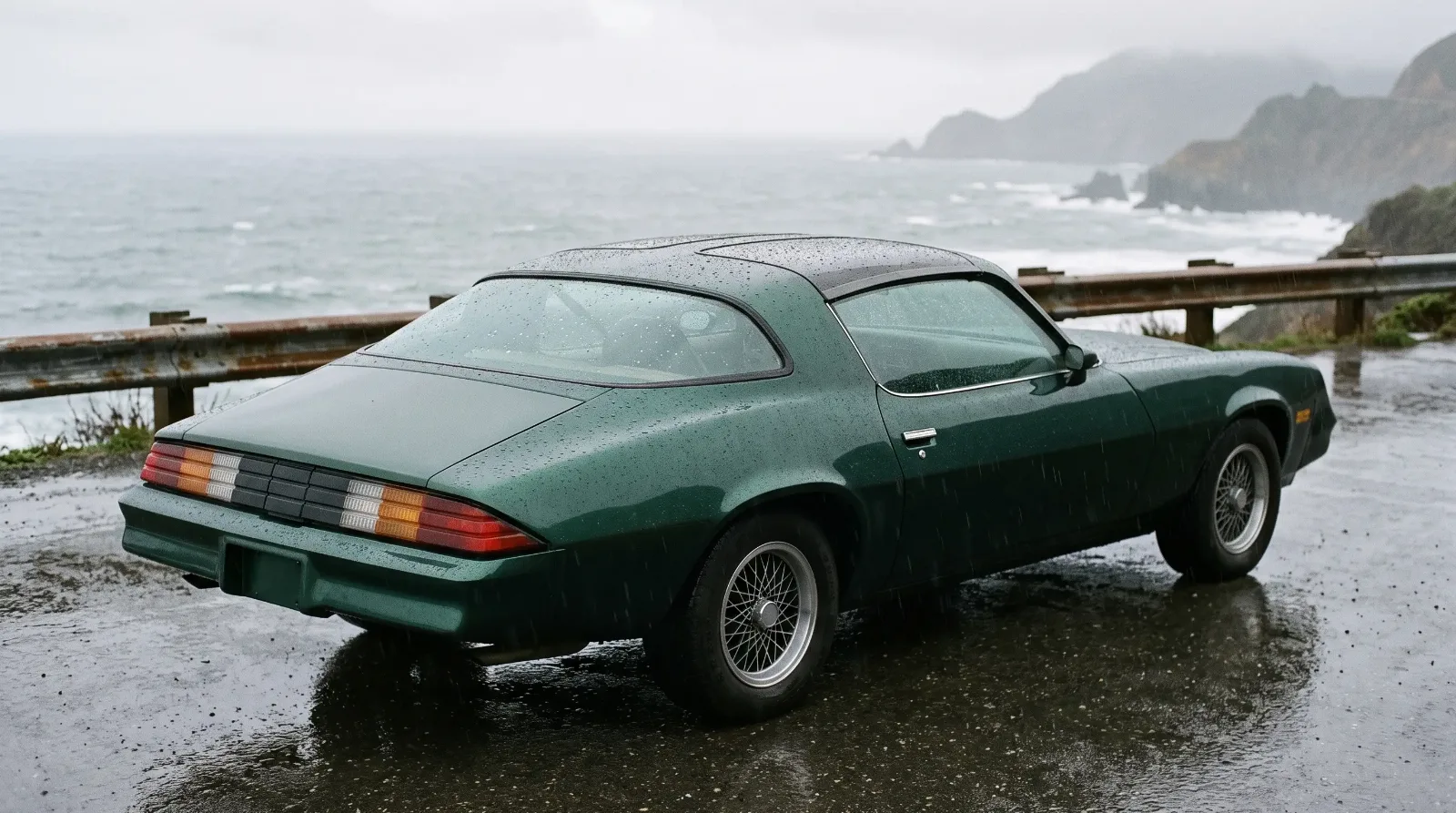
The production answer came late in the run. For the 1978 model year, Chevrolet offered T-tops for the first time: tinted glass panels that lifted out and stowed in the car. It was not a convertible, and it did not pretend to be, but it gave the coupe an open feel without new outer sheet metal. In tooling terms, it was exactly the kind of change the program could afford.
The convertible itself came back with the next generation. Late in the 1986 model year, American Sunroof Corporation built 82 IROC-Z convertibles for a dealer consortium. For 1987 the convertible became a factory-program car, the first Camaro convertible since 1969, still converted from T-top cars by ASC. Production that year was 1,007.
Checking a second-gen Camaro sold as a convertible
Aftermarket conversions of second-generation coupes exist, and some are well made. The problem is description. A car advertised as a factory 1970 Camaro convertible is either mislabeled or misrepresented, and the paperwork will show which.
Judged on its own records, the missing convertible is less a mystery than a ledger entry. A shared program with separate Pontiac sheet metal had room for one roofline, and it spent its money on that. The first generation had the open car; the third brought it back. To see how the whole line fits together, start at the beginning.
Sources and notes
- Hagerty: the second-gen Camaro, 1970 to 1981, on separate Firebird sheet metal and tooling cost
- Dean's Garage: Bob Ackerman on the Camaro Kammback proposal
- Classic Industries: Camaro VIN decoder, body code 87
- Wikipedia: Norwood Assembly and the 1972 strike
- Old Cars Weekly: the 1986 ASC IROC-Z convertible and the 1987 return
- Money Inc.: the Hurst Sunshine Special 1970 Z/28 prototype (enthusiast account)
Related Reading
Have a
Chevrolet Camaro
for Sale?
Reach thousands of serious classic car collectors across the US.
Sell It Here →
Selling a classic? Here's how: sell my classic car
Are You a Classic Car Dealer?
List your full inventory and connect with targeted classic car buyers.
Join as a Dealer →
#camaro history
#chevrolet camaro
#f-body
#second gen camaro
#camaro convertible
#vin decoding
#1970 Camaro

About the author
Tom Ramirez
Corvette researcher and historian based in Bowling Green, Kentucky. Two decades documenting Corvette production history from original factory records.
Related Listings - Chevrolet Camaro




Comments
Be the first to comment on this article.