
Pontiac's paperwork for 1973 tells a quieter story than the car itself let on. The GTO had been its own model since 1966, a full lineup with its own body and its own identity on the order form. For 1973 that changed. The Goat went back to being an option package, the W62 code stacked onto the Colonnade-bodied LeMans Sport Coupe, the same arrangement Pontiac had used to launch it in 1964. Dealers who had sold GTOs as a destination car for seven years now had to sell it as a checkbox.
Car Features
7 min read
1973 GTO: The Colonnade Era Nobody Asked For
In 1973 the GTO went back to being an option package on a heavier, softer Colonnade-bodied LeMans, a transitional year that set up the far bigger change coming in 1974.
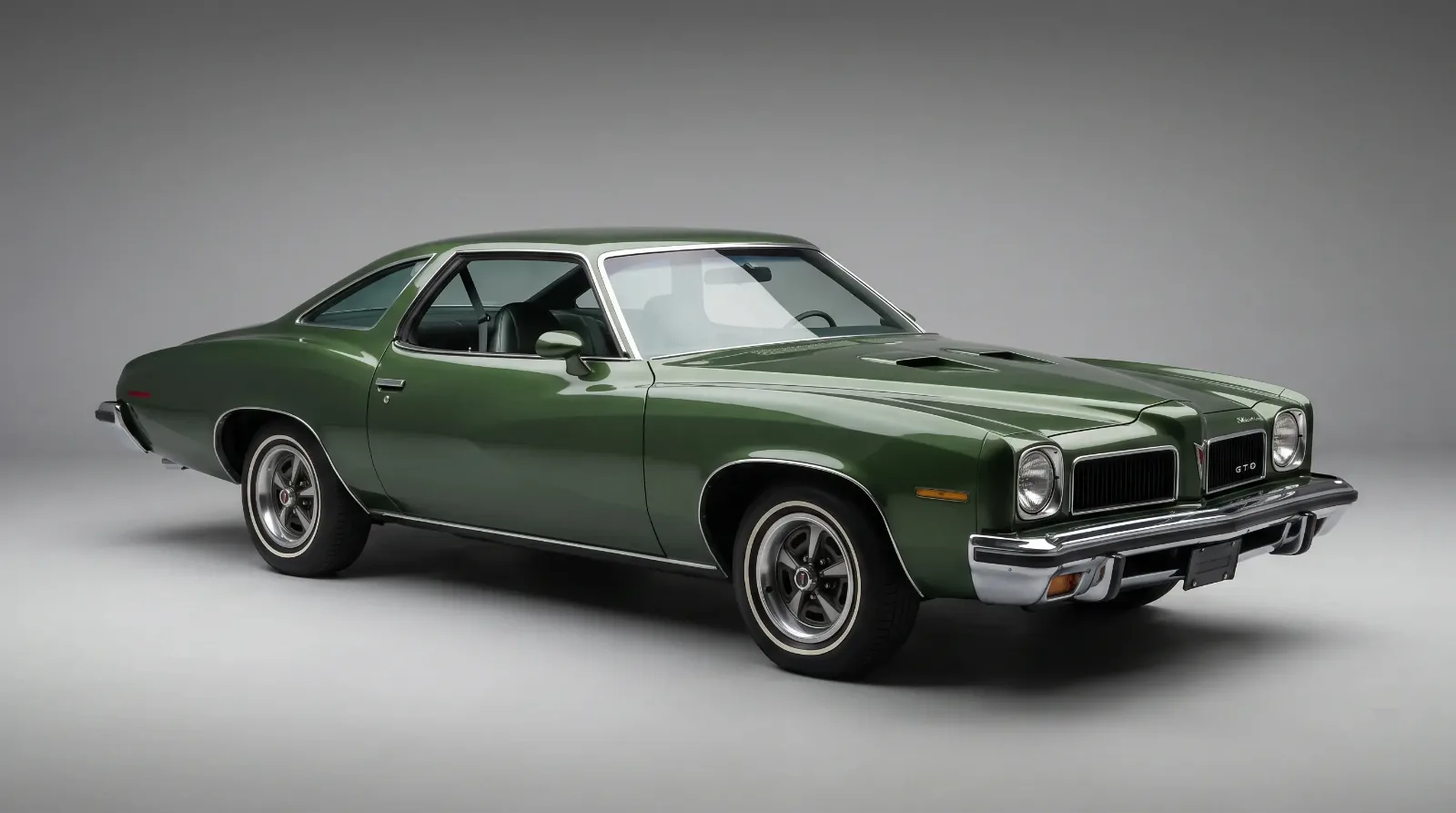
The bigger change sat underneath the trim. General Motors rolled out its new Colonnade body style across the entire midsize A-body line for 1973, and the GTO inherited it whether Pontiac wanted the association or not. Colonnade cars traded the pillarless hardtop look for fixed door frames and thick B-pillars, a response to rollover standards that regulators were drafting in Washington. The result was a heavier, more formal-looking car with a lower beltline view and none of the open-air hardtop silhouette that had defined the GTO since its debut. Buyers who remembered the crisp 1968-1969 GTO, or even the Endura-nosed cars that followed, were looking at something that read more like a personal-luxury coupe than a muscle car.
One engine, one attitude
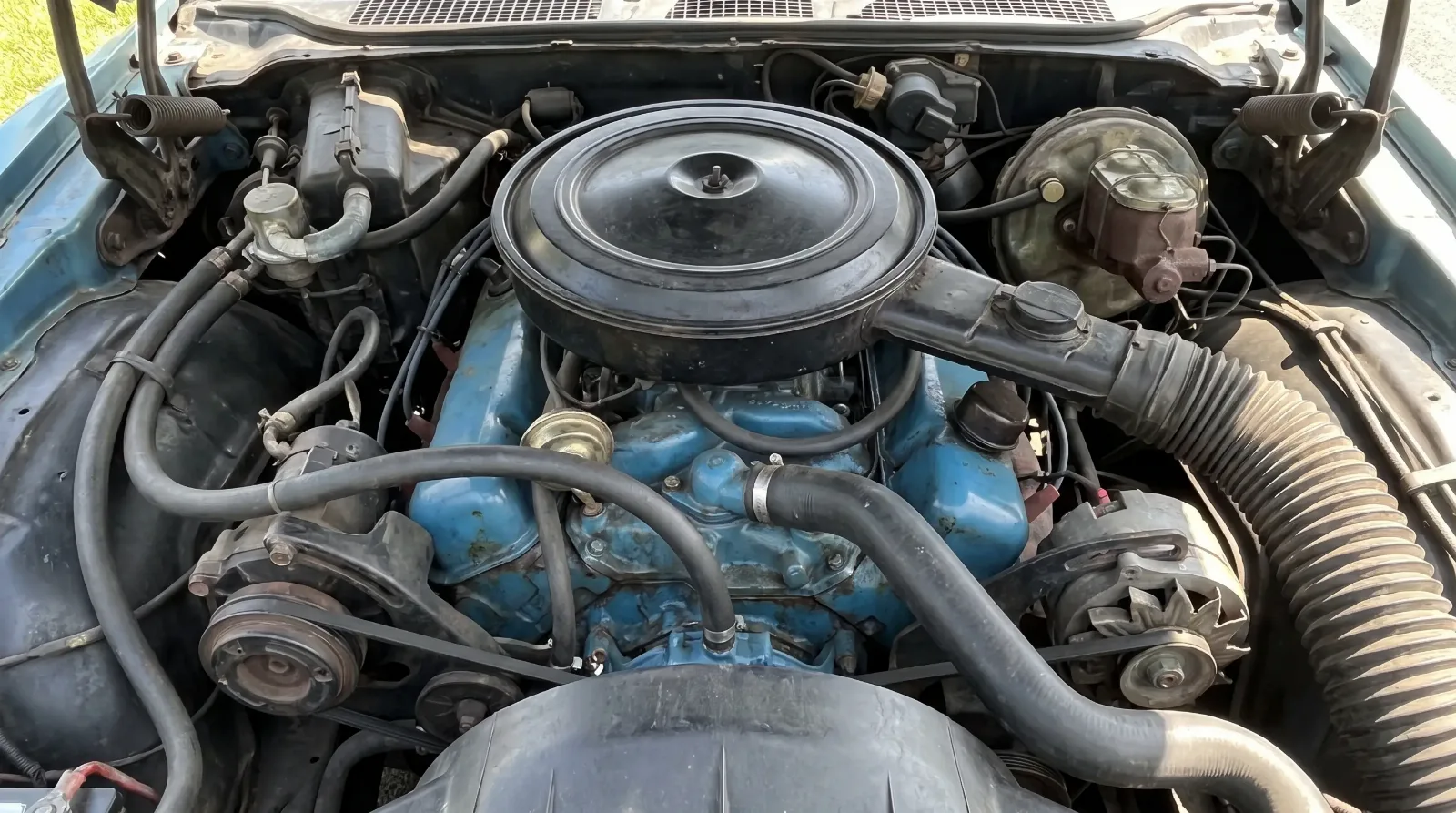
Pontiac trimmed the 1973 GTO's engine chart down to a single choice: a 400 cubic inch V8 rated at 230 horsepower net. That was the only engine on the order sheet, no small-block economy option and no big-block flagship. The move made sense on paper. Insurance surcharges on muscle cars had been climbing for years, emissions testing was tightening with every model year, and Pontiac's own 455 had already been pulled off the GTO options list. A single, mid-strength V8 kept the car simple to build and easier to insure, even if it meant nobody was cross-shopping a GTO against a genuine performance car anymore.
The horsepower number itself needs context that a lot of period road tests skip. By 1973 every domestic manufacturer had switched from gross to net horsepower ratings, measured with the engine dressed in its full accessories and exhaust rather than bare on a stand. A gross-rated engine from 1969 and a net-rated engine from 1973 can carry similar real output and still show wildly different numbers on paper. The 400's 230 net horsepower reads underwhelming next to a 1966 GTO's 335 gross-rated 389, but the gap between the two cars on the street was not nearly as dramatic as the spec sheet suggests.
What buyers actually got
The 1973 GTO package added the expected visual cues: dual non-functional hood scoops, GTO badging, a firmer suspension tune, and available Rally II wheels. Inside, buyers could still order bucket seats and a floor-mounted shifter, and a four-speed manual remained on the order form alongside the more common automatic. None of it disguised the fact that the car had grown heavier and softer than the GTOs that came before it. Curb weights on Colonnade-era midsize cars climbed noticeably over their 1972 predecessors, a byproduct of the reinforced structure GM built in to meet upcoming federal side-impact standards.
Sales numbers reflected the confusion in the market. GTO production for 1973 came in at just 4,806 cars, the lowest total of the entire 1964-1974 classic run and a small fraction of the nearly 97,000 units Pontiac moved in the model's 1966 peak. Buyers were not necessarily rejecting the GTO on its own merits. They were responding to a broader shift where the entire muscle car category had lost its reason to exist: insurance costs were punishing, gas prices were about to spike with the fall 1973 oil embargo, and emissions equipment was strangling horsepower across every make. The GTO wasn't uniquely weak that year. It was just one more car caught in a market that had stopped rewarding what it used to sell.
A transitional car, not a failure
It is easy to write off the 1973 GTO as the year the nameplate lost its meaning, but that undersells what Pontiac was working with. The engineers building this car were doing so under federal mandates that changed year to year, sometimes mid-cycle. A 400 V8 making 230 net horsepower in a nearly 3,700 pound Colonnade coupe was not a triumphant performance statement, but it was a coherent one given the regulatory box Pontiac was working inside. The car still ran a proper V8, still offered a manual gearbox, and still wore GTO badges with intent rather than as pure nostalgia marketing.
What makes 1973 significant in hindsight is that it set up the far more dramatic downsizing that followed. The GTO would not simply fade quietly. Pontiac had one more move to make, a platform swap so severe that it reshaped what the nameplate meant entirely. For the full picture of how Pontiac handled the end of the GTO, the 1973 Colonnade car is really the setup for the harder story that follows in 1974.
"People look at the 400's horsepower number and assume Pontiac gave up. What they're really looking at is a net rating on a car built to survive rules that changed twice a year. The engineering wasn't lazy, it was boxed in."
Tom Ramirez
Colors, trim, and what to look for on a survivor
Pontiac kept the 1973 GTO's color palette fairly conservative compared to the wilder hues of a few years earlier, with shades like Brewster Green, Cameo White, and Florentine Red showing up on surviving build sheets more often than the brighter period colors that defined 1969-1970. Interior choices leaned toward the standard vinyl bench or optional bucket seats in a handful of colorways, nothing close to the range Pontiac had offered when the GTO was still riding high on its own sales momentum. A car with a documented, matching-numbers build sheet in one of the less common color combinations tends to draw more attention today than a common white-over-black example, simply because fewer of them survive in original configuration.
Inspecting a 1973 GTO in person means paying close attention to areas the Colonnade redesign changed structurally. The reinforced door frames and thicker pillars mean rust in those areas is harder to spot and more expensive to repair than on earlier hardtop GTOs, since the structure itself is doing more work holding the body together. Floor pans, trunk drop-offs, and the lower edges of those thick B-pillars deserve a flashlight and a magnet before anyone commits to a purchase. The 400's numbers-matching status is also worth verifying against the block casting and the build sheet, since engine swaps on this generation of GTO are common enough that a seller's word alone isn't sufficient.
Where the story goes from here
Collectors today treat the 1973 GTO as a curiosity rather than a target, priced well under the earlier hardtop years and rarely restored to the same standard. That undervaluation is part of what makes it interesting. It is a documented, low-production transitional car built during one of the most turbulent regulatory stretches in Detroit's history, and it marks the last year the GTO carried a genuine midsize V8 platform before Pontiac made its final and most controversial move with the nameplate. To see how that next chapter played out, read on, and for the broader arc of the model from 1964 forward, the Pontiac GTO story lays out how a Tempest option package became an American icon and then, in the space of a decade, quietly stepped off the stage.
Sources and notes
Related Reading
Have a
Pontiac GTO
for Sale?
Reach thousands of serious classic car collectors across the US.
Sell It Here →
Are You a Classic Car Dealer?
List your full inventory and connect with targeted classic car buyers.
Join as a Dealer →

About the author
Tom Ramirez
Corvette researcher and historian based in Bowling Green, Kentucky. Two decades documenting Corvette production history from original factory records.
Related Listings - Pontiac GTO


Comments
Be the first to comment on this article.