
Value in old muscle cars comes down to documentation, condition, and how badly the market wants what you're holding. The 1974 GTO fails the third test more often than it should, and that gap between what the car is and what it sells for is exactly what makes it worth a serious look.
Car Features
7 min read
1974 GTO: The Ventura-Based Final Year
Pontiac's last classic GTO shrank onto a Ventura-based compact platform, and the market still hasn't decided what that's worth.
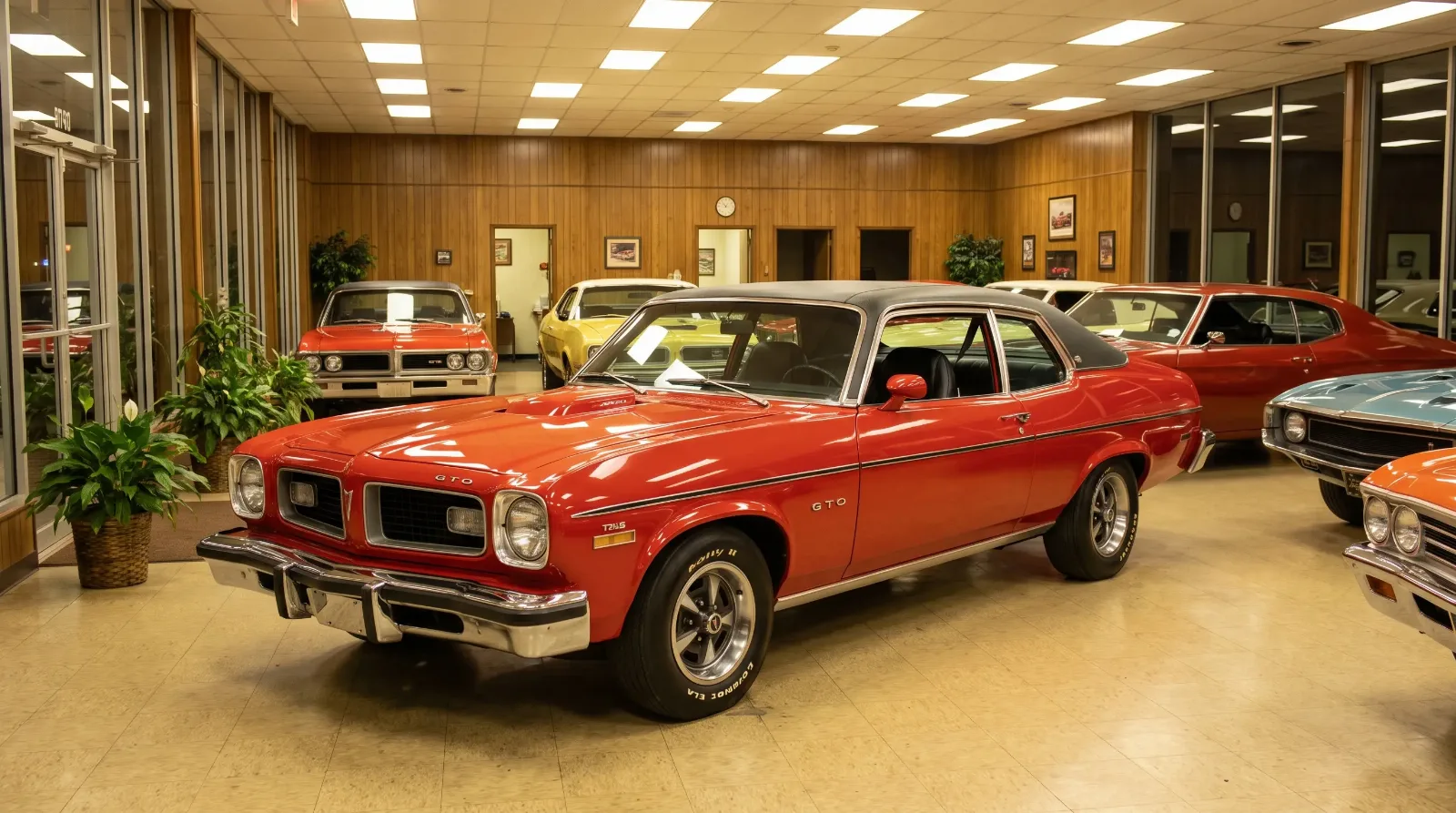
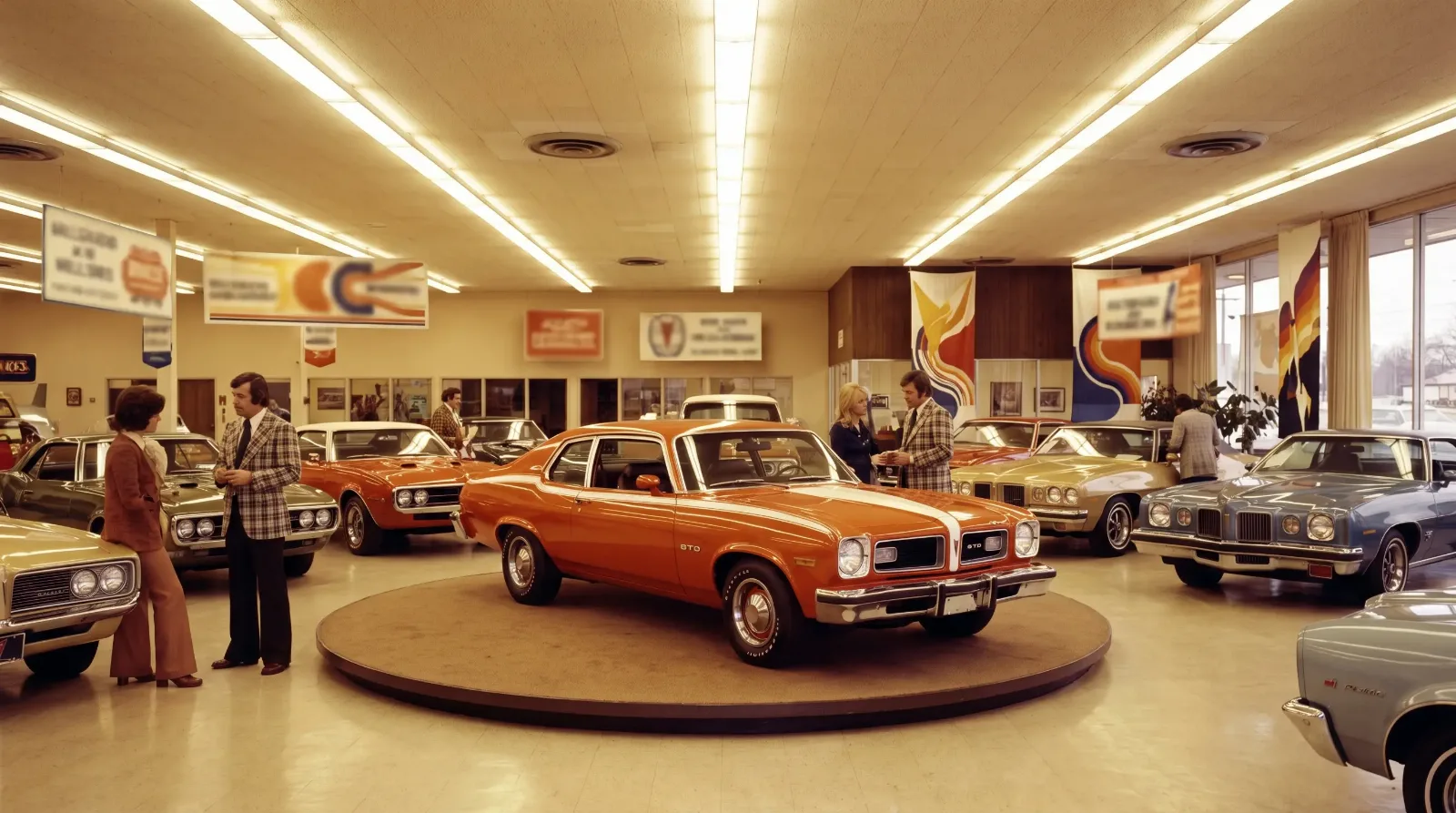
Pontiac spent 1974 doing something no GTO had done before: it shrank the car onto a completely different platform. Instead of riding on the midsize A-body Colonnade shell it used in 1973, the GTO moved onto the compact X-body, the same architecture underneath the Ventura, which was itself Pontiac's badge-engineered version of the Chevrolet Nova. The GTO nameplate, born in 1964 as an option on a midsize Tempest, ended its first era in 1974 on a car roughly the size of a compact economy coupe.
What was actually under the hood
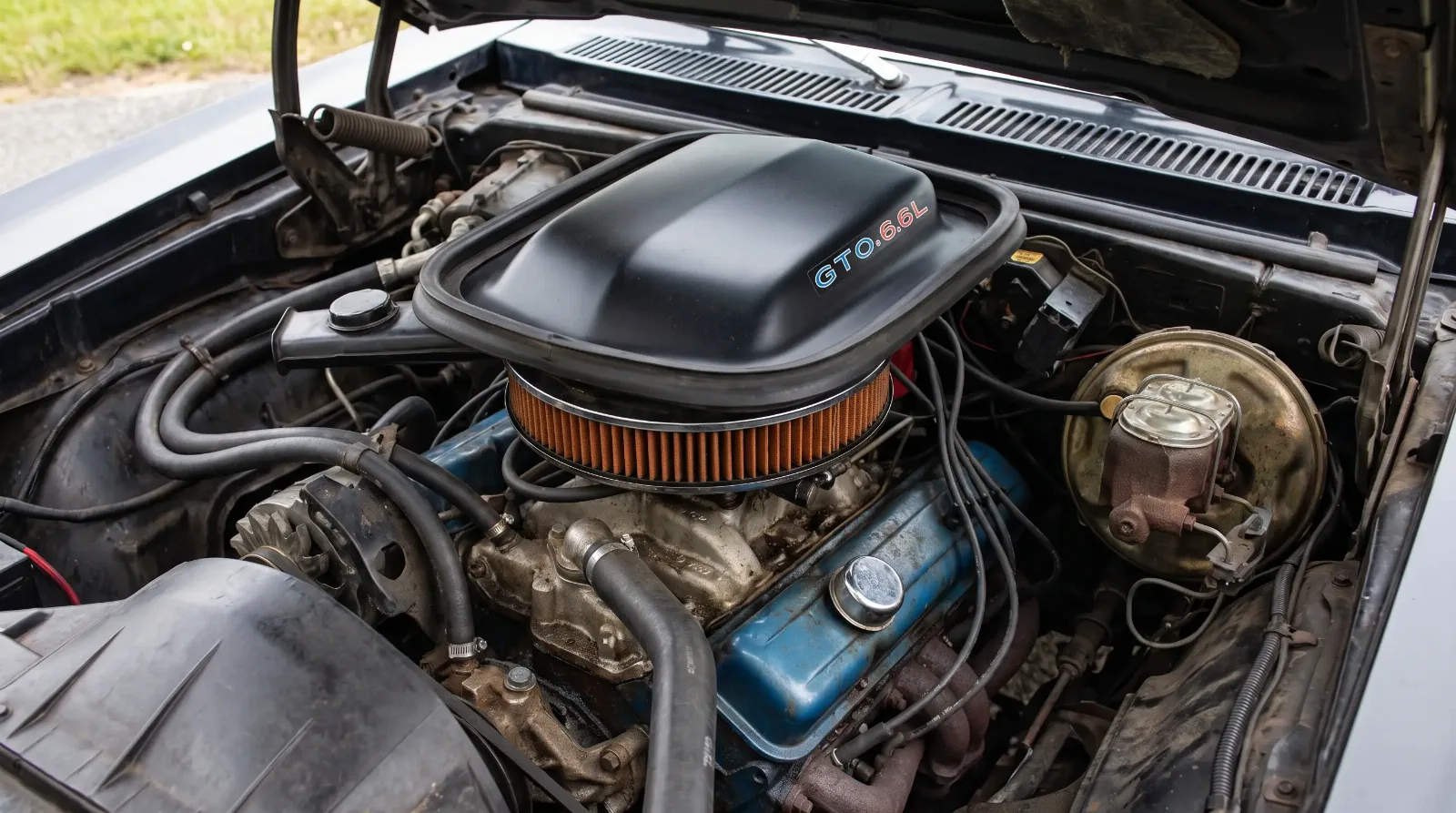
The 1974 GTO shipped with Pontiac's own 350 cubic inch V8 as the sole engine, rated at 200 net horsepower at 4,400 rpm, with 295 lb-ft of torque at 2,800 rpm. That figure sits well below what the GTO name implied a decade earlier, but the comparison isn't entirely fair. The 350 was pushing a car that weighed considerably less than the 1973 Colonnade GTO, and the power-to-weight math worked out closer than the horsepower number alone suggests. A functional Shaker hood scoop, borrowed visually from Pontiac's Trans Am, was available and became one of the more distinctive details buyers could option onto the compact body.
What the 350 could not do was outrun the era it was born into. Emissions equipment, a mandatory catalytic converter on many 1975-bound engineering decisions already being locked in for 1974, and compression ratios reduced to run on unleaded fuel had all eaten into what a Pontiac V8 could realistically produce. The 1974 GTO was never going to be measured against a Ram Air 400. It was built to survive a regulatory environment that had already killed most of its competition outright.
Reading the value honestly
Here is the appraisal reality: a documented, numbers-matching 1974 GTO in solid condition still trades at a meaningful discount to nearly every other classic-era GTO, including the 1973 that preceded it. That discount is not really about the car's competence. It reflects a market that still treats "final year, downsized platform" as a mark against desirability rather than a point of rarity. Production numbers for 1974 were low relative to the GTO's mid-1960s volume, and low-production final-year cars in other segments have historically appreciated once the initial stigma wears off.
The caveat, and there is always a caveat, is documentation and originality. The compact GTO wasn't built in huge numbers to begin with, and a car this far outside the mainstream collector conversation is one where sloppy restorations and parts-bin engine swaps show up more often than they should. Buyers should want build sheets, a clean title history, and verification that the 350 under the hood is the numbers-matching unit rather than a later service replacement. A GTO with gaps in its paper trail is a much harder car to resell at any price, downsized platform or not.
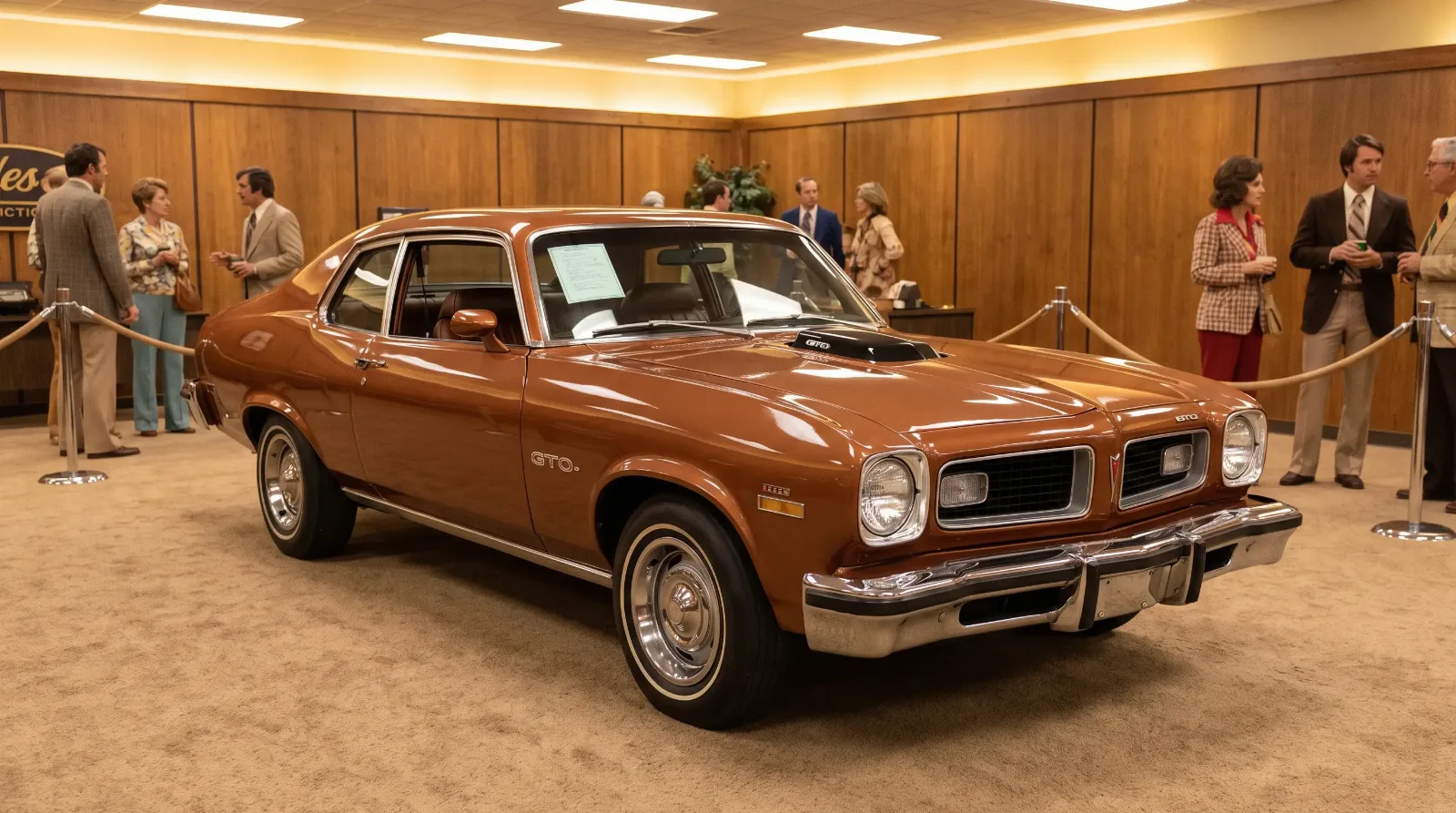
Interior and exterior options followed the same pattern of scaled-back ambition that defined the whole car. Buyers could still order air conditioning, an AM/FM radio, and a handful of exterior color choices, but the sprawling option list that had once let a GTO buyer build a genuinely personalized car had thinned considerably compared to the model's late-1960s peak. That's worth noting for anyone shopping a survivor today, since a heavily optioned 1974 car is scarcer, and correspondingly more desirable to a documentation-focused buyer, than a stripped example simply because fewer buyers checked many boxes on the order form that year.
| Spec | 1974 Pontiac GTO |
|---|---|
| Platform | X-body (Ventura-based, compact) |
| Standard engine | 350 cubic inch V8, 200 hp net |
| Notable option | Functional Shaker hood scoop |
| Body style | 2-door coupe/hatchback |
| Production | 7,058 units (up from 4,806 in 1973) |
| Final classic-era model year | Yes, last GTO of the original run |
What the comps actually show
Pull recent auction and private-sale results for documented 1974 GTOs and a pattern emerges quickly: the spread between a rough, undocumented car and a clean, numbers-matching example is wider than it is for most other classic-era GTO model years. That spread tells you the market has started differentiating on quality within this model year even while it continues to discount the year as a whole relative to 1966-1970 cars. A seller with genuine documentation, a matching 350, and an intact Shaker hood option is not competing against every other 1974 GTO on the market. They're competing against a much smaller pool of comparably documented cars, which is exactly the kind of scarcity that tends to support price appreciation once broader collector sentiment catches up.
Restoration cost is the other variable that separates a good buy from a money pit here. Parts availability for the compact X-body GTO is thinner than for the more common midsize Pontiac platforms, since fewer aftermarket suppliers bothered reproducing trim and body panels for a car built in relatively low numbers over a single model year. Sourcing an original Shaker hood assembly, correct GTO-specific trim, or interior components in good condition can take real time and real money, and that cost needs to factor into any purchase decision rather than getting discovered after the fact.
Liquidity is the real problem
Condition and documentation solve half the equation. The other half is liquidity, and that's where the 1974 GTO still struggles. Fewer buyers are actively hunting for one compared to a 1966 hardtop or a 1969 Judge, which means a seller often needs to be patient rather than expecting a quick sale at top dollar. That's not a reason to avoid the car if you actually want to own one. It's a reason to buy it as a driver and a piece of specific automotive history rather than as a short-term flip. The undervaluation that frustrates sellers is the same thing that makes entry cheap for a buyer who wants a real, documented GTO without competing against the deeper pool of money chasing 1969-1970 cars.
To understand how Pontiac ended up building a GTO on a Nova platform in the first place, it helps to look at the final GTO years as a single, connected decision rather than an isolated one. The pressures that shaped 1973 didn't ease up for 1974, they intensified, and Pontiac's response was the most drastic repositioning the nameplate had ever seen.
"A downsized final-year car with clean paperwork is one of the few honest bargains left in this hobby. The discount is about perception, not about what the car actually is."
Marcus Feld
Why Pontiac walked away entirely
The 1974 GTO wasn't just downsized, it was also the last one. Pontiac discontinued the nameplate after this model year, and the reasoning behind that decision involved more than one factor stacking up at once. For the full breakdown of what finally ended production, read on. And for buyers who want the complete arc from the car's 1964 debut as a Tempest option through its final compact-platform year, the full GTO story puts 1974 in its proper context rather than treating it as an afterthought. If you're ready to see what's actually on the market right now, you can browse GTO listings and judge the condition-versus-price math for yourself.
Sources and notes
Related Reading
Have a
Pontiac GTO
for Sale?
Reach thousands of serious classic car collectors across the US.
Sell It Here →
Are You a Classic Car Dealer?
List your full inventory and connect with targeted classic car buyers.
Join as a Dealer →

About the author
Marcus Feld
Accredited collector-car appraiser who reads the market through hammer prices, condition tiers and risk.
Related Listings - Pontiac GTO




Comments (2)
V
Vince Calabrese
2 months ago
The section on what a real restoration actually costs is something every buyer should read before deciding a project car is a bargain.
R
Rick Fontaine
2 months ago
Curious whether values have held since this was written. The market moves fast right now.